
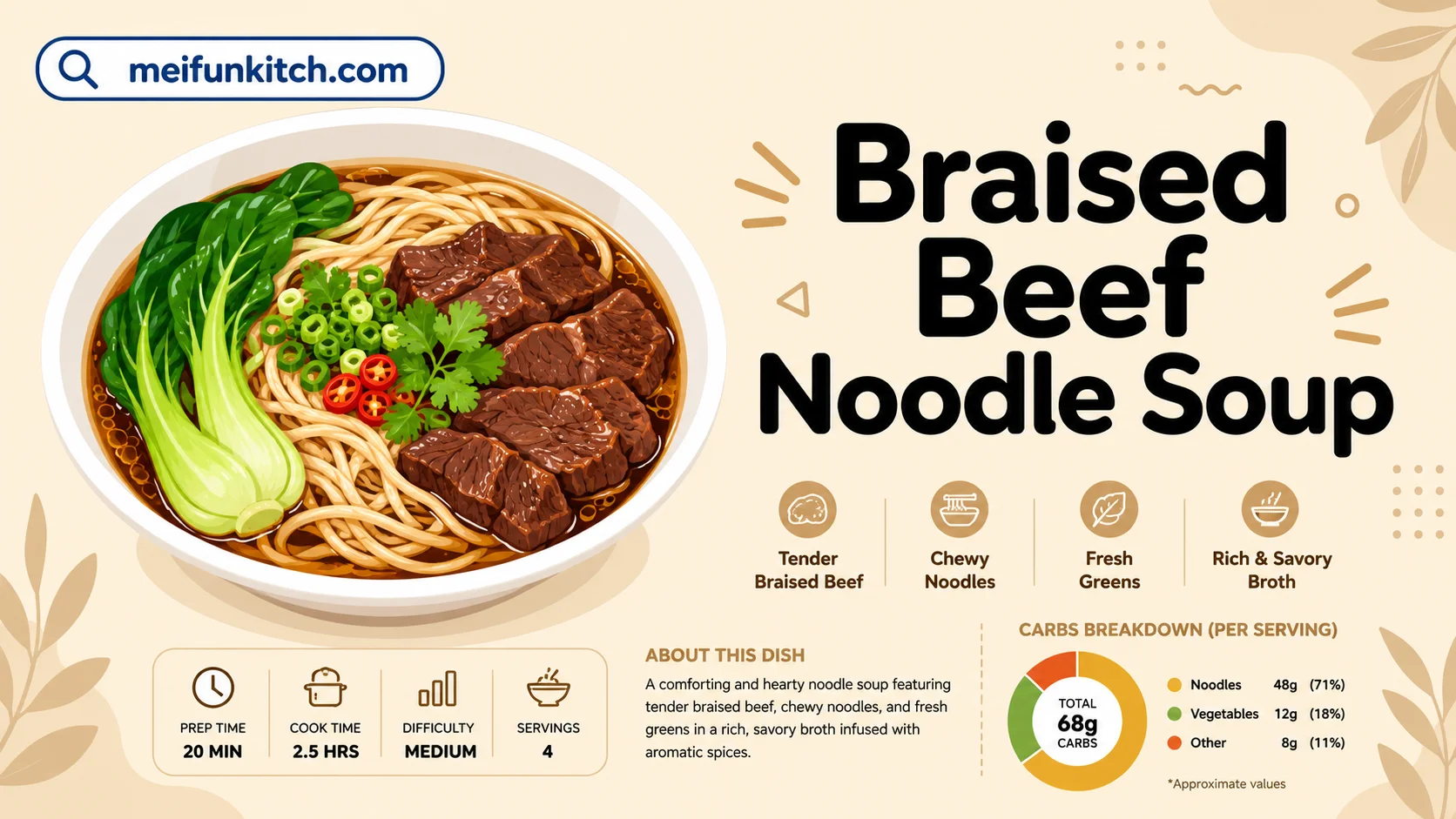
Braised Beef Noodle Soup is a warm and tasty meal that many people love. It has soft beef, noodles, and a rich broth full of flavor. People often enjoy this soup on cold days because it feels comforting and filling. In addition, it is a popular dish in many homes and restaurants.
This delicious soup takes time to cook, but the result is worth it. As the beef cooks slowly, it becomes tender and juicy. Meanwhile, the broth absorbs the flavors of herbs, spices, and vegetables. Because of this, every spoonful tastes rich and satisfying. Many families also add their own special ingredients to make the soup unique.
In this guide, you will learn what Braised Beef Noodle Soup is, how it is made, and why so many people enjoy it. Moreover, you will discover helpful cooking tips and serving ideas. Whether you are trying this dish for the first time or looking for a better recipe, this article will help you create a delicious bowl of soup with confidence.
What Is Braised Beef Noodle Soup?
Braised Beef Noodle Soup is a hearty dish that combines tender beef, flavorful broth, and chewy noodles in one comforting bowl. Many people enjoy this meal because it offers rich taste, satisfying texture, and nourishing ingredients. Traditionally, cooks prepare the beef through a slow braising process, which allows the meat to become soft while absorbing deep flavors from spices and seasonings. As a result, the dish develops a savory taste that appeals to both beginners and experienced food lovers.
This popular soup has roots in Asian cuisine, where families have enjoyed it for generations. Over time, different regions created their own versions by adding local herbs, vegetables, and cooking techniques. Therefore, you may find slight variations in flavor and appearance depending on where the recipe comes from. However, the key elements remain the same: slow-cooked beef, aromatic broth, and perfectly cooked noodles. Because these ingredients work together so well, the dish continues to gain popularity around the world.
Today, home cooks and professional chefs prepare this meal for family dinners, special gatherings, and comforting lunches. Moreover, the recipe offers flexibility because people can adjust the seasonings to match their preferences. Whether someone prefers a mild broth or a bold and spicy flavor, the soup can easily adapt. Consequently, it remains one of the most loved noodle dishes among food enthusiasts seeking warmth, flavor, and satisfaction.
Key Features of This Dish
| Feature | Description |
| Main Protein | Slow-braised beef |
| Broth Type | Rich and savory |
| Noodle Style | Wheat noodles |
| Texture | Tender and comforting |
| Cooking Method | Slow braising |
| Flavor Profile | Deep and aromatic |
| Popular Serving Time | Lunch and dinner |
| Common Garnishes | Green onions |
| Preparation Difficulty | Moderate |
| Family Friendly | Yes |
| Meal Type | Complete meal |
| Customizable | Highly adaptable |
Ingredients Needed for Braised Beef Noodle Soup
The quality of ingredients plays a major role in creating a flavorful bowl. Fresh beef provides the foundation of the dish, while onions, garlic, ginger, and spices contribute depth and aroma. Additionally, high-quality noodles help create the perfect texture. When cooks choose fresh ingredients, they often achieve better flavor and a more satisfying dining experience. Therefore, selecting premium ingredients should always be a priority when preparing this meal.
A well-balanced broth requires several supporting ingredients. Soy sauce adds richness, while cooking wine contributes complexity and aroma. Furthermore, vegetables such as carrots and bok choy provide nutrition and visual appeal. Because each ingredient serves a specific purpose, removing important components may reduce the overall quality of the dish. For this reason, following a balanced ingredient list often leads to the best results.
Many home cooks also customize the recipe according to personal preference. Some add mushrooms for an earthy flavor, whereas others include chili peppers for extra heat. Meanwhile, fresh herbs can enhance the final presentation and aroma. As a result, the dish remains versatile and suitable for a wide range of tastes while still maintaining its traditional character.
Essential Ingredients List
| Ingredient | Purpose |
| Beef | Main protein source |
| Noodles | Base of the dish |
| Beef broth | Flavor foundation |
| Garlic | Aroma enhancement |
| Ginger | Adds warmth |
| Onion | Flavor depth |
| Soy sauce | Savory taste |
| Cooking wine | Complexity |
| Star anise | Traditional flavor |
| Carrots | Nutrition |
| Bok choy | Freshness |
| Green onions | Garnish |
How to Make Braised Beef Noodle Soup Step by Step
Preparing Braised Beef Noodle Soup begins with selecting fresh beef and cutting it into medium-sized pieces. First, cooks sear the meat to lock in flavor and develop a rich color. Next, they sauté aromatics such as garlic, onion, and ginger until fragrant. This process builds a strong flavor base that supports the entire dish. Consequently, taking time during these early stages often improves the final outcome.
After browning the meat, add broth, seasonings, and spices to the pot. Then allow the mixture to simmer slowly for several hours. During this stage, the beef absorbs the surrounding flavors while gradually becoming tender. Meanwhile, the broth develops a deeper and more complex taste. Because slow cooking plays such an important role, patience often rewards cooks with exceptional results.
Once the beef becomes tender, prepare the noodles according to package instructions. Place the cooked noodles into serving bowls and carefully ladle the hot broth and beef over them. Finally, add fresh garnishes such as green onions and leafy vegetables. As a result, the finished dish delivers a satisfying combination of texture, aroma, and flavor that many people enjoy.
Step-by-Step Process
| Step | Action |
| 1 | Prepare ingredients |
| 2 | Cut beef pieces |
| 3 | Heat cooking pot |
| 4 | Sear beef |
| 5 | Cook aromatics |
| 6 | Add seasonings |
| 7 | Pour broth |
| 8 | Simmer slowly |
| 9 | Cook noodles |
| 10 | Assemble bowls |
| 11 | Add garnishes |
| 12 | Serve hot |
Best Beef Cuts for Braised Beef Noodle Soup
Choosing the right cut of beef can greatly affect the final texture and flavor of the dish. Tougher cuts often work best because they become tender during long cooking periods. As the meat slowly cooks, connective tissues break down and create a rich, silky texture. Therefore, selecting the proper cut helps produce a more authentic and satisfying meal.
Beef chuck remains one of the most popular options because it contains the ideal balance of meat and fat. Additionally, brisket offers excellent flavor and becomes wonderfully tender after extended cooking. Some cooks also use short ribs, which contribute extra richness to the broth. Consequently, these cuts consistently deliver excellent results when prepared correctly.
When purchasing beef, look for fresh color, good marbling, and quality sourcing. Moreover, buying from trusted suppliers helps ensure better taste and food safety. Although premium cuts may cost more, they often provide superior texture and flavor. Therefore, investing in quality beef can significantly improve the overall cooking experience and final presentation.
Comparison of Popular Beef Cuts
| Beef Cut | Tenderness After Braising | Flavor | Fat Content | Cost | Best Use |
| Chuck Roast | High | Rich | Medium | Moderate | Excellent |
| Brisket | High | Deep | Medium | Moderate | Excellent |
| Short Ribs | Very High | Very Rich | High | Higher | Premium |
| Beef Shank | High | Strong | Low | Affordable | Traditional |
| Round Roast | Medium | Mild | Low | Affordable | Budget option |
| Cross Cut Shank | High | Rich | Low | Moderate | Authentic recipes |
| Boneless Chuck | High | Rich | Medium | Moderate | Easy preparation |
| Plate Cut | Medium | Rich | High | Moderate | Flavorful broth |
| Shoulder Clod | Medium | Good | Medium | Affordable | Home cooking |
| Neck Bones | Medium | Strong | Low | Budget | Broth enhancement |
| Oxtail | Very High | Extremely Rich | High | Premium | Luxury version |
| Beef Rib Pieces | High | Rich | Medium | Moderate | Hearty soups |
Secrets to a Rich Braised Beef Noodle Soup Broth
A flavorful broth is the heart of any great noodle soup. Many experienced cooks focus on building layers of flavor instead of relying on a single ingredient. First, they brown the beef before adding liquid because this step creates a deeper and more complex taste. Next, they cook aromatics such as onions, garlic, and ginger until fragrant. As a result, the broth develops a stronger foundation that enhances every bite.
The cooking time also plays an important role in creating a rich soup base. Slow simmering allows flavors to blend naturally while helping the ingredients release their full potential. Furthermore, spices such as star anise, cinnamon, and bay leaves add warmth and depth. Because these ingredients work together gradually, the broth becomes balanced rather than overpowering. Therefore, patience often produces the best results.
Many home cooks improve the flavor even more by skimming excess foam and fat during cooking. Meanwhile, using quality stock instead of plain water can create a fuller taste. Braised Beef Noodle Soup becomes especially satisfying when the broth remains clear, rich, and aromatic. Consequently, paying attention to small details can transform an ordinary bowl into a memorable meal.
Factors That Improve Broth Flavor
| Factor | Benefit |
| Browning beef | Adds depth |
| Fresh aromatics | Enhances aroma |
| Slow simmering | Develops flavor |
| Quality stock | Richer taste |
| Whole spices | Greater complexity |
| Skimming foam | Cleaner broth |
| Balanced seasoning | Better flavor |
| Fresh vegetables | Natural sweetness |
| Proper cooking time | Tender ingredients |
| Moderate heat | Prevents bitterness |
| Fresh herbs | Added freshness |
| Resting broth | Improved flavor blending |
Common Mistakes to Avoid When Making Braised Beef Noodle Soup
Many beginners rush the cooking process, which often leads to disappointing results. Although it may seem tempting to increase the heat, rapid cooking can make beef tough and reduce broth quality. Instead, slow cooking allows flavors to develop naturally. Therefore, maintaining a gentle simmer remains one of the most important practices for success.
Another common mistake involves using too much seasoning at the beginning. While seasonings add flavor, excessive amounts can overpower the dish. Moreover, ingredients release different flavors throughout the cooking process. Because of this, experienced cooks usually adjust seasoning gradually. As a result, the final dish tastes balanced and enjoyable.
Some people also overlook ingredient quality when preparing Braised Beef Noodle Soup. Fresh vegetables, quality beef, and good noodles contribute significantly to the final result. Additionally, overcooking noodles can ruin the texture of the entire meal. Consequently, careful ingredient selection and proper timing help create a more satisfying bowl of soup.
Mistakes and Solutions
| Mistake | Better Approach |
| Cooking too fast | Simmer slowly |
| Using poor-quality beef | Choose fresh cuts |
| Over-seasoning early | Season gradually |
| Skipping beef browning | Sear first |
| Overcooking noodles | Cook until just tender |
| Using too much salt | Taste frequently |
| Ignoring broth foam | Skim regularly |
| Adding all spices at once | Balance flavors |
| Using weak stock | Use quality broth |
| Cutting beef unevenly | Keep pieces consistent |
| Rushing preparation | Follow each step |
| Forgetting garnishes | Add fresh toppings |
How to Choose the Right Noodles for This Dish
The type of noodle you choose can greatly affect the overall eating experience. Thick wheat noodles remain a popular option because they hold up well in hot broth. In addition, they absorb flavor without becoming overly soft. Therefore, many traditional recipes recommend medium or thick noodles for the best texture.
Fresh noodles often provide a softer and chewier texture compared to dried varieties. However, dried noodles offer convenience and a longer shelf life. Meanwhile, both options can produce excellent results when cooked properly. Because preferences vary, selecting noodles often depends on personal taste and availability.
The best noodles should complement the broth without overpowering it. Braised Beef Noodle Soup tastes most balanced when the noodles provide texture while allowing the broth and beef to remain the stars of the dish. Consequently, choosing high-quality noodles can improve both flavor and presentation.
Noodle Comparison Guide
| Noodle Type | Texture | Best Feature |
| Thick wheat noodles | Chewy | Traditional choice |
| Fresh noodles | Soft and chewy | Authentic texture |
| Dried wheat noodles | Firm | Convenient |
| Hand-pulled noodles | Elastic | Excellent bite |
| Flat noodles | Smooth | Absorbs broth |
| Egg noodles | Rich texture | Flavorful |
| Thin wheat noodles | Light | Quick cooking |
| Udon noodles | Thick | Filling |
| Knife-cut noodles | Rustic | Hearty texture |
| Rice noodles | Soft | Gluten-free option |
| Homemade noodles | Fresh | Custom texture |
| Alkaline noodles | Springy | Professional feel |
Easy Tips for Tender and Flavorful Beef
Tender beef begins with selecting the right cut. Cuts with connective tissue often perform better during long cooking because they soften gradually over time. Furthermore, these cuts release flavor into the broth as they cook. Therefore, choosing suitable beef remains one of the most effective ways to improve the dish.
Marinating beef before cooking can also enhance flavor. Ingredients such as soy sauce, garlic, and ginger help season the meat while adding complexity. In addition, allowing the beef to rest in the marinade for several hours can improve flavor penetration. As a result, every bite becomes more enjoyable.
Cooking techniques matter just as much as ingredient selection. Slow cooking at a steady temperature allows the meat to become tender without drying out. Meanwhile, regular monitoring helps maintain ideal cooking conditions. Because tenderness greatly affects the dining experience, these simple practices can make a noticeable difference.
Tips for Better Beef
| Tip | Benefit |
| Choose chuck roast | Better texture |
| Marinate beforehand | More flavor |
| Sear before braising | Richer taste |
| Cook slowly | Greater tenderness |
| Use quality stock | Enhanced flavor |
| Maintain low heat | Prevents toughness |
| Cut evenly | Uniform cooking |
| Rest after cooking | Juicier meat |
| Add aromatics | Better aroma |
| Use fresh ingredients | Improved quality |
| Monitor liquid levels | Consistent cooking |
| Taste frequently | Balanced seasoning |
What to Serve with Beef Noodle Soup
A well-chosen side dish can make the meal even more enjoyable. Fresh vegetables offer a light contrast to the richness of the soup. For example, steamed greens provide color, texture, and additional nutrients. Moreover, their mild flavor pairs well with savory broth and tender beef.
Many people also enjoy serving pickled vegetables alongside noodle soup. The slight tanginess balances the richness of the meal while adding refreshing flavor. Additionally, simple salads can create variety without overwhelming the main dish. Therefore, lighter sides often complement the soup better than heavy foods.
When serving Beef Noodle Soup, consider adding toppings and side dishes that enhance texture and flavor. Fresh herbs, sliced vegetables, and light appetizers can create a more complete dining experience. Consequently, thoughtful pairings help transform a simple bowl of soup into a satisfying and memorable meal.
Best Side Dishes and Pairings
| Side Dish | Why It Works |
| Steamed bok choy | Fresh contrast |
| Pickled vegetables | Balances richness |
| Cucumber salad | Refreshing |
| Green onions | Extra flavor |
| Fresh cilantro | Bright aroma |
| Garlic greens | Savory addition |
| Soft-boiled eggs | Extra protein |
| Stir-fried vegetables | More texture |
| Kimchi | Tangy contrast |
| Asian slaw | Crunchy side |
| Sesame cucumbers | Light pairing |
| Vegetable spring rolls | Complete meal |
Braised Beef Noodle Soup Conclusion
Braised Beef Noodle Soup is more than just a comforting meal. It brings together tender beef, rich broth, and satisfying noodles in a way that feels both hearty and welcoming. Throughout this guide, you have learned about the best ingredients, cooking methods, noodle choices, and helpful tips that can improve your results. As a result, preparing this classic dish at home becomes much easier and more enjoyable.
Moreover, this recipe offers plenty of flexibility. You can adjust the seasonings, choose your favorite vegetables, and select the beef cut that suits your taste and budget. Because of its balanced flavors and nourishing ingredients, it remains a favorite choice for family dinners and special occasions alike.
Whether you are making it for the first time or refining your cooking skills, this flavorful soup rewards patience and care. Ultimately, a warm bowl of Braised Beef Noodle Soup delivers comfort, rich taste, and a memorable dining experience that everyone can enjoy.
FAQs
What makes Braised Beef Noodle Soup different from regular beef noodle soup?
Braised Beef Noodle Soup uses a slow-cooking method that allows the beef to become tender while developing a deeper and richer flavor. The braising process also helps the broth absorb the seasonings and spices, creating a more complex taste than many standard beef noodle soups.
What is the best beef cut for Braised Beef Noodle Soup?
Beef chuck is often the preferred choice because it becomes tender during long cooking. Brisket and beef shank are also excellent options. These cuts contain connective tissue that breaks down slowly, resulting in flavorful and juicy meat that works perfectly in noodle soup.
How long should I braise the beef?
Most recipes require the beef to simmer gently for several hours. Slow cooking gives the meat enough time to soften and absorb the flavors of the broth. The exact cooking time depends on the cut, but patience usually produces the best texture and taste.
Can I make Braised Beef Noodle Soup in advance?
Yes, this soup is often even better the next day. As the ingredients rest, the flavors continue to blend and develop. Store the broth and beef in the refrigerator and cook fresh noodles when you are ready to serve for the best texture.
Which noodles work best in this recipe?
Medium or thick wheat noodles are the most common choice because they hold their shape well in hot broth. Fresh noodles provide a chewy texture, while dried noodles offer convenience. Both options can create a delicious and satisfying meal.
Can I freeze Braised Beef Noodle Soup?
Yes, the broth and beef freeze very well. However, it is best to freeze them separately from the noodles because noodles can become soft after thawing. When serving, simply prepare fresh noodles and combine them with the reheated broth and beef.
How can I make the broth more flavorful?
Use quality beef stock, fresh aromatics, and whole spices. Additionally, browning the beef before simmering adds depth and richness. Slow cooking and proper seasoning also help create a broth with a balanced and satisfying flavor profile.
Is Braised Beef Noodle Soup healthy?
This dish can be part of a balanced diet when prepared with quality ingredients. It provides protein from beef, carbohydrates from noodles, and nutrients from vegetables. You can also adjust the ingredients and sodium level to match your dietary preferences.
What vegetables pair well with this soup?
Bok choy, carrots, spinach, green onions, and cabbage are popular choices. These vegetables add color, texture, and nutrition without overpowering the rich flavors of the broth and beef.
Why is my beef still tough after cooking?
Tough beef usually means it needs more cooking time. Many braising cuts require slow simmering before they become tender. Keeping the heat low and allowing the meat to cook gradually often solves this problem and improves the overall texture.

Smith
Author103 Published Articles
James Smith is a dedicated food writer and recipe enthusiast who specializes in creating informative content about noodles, pasta, rice dishes, comfort foods, and a wide variety of global cuisines. He is passionate about sharing easy-to-follow recipes, cooking techniques, ingredient guides, nutrition facts, and meal preparation tips that help readers cook with confidence. From classic noodle dishes and homemade sauces to healthy meal ideas and international favorites, James focuses on delivering well-researched, practical, and engaging content for home cooks of all skill levels. His goal is to make cooking enjoyable, accessible, and inspiring by providing reliable recipes and food knowledge that readers can trust.
EducationM.Sc. in Food and Nutrition.
Experience8 Years.
ExpertiseWrites about Noodles and Many Other Foods