
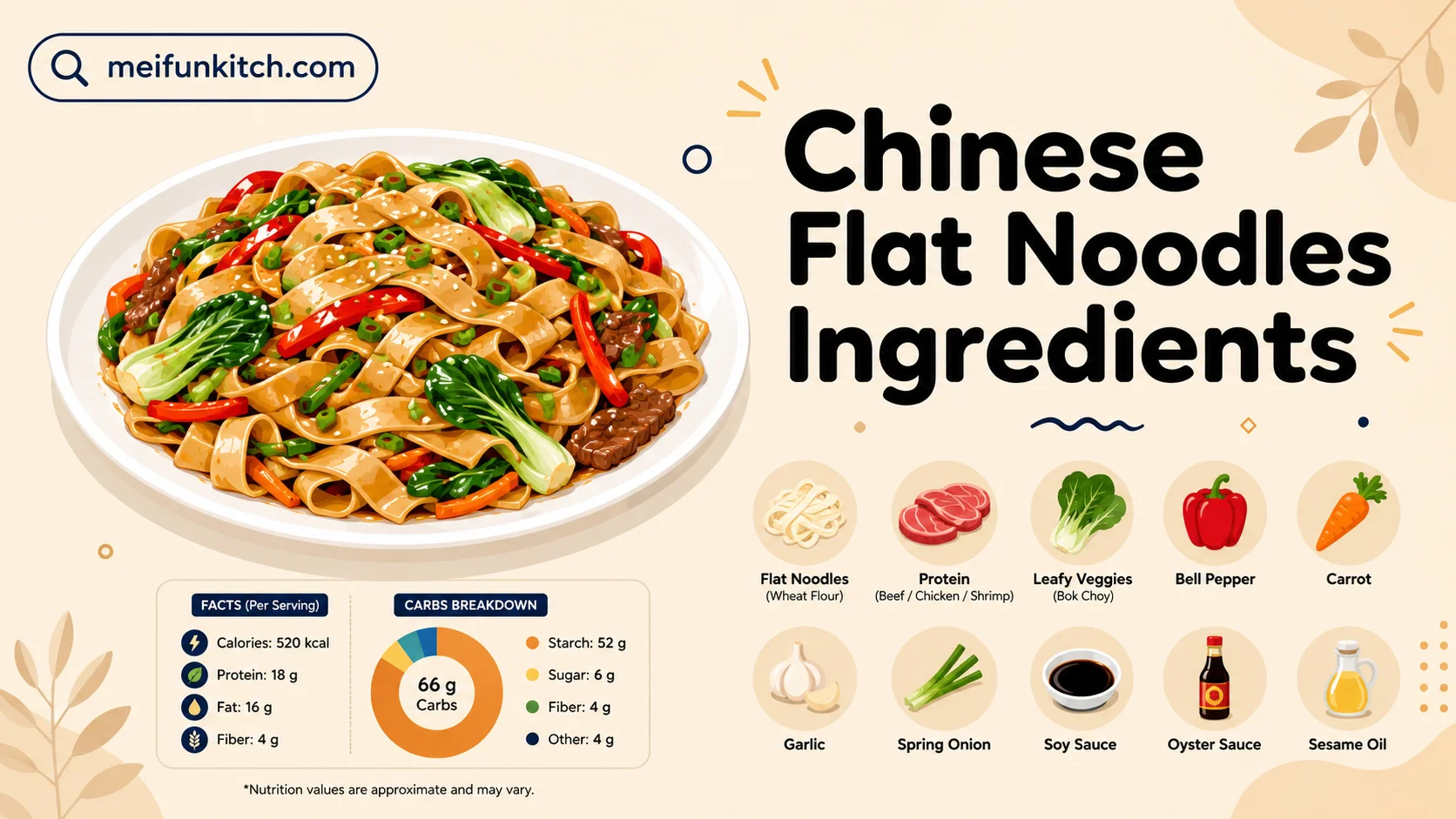
Chinese flat noodles are long, soft, and very tasty noodles that many people enjoy around the world. People often use these noodles in stir-fry dishes, soups, and spicy meals. They have a smooth texture, so they easily soak up sauces and flavors. Because of this, many families love to cook Chinese flat noodles at home for lunch or dinner.
These noodles come in different sizes and styles, but most are made from wheat flour, water, and salt. Some cooks make them fresh by hand, while others buy dried noodles from grocery stores. In many Chinese dishes, chefs add vegetables, chicken, beef, or seafood to create colorful and filling meals. Also, the noodles cook quickly, so they work well for busy families who want simple and delicious food.
Chinese flat noodles are popular because they taste great and fit many recipes. Some dishes are mild and comforting, while others are spicy and bold. In addition, people can enjoy these noodles in healthy meals with fresh vegetables and lean protein. As you read this guide, you will learn about the different types of Chinese flat noodles, how people cook them, and why they are loved in many kitchens around the world.
What Are Chinese Flat Noodles Made Of?
Common Ingredients Used in Flat Noodles
Many people enjoy flat noodles because they are soft, chewy, and easy to cook in many dishes. Most traditional Chinese noodles use simple ingredients like wheat flour, water, and salt. Some recipes also include oil or starch to improve texture and keep the noodles smooth. Because the ingredients are basic, cooks can prepare these noodles fresh at home or buy them dried from stores. Chinese Flat Noodles are popular in soups, stir-fries, and spicy meals because they absorb sauces very well.
Fresh noodle makers often knead the dough until it becomes stretchy and smooth. After that, they roll and cut the dough into long flat strips. Some regions in China use rice flour instead of wheat flour, especially for softer rice noodles. In addition, cooks sometimes add eggs to create a richer taste and firmer texture. These small ingredient changes create different noodle styles that work well in many recipes.
Today, many stores sell packaged flat noodles that are quick and convenient for busy families. However, homemade noodles often provide a fresher flavor and softer bite. Since the ingredients are simple, many people enjoy making noodles at home with family members. Freshly prepared noodles also work wonderfully in healthy meals with vegetables, chicken, or seafood.
Ingredient Comparison Table
| Feature | Wheat Flat Noodles | Rice Flat Noodles |
| Main Ingredient | Wheat flour | Rice flour |
| Texture | Chewy | Soft |
| Flavor | Mild and rich | Light |
| Color | Creamy white | Bright white |
| Gluten Content | Contains gluten | Usually gluten free |
| Cooking Time | Moderate | Quick |
| Popular Dishes | Stir fry and soups | Rice noodle dishes |
| Protein Level | Higher | Lower |
| Fiber Content | Moderate | Lower |
| Homemade Preparation | Easy | Moderate |
| Sauce Absorption | Excellent | Very good |
| Shelf Life | Longer | Shorter |
Chinese Flat Noodles vs Rice Noodles: What Is the Difference?
Comparing Texture, Taste, and Ingredients
Many people compare flat noodles and rice noodles because both appear in popular Asian dishes. However, they have important differences in texture, flavor, and ingredients. Wheat-based noodles usually feel chewy and rich, while rice noodles are softer and lighter. Since they absorb sauces differently, cooks choose specific noodles for different recipes. Chinese Flat Noodles often work best in stir-fried meals because their firm texture holds heavy sauces very well.
Rice noodles usually contain rice flour and water, which makes them naturally lighter in flavor. On the other hand, wheat noodles contain gluten, so they become more elastic and chewy during cooking. Many people prefer rice noodles in soups because they feel delicate and smooth. Meanwhile, wheat flat noodles create hearty dishes that feel more filling and satisfying.
Both noodle types can fit into healthy meal plans when people pair them with vegetables and lean proteins. In addition, each noodle style offers unique cooking experiences for home cooks. Rice noodles cook faster, but wheat flat noodles usually stay firmer during stir-frying. Understanding these differences helps people choose the best noodle type for their favorite meals.
Flat Noodles vs Rice Noodles Comparison
| Feature | Flat Noodles | Rice Noodles |
| Main Ingredient | Wheat flour | Rice flour |
| Texture | Chewy | Soft |
| Gluten Content | Contains gluten | Usually gluten free |
| Taste | Rich and hearty | Mild |
| Cooking Style | Stir fry and soups | Soups and salads |
| Cooking Time | Moderate | Fast |
| Color | Creamy white | Bright white |
| Sauce Holding | Excellent | Good |
| Popular Cuisine | Chinese dishes | Asian dishes |
| Protein Content | Higher | Lower |
| Best for Stir Fry | Excellent | Moderate |
| Shelf Stability | Longer lasting | Shorter shelf life |
Best Chinese Flat Noodles Recipes for Easy Family Meals
Delicious and Simple Meal Ideas
Families love noodle dishes because they are quick, filling, and full of flavor. Flat noodles work especially well in easy dinners because they cook quickly and blend nicely with vegetables and sauces. Many home cooks prepare stir-fried noodles with chicken, beef, shrimp, or tofu for balanced family meals. Chinese Flat Noodles make excellent comfort food because they create warm and satisfying dishes that both children and adults enjoy.
One popular recipe includes garlic, soy sauce, vegetables, and tender slices of beef. The noodles absorb the rich sauce while still keeping their chewy texture. Another favorite dish combines noodles with colorful vegetables and sesame oil for a lighter meal. In addition, spicy noodle dishes with chili sauce and mushrooms offer bold flavor for people who enjoy extra heat.
These noodles also work well for busy weeknights because they require only a few ingredients and little cooking time. Home cooks can prepare simple noodle meals in less than thirty minutes. Furthermore, leftovers taste delicious the next day, which makes meal planning easier for families. With fresh vegetables and healthy proteins, noodle dishes can become both tasty and nutritious.
Popular Family Meal Comparison
| Dish Type | Main Protein | Flavor Style |
| Beef Stir Fry Noodles | Beef | Savory |
| Chicken Garlic Noodles | Chicken | Mild garlic |
| Spicy Chili Noodles | Tofu or beef | Spicy |
| Vegetable Noodle Bowl | Vegetables | Fresh |
| Sesame Flat Noodles | Chicken | Nutty |
| Seafood Flat Noodles | Shrimp | Light seafood |
| Mushroom Soy Noodles | Mushrooms | Earthy |
| Sweet Soy Noodles | Chicken | Sweet and savory |
| Ginger Flat Noodles | Beef | Warm ginger |
| Garlic Shrimp Noodles | Shrimp | Rich garlic |
| Cold Noodle Salad | Vegetables | Refreshing |
| Egg Flat Noodles | Eggs | Comfort style |
How to Cook Chinese Flat Noodles Perfectly at Home
Easy Tips for Better Cooking Results
Cooking noodles correctly helps improve both texture and flavor. Many cooks start by boiling water and adding noodles carefully to prevent sticking. Fresh noodles usually cook faster than dried noodles, so checking texture during cooking is very important. Overcooked noodles can become too soft and lose their chewy bite. Chinese Flat Noodles taste best when they stay tender while still holding a slightly firm texture.
After boiling, many cooks rinse noodles lightly with cool water to stop the cooking process. This step also removes extra starch and keeps noodles from clumping together. Some recipes call for stir-frying the noodles after boiling, while others use them directly in soups. In addition, tossing noodles with a small amount of oil can help maintain smooth texture during preparation.
Good sauces and fresh ingredients also improve noodle dishes at home. Garlic, ginger, soy sauce, sesame oil, and vegetables create rich flavor without complicated cooking methods. Families can also add proteins like chicken, shrimp, tofu, or beef for complete meals. With practice and simple techniques, home cooks can prepare restaurant-style noodle dishes easily.
Cooking Method Comparison Table
| Cooking Step | Fresh Noodles | Dried Noodles |
| Cooking Time | Shorter | Longer |
| Texture | Softer | Firmer |
| Preparation | Minimal | Requires soaking or boiling |
| Best Use | Quick meals | Long storage |
| Water Needed | Moderate | More |
| Flavor Freshness | Higher | Moderate |
| Stir Fry Performance | Excellent | Good |
| Soup Use | Excellent | Very good |
| Shelf Life | Short | Long |
| Ease of Cooking | Easy | Moderate |
| Storage Method | Refrigerated | Pantry |
| Family Meal Use | Great for quick dinners | Great for meal prep |
Are Chinese Flat Noodles Healthy for Everyday Eating?
Nutritional Benefits and Balanced Meals
Flat noodles can become part of a healthy diet when people enjoy them with balanced ingredients and proper portion sizes. Wheat-based noodles provide carbohydrates that help supply energy throughout the day. Many families also combine noodles with vegetables, lean meats, and healthy sauces to create nutritious meals. Chinese Flat Noodles can support healthy eating habits when people avoid heavy oils and overly processed ingredients.
Vegetables such as carrots, broccoli, cabbage, and bell peppers add fiber, vitamins, and color to noodle dishes. Lean proteins like chicken, tofu, shrimp, and eggs also improve nutritional value while helping people feel full longer. In addition, homemade noodle dishes often contain less sodium and fewer preservatives compared to instant noodle products from stores.
People who want lighter meals can also choose rice-based flat noodles or whole-grain noodle options. Portion control remains important because noodles are rich in carbohydrates. However, when combined with fresh ingredients and healthy cooking methods, noodle dishes can fit well into many meal plans. Simple homemade recipes often provide better nutrition and flavor than fast-food alternatives.
Healthy Eating Comparison Table
| Feature | Homemade Flat Noodles | Instant Noodles |
| Sodium Level | Lower | Higher |
| Fresh Vegetables | Common | Limited |
| Protein Quality | Better | Moderate |
| Preservatives | Fewer | More |
| Cooking Method | Fresh cooking | Processed |
| Fiber Content | Higher with vegetables | Lower |
| Flavor Quality | Fresher | Artificial |
| Portion Control | Easier | Often oversized |
| Nutritional Balance | Better | Less balanced |
| Oil Content | Adjustable | Usually high |
| Meal Variety | Wide variety | Limited |
| Family Friendly | Highly suitable | Moderate |
Chinese Flat Noodles for Stir Fry: Best Cooking Tips
Simple Ways to Make Better Stir-Fry Noodles
Stir-fried noodles taste best when cooks use fresh ingredients and proper cooking methods. Many home cooks start by preparing vegetables, sauces, and proteins before heating the pan because stir-frying happens very quickly. Flat noodles work perfectly for this cooking style since they absorb sauces while still keeping a chewy texture. Chinese Flat Noodles are especially popular in stir-fry meals because they stay firm and flavorful even with rich sauces and high heat.
A very hot pan or wok helps create restaurant-style flavor and texture. Cooks usually add oil first, then garlic, ginger, vegetables, and protein before mixing in the noodles. Fresh noodles need only a short cooking time, while dried noodles may require soaking or boiling first. In addition, tossing the noodles gently prevents breaking and keeps the dish looking fresh and appealing.
Balanced sauces also improve stir-fried noodle dishes at home. Soy sauce, sesame oil, oyster sauce, chili sauce, and garlic create bold flavor without making the dish too heavy. Many families also add colorful vegetables like carrots, cabbage, broccoli, and bell peppers for extra nutrition. With the right preparation and cooking heat, stir-fried noodle dishes become quick, delicious, and satisfying meals.
Stir-Fry Cooking Tips Comparison
| Cooking Tip | Benefit |
| Use high heat | Creates better texture |
| Prepare ingredients early | Saves cooking time |
| Use fresh vegetables | Adds flavor and color |
| Do not overcook noodles | Keeps noodles chewy |
| Add sauce gradually | Prevents soggy noodles |
| Use a wok if possible | Distributes heat evenly |
| Stir constantly | Prevents sticking |
| Add sesame oil last | Improves aroma |
| Cook proteins first | Ensures even cooking |
| Rinse cooked noodles lightly | Removes extra starch |
| Use fresh garlic and ginger | Adds rich flavor |
| Avoid overcrowding the pan | Helps even cooking |
Where to Buy Chinese Flat Noodles Near You or Online
Best Places to Find Quality Flat Noodles
Many grocery stores now sell flat noodles because Asian dishes continue to grow in popularity around the world. Large supermarkets often carry both fresh and dried noodles in the international food section. Asian grocery stores usually provide the widest variety, including fresh handmade styles and specialty noodle brands. Chinese Flat Noodles are easy to find today because many people enjoy cooking restaurant-style meals at home.
Online shopping also gives customers access to many noodle brands and specialty products. Many websites sell fresh, dried, gluten-free, and organic noodle options with home delivery services. In addition, customer reviews help shoppers compare flavor, texture, and cooking quality before making purchases. Online stores often provide detailed ingredient information, which helps people choose products that match their dietary needs.
Local restaurants and Asian markets may also sell fresh noodles directly to customers. Fresh noodles usually have softer texture and richer flavor compared to dried versions. However, dried noodles last longer and work well for pantry storage. By comparing different shopping options, consumers can easily find noodles that fit both their budget and cooking preferences.
Buying Options Comparison Table
| Buying Place | Main Advantage |
| Asian grocery stores | Largest noodle selection |
| Supermarkets | Easy access |
| Online marketplaces | Wide brand variety |
| Local restaurants | Fresh noodle options |
| Specialty food stores | Premium products |
| Organic markets | Health-focused choices |
| Wholesale stores | Bulk buying |
| Farmers markets | Fresh handmade noodles |
| International food shops | Authentic ingredients |
| Online delivery apps | Convenience |
| Small local shops | Personalized service |
| Imported food stores | Traditional noodle brands |
Popular Chinese Flat Noodles Dishes You Should Try
Delicious Noodle Dishes Loved Around the World
Flat noodle dishes are famous for their rich flavor, chewy texture, and colorful ingredients. Many traditional Chinese meals combine noodles with vegetables, meats, seafood, and savory sauces. Some dishes are mild and comforting, while others include spicy chili oils and bold seasonings. Chinese Flat Noodles appear in many restaurant favorites because they hold sauces very well and create filling meals for families.
Beef chow fun is one of the most popular flat noodle dishes in Chinese cuisine. This meal combines tender beef, soy sauce, onions, and bean sprouts with chewy noodles cooked over high heat. Another popular option includes spicy flat noodles with garlic, chili paste, and fresh vegetables. In addition, seafood noodle dishes with shrimp and scallions provide lighter flavor while still feeling rich and satisfying.
Many noodle dishes also allow people to customize flavors and ingredients based on personal taste. Vegetarian versions often include mushrooms, tofu, cabbage, and carrots for healthy and colorful meals. Sweet soy noodle dishes create milder flavor for children and people who prefer less spice. Because these dishes are flexible and easy to prepare, flat noodles continue to remain a favorite comfort food around the world.
Popular Flat Noodle Dish Comparison
| Dish Name | Main Flavor |
| Beef Chow Fun | Savory |
| Spicy Chili Noodles | Hot and spicy |
| Garlic Chicken Noodles | Rich garlic |
| Seafood Flat Noodles | Light seafood |
| Vegetable Stir Fry Noodles | Fresh and mild |
| Sesame Flat Noodles | Nutty |
| Mushroom Soy Noodles | Earthy |
| Sweet Soy Noodles | Sweet and savory |
| Ginger Beef Noodles | Warm ginger |
| Tofu Stir Fry Noodles | Light and healthy |
| Shrimp Garlic Noodles | Bold seafood |
| Cold Noodle Salad | Refreshing |
How Chinese Flat Noodles Taste Compared to Lo Mein and Udon
Comparing Flavor and Texture
Different noodle types create unique eating experiences because each one has its own texture and flavor. Flat noodles usually feel chewy and smooth while soaking up rich sauces very well. Lo mein noodles are softer and thinner, while udon noodles are thick, soft, and very chewy. Chinese Flat Noodles often provide a stronger bite and firmer texture compared to other popular noodle varieties.
Lo mein noodles usually contain wheat flour and work best in saucy stir-fried dishes. They have a softer texture and mild flavor that blends easily with vegetables and meats. Udon noodles, which come from Japanese cuisine, feel thicker and heavier than flat noodles. Many people enjoy udon in soups because the noodles create a warm and comforting texture.
Flat noodles stand out because they balance chewiness and sauce absorption very well. Their broad shape allows them to carry savory sauces more effectively than thinner noodles. In addition, flat noodles work beautifully in spicy dishes because they hold flavor in every bite. Understanding these texture and flavor differences helps people choose the perfect noodle type for their meals.
Noodle Texture and Flavor Comparison
| Feature | Flat Noodles | Lo Mein | Udon |
| Texture | Chewy | Soft | Thick and chewy |
| Flavor | Mild and rich | Mild | Light |
| Thickness | Wide and flat | Thin | Thick |
| Sauce Absorption | Excellent | Good | Moderate |
| Main Cuisine | Chinese | Chinese | Japanese |
| Cooking Style | Stir fry and soups | Stir fry | Soups |
| Chewiness | High | Moderate | Very high |
| Shape | Flat strips | Round strands | Thick strands |
| Best Flavor Pairing | Savory sauces | Light sauces | Broths |
| Popular Use | Stir fry dishes | Mixed noodle dishes | Soup meals |
| Weight Feeling | Medium | Light | Heavy |
| Family Meal Appeal | Very popular | Popular | Comfort food |
Easy Homemade Chinese Flat Noodles Recipe for Beginners
Beginner-Friendly Homemade Noodle Guide
Homemade noodles can feel fun and rewarding because people control the ingredients and texture from start to finish. Most basic noodle recipes use simple ingredients like flour, water, salt, and a little oil. After mixing the dough, cooks knead it until smooth and stretchy before rolling it flat and cutting it into strips. Chinese Flat Noodles are easy for beginners because the recipe uses simple steps and common kitchen tools.
Fresh noodle dough should rest for a short time before rolling because resting helps improve texture and flexibility. Many cooks dust the dough lightly with flour to prevent sticking during rolling and cutting. After cutting the noodles, people can boil them for only a few minutes until tender. In addition, fresh homemade noodles taste softer and fresher than many packaged products from stores.
Homemade noodles work wonderfully in soups, stir-fries, and spicy dishes with vegetables and proteins. Families often enjoy making noodles together because the process feels creative and enjoyable. Fresh noodles also allow people to adjust thickness and size based on personal preference. With practice and patience, beginners can create delicious homemade noodle dishes that taste fresh and comforting.
Homemade vs Store-Bought Noodles Comparison
| Feature | Homemade Noodles | Store-Bought Noodles |
| Freshness | Very fresh | Moderate |
| Ingredient Control | Full control | Limited |
| Texture | Softer | Firmer |
| Flavor | Rich and natural | Standard |
| Preparation Time | Longer | Quick |
| Shelf Life | Short | Longer |
| Cooking Experience | Fun and creative | Convenient |
| Additives | Usually none | Sometimes included |
| Cost | Budget friendly | Varies |
| Family Activity | Great for families | Limited involvement |
| Customization | Easy | Limited |
| Meal Quality | Restaurant style | Standard |
Conclusion
Chinese flat noodles are loved by many people because they are soft, chewy, and full of flavor. They work perfectly in stir-fries, soups, spicy dishes, and simple homemade meals. Since these noodles absorb sauces so well, they create rich and satisfying dishes that families enjoy around the world. In addition, cooks can pair them with vegetables, chicken, beef, tofu, or seafood to make balanced and delicious meals for any occasion.
Chinese Flat Noodles are also easy to prepare at home, which makes them a great choice for busy families and beginner cooks. Fresh noodles provide soft texture and authentic flavor, while dried noodles offer convenience and long storage life. Moreover, these noodles fit many cooking styles, from light healthy dishes to bold restaurant-style recipes. Whether you enjoy classic stir-fried noodles or comforting noodle soups, flat noodles can bring warmth and flavor to your table. With simple ingredients and endless recipe ideas, they continue to remain a favorite comfort food in many kitchens worldwide.
FAQs
What are Chinese flat noodles made from?
Chinese flat noodles are usually made from wheat flour, water, and salt. Some recipes also use rice flour for softer noodles. Fresh noodles often have a chewy texture, while rice-based noodles feel lighter and smoother in soups and stir-fry dishes.
Are Chinese flat noodles healthy?
Chinese flat noodles can be healthy when people combine them with vegetables, lean proteins, and light sauces. Homemade noodle dishes often contain fewer preservatives and less sodium than instant noodles, which makes them a better choice for balanced meals.
What dishes use Chinese flat noodles?
Many popular dishes use flat noodles, including beef chow fun, spicy stir-fried noodles, garlic chicken noodles, and seafood noodle soups. These noodles work well in both mild and spicy recipes because they absorb sauces very effectively.
How do you cook Chinese flat noodles?
Most flat noodles cook quickly in boiling water. Fresh noodles usually need only a few minutes, while dried noodles may require soaking or longer cooking time. After boiling, cooks often stir-fry them with sauces, vegetables, and protein.
Are Chinese flat noodles gluten free?
Most wheat-based flat noodles contain gluten because they use wheat flour. However, some rice flat noodles are naturally gluten free. Checking ingredient labels helps people choose the best option for their dietary needs.
What is the difference between flat noodles and lo mein?
Flat noodles are wider and chewier than lo mein noodles. Lo mein noodles are usually thinner and softer, while flat noodles hold thick sauces better in stir-fried dishes and hearty meals.
Can I make Chinese flat noodles at home?
Yes, many people make flat noodles at home using simple ingredients like flour, water, and salt. Homemade noodles often taste fresher and allow cooks to control thickness, texture, and ingredients more easily.
Where can I buy Chinese flat noodles?
You can buy flat noodles in supermarkets, Asian grocery stores, specialty food shops, and online marketplaces. Many stores sell both fresh and dried noodle varieties for different recipes and cooking styles.
Why are Chinese flat noodles popular in stir fry?
Flat noodles work perfectly in stir fry because they stay chewy and absorb sauces well. Their wide shape also helps them mix evenly with vegetables, meats, and flavorful seasonings during cooking.
Can children eat Chinese flat noodles?
Yes, children often enjoy flat noodles because they are soft, easy to chew, and mild in flavor. Families can prepare kid-friendly noodle dishes with vegetables, eggs, and light sauces for healthy and tasty meals.

Smith
Author103 Published Articles
James Smith is a dedicated food writer and recipe enthusiast who specializes in creating informative content about noodles, pasta, rice dishes, comfort foods, and a wide variety of global cuisines. He is passionate about sharing easy-to-follow recipes, cooking techniques, ingredient guides, nutrition facts, and meal preparation tips that help readers cook with confidence. From classic noodle dishes and homemade sauces to healthy meal ideas and international favorites, James focuses on delivering well-researched, practical, and engaging content for home cooks of all skill levels. His goal is to make cooking enjoyable, accessible, and inspiring by providing reliable recipes and food knowledge that readers can trust.
EducationM.Sc. in Food and Nutrition.
Experience8 Years.
ExpertiseWrites about Noodles and Many Other Foods