
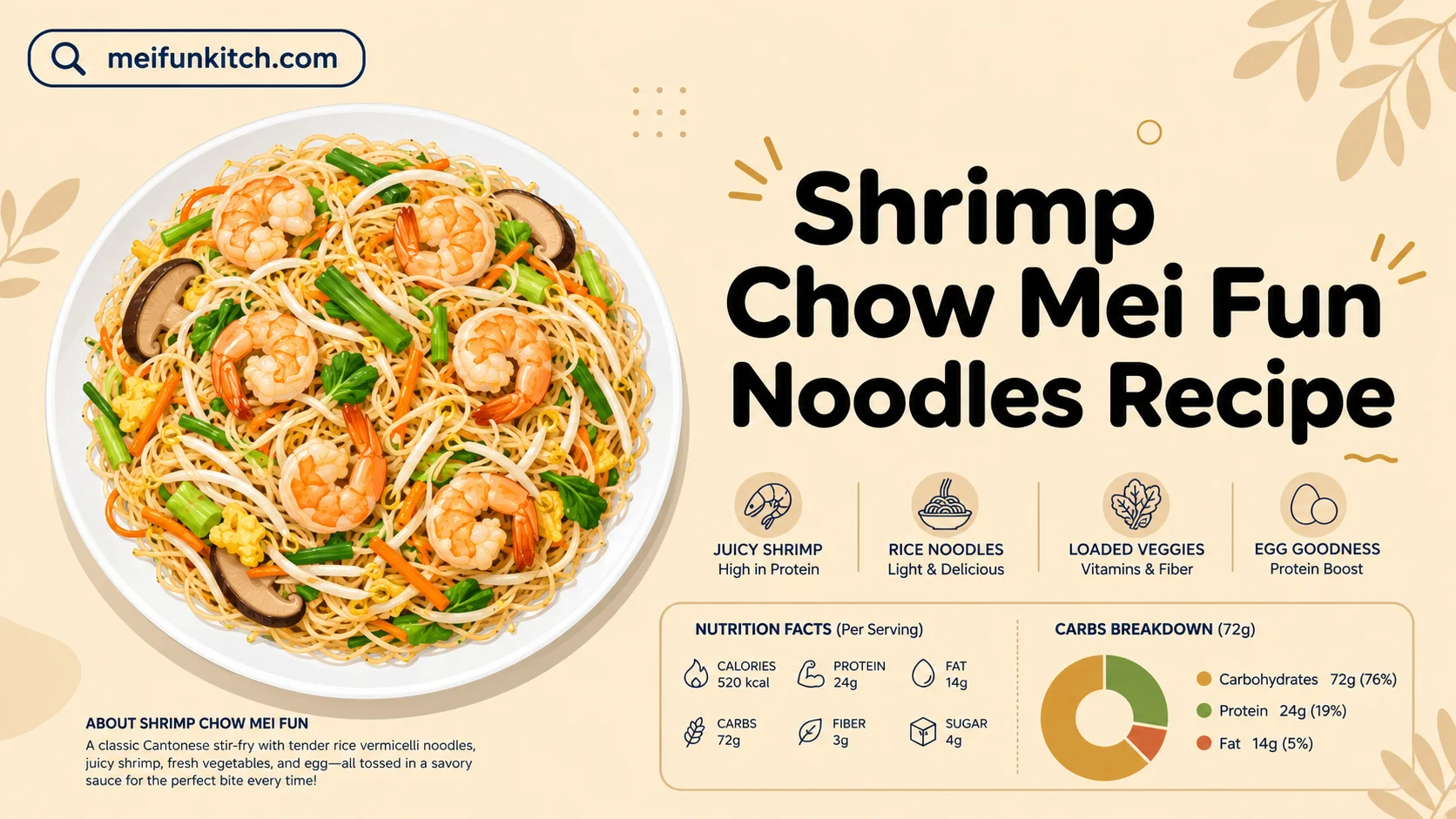
Shrimp Chow Mei Fun Noodles Recipe combines juicy shrimp, soft rice vermicelli noodles, colorful vegetables, and savory seasonings to create a flavorful Chinese-inspired dish. Cooks and food lovers enjoy this popular stir-fry for its light texture, delicious taste, and quick preparation time.The combination of tender shrimp and delicate mei fun noodles creates a satisfying dish that feels both comforting and restaurant-quality. It is a perfect option for anyone craving homemade takeout-style noodles with fresh ingredients and bold flavor.
One of the best things about this Shrimp Chow Mei Fun Noodles Recipe is how simple and versatile it is to prepare. The thin rice noodles absorb the rich sauce beautifully while staying light and easy to eat. Fresh vegetables like carrots, cabbage, onions, and bell peppers add crunch, color, and nutrition to every bite.Whether you’re preparing a family dinner, a weekend lunch, or a quick weekday meal, you can easily customize this shrimp noodle recipe with your favorite vegetables and seasonings.
This easy Shrimp Chow Mei Fun Noodles Recipe is also ideal for seafood lovers who want a fast and delicious meal without spending hours in the kitchen. The shrimp cooks quickly, making this dish perfect for busy schedules while still delivering authentic Asian-inspired flavor.Serve these savory stir-fried noodles hot and fresh from the wok, and enjoy their rich aroma, satisfying texture, and delicious flavor. Once you try this homemade chow mei fun recipe, it may become one of your favorite noodle dishes to make again and again.
Vegetables That Go Perfect in Chow Mei Fun
Classic Vegetables Used in Authentic Chow Mei Fun
Vegetables play a major role in creating the balanced flavor and texture that makes Shrimp Chow Mei Fun Noodles Recipe so popular. Traditional Chinese-style chow mei fun usually includes cabbage, carrots, onions, bean sprouts, and green onions because these vegetables cook quickly while maintaining a slight crunch. Cabbage becomes slightly sweet during stir-frying, while carrots add natural color and mild earthy flavor. Bean sprouts are especially important because they provide freshness and a light crisp texture that contrasts perfectly with the soft rice vermicelli noodles.
Adding More Vegetables for Better Nutrition
Many home cooks like adding extra vegetables to make the dish healthier and more colorful. Bell peppers, mushrooms, snap peas, baby corn, bok choy, broccoli, and snow peas all work well in chow mei fun recipes. These vegetables increase fiber, vitamins, and texture while making the meal more filling. Using a mix of colorful vegetables also improves visual appeal, which makes homemade chow mei fun look more like restaurant-quality food. Fresh vegetables should always be sliced thinly so they cook evenly during high-heat stir-frying.
Best Cooking Method for Crisp Vegetables
One secret to perfect vegetables in Shrimp Chow Mei Fun is avoiding overcooking. Vegetables should remain slightly crisp instead of becoming soft and watery. Stir-frying over high heat for a short time keeps the vegetables vibrant and flavorful. Professional chefs often cook hard vegetables like carrots first and softer vegetables later to maintain balanced texture. Adding bean sprouts and green onions near the end of cooking helps preserve freshness and aroma.
Best Vegetables Comparison Table
| Vegetable | Flavor | Texture | Best Cooking Stage |
| Cabbage | Mild sweet flavor | Slight crunch | Mid cooking |
| Carrots | Earthy sweetness | Firm crispness | Early cooking |
| Bean Sprouts | Fresh and mild | Crunchy | Final stage |
| Bell Peppers | Sweet flavor | Crisp | Mid cooking |
| Mushrooms | Umami richness | Soft and juicy | Early cooking |
| Bok Choy | Light earthy taste | Tender crunch | Mid cooking |
| Green Onions | Sharp aroma | Soft | Final garnish |
| Snow Peas | Sweet fresh flavor | Crisp | Quick stir-fry |
Step-by-Step Cooking Instructions
Preparing Ingredients Before Cooking
The first step in making Shrimp Chow Mei Fun Noodles Recipe is preparing all ingredients before turning on the heat. Since stir-frying happens very quickly, prepare and organize all ingredients before you start cooking. Soak the rice vermicelli noodles until soft, cut the vegetables into thin strips, and clean and marinate the shrimp.Organizing ingredients ahead of time allows the cooking process to move smoothly and prevents overcooking.
Cooking Shrimp and Vegetables
Heat a wok or large skillet over high heat and add cooking oil. The shrimp should be cooked first because it takes only a few minutes to turn pink and juicy. Remove the shrimp temporarily after cooking to avoid overcooking later. Next, stir-fry garlic, onions, carrots, cabbage, and other vegetables until slightly tender but still crisp. Cooking vegetables quickly at high heat creates the smoky wok flavor often found in restaurant-style Chinese dishes.
Combining Noodles and Sauce
After the vegetables cook, add the softened rice noodles to the wok along with soy sauce, oyster sauce, sesame oil, white pepper, and any other seasonings. Toss everything gently to coat the noodles evenly without breaking them apart. Finally, return the cooked shrimp to the pan and mix until heated through. Garnish with green onions and serve hot for the best flavor and texture.
Cooking Process Comparison Table
| Step | Purpose | Key Tip | Result |
| Soak Noodles | Soften rice noodles | Do not over-soak | Perfect texture |
| Cook Shrimp | Build seafood flavor | Cook quickly | Juicy shrimp |
| Stir-Fry Vegetables | Add crunch | High heat cooking | Crisp texture |
| Add Sauce | Flavor noodles | Toss evenly | Balanced seasoning |
| Combine Ingredients | Blend flavors | Gentle mixing | Restaurant-style dish |
How to Soak Rice Noodles Properly
Importance of Proper Noodle Soaking
Correctly soaking rice vermicelli noodles is one of the most important steps in making perfect Shrimp Chow Mei Fun Noodles Recipe. If you under-soak the noodles, they will remain hard and difficult to stir-fry. If you soak them for too long, they will become mushy and sticky during cooking.Proper soaking ensures the noodles remain soft, flexible, and slightly chewy after stir-frying.
Best Water Temperature for Soaking
Most rice vermicelli noodles soften best in warm water instead of boiling water. Warm water allows the noodles to absorb moisture gradually without becoming too fragile. Thin noodles may need only 5 to 10 minutes, while thicker rice sticks can require longer soaking times. The noodles should feel flexible but not fully soft because they continue cooking in the wok later.
Preventing Sticky or Mushy Noodles
After soaking, noodles should be drained thoroughly and lightly tossed with a small amount of oil to prevent sticking. Overcrowding the wok can also make noodles clump together because steam builds up quickly. Professional cooks often use high heat and quick tossing techniques to keep noodles separated and evenly coated with sauce.
Rice Noodle Soaking Comparison Table
| Soaking Method | Water Type | Result | Best For |
| Warm Water Soak | Warm water | Balanced texture | Chow Mei Fun |
| Boiling Water Soak | Hot boiling water | Mushy noodles | Not recommended |
| Cold Water Soak | Cold water | Slow softening | Thick noodles |
| Oil-Coated Noodles | Light oil coating | Less sticking | Stir-frying |
Secrets to Authentic Restaurant-Style Flavor
Using High Heat and a Wok
One of the biggest secrets behind restaurant-quality Shrimp Chow Mei Fun Noodles Recipe is cooking over extremely high heat. Chinese restaurants use powerful burners that create smoky flavor known as “wok hei.” This flavor develops when noodles, shrimp, vegetables, and sauces cook quickly while lightly charring. A wok works better than a regular frying pan because its curved shape distributes heat evenly and allows ingredients to cook rapidly.
Balancing Sauces and Seasonings
Authentic chow mei fun relies on balanced seasoning rather than heavy sauces. Soy sauce provides saltiness, oyster sauce adds umami depth, sesame oil gives nutty aroma, and white pepper creates mild heat. Some cooks also add curry powder for the yellow-colored Cantonese-style variation. Using too much sauce can overpower the noodles, so the seasoning should lightly coat the ingredients without making them soggy.
Fresh Ingredients Make a Difference
Fresh shrimp, crisp vegetables, and quality rice noodles create noticeable improvements in flavor and texture. Restaurants often prepare ingredients daily to maintain freshness and consistency. Garlic, green onions, and sesame oil should also be fresh because aromatic ingredients lose strength over time. Proper ingredient preparation combined with high-heat cooking produces the signature restaurant-style taste people love.
Restaurant Flavor Secrets Table
| Secret Technique | Why It Matters | Flavor Result |
| High Heat Cooking | Creates smoky aroma | Authentic taste |
| Wok Cooking | Even heat distribution | Better texture |
| Balanced Sauce | Prevents sogginess | Rich flavor |
| Fresh Ingredients | Enhances quality | Cleaner taste |
| Quick Stir-Frying | Maintains crispness | Better texture |
| Sesame Oil Finish | Adds aroma | Nutty flavor |
Sauce Used in Shrimp Chow Mei Fun
Core Sauces for Authentic Taste
The sauce is the heart of every Shrimp Chow Mei Fun Noodles Recipe because it gives the noodles their savory and slightly smoky flavor. Traditional recipes usually combine soy sauce, oyster sauce, sesame oil, white pepper, and a small amount of sugar. Soy sauce acts as the primary seasoning, while oyster sauce adds deep umami richness that enhances the shrimp and vegetables.
Balancing Salty, Sweet, and Savory Flavors
A good chow mei fun sauce should taste balanced rather than overly salty. Some recipes include chicken broth, fish sauce, or Shaoxing wine for added depth. Sugar helps balance salty flavors while white pepper provides mild heat without overpowering the seafood. Sesame oil is usually added at the end because its aroma becomes stronger when used as a finishing ingredient.
Light Sauce vs Heavy Sauce
Unlike many noodle dishes, Shrimp Chow Mei Fun uses a lighter coating of sauce so the noodles remain soft and separate rather than drenched. Too much sauce can make the rice noodles sticky and heavy. Professional cooks toss noodles quickly to distribute sauce evenly while preserving texture and preventing clumping.
Sauce Ingredient Comparison Table
| Sauce Ingredient | Flavor Role | Best Usage |
| Soy Sauce | Salty umami | Main seasoning |
| Oyster Sauce | Rich savory taste | Depth of flavor |
| Sesame Oil | Nutty aroma | Final finishing |
| White Pepper | Mild spice | Flavor balance |
| Sugar | Sweet balance | Reduce saltiness |
| Fish Sauce | Seafood depth | Optional enhancement |
| Shaoxing Wine | Authentic aroma | Restaurant-style flavor |
Conclusion About Shrimp Chow Mei Fun Noodles Recipe
Shrimp Chow Mei Fun Noodles Recipe is the perfect combination of light rice vermicelli noodles, juicy shrimp, crisp vegetables, and savory Asian-inspired flavors. People love this classic Chinese noodle dish for its quick cooking time, delicious texture, and restaurant-style flavor that they can easily recreate at home.Whether you are preparing a fast family dinner, a comforting weekend meal, or a homemade takeout alternative, this recipe delivers satisfying flavor in every bite. The balance of soft noodles, tender seafood, and flavorful sauce makes it both comforting and versatile for different taste preferences. You can customize the vegetables, spice level, or seasonings to create your own unique version while still keeping the authentic chow mei fun experience. Once you master the simple stir-fry techniques and noodle preparation tips, this Shrimp Chow Mei Fun recipe can quickly become one of your favorite homemade Asian noodle dishes.
FAQs
What is Shrimp Chow Mei Fun made of?
Shrimp Chow Mei Fun is made with thin rice vermicelli noodles, shrimp, vegetables, soy sauce, sesame oil, garlic, and seasonings. Common vegetables include cabbage, carrots, onions, and bean sprouts. The dish is stir-fried over high heat to create a flavorful and slightly smoky restaurant-style texture.
Are mei fun noodles the same as rice noodles?
Yes, mei fun noodles are a type of thin rice noodle often called rice vermicelli. Manufacturers make them from rice flour and water, which gives them a light and delicate texture. Many cooks use these noodles in Chinese and Asian stir-fry dishes because they absorb sauces very well.
How do you keep rice noodles from sticking together?
To prevent rice noodles from sticking, soak them properly without overcooking and drain them thoroughly before stir-frying. Tossing the noodles lightly with oil also helps keep them separated. Cooking over high heat and stirring gently during frying improves texture and prevents clumping.
Can I use frozen shrimp for chow mei fun?
Yes, frozen shrimp works well for Shrimp Chow Mei Fun Noodles Recipe when properly thawed. Place the shrimp in cold water or refrigerate overnight before cooking. Pat the shrimp dry to remove excess moisture so they cook evenly and develop better flavor in the wok.
What vegetables taste best in chow mei fun?
Cabbage, carrots, bean sprouts, onions, bell peppers, mushrooms, and green onions are some of the best vegetables for chow mei fun. These vegetables add crunch, color, and freshness while balancing the soft texture of the rice noodles and tender shrimp.
Is Shrimp Chow Mei Fun spicy?
Traditional Shrimp Chow Mei Fun is usually mild rather than spicy. However, you can easily make it spicy by adding chili oil, crushed red pepper, sriracha sauce, or fresh chili peppers. The spice level can be adjusted based on personal taste preferences.
What sauce is used in Shrimp Chow Mei Fun?
The sauce typically includes soy sauce, oyster sauce, sesame oil, white pepper, and a small amount of sugar. Some recipes also include fish sauce or Shaoxing wine for deeper flavor. The sauce lightly coats the noodles instead of making them overly heavy or soggy.
Can I make chow mei fun without a wok?
Yes, you can make Shrimp Chow Mei Fun without a wok by using a large skillet or frying pan. A wok works best because it distributes heat evenly and creates smoky flavor, but a hot nonstick or stainless-steel pan can still produce delicious results.
How long does Shrimp Chow Mei Fun last in the refrigerator?
Shrimp Chow Mei Fun can usually last up to three days when stored in an airtight container in the refrigerator. Reheat it quickly in a skillet over medium heat for the best texture. Avoid overheating because rice noodles can become soft and sticky.
Is Shrimp Chow Mei Fun gluten-free?
Shrimp Chow Mei Fun can be gluten-free if gluten-free soy sauce and sauces are used. Rice vermicelli noodles themselves are generally gluten-free because they are made from rice flour. Always check sauce labels carefully if preparing the dish for someone with gluten sensitivity.

George Eliot
Author63 Published Articles
George Eliot is a passionate recipe writer and home cooking enthusiast dedicated to sharing simple, flavorful, and reliable recipes for everyday meals. With a love for fresh ingredients and practical cooking techniques, George creates easy-to-follow recipes that help home cooks of all skill levels prepare delicious breakfasts, lunches, dinners, desserts, and snacks. In addition to developing recipes, George shares helpful cooking tips, ingredient guides, and nutrition insights to inspire readers to cook with confidence and enjoy homemade food. Every recipe is carefully crafted, tested, and written with the goal of making home cooking enjoyable, accessible, and rewarding for families and food lovers alike.
EducationPostgraduate Diploma in Nutrition.
Experience5 Years.
ExpertiseWrite about Recipes, Nutrition Facts