
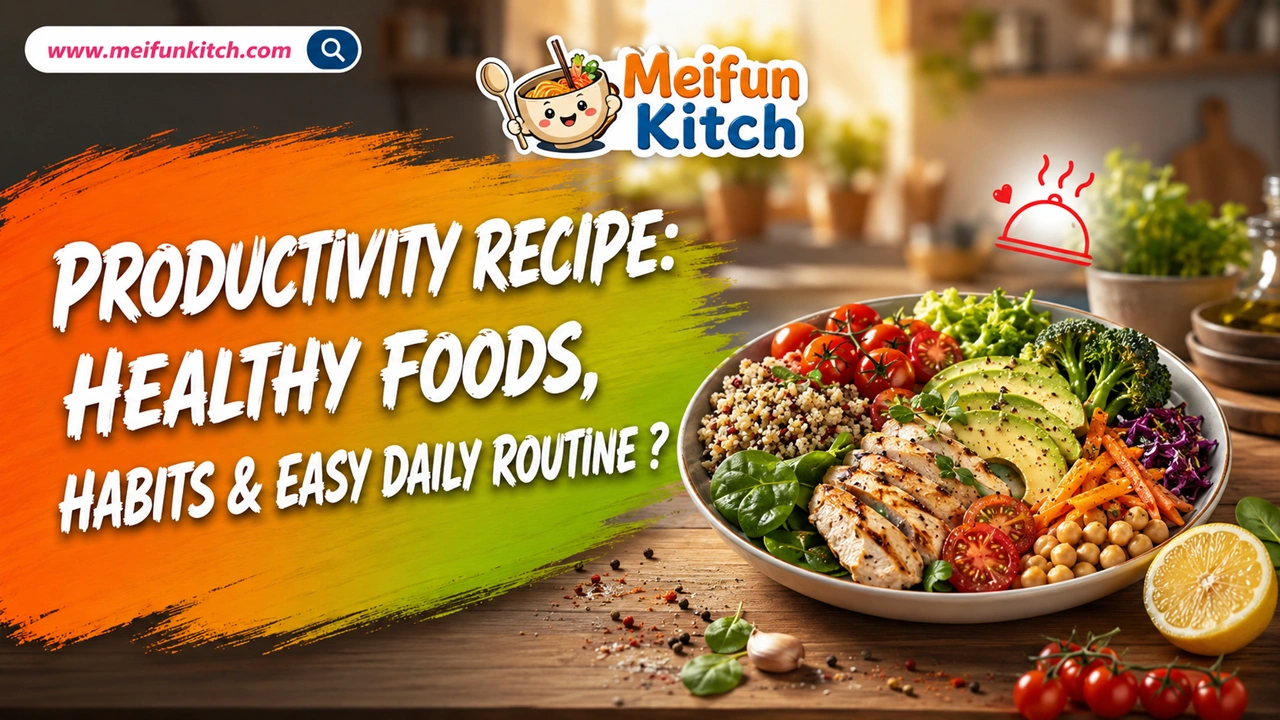
A productivity recipe is a simple combination of healthy foods, useful habits, smart time management, focused work, and proper recovery. Just like a cooking recipe brings different ingredients together, a productivity recipe combines several small actions that can help you stay focused and make steady progress. The goal is not to work every minute of the day. Instead, it is about creating a balanced routine that supports your energy, attention, and important goals.
Many people try to become more productive by using new apps, making long to-do lists, or following complicated morning routines. These methods can help, but they do not always solve the real problem. A better approach is to create a simple system that fits your real life. This system can include healthy meals, proper hydration, focused work sessions, short breaks, movement, good sleep, and a comfortable workspace.
The best productivity recipe is different for everyone. A student may need a strong study routine, while a professional may need better time management and meal preparation. A remote worker may need clear boundaries between work and home. Therefore, you should use this guide as a flexible framework and adjust each part according to your schedule, energy levels, responsibilities, and personal goals.
What Is a Productivity Recipe?
Understanding the Productivity Recipe Concept
A productivity recipe is a repeatable combination of habits, food choices, timing, environment, and work methods that can help you create a more organized daily routine.
The concept is similar to a cooking recipe. A meal needs several ingredients to create the desired result. Productivity can work in the same way. Your sleep, meals, work schedule, focus habits, environment, movement, and recovery can all influence how your day feels.
A productivity recipe does not mean working continuously. Rest is also an important ingredient. Without enough recovery, even a well-planned schedule can become difficult to maintain.
Why a Productivity Recipe Works
A productivity recipe works because it looks at your entire routine instead of focusing on one productivity trick.
For example, imagine starting your day without breakfast, checking social media for an hour, responding to messages, and then trying to complete an important task. Even with a good task-management app, your routine may still feel difficult.
Now imagine starting with a simple breakfast, planning your priorities, putting your phone away, completing one focused work session, taking a short break, and eating a prepared lunch. The difference comes from the complete system.
This approach also gives you flexibility. If one part of your routine does not work, you can change that ingredient without rebuilding your entire day.
Productivity Recipe vs. a To-Do List
A to-do list mainly tells you what you need to do. A productivity recipe looks at how you can create the right conditions to complete those tasks.
For example, a to-do list may include:
- Write an article
- Answer emails
- Prepare lunch
- Study for an exam
- Complete a work project
A productivity recipe goes further. It asks when you should complete these tasks, when your focus is strongest, what you should eat before demanding work, when you should take breaks, and how you can reduce distractions.
This makes the productivity recipe broader than a simple task list.
Essential Ingredients of a Productivity Recipe
Focus, Intention, and Awareness
Focus is one of the most important ingredients in any productivity recipe. It means giving your attention to one important activity instead of constantly switching between different tasks.
Intention means deciding what you want to accomplish before your day becomes busy. Instead of reacting to every notification, message, and request, you identify the tasks that matter most.
Awareness helps you understand your own patterns. You may discover that you focus better in the morning or that certain meals make you feel less energetic during the afternoon.
When you understand these patterns, you can build a routine around them.
Time Management and Planning: Productivity Recipe
Time management gives structure to your productivity recipe.
You can use time-blocking to reserve specific periods for important tasks. You can also group similar tasks together to reduce unnecessary switching.
For example, instead of checking emails every few minutes, choose two specific periods for email. This leaves larger blocks of uninterrupted time for meaningful work.
Healthy Food and Nutrition
Food is another useful part of a productivity recipe.
A balanced eating routine can make your day easier to manage. Instead of relying on random snacks or skipping meals, plan simple foods that fit your schedule and preferences.
Useful food choices can include:
- Oats
- Eggs
- Greek yogurt
- Whole grains
- Chicken
- Beans and lentils
- Vegetables
- Fresh fruit
- Nuts and seeds
- Avocado
- Fish
- Water
The goal is not to follow a complicated diet. The goal is to make your meals practical, balanced, and easy to maintain.
Movement and Breaks
Long periods of sitting and continuous screen time can make your routine feel tiring.
Short breaks give you an opportunity to stand, stretch, walk, drink water, or rest your eyes.
You do not need a long workout during every break. A few minutes of movement can help divide long periods of sitting and screen work.
Sleep and Recovery
Sleep should also be part of your productivity recipe.
If you regularly sacrifice sleep to complete more work, your routine may become harder to maintain. Recovery gives you time away from demanding tasks and helps create a more sustainable schedule.
The goal is to build a routine that works today and remains practical tomorrow.
How to Build Your Personal Productivity Recipe
Start With a Daily Audit
Before changing your routine, spend a few days observing it.
Write down when you wake up, eat meals, work, study, use your phone, take breaks, exercise, go to sleep, and lose focus.
This simple audit can reveal where your time and energy are going.
Find Your Most Productive Hours
Pay attention to your strongest focus periods.
Some people prefer difficult tasks early in the morning. Others work better later in the day.
Once you know your best hours, protect them for important work whenever possible.
Choose Your Top Priorities
Do not begin every day with a huge list of tasks.
Choose one to three important priorities.
Ask yourself:
- What must be completed today?
- What task creates the most value?
- What can wait until tomorrow?
This approach can make your day feel more manageable.
Remove One Major Distraction
You do not need to remove every distraction. Start with the biggest one.
If your phone constantly interrupts you, keep it away during focus sessions.
And If social media takes too much time, turn off unnecessary notifications or avoid opening it during your focus period.
If unnecessary browser tabs distract you, close them before starting work.
Small environmental changes can make focused work easier.
Create a Weekly Review
At the end of each week, review your productivity recipe.
Ask yourself:
- Which habits worked?
- Which habits were difficult?
- When was my energy highest?
- Which meals were easiest to prepare?
- What caused distractions?
- Which tasks took longer than expected?
- What should I change next week?
This weekly review helps you improve gradually instead of constantly starting over.
Morning Productivity Recipe
Create a Simple Morning Routine
A productive morning does not need ten different habits.
A simple routine can include drinking water after waking, doing light stretching or walking, avoiding unnecessary phone use, choosing your main priorities, eating a balanced breakfast, and starting your most important task during your best focus period.
The purpose of a morning routine is to create a calm starting point for your day.
Easy Breakfast Ideas for Productivity
Breakfast can be simple, nutritious, and quick.
Try these options:
- Oatmeal with berries and nuts
- Eggs with whole-grain toast
- Greek yogurt with fruit
- Vegetable omelet
- Overnight oats
- Banana and nut butter toast
- Egg and vegetable sandwich
- Whole-grain breakfast wrap
You do not need a different complicated breakfast every day. Repeating a few easy meals can save time and reduce decision-making.
How to Prepare Breakfast Faster
If mornings are busy, prepare some ingredients the night before.
You can prepare overnight oats, wash fruit, boil eggs, or portion nuts in advance.
This turns breakfast into a simple routine instead of a morning decision.
Healthy Foods for a Productivity Recipe
Complex Carbohydrates
Complex carbohydrates can be included in balanced meals.
Examples include:
- Oats
- Brown rice
- Quinoa
- Whole-grain bread
- Whole-grain pasta
- Potatoes
These foods can be used in simple breakfasts, lunches, and dinners.
Protein-Rich Foods
Protein can be included in many practical meals.
Examples include:
- Eggs
- Chicken
- Greek yogurt
- Beans
- Lentils
- Fish
- Lean meat
- Tofu
You can combine protein with vegetables and carbohydrates to create simple balanced meals.
Fruits and Vegetables
Fruits and vegetables can add variety, fiber, and nutrients to your meals.
Easy options include:
- Berries
- Bananas
- Apples
- Oranges
- Spinach
- Broccoli
- Carrots
- Bell peppers
- Tomatoes
- Cucumbers
These foods are easy to add to breakfasts, salads, sandwiches, bowls, and snacks.
Healthy Fats
Healthy fat sources can also be included in a balanced eating pattern.
Examples include:
- Avocado
- Nuts
- Seeds
- Olive oil
- Nut butter
Use them in reasonable portions as part of your overall meals.
Easy Lunch Ideas for Busy People
Chicken and Vegetable Rice Bowl
A chicken and vegetable rice bowl is simple to prepare and easy to customize.
Combine cooked chicken with rice and vegetables. You can prepare several portions in advance and use different seasonings or sauces to create variety.
Healthy Chicken Wrap
A chicken wrap can be a convenient lunch for work or study.
Use cooked chicken, vegetables, whole-grain wraps, and a simple sauce. Prepare the ingredients ahead of time so you can assemble the wrap quickly.
Vegetable Noodle Bowl
A vegetable noodle bowl can be a practical option for a busy day.
Add noodles, vegetables, and your preferred protein. Keep the ingredients prepared so the meal can be assembled quickly.
Egg Fried Rice With Vegetables
Egg fried rice is another easy meal.
Use cooked rice, eggs, vegetables, and simple seasonings. It can also be a useful way to use leftover vegetables.
Healthy Soup and Whole-Grain Bread
A homemade soup can be prepared in advance and stored for several meals.
Add vegetables, beans, chicken, or lentils depending on your preferences. Serve it with whole-grain bread for a simple meal.
Healthy Snack Ideas for Focused Work
Quick Snacks for Busy Days
Keep simple snacks available when you need something between meals.
Good options can include:
- Fresh fruit
- Greek yogurt
- Nuts
- Boiled eggs
- Carrot sticks
- Hummus with vegetables
- Apple with nut butter
- Fruit and yogurt
- Homemade energy bites
The best snack is one that fits your preferences and is convenient enough to keep in your routine.
How to Avoid Unplanned Snacking
One simple way to make snacking more organized is to prepare portions in advance.
Instead of eating directly from a large package, portion nuts, fruit, or other snacks before starting your workday.
This can make your food routine easier to manage.
Meal Prep for a Productive Week
Why Meal Prep Helps
Meal prep can reduce the amount of time you spend deciding what to eat.
When healthy ingredients are already prepared, it becomes easier to create a quick meal during a busy day.
Meal prep can also reduce the temptation to order food simply because there is nothing ready at home.
Simple Weekly Meal Prep Formula
Try preparing:
- Two protein sources
- Two carbohydrate sources
- Three vegetables
- Two simple snacks
For example, you could prepare chicken and eggs, rice and whole-grain pasta, broccoli, carrots and peppers, plus fruit and yogurt.
You can combine these ingredients in different ways throughout the week.
Foods to Prepare in Advance
You can prepare:
- Cooked chicken
- Rice
- Boiled eggs
- Chopped vegetables
- Roasted vegetables
- Overnight oats
- Homemade soup
- Fruit portions
- Snack portions
You do not need to prepare every meal completely. Preparing basic ingredients can be enough.
Foods and Habits That Can Disrupt Your Routine
Large and Heavy Meals
Large and heavy meals may make some people feel sluggish afterward. If you notice that you lose energy after a particular meal, pay attention to the portion size, ingredients, timing, and your overall routine.
Skipping Meals
Skipping meals can make your eating schedule less predictable.
Instead of waiting until you are extremely hungry, plan simple meals and snacks that fit your day.
Relying Too Much on Caffeine
Caffeine can be part of many people’s routines, but it should not replace regular meals, water, sleep, and recovery.
The goal is not to label individual foods as good or bad. Instead, build a balanced eating routine that works for you.
Time-Blocking for Better Productivity
What Is Time-Blocking?
Time-blocking means assigning a specific period to a specific type of work.
Instead of saying, “I need to work today,” you can schedule specific activities in your calendar.
| Time | Activity |
|---|---|
| 9:00–10:30 | Write an article |
| 10:30–10:45 | Take a break |
| 10:45–11:30 | Edit the article |
| 11:30–12:00 | Answer emails |
This creates a clear structure for your day.
How to Use Deep Work Sessions
Deep work means giving your full attention to a demanding task for a defined period.
During a deep work session:
- Turn off unnecessary notifications.
- Keep your phone away.
- Close unrelated browser tabs.
- Choose one task.
- Avoid checking email.
- Take a proper break after the session.
The exact length of a focus session can vary. Some people prefer shorter sessions, while others prefer longer blocks.
Using the Pomodoro Technique
The Pomodoro Technique usually divides work into short focused sessions followed by short breaks.
A common structure is 25 minutes of focused work followed by a five-minute break. After several rounds, you can take a longer break.
This method can work well for beginners, repetitive tasks, studying, writing, and activities that feel difficult to start.
Productivity Tools and Apps
Useful Productivity Tool Categories
| Tool Type | Main Purpose |
|---|---|
| Task manager | Organize tasks and priorities |
| Calendar | Schedule work and appointments |
| Notes app | Store ideas and information |
| Focus tool | Reduce digital distractions |
| Habit tracker | Monitor routine consistency |
Do You Need Many Productivity Apps?
No. You can create an effective productivity recipe with a simple calendar, a task list, a notebook, and a consistent routine.
Too many apps can create another form of distraction. Choose tools based on genuine needs instead of downloading every productivity app you find.
Create a Productive Workspace
Keep Your Desk Simple
Your environment can influence how easy it feels to begin focused work.
Keep your desk organized and remove items that regularly distract you. Make sure your chair, screen, lighting, and desk setup are comfortable for your normal work period.
Reduce Digital Distractions
Before starting focused work:
- Close unnecessary browser tabs.
- Turn off nonessential notifications.
- Silence social media alerts.
- Keep your phone away when possible.
- Use one simple place for temporary notes.
A cleaner digital environment can make it easier to stay focused on one task.
Productivity Recipe for Remote Workers
Create Clear Work-Home Boundaries
Remote work offers flexibility, but it can also make it difficult to separate work from personal time.
Create a dedicated workspace if possible. Set a starting time and an ending time. Take a proper lunch break instead of eating while working.
Build a Remote Work Schedule
A simple remote work schedule can include:
- Morning planning
- One or two deep work blocks
- Scheduled email periods
- A proper lunch break
- Short movement breaks
- A clear end-of-day routine
This structure can make remote work feel more organized.
Productivity Recipe for Students
Create Focused Study Blocks
Students can use the productivity recipe concept to organize study time, meals, breaks, and sleep.
Instead of studying randomly for many hours, create specific study blocks and give each block a clear purpose.
For example, one block can focus on reading, another on practice questions, and another on reviewing notes.
Use Active Recall and Spaced Review
When studying, do not only reread the same material. Try to recall information without looking at your notes.
Review important information at different times instead of trying to memorize everything in one long session.
Plan Simple Study Meals
Students with busy schedules can prepare easy meals and snacks in advance.
Overnight oats, eggs, fruit, yogurt, sandwiches, rice bowls, and homemade soups can be convenient options.
Productivity Recipe for Professionals
Protect Your Important Work
Professionals often deal with meetings, emails, deadlines, and unexpected requests.
Try to schedule important work during protected focus periods whenever possible.
Batch email and routine communication instead of checking messages continuously.
Use Buffers Between Meetings
Back-to-back meetings can make it difficult to complete meaningful work.
When possible, leave short gaps between meetings. Use these gaps to review notes, drink water, stretch, or prepare for the next task.
Sleep, Recovery, and Productivity
Why Recovery Matters
A productive routine cannot depend entirely on work.
Sleep, breaks, movement, and downtime are important parts of a sustainable productivity recipe.
If your routine gives you no time to recover, it may become difficult to maintain.
Simple Recovery Habits
Try these simple habits:
- Keep a consistent sleep schedule.
- Take short breaks during long work periods.
- Move regularly during the day.
- Make time for relaxing activities.
- Avoid treating rest as wasted time.
The goal is to create a routine that supports consistent progress rather than constant exhaustion.
Common Productivity Recipe Mistakes
Trying to Change Everything at Once
One of the most common mistakes is trying to introduce ten new habits on the same day.
Start with one or two changes. Once they become easier, introduce another improvement.
Overloading Your Schedule
A schedule that contains tasks from morning until night leaves little room for unexpected events.
Leave some space between important activities so your routine has room to breathe.
Multitasking Too Much
Constantly switching between tasks can make focused work more difficult.
Whenever possible, complete one defined task or work block before moving to another activity.
Ignoring Food and Breaks
Some people plan every work task but forget to plan meals, water, movement, and breaks.
These are also important parts of a practical productivity recipe.
Depending Only on Motivation
Motivation changes from day to day.
A simple routine can reduce the amount of motivation required to begin a task. When your workspace, meals, schedule, and priorities are already prepared, getting started can feel easier.
How to Customize Your Productivity Recipe
Early Birds and Night Owls
Your best work period may not match someone else’s.
| Work Style | Possible Focus Period | Useful Approach |
|---|---|---|
| Early morning person | Morning | Schedule demanding work early |
| Afternoon-focused person | Afternoon | Protect afternoon focus blocks |
| Evening-focused person | Evening | Use later hours for important work when practical |
The important point is to observe your own pattern instead of forcing yourself to follow someone else’s schedule.
Different Work Styles
Some people prefer long periods of uninterrupted work. Others prefer shorter sessions with regular breaks.
Your productivity recipe should fit your working style instead of forcing you into a routine that feels unnatural.
How to Measure Your Productivity Recipe
Useful Productivity Metrics
You do not need complicated analytics to understand whether your routine is working.
You can track:
- Focused work hours
- Important tasks completed
- Daily energy levels
- Sleep consistency
- Number of interruptions
- Meal-prep consistency
- Time spent on distracting activities
Review Your Progress Weekly
At the end of each week, look at your results.
If your focus improved after changing your morning routine, keep the change. If a particular habit was difficult to maintain, simplify it.
Change one major ingredient at a time whenever possible. This makes it easier to understand what actually helped.
Productivity Recipe for Low-Energy Days
Use a Smaller Daily Plan
Not every day will feel the same.
On a low-energy day, choose one important task instead of trying to complete your entire task list.
You can also use shorter focus sessions, prepare a simple meal, take a walk, drink water, and reduce unnecessary commitments.
Do Not Expect a Perfect Routine Every Day
A productivity recipe should be flexible.
If you miss a planned meal, skip a workout, or have an unproductive afternoon, do not assume that the entire routine has failed.
Return to your basic routine at the next opportunity.
Productivity Recipe for Better Meal Planning
Plan Meals Before Your Busy Week
Meal planning can become an important part of your productivity recipe.
Before the week starts, choose a few breakfasts, lunches, dinners, and snacks that you can prepare easily.
Make a shopping list based on those meals. This can reduce unnecessary decisions during the week.
Create a Simple Dinner Rotation
You do not need a new dinner every night.
Create a rotation of simple meals such as chicken bowls, vegetable noodles, pasta, soup, rice dishes, salads, and easy homemade wraps.
A repeatable dinner system can save time while still allowing you to change seasonings, vegetables, and sauces.
Simple One-Day Productivity Recipe
Example Daily Schedule
| Time | Routine |
|---|---|
| 7:00 AM | Wake up, drink water, and stretch |
| 7:30 AM | Healthy breakfast |
| 8:00 AM | Plan daily priorities |
| 9:00 AM | Focused work session |
| 10:30 AM | Short break |
| 10:45 AM | Second focus session |
| 12:30 PM | Healthy lunch |
| 1:00 PM | Light walk or rest |
| 1:30 PM | Email and routine tasks |
| 3:00 PM | Healthy snack and short break |
| 3:30 PM | Important afternoon tasks |
| 6:00 PM | Finish work and relax |
| 7:00 PM | Balanced dinner |
| Evening | Light planning and recovery |
This is only an example. Your ideal productivity recipe should match your personal schedule.
Frequently Asked Questions About Productivity Recipe
What Is a Productivity Recipe in Simple Terms?
A productivity recipe is a repeatable combination of habits, food choices, time management, environment, focus, and recovery that can help create a more organized and sustainable daily routine.
How Long Does It Take to Build a Productivity Recipe?
There is no single timeline that works for everyone. Start with a few simple habits and repeat them consistently. Review your routine regularly and make small improvements.
What Is the Most Important Ingredient in a Productivity Recipe?
There is no single ingredient that works for everyone. Awareness is a strong starting point because it helps you understand your energy, distractions, schedule, and habits.
Can a Productivity Recipe Help With Procrastination?
It can help by reducing the number of decisions you need to make before starting work. A planned task, prepared workspace, scheduled focus period, and simple starting routine can reduce friction.
Do I Need Expensive Productivity Apps?
No. You can create a useful productivity recipe with a notebook, calendar, task list, planned meals, and a consistent routine. Productivity apps can support your system, but they do not need to become the system itself.
How Is a Productivity Recipe Different From Time Management?
Time management focuses mainly on organizing your available time. A productivity recipe is broader because it can include time management, food, habits, environment, movement, focus, sleep, and recovery.
What Should a Morning Productivity Recipe Include?
A simple morning productivity recipe can include water, light movement, daily planning, reduced distractions, and a balanced breakfast. You can adjust the routine according to your schedule.
Can Food Affect Productivity?
Food is one part of a broader productivity routine. Planning balanced meals can make your eating schedule more predictable and may help you avoid relying on random snacks during busy periods.
What Are Easy Foods for a Productive Day?
Easy options include oatmeal, eggs, yogurt, fruit, nuts, chicken, vegetables, whole grains, soups, wraps, rice bowls, and simple noodle dishes. Choose foods that fit your preferences, budget, and schedule.
Is It Better to Follow a Strict Productivity Recipe?
Not necessarily. A routine needs enough structure to protect important work but enough flexibility to handle unexpected events. A flexible system is usually easier to maintain over time.
Can a Productivity Recipe Change Over Time?
Yes. Your work, study schedule, responsibilities, energy patterns, and food preferences can change. Review your routine periodically and adjust individual ingredients instead of rebuilding everything from scratch.
Productivity Recipe Myths
Myth 1: More Hours Always Mean More Productivity
More working hours do not automatically mean more meaningful output. Focused work with appropriate breaks can be more useful than long periods of distracted work.
Myth 2: Multitasking Is Always More Efficient
Constantly switching between tasks can make focused work more difficult. When possible, complete one defined task or work block before moving to another activity.
Myth 3: The Right App Will Fix Everything
An app cannot create a complete routine by itself. Your habits, schedule, environment, meals, focus, and recovery still matter.
Myth 4: Being Busy Means Being Productive
A full calendar can still produce little meaningful progress. Productivity should focus on important outcomes rather than constant activity.
Final Thoughts on Building Your Productivity Recipe
The best productivity recipe is not a complicated schedule or a collection of dozens of apps. It is a practical combination of food, habits, timing, focus, environment, movement, and recovery that you can actually repeat.
Start with a few simple ingredients. Plan your most important work. Prepare easy meals. Drink enough water. Reduce distractions. Take meaningful breaks. Then review your results and adjust the routine.
Your productivity recipe does not need to look like anyone else’s. A student may need a study-focused routine. A remote worker may need stronger boundaries. A busy professional may need better meal preparation and protected focus blocks. Someone with a flexible schedule may need more structure.
The key is to build a system that works with your real life.
Just as a good cooking recipe can be adjusted to suit different tastes, your productivity recipe can change as your schedule and responsibilities change. The goal is not perfection. The goal is a sustainable routine that helps you make steady progress while leaving room for food, rest, and everyday life.

Smith
Author103 Published Articles
James Smith is a dedicated food writer and recipe enthusiast who specializes in creating informative content about noodles, pasta, rice dishes, comfort foods, and a wide variety of global cuisines. He is passionate about sharing easy-to-follow recipes, cooking techniques, ingredient guides, nutrition facts, and meal preparation tips that help readers cook with confidence. From classic noodle dishes and homemade sauces to healthy meal ideas and international favorites, James focuses on delivering well-researched, practical, and engaging content for home cooks of all skill levels. His goal is to make cooking enjoyable, accessible, and inspiring by providing reliable recipes and food knowledge that readers can trust.
EducationM.Sc. in Food and Nutrition.
Experience8 Years.
ExpertiseWrites about Noodles and Many Other Foods