
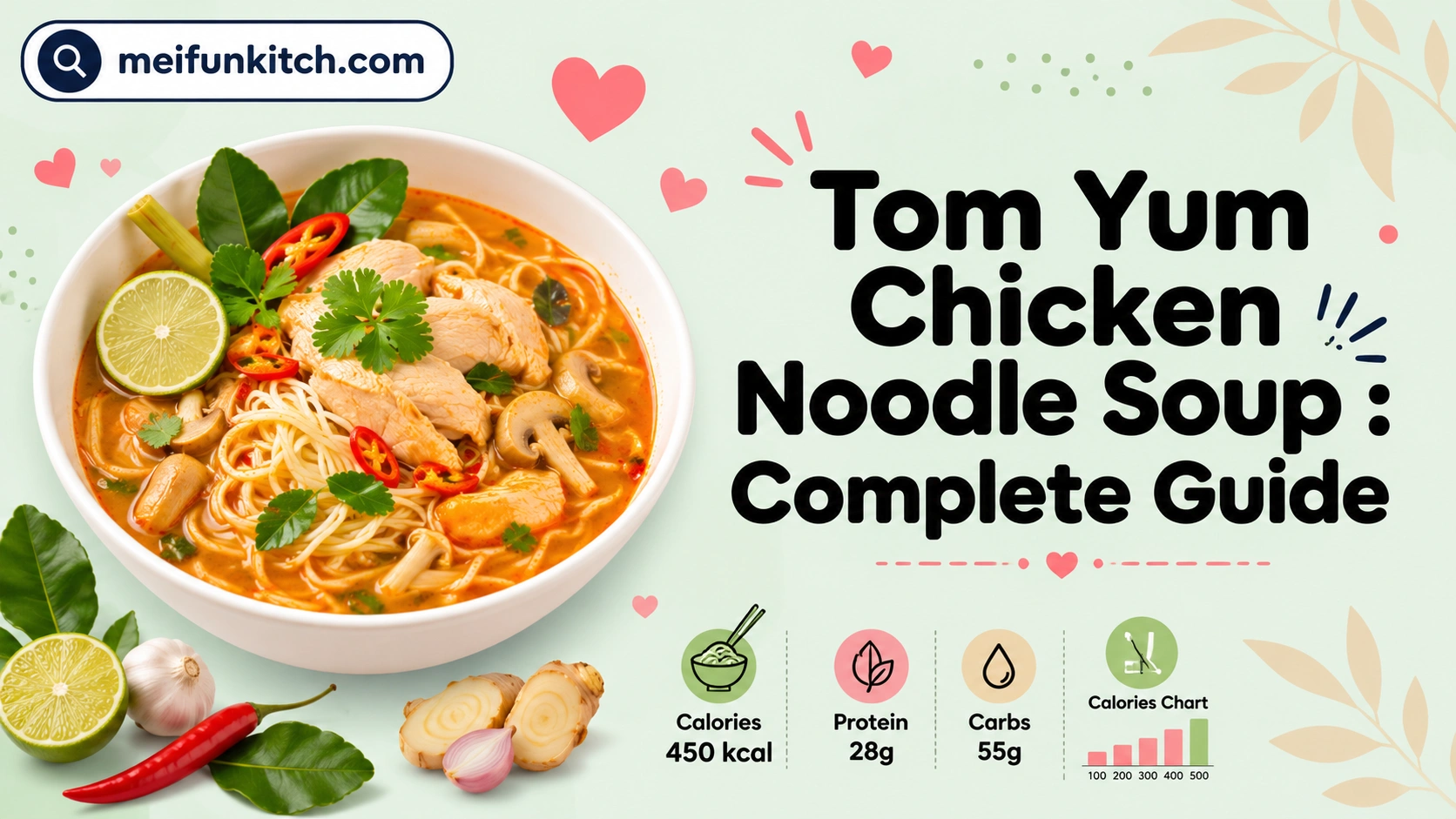
Thai cuisine offers many famous dishes, yet tom yum chicken noodle stands out for its vibrant flavor and comforting texture. It blends juicy chicken, aromatic herbs, and chewy noodles in a rich broth. Every spoonful delivers a balance of sourness, heat, and umami. As a result, this meal has become popular in homes and restaurants worldwide. Moreover, it works well as a quick lunch, a satisfying dinner, or a warming meal during colder months.
The secret behind tom yum chicken noodle is its signature broth. Fresh lemongrass, kaffir lime leaves, galangal, garlic, and chilies create deep layers of flavor. Meanwhile, lime juice brightens the soup, while fish sauce adds savory richness. Chicken provides lean protein, and noodles make the dish filling. Therefore, this recipe satisfies both comfort food lovers and fans of authentic Thai cooking.
Plan Your Perfect Week of Meals
Build a personalized weekly diet plan in minutes — balanced meals, made simple.
Many people believe tom yum chicken noodle is difficult to prepare. However, the recipe becomes simple once you understand the ingredients and cooking process. You can also customize the soup with vegetables, mushrooms, different noodles, or extra herbs. Throughout this guide, you will learn how to choose the right ingredients, cook the perfect broth, avoid common mistakes, and create restaurant-quality results in your own kitchen.
What Is Tom Yum Chicken Noodle?
Tom yum chicken noodle is a Thai noodle soup made with chicken, aromatic herbs, noodles, and a flavorful broth. The name “Tom Yum” refers to Thailand’s famous hot and sour soup. “Tom” means boiling, while “Yum” describes the signature spicy and sour flavor profile.
Unlike traditional Tom Yum soup, this version includes noodles. Consequently, it becomes a complete and satisfying meal instead of a simple appetizer. The broth remains the highlight, while tender chicken and noodles add texture and substance.
Today, tom yum chicken noodle appears in street food stalls, family kitchens, and Thai restaurants across the world. Each region prepares it slightly differently. Some cooks prefer clear broth, whereas others use evaporated milk or coconut milk for a creamier finish.
Key Characteristics of Tom Yum Chicken Noodle
| Feature | Description |
|---|---|
| Cuisine | Thai |
| Main Protein | Chicken |
| Noodles | Rice noodles, egg noodles, or wheat noodles |
| Broth | Hot, sour, savory, and aromatic |
| Primary Herbs | Lemongrass, galangal, kaffir lime leaves |
| Common Seasonings | Fish sauce, lime juice, chili paste |
| Spice Level | Mild to very spicy |
| Cooking Time | About 30–40 minutes |
| Best Served | Hot |
Why People Love Tom Yum Chicken Noodle
The popularity of tom yum chicken noodle continues to grow because it delivers several benefits.
| Reason | Why It Matters |
|---|---|
| Balanced Flavor | Combines sour, spicy, salty, and savory tastes |
| Comfort Food | Warm and filling for any season |
| Easy to Customize | Works with different vegetables and noodles |
| Rich Aroma | Fresh herbs create an inviting fragrance |
| Nutritious | Provides protein, vitamins, and minerals |
| Quick to Prepare | Suitable for busy weeknight meals |
The History and Origins of Tom Yum Chicken Noodle
Thai food reflects centuries of cultural influences. Tom yum chicken noodle evolved from the famous Tom Yum soup, one of Thailand’s most recognized dishes. While the original soup traditionally featured shrimp, cooks later adapted the recipe using chicken because it was affordable, widely available, and suitable for many families.
How Traditional Tom Yum Became a Noodle Dish
Street food vendors played an important role in developing tom yum chicken noodle. They combined hot and sour soup with freshly cooked noodles to create a complete meal. As demand increased, restaurants introduced their own versions using different proteins, vegetables, and broth styles.
Today, the dish remains popular because it combines authentic Thai flavors with the convenience of a hearty noodle soup. Its flexibility also allows home cooks to prepare delicious variations without losing the essence of traditional Tom Yum.
Essential Ingredients for Tom Yum Chicken Noodle
The quality of every ingredient shapes the final taste of tom yum chicken noodle. Fresh herbs create the signature aroma. Meanwhile, the right protein and noodles improve texture. Therefore, choosing authentic ingredients helps you prepare a flavorful Thai noodle soup at home.
Fresh Herbs That Create Authentic Thai Flavor
Traditional tom yum chicken noodle depends on fragrant herbs instead of heavy spices. These ingredients give the broth its fresh and citrusy character.
| Ingredient | Purpose in the Soup | Best Alternative |
|---|---|---|
| Lemongrass | Adds citrus aroma | Lemon zest with ginger |
| Galangal | Provides earthy warmth | Fresh ginger |
| Kaffir Lime Leaves | Creates a refreshing fragrance | Lime zest |
| Thai Bird’s Eye Chilies | Delivers spicy heat | Red chili flakes |
| Fresh Cilantro | Adds freshness before serving | Flat-leaf parsley |
Fresh herbs release natural oils during cooking. As a result, the broth develops a rich aroma without becoming overpowering.
Choosing the Best Chicken for Tom Yum Chicken Noodle
Chicken remains the heart of tom yum chicken noodle. Different cuts create different textures and flavors.
| Chicken Cut | Texture | Best Use |
|---|---|---|
| Chicken Breast | Lean and tender | Healthy version |
| Chicken Thigh | Juicy and flavorful | Authentic Thai recipe |
| Boneless Chicken | Easy to slice | Quick meals |
| Bone-in Chicken | Richer broth | Slow-simmered soup |
Chicken thighs usually produce a richer broth because they contain more natural fat. However, chicken breast works well for a lighter Thai chicken soup.
Best Noodles for Tom Yum Chicken Noodle
The noodles affect the eating experience. Fortunately, several options pair beautifully with tom yum chicken noodle.
| Noodle Type | Texture | Suitable For |
|---|---|---|
| Rice Noodles | Soft and silky | Traditional Thai noodle soup |
| Egg Noodles | Chewy | Restaurant-style bowls |
| Wheat Noodles | Firm | Fusion recipes |
| Glass Noodles | Light | Low-calorie meals |
| Instant Noodles | Convenient | Quick dinner recipes |
Rice noodles remain the classic choice because they absorb the flavorful broth without becoming too heavy.
Essential Seasonings for a Balanced Broth
Every bowl of tom yum chicken noodle relies on balanced seasoning. Each ingredient contributes a unique layer of flavor.
| Seasoning | Flavor Contribution |
|---|---|
| Fish Sauce | Salty and savory umami |
| Lime Juice | Bright sourness |
| Thai Chili Paste | Depth and gentle sweetness |
| Chicken Stock | Rich base |
| Garlic | Aromatic flavor |
| Shallots | Mild sweetness |
| White Pepper | Gentle heat |
| Palm Sugar | Balances acidity |
The broth should taste balanced instead of overly spicy or sour. Therefore, add seasonings gradually and taste after each adjustment.
How Tom Yum Chicken Noodle Gets Its Signature Flavor
The unforgettable taste of tom yum chicken noodle comes from the balance of four classic Thai flavors. Unlike many noodle soups, this dish does not depend on cream or heavy sauces. Instead, fresh ingredients build complexity naturally.
The Perfect Balance of Sour, Spicy, Salty, and Umami
Thai cooking focuses on harmony. Consequently, each spoonful of tom yum chicken noodle delivers several flavors at once.
| Flavor | Main Ingredient | Effect on the Broth |
|---|---|---|
| Sour | Fresh lime juice | Bright and refreshing |
| Spicy | Thai chilies | Warm heat |
| Salty | Fish sauce | Enhances overall flavor |
| Umami | Chicken stock and chili paste | Rich depth |
| Slight Sweetness | Palm sugar | Softens acidity |
When these flavors stay balanced, the soup tastes fresh rather than overwhelming.
Why Aromatic Herbs Matter
Fresh herbs define authentic tom yum chicken noodle. They create aromas that dried spices cannot match.
Lemongrass adds citrus notes without bitterness. Galangal contributes a peppery warmth. Kaffir lime leaves provide a floral fragrance. Finally, cilantro finishes the bowl with freshness.
These herbs also make the soup smell inviting before you even take the first bite.
How the Broth Absorbs Every Flavor
A great tom yum chicken noodle broth develops in layers. First, the herbs simmer gently in chicken stock. Next, garlic and shallots release their natural sweetness. Then fish sauce, chili paste, and lime juice complete the seasoning.
Finally, the chicken cooks in the aromatic broth. As a result, it absorbs the rich Thai flavors instead of remaining plain. The noodles also soak up the broth, making every bite satisfying.
Fresh Ingredients vs Ready-Made Tom Yum Paste
Many home cooks wonder whether fresh ingredients or prepared paste creates better tom yum chicken noodle.
| Option | Advantages | Best For |
|---|---|---|
| Fresh Herbs | Authentic flavor and aroma | Traditional Thai cooking |
| Tom Yum Paste | Faster preparation | Busy weeknights |
| Homemade Paste | Custom spice level | Experienced home cooks |
| Store-Bought Paste | Consistent taste | Beginner recipes |
Fresh ingredients usually deliver the best results. However, high-quality tom yum paste provides an excellent shortcut when time is limited.
Common Flavor Mistakes to Avoid
Many people accidentally reduce the quality of tom yum chicken noodle by making small mistakes.
| Mistake | Result | Better Approach |
|---|---|---|
| Too much lime juice | Overly sour broth | Add gradually |
| Boiling herbs too long | Bitter flavor | Simmer gently |
| Adding noodles too early | Mushy texture | Cook separately when possible |
| Too much fish sauce | Excessive saltiness | Taste before adding more |
| Using bottled lime juice | Flat flavor | Use fresh lime juice |
Avoiding these mistakes helps you prepare a Thai chicken noodle soup with restaurant-quality flavor and aroma while supporting the authentic taste of tom yum chicken noodle.
Nutrition Facts and Health Benefits of Tom Yum Chicken Noodle
A well-prepared bowl of tom yum chicken noodle offers more than bold flavor. It also provides lean protein, essential vitamins, and satisfying carbohydrates. Furthermore, fresh herbs and vegetables add nutrients without making the meal heavy. Therefore, this Thai-inspired soup fits many balanced eating plans.
Estimated Nutrition Per Serving
The nutritional value depends on the ingredients and serving size. However, a homemade version often contains fewer additives than restaurant meals.
| Nutrient | Approximate Amount | Why It Matters |
|---|---|---|
| Calories | 380–480 kcal | Provides energy |
| Protein | 28–35 g | Supports muscle growth |
| Carbohydrates | 40–50 g | Fuels daily activities |
| Fat | 8–14 g | Adds richness and satiety |
| Fiber | 3–5 g | Supports digestion |
| Sodium | 850–1,250 mg | Varies by seasoning |
| Vitamin C | Moderate | Supports immunity |
| Iron | Moderate | Helps oxygen transport |
Homemade recipes allow better control over sodium and fat. As a result, they often become a healthier choice.
Health Benefits of This Thai Noodle Soup
Fresh ingredients make this dish both flavorful and nourishing. In addition, the aromatic herbs contribute more than fragrance.
| Ingredient | Potential Benefit |
|---|---|
| Chicken | Lean source of protein |
| Lemongrass | Rich in natural antioxidants |
| Galangal | Traditionally used for digestion |
| Lime Juice | Provides vitamin C |
| Mushrooms | Contain fiber and minerals |
| Fresh Herbs | Add antioxidants and freshness |
| Rice Noodles | Supply easy-to-digest carbohydrates |
Together, these ingredients create a satisfying meal with balanced nutrition.
Is This Recipe Good for Weight Management?
Many people include tom yum chicken noodle in a balanced diet because it feels filling without being overly rich. The broth contains plenty of flavor, while lean chicken provides lasting satisfaction.
Portion size still matters. Therefore, moderate noodle portions and extra vegetables create a lighter meal. Choosing homemade stock also helps reduce unnecessary sodium.
Best Noodles for Tom Yum Chicken Noodle
The type of noodle changes both texture and the overall eating experience. Although rice noodles remain the traditional option, several alternatives also work well.
Rice Noodles vs Egg Noodles
Both choices absorb the flavorful broth differently.
| Feature | Rice Noodles | Egg Noodles |
|---|---|---|
| Texture | Soft and silky | Chewy and springy |
| Traditional | Yes | Less common |
| Gluten-Free | Usually yes | No |
| Flavor Absorption | Excellent | Very good |
| Best For | Authentic recipes | Richer variations |
Rice noodles remain the preferred option because they complement the light, aromatic broth.
Other Noodle Options
Different noodles create unique textures without changing the character of the soup.
| Noodle Type | Texture | Recommended Use |
|---|---|---|
| Glass Noodles | Delicate | Light meals |
| Whole Wheat Noodles | Firm | Higher-fiber option |
| Udon | Thick and chewy | Fusion recipes |
| Ramen Noodles | Springy | Restaurant-style bowls |
| Brown Rice Noodles | Slightly nutty | Healthy recipes |
Selecting the right noodle depends on personal preference and dietary needs.
How to Keep Noodles Perfectly Cooked
Overcooked noodles quickly become soft and lose their texture. Fortunately, a few simple techniques prevent this problem.
| Tip | Result |
|---|---|
| Cook noodles separately | Prevents sogginess |
| Rinse briefly if needed | Stops further cooking |
| Add to serving bowls last | Maintains texture |
| Pour hot broth before serving | Keeps noodles firm |
| Avoid reheating noodles repeatedly | Preserves consistency |
These steps help every bowl remain fresh from the first bite to the last.
What to Serve With Tom Yum Chicken Noodle
A flavorful soup becomes even more satisfying with the right side dishes. Light appetizers and fresh vegetables balance the bold broth without overpowering it.
Best Side Dishes
Simple accompaniments pair beautifully with this Thai favorite.
| Side Dish | Why It Works |
|---|---|
| Fresh Spring Rolls | Light and refreshing |
| Thai Cucumber Salad | Adds crunch |
| Steamed Jasmine Rice | Makes the meal heartier |
| Chicken Satay | Adds extra protein |
| Grilled Vegetables | Complements smoky flavors |
| Crispy Tofu | Great vegetarian addition |
These sides enhance the meal while keeping the focus on the aromatic broth.
Fresh Garnishes That Enhance Flavor
Fresh toppings improve both presentation and taste.
| Garnish | Flavor Contribution |
|---|---|
| Cilantro | Fresh herbal notes |
| Green Onions | Mild sharpness |
| Lime Wedges | Extra brightness |
| Sliced Red Chilies | Additional heat |
| Fried Garlic | Crispy texture |
| Thai Basil | Sweet herbal aroma |
Adding garnishes just before serving preserves their freshness and aroma.
Best Drinks to Pair With This Dish
Refreshing beverages balance the soup’s bold flavors.
| Drink | Pairing Benefit |
|---|---|
| Thai Iced Tea | Cools spicy heat |
| Iced Lemon Water | Refreshes the palate |
| Coconut Water | Light tropical flavor |
| Jasmine Tea | Cleanses the palate |
| Sparkling Water | Refreshing between bites |
The right beverage completes the meal while allowing the complex flavors of the broth to stand out naturally.
Common Mistakes to Avoid When Making Tom Yum Chicken Noodle
Even experienced home cooks can make small mistakes that affect the final result. Fortunately, most problems have simple solutions. Paying attention to cooking techniques helps you achieve a flavorful broth, tender chicken, and perfectly cooked noodles every time.
Using Herbs Incorrectly
Fresh Thai herbs should release their aroma gradually. However, cooking them for too long reduces their freshness.
| Mistake | Effect | Better Approach |
|---|---|---|
| Boiling lemongrass too long | Weak citrus aroma | Simmer gently for 10–15 minutes |
| Chopping kaffir lime leaves finely | Small pieces remain in soup | Tear leaves into large pieces |
| Using dried galangal | Less authentic flavor | Choose fresh slices whenever possible |
| Skipping fresh herbs | Flat broth | Use fresh ingredients for the best aroma |
Aromatic herbs should enhance the broth without becoming bitter.
Overcooking the Chicken
Tender chicken improves both texture and flavor. Overcooking makes it dry and chewy.
| Mistake | Result | Solution |
|---|---|---|
| Cooking on high heat too long | Tough meat | Simmer gently |
| Cutting uneven pieces | Uneven cooking | Slice into equal sizes |
| Leaving chicken in boiling broth | Dry texture | Remove once fully cooked |
Gentle simmering keeps the meat juicy while allowing it to absorb the flavorful stock.
Adding Lime Juice Too Early
Fresh lime juice gives the soup its signature brightness. However, excessive heat changes its flavor.
| Wrong Method | Better Method |
|---|---|
| Add while boiling | Add after reducing the heat |
| Use bottled juice | Use freshly squeezed lime |
| Add large amounts at once | Adjust gradually to taste |
Fresh citrus should brighten the broth instead of overpowering it.
Cooking Noodles in the Soup
Many beginners cook noodles directly in the broth. Although this seems convenient, it often changes the soup’s texture.
| Problem | Outcome | Best Practice |
|---|---|---|
| Noodles absorb too much broth | Thick soup | Cook separately |
| Reheated noodles become soft | Mushy texture | Store separately |
| Broth turns cloudy | Less appealing appearance | Combine only before serving |
Separate cooking keeps both the broth and noodles at their best.
Overseasoning the Broth
Thai cooking focuses on balance rather than intensity.
| Ingredient | Common Error | Recommendation |
|---|---|---|
| Fish sauce | Too salty | Add little by little |
| Chili paste | Overly spicy | Taste before adding more |
| Palm sugar | Too sweet | Use only enough to balance acidity |
| Lime juice | Too sour | Adjust at the end |
Balanced seasoning creates a richer and more enjoyable bowl.
How to Store and Reheat Leftovers
Proper storage helps preserve both flavor and texture. In addition, reheating the soup correctly prevents the noodles from becoming soft.
Best Storage Method
Separate storage extends freshness and improves reheating results.
| Component | Storage Method | Refrigeration Time |
|---|---|---|
| Broth | Airtight container | Up to 4 days |
| Cooked Chicken | Sealed container | Up to 4 days |
| Cooked Noodles | Separate container | Up to 2 days |
| Fresh Herbs | Refrigerate dry | 2–3 days |
Keeping ingredients separate maintains the original texture.
Can You Freeze It?
The broth freezes well, but noodles do not.
| Item | Freezer Friendly | Recommended Time |
|---|---|---|
| Broth | Yes | Up to 3 months |
| Chicken | Yes | Up to 3 months |
| Rice Noodles | Not recommended | Cook fresh later |
| Fresh Garnishes | No | Add after reheating |
Preparing fresh noodles after thawing creates a much better meal.
Best Way to Reheat
Gentle reheating protects the flavor of the herbs and prevents the chicken from drying out.
| Method | Instructions |
|---|---|
| Stovetop | Heat over medium-low until steaming |
| Microwave | Heat in short intervals and stir |
| Noodles | Warm briefly in hot water before serving |
| Garnishes | Add after reheating |
Avoid boiling the soup repeatedly because excessive heat reduces the fresh herbal aroma.
Tom Yum Chicken Noodle vs Other Popular Asian Noodle Soups
Many Asian noodle soups share comforting qualities. However, each recipe has a unique flavor profile. Understanding these differences helps you choose the right dish for every occasion.
Comparison With Other Noodle Soups
| Feature | Tom Yum Chicken Noodle | Pho | Ramen | Chicken Laksa |
|---|---|---|---|---|
| Country of Origin | Thailand | Vietnam | Japan | Malaysia |
| Main Flavor | Hot, sour, and aromatic | Light and savory | Rich umami | Spicy and creamy |
| Broth Base | Herbs, lime, and chilies | Beef or chicken stock | Bone broth or miso | Coconut-based broth |
| Noodles | Rice or egg noodles | Rice noodles | Wheat noodles | Rice noodles |
| Spice Level | Medium to high | Mild | Mild to medium | Medium to high |
| Fresh Herbs | Very important | Important | Moderate | Moderate |
Each soup offers a different experience. Nevertheless, Thai hot and sour soup stands out because of its bright citrus flavor and fragrant herbs.
Which Soup Is Best for Different Preferences?
| Preference | Recommended Choice |
|---|---|
| Light and refreshing | Thai hot and sour noodle soup |
| Rich and creamy | Chicken laksa |
| Deep umami flavor | Japanese ramen |
| Delicate herbal broth | Vietnamese pho |
| Bold spicy flavors | Thai-inspired chicken soup |
Choosing the right soup depends on personal taste, dietary preferences, and the type of meal you want. The balance of citrus, herbs, and gentle heat makes tom yum chicken noodle unique among Asian noodle dishes.
Conclusion
Tom yum chicken noodle is much more than a simple noodle soup. It brings together tender chicken, aromatic herbs, fresh vegetables, and flavorful noodles in one satisfying bowl. Every ingredient contributes to the balance of sour, spicy, salty, and umami flavors that make Thai cuisine so popular around the world.
Whether you prefer a traditional clear broth or a creamy variation, this recipe adapts easily to your taste. You can also choose different noodles, adjust the spice level, or add extra vegetables without losing its authentic character. As a result, it suits busy weeknight dinners, family meals, and special occasions alike.
Preparing tom yum chicken noodle at home also gives you complete control over the ingredients. Fresh lemongrass, galangal, kaffir lime leaves, and lime juice create a vibrant broth that packaged soups cannot easily match. Meanwhile, quality chicken and properly cooked noodles ensure every bowl remains hearty and comforting.
If you follow the cooking techniques, ingredient tips, and storage advice in this guide, you can confidently prepare a restaurant-quality meal in your own kitchen. Most importantly, using fresh ingredients and balancing the seasoning will help you enjoy the authentic taste that has made tom yum chicken noodle one of Thailand’s most beloved noodle dishes.
FAQs:
Is tom yum chicken noodle healthy?
Yes. Tom yum chicken noodle can be a healthy meal because it contains lean protein, fresh herbs, vegetables, and a light broth. Homemade versions also allow you to control sodium and fat levels.
Can I make tom yum chicken noodle less spicy?
Yes. Simply reduce the number of Thai chilies or use milder peppers. The soup will still have its signature hot and sour flavor without excessive heat.
Which noodles work best for tom yum chicken noodle?
Rice noodles are the traditional choice for tom yum chicken noodle because they absorb the broth well. However, egg noodles, ramen noodles, and glass noodles also produce excellent results.
Can I prepare the broth in advance?
Absolutely. The broth for this noodle often tastes even better after resting for several hours. Store it separately from the noodles until serving.
Can I freeze tom yum chicken noodle?
Yes, but freeze only the broth and chicken. Freshly cooked noodles provide the best texture after reheating.
What vegetables go well with tom yum chicken noodle?
Mushrooms, bok choy, spinach, cherry tomatoes, baby corn, carrots, and snow peas all pair well with tom yum chicken noodle while adding nutrition and color.
Can I make a vegetarian version?
Yes. Replace chicken with tofu and use vegetable stock instead of chicken stock. Vegetarian fish sauce alternatives also work well.
Why is my broth cloudy?
Cloudy broth usually happens when noodles cook directly in the soup or the broth boils too vigorously. Cooking noodles separately helps maintain a clear and flavorful broth.
How do I balance the flavors?
Taste the broth gradually. Adjust fish sauce for saltiness, lime juice for acidity, palm sugar for balance, and chilies for heat until the flavors work together.
What makes tom yum chicken noodle authentic?
Fresh lemongrass, galangal, kaffir lime leaves, Thai chilies, fish sauce, and lime juice give tom yum chicken noodle its authentic Thai flavor and aroma.

Smith
Author103 Published Articles
James Smith is a dedicated food writer and recipe enthusiast who specializes in creating informative content about noodles, pasta, rice dishes, comfort foods, and a wide variety of global cuisines. He is passionate about sharing easy-to-follow recipes, cooking techniques, ingredient guides, nutrition facts, and meal preparation tips that help readers cook with confidence. From classic noodle dishes and homemade sauces to healthy meal ideas and international favorites, James focuses on delivering well-researched, practical, and engaging content for home cooks of all skill levels. His goal is to make cooking enjoyable, accessible, and inspiring by providing reliable recipes and food knowledge that readers can trust.
EducationM.Sc. in Food and Nutrition.
Experience8 Years.
ExpertiseWrites about Noodles and Many Other Foods