
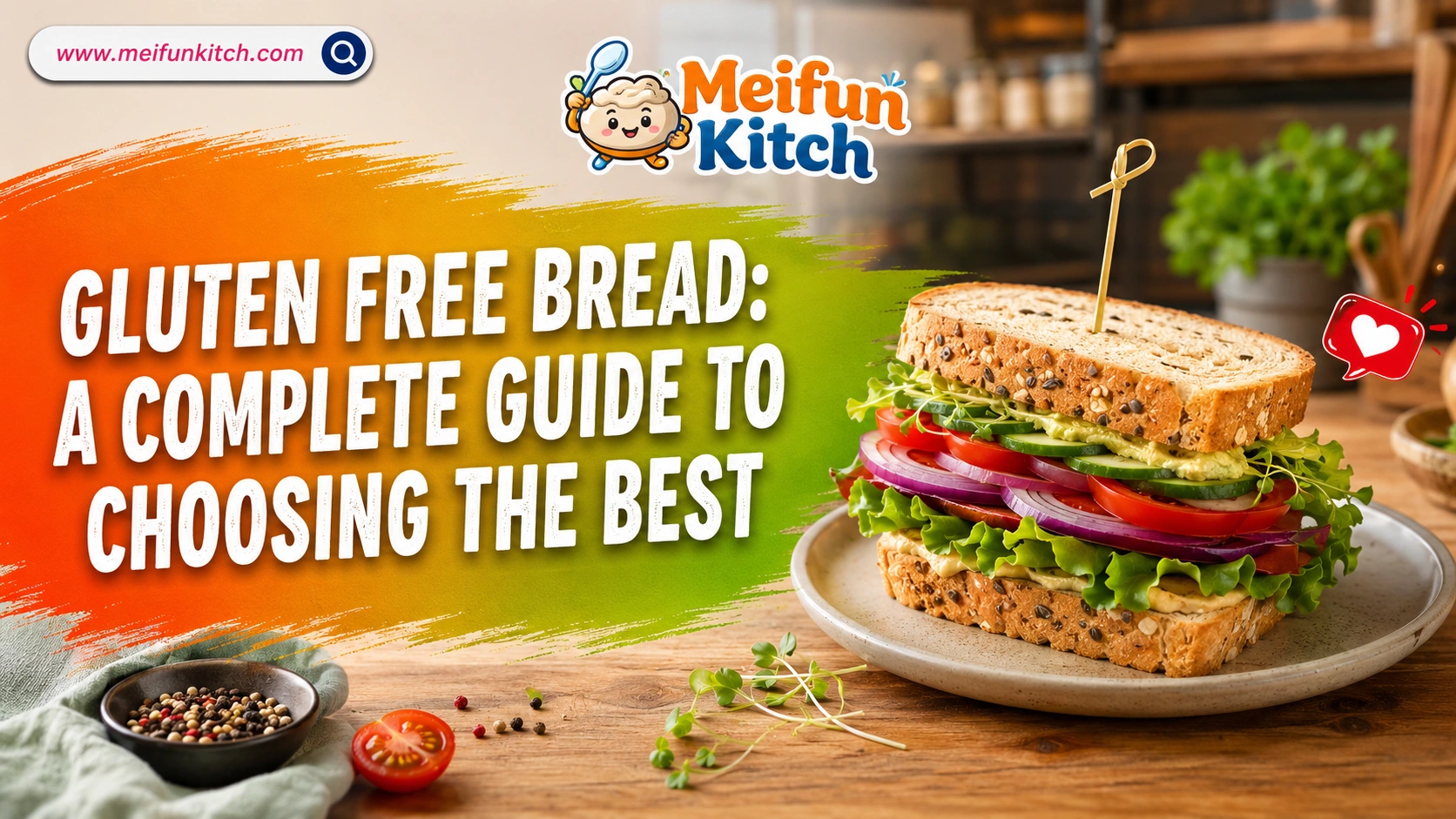
Gluten free bread is bread made without wheat, rye, barley, or other ingredients that contain gluten. It is commonly chosen by people with celiac disease, wheat allergy, or gluten sensitivity, but the term can also describe a wide range of breads made with rice flour, sorghum, millet, buckwheat, tapioca, potato starch, and other ingredients.
If you are buying gluten free bread for the first time, the label is only the starting point. You also need to consider texture, ingredients, nutrition, taste, storage, and the possibility of cross contact. Some loaves are soft enough for sandwiches, while others are better toasted or served with soup.
Plan Your Perfect Week of Meals
Build a personalized weekly diet plan in minutes — balanced meals, made simple.
What Is Gluten Free Bread?
Gluten free bread is made without gluten containing grains such as wheat, rye, and barley. Instead of traditional wheat flour, recipes use combinations of alternative flours and starches.
Gluten normally gives wheat bread much of its elasticity and structure. It helps dough stretch and allows it to hold the gas produced by yeast. Without gluten, bakers need other ingredients and techniques to create a loaf that rises properly and holds together.
Common ingredients include rice flour, sorghum flour, millet flour, buckwheat flour, tapioca starch, potato starch, psyllium husk, xanthan gum, eggs, yeast, oil, and seeds.
The exact combination makes a major difference. Two loaves can both be labeled gluten free and still have completely different textures and flavors.
One may be soft and mild, while another may be dense, chewy, nutty, or slightly earthy. That is why choosing the right gluten free bread often requires looking beyond the front of the package.
Why Do People Choose Gluten Free Bread?
People choose gluten free bread for different reasons. Some have a medical reason to avoid gluten, while others are simply looking for alternatives to conventional wheat bread.
Celiac disease
Celiac disease is an autoimmune condition in which eating gluten triggers an immune response that damages the small intestine.
For someone with celiac disease, avoiding gluten is not simply a lifestyle preference. A strict gluten free diet is an important part of managing the condition.
Cross contact can also matter. A person with celiac disease may need to consider shared toasters, cutting boards, knives, preparation surfaces, and other kitchen equipment.
Wheat allergy
A wheat allergy is different from celiac disease.
Someone with a wheat allergy needs to avoid wheat, but that does not necessarily mean they need to avoid every ingredient that contains gluten. Because allergies can be serious, people with a diagnosed wheat allergy should follow the advice of their healthcare professional and read ingredient and allergen information carefully.
Gluten sensitivity
Some people experience symptoms after consuming gluten containing foods without having celiac disease or a wheat allergy. This is often described as non celiac gluten sensitivity.
Symptoms can vary from person to person. If you suspect gluten is causing problems, it is better to discuss the issue with a healthcare professional instead of assuming that every digestive symptom is caused by gluten.
How Is Gluten Free Bread Made?
Making gluten free bread requires a different approach from traditional wheat bread.
A wheat dough can develop a stretchy gluten network through mixing and kneading. Gluten free dough does not have that network, so recipes usually depend on a carefully selected combination of flours, starches, liquids, and binders.
Gluten free flour blends
Most successful bread recipes use more than one type of gluten free flour.
Rice flour provides a relatively mild base. Sorghum can add a deeper grain flavor, while millet has a mild taste. Buckwheat brings a stronger earthy flavor. Starches such as tapioca and potato starch can help create a softer or more flexible crumb.
A typical blend may look something like this:
| Ingredient | Main purpose |
|---|---|
| Rice flour | Mild base and structure |
| Sorghum flour | Adds flavor and body |
| Millet flour | Mild taste and texture |
| Buckwheat flour | Adds earthy flavor |
| Tapioca starch | Helps with softness and chew |
| Potato starch | Helps create a lighter texture |
| Psyllium husk | Adds structure and moisture |
| Xanthan gum | Helps bind ingredients |
Not every recipe needs all of these ingredients. The best combination depends on the style of bread being made.
Binders and structure
Because gluten is missing, gluten free bread often needs another ingredient to help hold everything together.
Xanthan gum is commonly used for this purpose. Psyllium husk is also popular in homemade recipes because it can absorb water and help create a cohesive dough.
Eggs can provide structure and moisture in some recipes. Yeast helps with fermentation and rising when used in a yeast based loaf.
The important point is thatsuch bread does not need gluten to have structure. It simply needs a different structural system.
Why Does Gluten Free Bread Taste Different?
The flavor and texture of gluten free bread depend heavily on the ingredients used.
Traditional wheat bread has a familiar elasticity and chew because of gluten. Gluten free bread may have a softer crumb or a slightly different bite.
Rice based bread tends to have a mild flavor. Sorghum can provide a more noticeable grain flavor. Buckwheat creates a stronger, earthy character that some people love and others may find unfamiliar.
Seeds can add crunch, while nuts can add richness. Some commercial loaves also contain sweeteners, oils, or fibers that influence the final taste.
This means you should not judge every gluten free bread by one loaf you have tried. There is considerable variation between products and recipes.
If you are trying to find a bread for sandwiches, you may prefer a soft and flexible loaf. If you mainly eat toast, a firmer bread may actually be more enjoyable.
Is Gluten Free Bread Healthy?
Gluten free bread can be part of a healthy diet, but being gluten free does not automatically make a bread healthier.
This is one of the most important things to understand when shopping.
The term “gluten free” describes the absence or controlled level of gluten. It does not tell you how much fiber, protein, sugar, sodium, fat, or calories the bread contains.
Read the nutrition label
When comparing different products, look at:
- Fiber
- Protein
- Added sugar
- Sodium
- Saturated fat
- Calories
- Serving size
- Whole grain ingredients
Some gluten free breads contain whole grain gluten free flours, seeds, and useful amounts of fiber. Others are made mainly from refined starches.
Neither type should be judged solely by its name. The nutrition facts and ingredient list provide much more useful information.
Is gluten free bread low calorie?
Not necessarily.
Such bread can have fewer, similar, or more calories than regular wheat bread depending on the recipe.
Ingredients such as oil, seeds, nuts, starches, and sweeteners can affect the calorie content. If calories matter to you, compare the serving size and nutrition information of specific products.
Gluten Free Bread vs Regular Bread
The main difference is how the bread gets its structure.
Regular wheat bread usually depends on gluten proteins in wheat flour. Gluten free bread must use alternative ingredients to create a similar structure.
| Feature | Gluten free bread | Regular wheat bread |
|---|---|---|
| Main flour | Gluten free flour blends | Usually wheat flour |
| Gluten | Not intentionally present within applicable gluten free limits | Usually present |
| Structure | Binders, starches, fibers, eggs, or other ingredients | Gluten network |
| Texture | Varies from soft to dense or chewy | Usually elastic and chewy |
| Flavor | Depends on the flour blend | Usually mild wheat flavor |
| Nutrition | Varies by recipe | Varies by recipe |
| Best use | Sandwiches, toast, meals, snacks | Sandwiches, toast, meals, snacks |
Neither option is automatically healthier. The better choice depends on your dietary needs and the specific bread.
What Are the Best Flours for Gluten Free Bread?
There is no single best flour for every recipe.
Different flours have different strengths, and combining them can produce a better balance of taste and texture.
Rice flour
Rice flour is one of the most familiar ingredients in gluten free baking.
It has a mild flavor, which makes it useful when you want bread that tastes relatively neutral. It can work particularly well in sandwich bread blends.
However, rice flour alone may not provide the texture many people expect from bread. Recipes often combine it with starches or other flours.
Sorghum flour
Sorghum flour has a mild grain flavor and can add more depth to a gluten free loaf.
It works well in flour blends when you want a bread that tastes more like a hearty grain bread rather than a simple starch based loaf.
Millet flour
Millet flour has a mild flavor and can be useful in a variety of bread recipes.
Because its flavor is relatively gentle, it can work well alongside rice flour and other ingredients.
Buckwheat flour
Despite its name, buckwheat is not wheat.
Buckwheat can be used in gluten free baking when the product is appropriately sourced and free from unwanted contamination. It has a distinctive earthy flavor and can produce darker, more rustic bread.
Tapioca starch
Tapioca starch is frequently used in this type of bread because it can contribute to softness and chew.
It is a starch rather than a whole grain flour, so it usually works best as part of a broader recipe.
Potato starch
Potato starch can help create a lighter texture and is often combined with rice flour, tapioca starch, sorghum, or other ingredients.
How to Choose Gluten Free Bread for Sandwiches
Sandwiches place different demands on bread than toast.
A good sandwich loaf should bend without immediately breaking. It should also hold fillings without becoming completely soggy.
Look for a flexible crumb
If the slices crumble when you pick them up, they may not be ideal for sandwiches.
A slightly denser but flexible loaf can sometimes perform better than a very soft loaf that falls apart.
Consider the slice size
Some gluten free bread products have smaller slices than conventional sandwich bread.
Check the serving information before assuming that two slices of one product are nutritionally equivalent to two slices of another.
Toast delicate bread first
If your bread breaks easily, lightly toasting it can sometimes improve its structure.
This is especially useful when preparing sandwiches with moist ingredients such as tomatoes, sauces, or cooked vegetables.
How to Choose Gluten Free Bread for Toast
Toast is one of the easiest ways to enjoy gluten free bread because heat can change the texture.
A softer loaf may become crisp on the outside while staying tender inside. A denser loaf can become more pleasant and crunchy after toasting.
If you are buying bread mainly for breakfast, consider how well it fits your favorite toppings.
For example, a sturdy slice is useful for:
- Eggs
- Peanut butter
- Avocado
- Hummus
- Nut spreads
- Fruit spreads
If you use a toaster shared with wheat bread, cross contact may be a concern for someone who needs strict gluten avoidance.
How to Store Gluten Free Bread
Proper storage can make a noticeable difference in texture and freshness.
Some packaged gluten free bread can stay at room temperature according to the manufacturer’s instructions. Others are better refrigerated or frozen.
Always follow the storage instructions on the package when available.
Can you freeze gluten free bread?
Yes, many types can be frozen.
Freezing can be particularly useful if you do not eat bread quickly.
One practical approach is to separate slices before freezing. That allows you to remove only what you need instead of thawing the entire loaf.
Place the bread in suitable airtight packaging to reduce freezer burn and moisture loss.
Why does gluten free bread dry out?
This type of bread can have a different moisture balance from traditional wheat bread.
Improper storage can make the bread dry, stale, or crumbly. Keeping it sealed and following the manufacturer’s storage recommendations can help maintain its quality.
How to Make Gluten Free Bread at Home
Making bread at home gives you control over the ingredients.
You can choose the flour blend, adjust the flavor, add seeds, reduce sweetness, and experiment with different textures.
Start with a tested recipe
If you are new to gluten free baking, start with a recipe that has already been tested rather than immediately replacing wheat flour in a regular bread recipe.
Gluten free flour does not behave exactly like wheat flour. Simply swapping equal amounts can produce disappointing results.
Expect a different dough texture
Gluten free bread dough often looks more like a thick batter or very soft dough.
That is normal for many recipes.
Do not automatically keep adding flour because the dough does not look like conventional wheat dough. Too much flour can produce a heavy loaf.
Follow the recipe’s measurements and visual cues.
Give the bread enough time to cool
Freshly baked bread can be fragile when it is still hot.
Allowing it to cool properly can make slicing easier and help the crumb settle.
Using a sharp bread knife and gentle sawing motion can also reduce tearing.
Can You Make Gluten Free Bread Without Yeast?
Yes.
Not every bread needs yeast. Quick breads can use baking powder or baking soda for leavening.
You can also make flatbreads and other bread style foods without yeast.
The texture will usually differ from a traditional yeast raised loaf. That is not necessarily a problem. A quick bread can be ideal when you want something simple and fast.
Common Gluten Free Bread Problems
Even a carefully followed recipe can take some experimentation.
Why does gluten free bread fall apart?
Crumbly bread can result from an unsuitable flour combination, insufficient binding, incorrect liquid levels, or handling the loaf before it has cooled.
The binder and moisture balance are particularly important.
Why is my gluten free bread dense?
Dense bread can have several causes.
The yeast may not have worked properly, the dough may not have risen enough, or the recipe may contain too much flour or not enough liquid.
Old or inactive yeast can also cause poor rising.
Why is the center gummy?
A loaf can look fully baked on the outside while remaining excessively moist in the middle.
It may need additional baking time or more cooling time. Recipe formulation also matters because gluten free breads often contain substantial moisture.
Why does gluten free bread become hard?
Improper storage can cause moisture loss.
Some varieties also naturally become firmer as they sit. Keeping individual slices frozen can be a practical solution if you only eat bread occasionally.
How to Avoid Cross Contact With Gluten
For someone who must strictly avoid gluten, preventing cross contact can be just as important as buying the right ingredients.
Shared toaster
A toaster that has been used for regular wheat bread can contain crumbs.
If strict gluten avoidance is necessary, a separate toaster may be appropriate.
Cutting boards and knives
Bread crumbs can remain on cutting boards and utensils.
Clean preparation equipment thoroughly, and consider separate equipment when recommended for your dietary needs.
Shared spreads
Butter, peanut butter, jam, and other spreads can become contaminated if someone uses the same knife on regular bread and then puts it back into the container.
Using separate containers or clean utensils can help prevent this type of cross contact.
Baking surfaces
Flour can spread easily around a kitchen.
If you are preparing this type of bread for someone with celiac disease, consider how conventional flour is used and stored in the same kitchen.
How to Read a Gluten Free Bread Label
The front of a package gives you basic information, but the ingredient list and nutrition panel tell you much more.
Before buying, check:
- The gluten free statement or certification when relevant.
- The ingredient list.
- The allergen information.
- Serving size.
- Fiber content.
- Protein content.
- Added sugar.
- Sodium.
- Storage instructions.
People with celiac disease or food allergies should follow the labeling and dietary guidance appropriate to their condition.
Remember that “wheat free” and “gluten free” do not necessarily mean exactly the same thing.
Is Gluten Free Bread Good for Weight Loss?
This type of bread is not automatically a weight loss food.
Weight management depends on total dietary intake, activity, individual needs, and many other factors.
Replacing regular bread with gluten free bread does not by itself guarantee weight loss.
If weight management is your goal, compare calories, serving sizes, fiber, protein, and other nutrition information. Also consider what you put on the bread because spreads, sauces, cheese, and other toppings can significantly change the nutritional value of a meal.
Is Gluten Free Bread Good for Digestion?
It depends on the individual and the reason for eating it.
For people with celiac disease, avoiding gluten is essential to managing the condition.
However, a gluten free label does not automatically mean a product will be easier for everyone to digest.
Some gluten free breads contain added fibers, seeds, or other ingredients that can affect digestion differently from person to person.
If you regularly experience digestive symptoms, consider discussing them with a healthcare professional rather than assuming that gluten is the only possible cause.
Is Sourdough Gluten Free?
Traditional sourdough bread made with wheat flour is not gluten free.
The fermentation process does not automatically turn wheat bread into gluten free bread.
If you need to avoid gluten, look for sourdough specifically made with gluten free ingredients and appropriately labeled for your needs.
This is an area where assumptions can cause problems. “Sourdough” describes a fermentation method, not whether the bread contains gluten.
Can Gluten Free Bread Be Made Without Eggs?
Yes.
Many bread recipes are made without eggs.
Depending on the recipe, ingredients such as psyllium husk, ground flaxseed, chia, or commercial egg substitutes may help provide structure.
The best substitute depends on the recipe, so replacing eggs one-for-one without understanding their purpose can change the final texture.
Can You Make Gluten Free Bread Without Xanthan Gum?
Yes.
Some recipes use psyllium husk or other binders instead of xanthan gum.
However, you should not assume that xanthan gum can simply be removed from every recipe. It may provide an important structural function.
If you want a xanthan gum free loaf, choose a recipe specifically designed without it rather than modifying a conventional gluten free recipe at random.
Gluten Free Bread for Breakfast, Lunch, and Dinner
One useful way to choose a loaf is to think about when you will actually eat it.
Breakfast
For breakfast, a soft loaf works well with eggs, peanut butter, fruit spreads, or avocado.
If you prefer crunchy toast, choose bread that browns well without becoming excessively dry.
Lunch
For sandwiches, flexibility matters.
Choose a loaf that can hold fillings without cracking. Lightly toasting the bread can also help if the slices are delicate.
Dinner
Rustic or seeded bread can work well with soups, salads, roasted vegetables, and main dishes.
A stronger flavored loaf can also add more character to a simple meal.
Snacks
A toasted slice topped with hummus, nut butter, avocado, or another preferred topping can make a simple snack.
For people with allergies, make sure toppings are also suitable for their dietary requirements.
FAQs
What is gluten free bread made from?
Gluten free bread can contain rice flour, sorghum flour, millet flour, buckwheat flour, tapioca starch, potato starch, psyllium husk, xanthan gum, eggs, yeast, seeds, and other ingredients. Most recipes use a combination rather than one flour.
Is gluten free bread healthier than regular bread?
Not automatically. Gluten free bread can be nutritious, but the nutritional quality depends on its ingredients. Check fiber, protein, added sugar, sodium, calories, and serving size instead of relying only on the gluten free label.
Does this type of bread contain wheat?
A properly labeled gluten free product should meet applicable gluten free requirements, but people with wheat allergy have a separate concern. Always check the ingredient and allergen information if wheat is a problem for you.
Can people with celiac disease eat gluten free bread?
Yes, bread can be part of a celiac friendly diet when it meets the appropriate gluten free requirements and is not contaminated through cross contact. People with celiac disease should follow their healthcare professional’s dietary advice.
Why is gluten free bread crumbly?
Gluten normally helps wheat bread develop elasticity and structure. Without it, recipes rely on starches, binders, fibers, eggs, and other ingredients. If the balance is not right, the finished loaf can become crumbly.
Does gluten free bread taste good?
Taste is personal, and products vary widely. Some gluten free bread is mild and soft, while other varieties have earthy, nutty, seeded, or rustic flavors. Trying different styles is often the easiest way to find one you enjoy.
Can you toast gluten free bread?
Yes. Many types toast well. Toasting can make a soft loaf crispier and may make a delicate slice easier to handle.
Can gluten free bread be frozen?
Yes, many varieties freeze well. Separating slices before freezing makes it easier to use only the amount you need.
Is sourdough bread gluten free?
Regular sourdough made from wheat flour is not gluten free. Fermentation does not automatically remove gluten to a level that makes wheat sourdough suitable for people who need to avoid gluten.
Can gluten free bread be made without eggs?
Yes. Many recipes are egg free. Psyllium husk, flaxseed, chia, or other ingredients may be used to help create structure, depending on the recipe.
Can gluten free bread be made without xanthan gum?
Yes. Some recipes use psyllium husk or other ingredients instead. Choose a recipe designed without xanthan gum if you want to avoid it, because simply removing it can affect the loaf’s structure.
Final Thoughts
Gluten free bread includes far more than one type of loaf. You can find soft sandwich bread, seeded loaves, rustic bread, quick breads, flatbreads, and homemade recipes using many different flour combinations.
The right choice depends on why you need gluten free food, how you plan to use the bread, what texture you enjoy, and what the nutrition label says.
If you need to avoid gluten for celiac disease or another medical reason, pay particular attention to labeling and cross contact. A bread that looks suitable on the shelf still needs to fit your dietary requirements.
For everyday shopping, compare several products instead of assuming that one gluten free loaf represents the entire category. Look at the ingredients, fiber, protein, serving size, sugar, sodium, and storage instructions.
If you bake at home, give yourself room to experiment. Gluten free dough behaves differently from wheat dough, and the balance between flour, starch, liquid, and binders can change the finished bread considerably.
Ultimately, good gluten free bread is the bread that works for your needs. Whether you want reliable sandwich slices, crisp breakfast toast, or a homemade loaf with a hearty flavor, understanding the ingredients and baking process makes choosing the right option much easier.

Smith
Author103 Published Articles
James Smith is a dedicated food writer and recipe enthusiast who specializes in creating informative content about noodles, pasta, rice dishes, comfort foods, and a wide variety of global cuisines. He is passionate about sharing easy-to-follow recipes, cooking techniques, ingredient guides, nutrition facts, and meal preparation tips that help readers cook with confidence. From classic noodle dishes and homemade sauces to healthy meal ideas and international favorites, James focuses on delivering well-researched, practical, and engaging content for home cooks of all skill levels. His goal is to make cooking enjoyable, accessible, and inspiring by providing reliable recipes and food knowledge that readers can trust.
EducationM.Sc. in Food and Nutrition.
Experience8 Years.
ExpertiseWrites about Noodles and Many Other Foods