
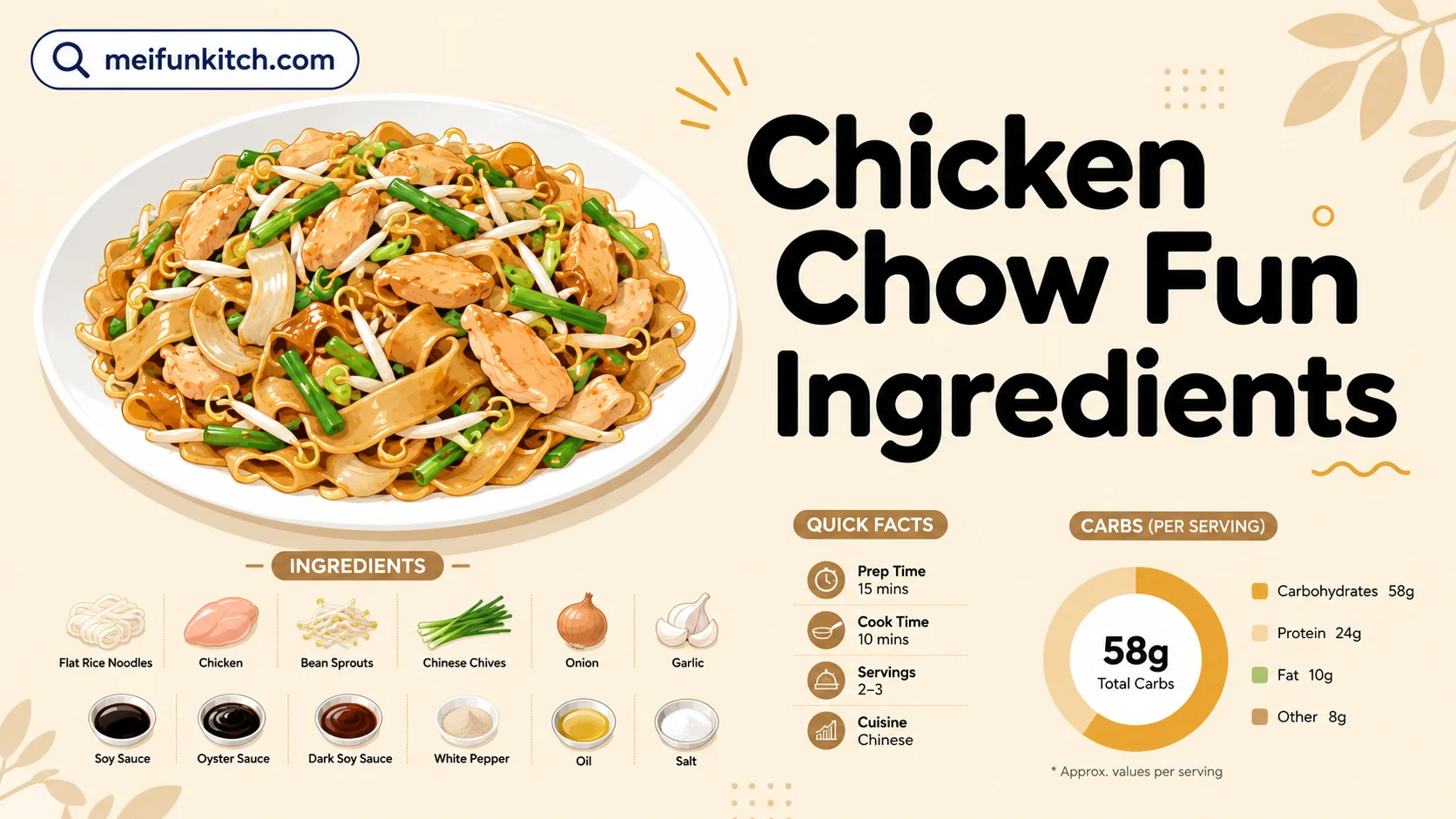
Chicken Chow Fun is a popular Chinese noodle dish that many people enjoy because of its rich flavor and simple ingredients. It is made with wide rice noodles, tender chicken, and fresh vegetables. In addition, tasty sauces bring all the ingredients together to create a delicious meal that is both filling and satisfying.
Knowing the right Chicken Chow Fun ingredients can help you make this dish at home with confidence. For example, chicken, bean sprouts, green onions, and soy sauce are commonly used in many recipes. As a result, you can enjoy a restaurant-style meal while using fresh ingredients from your own kitchen.
In this guide, you will learn about the main Chicken Chow Fun ingredients and how each one adds flavor and texture to the dish. Furthermore, understanding these ingredients can help you choose the best options for your recipe. Whether you are cooking for your family or trying a new dish for the first time, this information will make the process easier and more enjoyable.
What Are the Main Chicken Chow Fun Ingredients?
Chicken Chow Fun is a flavorful stir-fried noodle dish that combines simple ingredients to create a balanced and satisfying meal. Traditionally, cooks use wide rice noodles, sliced chicken, bean sprouts, green onions, soy sauce, and cooking oil. Together, these ingredients create the classic texture and taste that many people enjoy. Moreover, each ingredient plays a specific role in the recipe. The noodles provide a soft and chewy base, while the chicken adds protein and richness. At the same time, fresh vegetables contribute crunch and freshness, making the dish more enjoyable.
In addition, sauces help bring all the flavors together. Light soy sauce adds saltiness, whereas dark soy sauce provides a deeper color and slightly sweeter flavor. Furthermore, many home cooks include garlic, ginger, or sesame oil to enhance the overall taste. As a result, the dish develops a more complex flavor profile without becoming difficult to prepare. Because the recipe relies on a few key components, choosing fresh and high-quality ingredients can make a noticeable difference in the final result.
When preparing this popular noodle dish, understanding the purpose of each ingredient can improve both flavor and texture. Therefore, many experienced cooks focus on balancing savory, fresh, and slightly smoky elements. Additionally, proper preparation ensures that every ingredient cooks evenly during stir-frying. Consequently, the finished meal tastes authentic and satisfying. Whether you are new to Asian cooking or already enjoy making stir-fries, learning about the main ingredients provides a strong foundation for success.
Main Ingredients Overview
| Ingredient | Purpose | Texture Contribution | Flavor Contribution |
| Wide Rice Noodles | Base ingredient | Soft and chewy | Mild |
| Chicken Breast | Main protein | Tender | Savory |
| Bean Sprouts | Fresh vegetable | Crunchy | Light |
| Green Onions | Aromatic vegetable | Crisp | Mild onion flavor |
| Light Soy Sauce | Seasoning | Liquid coating | Salty |
| Dark Soy Sauce | Color enhancer | Smooth | Rich and slightly sweet |
| Garlic | Aromatic | Soft when cooked | Bold |
| Ginger | Flavor enhancer | Tender | Warm and fresh |
| Vegetable Oil | Cooking medium | Helps stir-fry | Neutral |
| Sesame Oil | Finishing ingredient | Silky | Nutty |
| White Pepper | Seasoning | Fine texture | Mild heat |
| Oyster Sauce | Optional flavor booster | Thick | Deep umami |
Complete Chicken Chow Fun Ingredients List for Home Cooking
Creating this dish at home becomes much easier when you have a complete ingredient list before you start cooking. A well-planned shopping list helps save time and ensures consistent results. Most home kitchens already contain several of the required items, including cooking oil and soy sauce. However, purchasing fresh rice noodles and quality chicken can significantly improve the final meal. Because preparation moves quickly during stir-frying, gathering ingredients in advance is especially important.
Furthermore, home cooks often customize the recipe based on personal preferences and ingredient availability. For example, some people add bell peppers, carrots, mushrooms, or cabbage to increase the vegetable content. Meanwhile, others focus on keeping the recipe close to its traditional style. As a result, the ingredient list may vary slightly from one household to another. Nevertheless, the core ingredients remain largely the same because they create the authentic flavor and texture people expect.
A complete understanding of the ingredients also helps beginners avoid common mistakes. Therefore, measuring sauces beforehand and slicing ingredients evenly can improve cooking efficiency. In addition, organized preparation allows ingredients to cook at the correct pace. Consequently, the noodles stay tender, the vegetables remain crisp, and the chicken cooks thoroughly. With proper planning, home cooks can prepare a delicious meal that rivals restaurant versions.
Home Cooking Ingredient Checklist
| Ingredient | Required | Common Amount | Easy to Find | Beginner Friendly |
| Rice Noodles | Yes | 12 oz | Yes | Yes |
| Chicken | Yes | 1 lb | Yes | Yes |
| Bean Sprouts | Yes | 2 cups | Usually | Yes |
| Green Onions | Yes | 4 stalks | Yes | Yes |
| Light Soy Sauce | Yes | 2 tbsp | Yes | Yes |
| Dark Soy Sauce | Yes | 1 tbsp | Yes | Yes |
| Garlic | Yes | 3 cloves | Yes | Yes |
| Ginger | Optional | 1 tbsp | Yes | Yes |
| Sesame Oil | Optional | 1 tsp | Yes | Yes |
| Oyster Sauce | Optional | 1 tbsp | Yes | Yes |
| White Pepper | Optional | ½ tsp | Yes | Yes |
| Vegetable Oil | Yes | 2 tbsp | Yes | Yes |
Essential Chicken Chow Fun Ingredients and Their Purpose
Every ingredient in this recipe serves a specific purpose that contributes to the overall quality of the dish. While some ingredients provide structure and texture, others focus on enhancing flavor and aroma. For instance, rice noodles form the foundation of the meal, whereas chicken acts as the primary protein source. Similarly, vegetables add freshness and visual appeal. Because each ingredient performs a unique function, removing one can noticeably change the final result.
Moreover, seasonings play a major role in balancing flavors. Light soy sauce contributes saltiness, while dark soy sauce creates a richer appearance. In contrast, sesame oil adds fragrance without overpowering the dish. Additionally, aromatics such as garlic and ginger provide depth and complexity. As these ingredients cook together, they create layers of flavor that make the meal more satisfying and memorable.
Understanding ingredient functions can help cooks make smart substitutions when necessary. Therefore, people who cannot find a particular ingredient can often replace it with a similar option. However, maintaining the balance between noodles, protein, vegetables, and seasonings remains important. Consequently, the finished dish retains its authentic character. Learning the purpose of each component makes it easier to create consistent and delicious results every time.
Ingredient Purpose Comparison
| Ingredient | Primary Function | Secondary Function | Importance |
| Rice Noodles | Base | Texture | Very High |
| Chicken | Protein | Flavor | Very High |
| Bean Sprouts | Crunch | Freshness | High |
| Green Onions | Aroma | Garnish | Medium |
| Garlic | Flavor | Aroma | High |
| Ginger | Warm Flavor | Freshness | Medium |
| Light Soy Sauce | Saltiness | Seasoning | High |
| Dark Soy Sauce | Color | Richness | High |
| Sesame Oil | Aroma | Flavor Finish | Medium |
| Vegetable Oil | Cooking | Heat Transfer | High |
| White Pepper | Mild Spice | Balance | Low |
| Oyster Sauce | Umami | Depth | Medium |
Best Noodles to Use for Chicken Chow Fun
Choosing the right noodles is one of the most important steps when preparing this classic stir-fried dish. Traditionally, cooks use wide rice noodles because they provide the soft yet slightly chewy texture that defines the recipe. These noodles absorb sauces well while maintaining their structure during high-heat cooking. As a result, every bite delivers balanced flavor and texture. Furthermore, authentic rice noodles create the signature appearance that many people expect when ordering this popular meal. Since the noodles serve as the foundation of the dish, selecting a quality product can greatly improve the final outcome.
Fresh rice noodles often produce the best results because they remain soft and flexible before cooking. However, dried rice noodles can also work very well when prepared correctly. Therefore, many home cooks choose dried noodles because they are easier to find and store. Before stir-frying, it is important to soak or cook them according to package directions. In addition, avoiding overcooking helps prevent the noodles from breaking apart during the cooking process. Consequently, the finished dish looks more appealing and maintains a better texture.
Many people search for alternatives when traditional rice noodles are unavailable. Although substitutions may change the final texture, several options can still create a satisfying meal. For example, some cooks use medium-width rice sticks, while others experiment with flat wheat noodles. Nevertheless, authentic Chicken Chow Fun Ingredients usually include wide rice noodles because they provide the most traditional experience. Therefore, if you want restaurant-style results, choosing wide rice noodles remains the best option. Moreover, using the correct noodle type helps preserve the balance between flavor, texture, and presentation.
Why Wide Rice Noodles Are Preferred
Wide rice noodles create a smooth texture that pairs perfectly with savory sauces and tender chicken. Additionally, they cook quickly and absorb seasonings evenly. As a result, they help create the authentic taste that many people enjoy.
Fresh vs. Dried Rice Noodles
Fresh noodles offer convenience during cooking because they require little preparation. On the other hand, dried noodles have a longer shelf life and are easier to store. Therefore, both options work well when handled properly.
Noodle Selection Comparison
| Noodle Type | Texture | Authenticity | Sauce Absorption | Availability | Preparation Time | Best For | Flavor Impact | Cost | Storage Life | Beginner Friendly | Overall Rating |
| Fresh Wide Rice Noodles | Soft and Chewy | Excellent | Excellent | Moderate | Very Low | Traditional Recipes | Neutral | Medium | Short | Yes | High |
| Dried Wide Rice Noodles | Chewy | Excellent | Very Good | High | Medium | Home Cooking | Neutral | Low | Long | Yes | High |
| Rice Stick Noodles | Slightly Firm | Good | Good | High | Medium | Quick Meals | Neutral | Low | Long | Yes | Good |
| Flat Rice Noodles | Soft | Excellent | Excellent | Moderate | Low | Authentic Dishes | Neutral | Medium | Medium | Yes | High |
| Medium Rice Noodles | Balanced | Fair | Good | High | Medium | Simple Recipes | Mild | Low | Long | Yes | Good |
| Thin Rice Noodles | Light | Low | Moderate | High | Low | Alternative Dishes | Mild | Low | Long | Yes | Fair |
| Wheat Noodles | Firm | Low | Good | High | Medium | Fusion Recipes | Slightly Rich | Low | Long | Yes | Fair |
| Udon Noodles | Thick | Low | Very Good | Moderate | Low | Creative Versions | Mild | Medium | Medium | Yes | Fair |
| Egg Noodles | Springy | Low | Good | High | Medium | Alternative Stir-Fries | Rich | Low | Long | Yes | Fair |
| Glass Noodles | Delicate | Very Low | Moderate | Moderate | Low | Light Meals | Neutral | Medium | Long | Yes | Low |
| Homemade Rice Noodles | Soft | Excellent | Excellent | Low | High | Advanced Cooking | Neutral | Medium | Short | No | High |
| Frozen Rice Noodles | Soft | Good | Good | Moderate | Low | Convenience Meals | Neutral | Medium | Long | Yes | Good |
How to Choose Fresh Chicken for Chicken Chow Fun
Fresh chicken plays a major role in creating a flavorful and satisfying meal. Therefore, selecting high-quality poultry should always be a priority. When shopping, look for chicken with a clean appearance, a natural pink color, and firm texture. In addition, fresh chicken should have little to no odor. If the meat appears dull, slimy, or unusually dark, it may not be the best choice. Consequently, starting with fresh ingredients helps improve both food safety and overall taste.
Many cooks prefer boneless and skinless chicken breast because it cooks quickly and provides a lean source of protein. However, chicken thighs can also be an excellent choice because they contain slightly more fat and remain juicy during stir-frying. As a result, the decision often depends on personal preference. Furthermore, cutting the chicken into thin, even slices promotes faster cooking and better flavor distribution. Therefore, proper preparation is just as important as selecting the right cut of meat.
When preparing traditional stir-fried noodles, quality ingredients make a noticeable difference. Although several protein options exist, fresh chicken remains the most popular choice for many home cooks. In authentic Chicken Chow Fun Ingredients, tender chicken works alongside noodles and vegetables to create a balanced and flavorful dish. Moreover, marinating the chicken before cooking can improve texture and enhance flavor. Consequently, a small amount of preparation can elevate the final meal and create restaurant-quality results at home.
Signs of Fresh Chicken
Fresh chicken should feel firm, look moist without being slimy, and have a clean smell. Additionally, the packaging should be intact and free from excessive liquid. Therefore, inspecting the product carefully before purchase can help ensure quality.
Chicken Breast vs. Chicken Thigh
Chicken breast provides a lean texture and mild flavor. Meanwhile, chicken thighs offer additional juiciness and richness. As a result, both cuts work well depending on your cooking goals.
Fresh Chicken Comparison Table
| Feature | Chicken Breast | Chicken Thigh |
| Fat Content | Low | Moderate |
| Protein Level | High | High |
| Texture | Lean | Juicy |
| Cooking Speed | Fast | Medium |
| Flavor | Mild | Rich |
| Tenderness | Good | Excellent |
| Moisture Retention | Moderate | High |
| Cost | Moderate | Often Lower |
| Beginner Friendly | Yes | Yes |
| Marinating Benefits | High | High |
| Stir-Fry Performance | Excellent | Excellent |
| Traditional Usage | Common | Common |
Freshness Checklist
| Quality Factor | What to Look For |
| Color | Light pink appearance |
| Smell | Clean and neutral |
| Texture | Firm and smooth |
| Surface | Moist but not slimy |
| Packaging | Undamaged and sealed |
| Expiration Date | Current and valid |
| Storage Temperature | Properly chilled |
| Liquid in Package | Minimal amount |
| Appearance | No discoloration |
| Freshness | Recently packaged |
| Safety | No unusual odor |
| Quality Score | High overall condition |
What Vegetables Are Commonly Used in Chicken Chow Fun?
Vegetables add freshness, color, and texture to this popular noodle dish. While the noodles and chicken provide the foundation, vegetables help create balance and make the meal more satisfying. Traditionally, bean sprouts and green onions appear in many recipes because they offer a crisp texture that contrasts nicely with the soft noodles. In addition, these vegetables cook quickly, which makes them ideal for high-heat stir-frying. As a result, they retain their freshness while contributing flavor and visual appeal to the finished dish.
Many home cooks also include extra vegetables to increase nutrition and customize the recipe. For example, carrots, bell peppers, cabbage, snow peas, and mushrooms are common additions. Furthermore, these vegetables introduce different textures and subtle flavors without overpowering the dish. Because stir-frying cooks ingredients rapidly, vegetables often maintain a pleasant crunch. Therefore, they not only improve the appearance of the meal but also enhance the overall eating experience.
When selecting vegetables, freshness should always remain a priority. Crisp produce tends to perform better during cooking and provides better flavor. Moreover, cutting vegetables into similar sizes helps them cook evenly. In authentic Chicken Chow Fun Ingredients, bean sprouts and green onions remain the most recognizable vegetable choices. However, many cooks successfully add other vegetables based on personal preference. Consequently, the recipe stays flexible while preserving its traditional character.
Why Vegetables Matter
Fresh vegetables contribute important nutrients, natural sweetness, and texture. Additionally, they help balance the savory flavors of the noodles and sauce. Therefore, including a variety of vegetables can improve both flavor and nutrition.
Common Vegetable Comparison
| Vegetable | Texture | Flavor | Traditional Use | Nutrition Value | Cooking Time | Color Contribution | Availability | Cost | Beginner Friendly | Popularity | Overall Use |
| Bean Sprouts | Crunchy | Mild | Excellent | Good | Very Fast | Light | High | Low | Yes | Very High | Essential |
| Green Onions | Crisp | Mild Onion | Excellent | Good | Fast | Green | High | Low | Yes | Very High | Essential |
| Carrots | Firm | Slightly Sweet | Moderate | High | Medium | Orange | High | Low | Yes | High | Common |
| Bell Peppers | Crisp | Sweet | Moderate | High | Fast | Colorful | High | Medium | Yes | High | Common |
| Cabbage | Tender-Crisp | Mild | Moderate | Good | Fast | Green | High | Low | Yes | Medium | Useful |
| Mushrooms | Soft | Earthy | Moderate | Good | Fast | Brown | High | Medium | Yes | Medium | Popular |
| Snow Peas | Crunchy | Fresh | Low | Good | Fast | Green | Moderate | Medium | Yes | Medium | Optional |
| Bok Choy | Tender | Mild | Good | High | Fast | Green | Moderate | Medium | Yes | Medium | Traditional |
| Broccoli | Firm | Mild | Low | High | Medium | Green | High | Low | Yes | Medium | Optional |
| Baby Corn | Crunchy | Mild Sweet | Low | Moderate | Fast | Yellow | Moderate | Medium | Yes | Low | Optional |
| Zucchini | Tender | Mild | Low | Moderate | Fast | Green | High | Low | Yes | Low | Optional |
| Spinach | Soft | Mild | Low | High | Very Fast | Green | High | Low | Yes | Medium | Optional |
Chicken Chow Fun Sauce Ingredients Explained
The sauce plays a major role in creating the rich and savory flavor that makes this dish so popular. Although the recipe uses simple ingredients, the sauce brings everything together and coats the noodles evenly. Light soy sauce often provides the primary seasoning, while dark soy sauce adds color and depth. In addition, some recipes include oyster sauce to introduce extra umami flavor. As these ingredients combine during cooking, they create a balanced and satisfying taste.
Furthermore, many cooks enhance the sauce with additional seasonings. For instance, sesame oil adds a nutty aroma, while white pepper contributes gentle warmth. Meanwhile, garlic and ginger provide depth and freshness. Because each ingredient serves a specific purpose, balancing them correctly is important. Therefore, measuring sauces carefully can help prevent overly salty or overpowering flavors.
Understanding the role of each sauce ingredient allows home cooks to customize recipes with confidence. While some people prefer a stronger soy flavor, others enjoy a slightly sweeter profile. In traditional Chicken Chow Fun Ingredients, the sauce remains simple yet effective. Consequently, even small adjustments can create noticeable differences in flavor while maintaining the dish's authentic appeal.
Key Sauce Components
A successful sauce balances saltiness, richness, aroma, and subtle sweetness. Additionally, the sauce should enhance the noodles rather than overwhelm them. Therefore, using quality ingredients often produces the best results.
Sauce Ingredient Comparison
| Ingredient | Main Purpose | Flavor Profile | Importance | Traditional Use | Availability | Cost | Beginner Friendly | Aroma | Color Impact | Texture Impact | Overall Value |
| Light Soy Sauce | Seasoning | Salty | Very High | Essential | High | Low | Yes | Mild | Light | Smooth | Excellent |
| Dark Soy Sauce | Color | Rich | High | Essential | High | Low | Yes | Mild | Strong | Smooth | Excellent |
| Oyster Sauce | Umami | Savory | Medium | Common | High | Medium | Yes | Rich | Medium | Thick | High |
| Sesame Oil | Aroma | Nutty | Medium | Common | High | Medium | Yes | Strong | Low | Silky | High |
| Garlic | Flavor | Bold | High | Common | High | Low | Yes | Strong | Low | Minimal | High |
| Ginger | Freshness | Warm | Medium | Common | High | Low | Yes | Fresh | Low | Minimal | High |
| White Pepper | Spice | Mild Heat | Low | Traditional | High | Low | Yes | Light | None | None | Moderate |
| Sugar | Balance | Sweet | Low | Optional | High | Low | Yes | None | None | None | Moderate |
| Chicken Stock | Depth | Savory | Medium | Optional | High | Low | Yes | Mild | Low | Light | Good |
| Cornstarch | Thickening | Neutral | Medium | Optional | High | Low | Yes | None | None | Thick | Good |
| Shaoxing Wine | Complexity | Aromatic | Medium | Traditional | Moderate | Medium | Moderate | Strong | Low | Minimal | Good |
| Water | Dilution | Neutral | High | Essential | High | Low | Yes | None | None | Smooth | Essential |
Traditional vs. Modern Chicken Chow Fun Ingredients
Traditional recipes focus on simplicity and authenticity. They often use wide rice noodles, chicken, bean sprouts, green onions, soy sauces, and a few aromatics. Because these ingredients have remained popular for many years, they continue to define the classic version of the dish. Furthermore, traditional preparations emphasize balance rather than complexity. As a result, every ingredient contributes to the overall flavor without dominating the meal.
Modern recipes often introduce additional ingredients to suit changing tastes and dietary preferences. For example, some cooks add colorful vegetables, spicy sauces, or alternative proteins. In addition, healthier versions may use reduced-sodium sauces or extra vegetables. Therefore, modern adaptations provide greater flexibility while maintaining the core elements of the recipe. Consequently, home cooks can personalize the dish without losing its familiar appeal.
Both traditional and modern approaches have advantages. Traditional recipes offer authentic flavor and cultural connection, while modern versions provide convenience and variety. In discussions about Chicken Chow Fun Ingredients, many people appreciate learning how the recipe has evolved over time. Moreover, understanding both styles allows cooks to choose the version that best matches their preferences and cooking goals.
Traditional and Modern Differences
Traditional recipes prioritize authenticity and simplicity. Meanwhile, modern versions emphasize creativity, convenience, and dietary customization. Therefore, both approaches can produce delicious results.
Traditional vs. Modern Comparison Table
| Feature | Traditional Version | Modern Version |
| Noodles | Wide Rice Noodles | Various Noodles |
| Protein | Chicken | Chicken or Alternatives |
| Vegetables | Bean Sprouts, Green Onions | Expanded Vegetable Variety |
| Sauce Style | Simple | Customized |
| Flavor Profile | Authentic | Flexible |
| Cooking Method | Classic Stir-Fry | Adapted Techniques |
| Spice Level | Mild | Adjustable |
| Nutrition Focus | Balanced | Enhanced Nutrition |
| Ingredient Count | Limited | Expanded |
| Availability | Specialty Ingredients | Easier Substitutions |
| Cultural Authenticity | Very High | Moderate |
| Personalization | Limited | High |
Easy Ingredient Substitutes for Chicken Chow Fun
Ingredient substitutions can help home cooks prepare this dish even when certain items are unavailable. Fortunately, many components have practical alternatives that still deliver excellent results. For example, dried rice noodles can replace fresh noodles, while chicken thighs can substitute for chicken breast. In addition, alternative vegetables often work well because stir-frying adapts easily to different ingredients. Therefore, substitutions can make the recipe more accessible without sacrificing quality.
Many people also choose substitutes based on dietary preferences or local availability. For instance, tofu can replace chicken for a vegetarian version, while tamari may serve as an alternative to soy sauce for certain dietary needs. Furthermore, vegetables such as broccoli, carrots, or cabbage can replace bean sprouts when necessary. Because flexibility remains one of the strengths of stir-fry cooking, substitutions often integrate smoothly into the recipe.
When making changes, it is important to maintain balance between noodles, protein, vegetables, and seasonings. This approach helps preserve the overall flavor and texture of the dish. Although authentic recipes remain popular, many successful variations exist. In discussions about Chicken Chow Fun Ingredients, substitutions often help beginners prepare the dish with confidence. Consequently, more people can enjoy the meal regardless of ingredient availability.
Tips for Successful Substitutions
Choose alternatives with similar texture and cooking characteristics whenever possible. Additionally, make small adjustments to seasonings if needed. Therefore, the finished dish remains balanced and flavorful.
Ingredient Substitute Comparison
| Original Ingredient | Substitute Option | Texture Similarity | Flavor Similarity | Availability | Cost | Cooking Performance | Nutrition Value | Beginner Friendly | Authenticity Level | Flexibility | Overall Rating |
| Fresh Rice Noodles | Dried Rice Noodles | High | High | High | Low | Excellent | Similar | Yes | High | High | Excellent |
| Chicken Breast | Chicken Thigh | High | Moderate | High | Medium | Excellent | Similar | Yes | High | High | Excellent |
| Chicken | Tofu | Moderate | Low | High | Low | Good | High | Yes | Moderate | High | Good |
| Bean Sprouts | Cabbage | Moderate | Moderate | High | Low | Good | Good | Yes | Moderate | High | Good |
| Green Onions | Chives | High | Moderate | Moderate | Low | Good | Similar | Yes | Moderate | Good | Good |
| Light Soy Sauce | Tamari | High | High | Moderate | Medium | Excellent | Similar | Yes | High | Moderate | Excellent |
| Dark Soy Sauce | Regular Soy Sauce | Moderate | Moderate | High | Low | Good | Similar | Yes | Moderate | High | Good |
| Oyster Sauce | Hoisin Sauce | Moderate | Moderate | High | Medium | Good | Similar | Yes | Moderate | High | Good |
| Sesame Oil | Peanut Oil | Moderate | Moderate | High | Medium | Good | Similar | Yes | Low | High | Good |
| White Pepper | Black Pepper | Moderate | Moderate | High | Low | Excellent | Similar | Yes | Moderate | High | Good |
| Bok Choy | Spinach | Moderate | Moderate | High | Low | Good | High | Yes | Low | High | Good |
| Snow Peas | Bell Peppers | Moderate | Low | High | Low | Excellent | High | Yes | Low | High | Good |
Conclusion
Understanding Chicken Chow Fun Ingredients is the first step toward creating a flavorful and satisfying meal at home. Throughout this guide, we explored the essential noodles, fresh vegetables, tender chicken, and savory sauces that make this dish a favorite among food lovers. Moreover, we looked at traditional ingredients, modern variations, and practical substitutions that can help you customize the recipe to fit your needs.
Whether you prefer an authentic restaurant-style version or a simple homemade meal, choosing quality ingredients can make a noticeable difference. In addition, proper preparation and balanced flavors help create the perfect combination of texture and taste. As a result, you can enjoy a delicious stir-fried noodle dish that feels both comforting and exciting.
Now that you know what goes into this popular recipe, you can confidently gather your ingredients and start cooking. With the right approach, every bowl can deliver rich flavor, fresh texture, and a truly enjoyable dining experience.
FAQs
What are the main ingredients in Chicken Chow Fun?
The main ingredients typically include wide rice noodles, sliced chicken, bean sprouts, green onions, soy sauce, cooking oil, and seasonings. Together, these ingredients create the classic flavor and texture associated with this popular stir-fried noodle dish.
Can I use dried rice noodles instead of fresh noodles?
Yes, dried rice noodles work very well and are often easier to find. Simply follow the package instructions for soaking or cooking before stir-frying. Proper preparation helps maintain the correct texture and prevents the noodles from becoming too soft.
What type of chicken is best for this recipe?
Both chicken breast and chicken thighs are excellent choices. Chicken breast provides a lean texture, while chicken thighs offer extra juiciness and flavor. Many home cooks select the option that best matches their personal preferences.
Which vegetables are commonly added to Chicken Chow Fun?
Bean sprouts and green onions are the most traditional vegetables. However, many recipes also include carrots, bell peppers, cabbage, mushrooms, snow peas, or bok choy to add color, nutrition, and texture.
What sauces are used in Chicken Chow Fun?
Most recipes use light soy sauce and dark soy sauce. Additionally, some cooks add oyster sauce, sesame oil, garlic, and ginger to create a deeper and more complex flavor profile without overwhelming the dish.
Can I make Chicken Chow Fun without oyster sauce?
Yes, you can prepare the dish without oyster sauce. Many people replace it with hoisin sauce, additional soy sauce, or vegetarian alternatives. The recipe will still be flavorful and enjoyable with the right balance of seasonings.
Is Chicken Chow Fun gluten-free?
It can be gluten-free if you use certified gluten-free soy sauce or tamari and verify that all other ingredients meet gluten-free requirements. Always check product labels carefully before preparing the dish.
What can I use instead of bean sprouts?
Cabbage, snow peas, shredded lettuce, or thinly sliced bell peppers can work as substitutes. While the texture may differ slightly, these vegetables still provide freshness and crunch to the finished meal.
How do I keep the noodles from sticking together?
Use properly prepared noodles and avoid overcooking them. In addition, stir-fry over medium-high heat and toss the noodles frequently. A small amount of oil can also help prevent sticking during cooking.
Can I prepare Chicken Chow Fun ahead of time?
Yes, you can prepare ingredients in advance and store them separately in the refrigerator. However, for the best texture and flavor, cook the dish shortly before serving so the noodles and vegetables remain fresh and appealing.

Smith
Author103 Published Articles
James Smith is a dedicated food writer and recipe enthusiast who specializes in creating informative content about noodles, pasta, rice dishes, comfort foods, and a wide variety of global cuisines. He is passionate about sharing easy-to-follow recipes, cooking techniques, ingredient guides, nutrition facts, and meal preparation tips that help readers cook with confidence. From classic noodle dishes and homemade sauces to healthy meal ideas and international favorites, James focuses on delivering well-researched, practical, and engaging content for home cooks of all skill levels. His goal is to make cooking enjoyable, accessible, and inspiring by providing reliable recipes and food knowledge that readers can trust.
EducationM.Sc. in Food and Nutrition.
Experience8 Years.
ExpertiseWrites about Noodles and Many Other Foods