
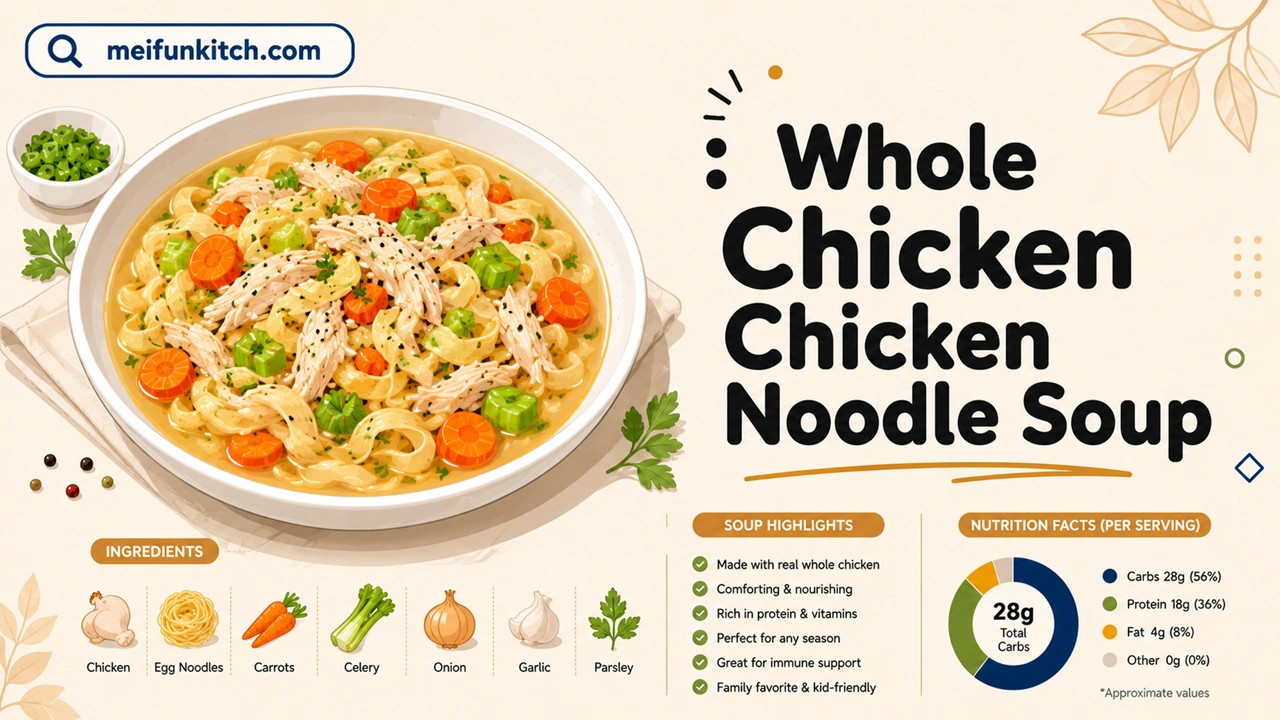
Whole chicken chicken noodle soup is a warm, tasty, and comforting meal that many families enjoy throughout the year. It combines a whole chicken, fresh vegetables, flavorful broth, and soft noodles to make a filling dish. Moreover, it is easy to prepare and works well for lunch or dinner. Because the chicken cooks slowly, it creates a rich and delicious broth. Therefore, many home cooks choose this recipe when they want a homemade meal that tastes fresh and satisfying.
Many people love this soup because it is simple, hearty, and full of flavor. In addition, you can add carrots, celery, onions, herbs, and your favorite noodles to make it even better. As you continue reading, you will learn how to choose the best ingredients, cook the soup step by step, and make the broth rich and delicious. Furthermore, you will discover useful cooking tips, easy storage methods, and serving ideas that help you prepare this classic recipe with confidence.
Making whole chicken chicken noodle soup at home allows you to enjoy fresh ingredients while creating a meal your family will love. However, a few simple techniques can make a big difference in both flavor and texture. Therefore, this guide explains everything in clear and easy language. By the end of this article, you will know how to cook a comforting bowl of soup, avoid common mistakes, and serve a delicious homemade meal that everyone can enjoy.
What Is Whole Chicken Chicken Noodle Soup?
Whole chicken chicken noodle soup is a classic homemade meal made by cooking a whole chicken with fresh vegetables, herbs, seasonings, and noodles in a rich broth. Because the chicken cooks slowly, it releases natural juices that create a deep and comforting flavor. As a result, the broth becomes rich without needing many extra ingredients. Moreover, the cooked chicken turns tender and easy to shred, making every spoonful hearty and satisfying. Many families prepare this soup during cold weather, while others enjoy it throughout the year as a comforting meal. Therefore, it has become a favorite recipe in many homes because it combines simple ingredients with delicious homemade taste.
Making this soup from scratch also gives you complete control over the ingredients. For example, you can choose fresh vegetables such as carrots, celery, onions, and garlic to build natural flavor. Furthermore, adding herbs like parsley, thyme, or bay leaves creates a more fragrant broth without making the recipe complicated. Because you prepare everything yourself, you can also reduce salt, avoid unnecessary preservatives, and select high-quality ingredients. Consequently, homemade soup often tastes fresher than many store-bought options.
This traditional soup also offers excellent flexibility because you can easily adjust the ingredients to match your family's preferences. Likewise, you may choose egg noodles, wide noodles, or other pasta shapes depending on the texture you enjoy most. In addition, leftover chicken can be used in many other meals after serving the soup. Because every family has its own favorite recipe, small changes often create unique flavors while keeping the dish comforting and familiar.
How to Make Whole Chicken Chicken Noodle Soup Step by Step
Preparing homemade soup becomes simple when you follow a few easy steps. Whole chicken chicken noodle soup begins with placing a cleaned whole chicken into a large cooking pot along with fresh water. Next, add chopped onions, carrots, celery, garlic, and your favorite herbs. Then slowly bring everything to a gentle boil before reducing the heat to a low simmer. Because slow cooking allows the flavors to develop naturally, the broth becomes rich and delicious. Moreover, removing any foam from the top keeps the broth clearer. After the chicken becomes fully cooked, carefully remove it from the pot and allow it to cool before shredding the meat. Consequently, you create tender chicken pieces that blend perfectly into the finished soup.
Once the chicken has cooled enough to handle, remove the skin and bones before returning the shredded meat to the broth. Meanwhile, continue simmering the vegetables until they become soft but not mushy. Afterward, add your preferred noodles and cook them according to the package directions. Furthermore, tasting the broth before serving allows you to adjust the seasoning with salt, black pepper, or fresh herbs if needed.
Serving the soup with fresh bread, crackers, or a simple salad creates a complete family meal. Additionally, fresh parsley or a squeeze of lemon juice can brighten the overall flavor just before serving. If you prepare extra soup, allow it to cool before storing it in airtight containers for later meals. Likewise, reheating gently helps maintain both flavor and texture. As your confidence grows, you can also customize the recipe by adding corn, peas, spinach, or other vegetables. Consequently, this homemade recipe becomes easy to prepare, enjoyable to share, and perfect for busy weekdays or relaxing family weekends.
Whole Chicken Soup Cooking Process Comparison
| Cooking Step | Purpose | Helpful Tip |
| Choose a whole chicken | Creates rich broth | Use a fresh chicken |
| Wash vegetables | Removes dirt | Pat dry before chopping |
| Chop vegetables | Even cooking | Cut into similar sizes |
| Add fresh water | Forms the broth | Cover ingredients fully |
| Add herbs | Improves flavor | Use fresh if available |
| Bring to a gentle boil | Starts cooking | Avoid rapid boiling |
| Simmer slowly | Builds rich flavor | Cook on low heat |
| Remove foam | Creates clear broth | Skim regularly |
| Shred cooked chicken | Easy serving | Remove bones carefully |
| Add noodles | Completes the soup | Follow package directions |
| Taste and season | Balance flavors | Adjust salt gradually |
| Serve hot | Best texture | Garnish with fresh parsley |
Best Ingredients for Whole Chicken Chicken Noodle Soup
Choosing fresh ingredients makes a big difference in the flavor and quality of homemade soup. Whole chicken chicken noodle soup tastes best when you start with a fresh whole chicken because it creates a rich and natural broth during slow cooking. In addition, vegetables such as carrots, celery, onions, and garlic add sweetness, aroma, and color. Furthermore, herbs like parsley, thyme, bay leaves, and black pepper give the broth a comforting taste without making it too strong. Because every ingredient adds its own flavor, the soup becomes balanced and satisfying. Therefore, using high-quality ingredients helps create a meal that tastes fresh from the first spoonful to the last.
The type of noodles also affects the final texture. For example, egg noodles stay soft and pair well with homemade broth, while wide noodles create a heartier meal. Likewise, medium noodles cook evenly and remain tender without becoming too soft. Moreover, using fresh vegetables instead of frozen ones often improves both texture and flavor. At the same time, adding fresh herbs near the end of cooking helps preserve their natural aroma. Consequently, every bowl looks colorful, smells inviting, and delivers a delicious homemade taste.
You can also customize the recipe based on your family's preferences. For instance, some people enjoy adding peas, corn, spinach, or mushrooms for extra nutrition and flavor. In addition, a squeeze of fresh lemon juice before serving adds brightness to the broth. Likewise, homemade chicken stock creates even deeper flavor if you have extra time. Because each ingredient contributes something unique, even small changes can improve the final dish.
How Long to Cook Whole Chicken Chicken Noodle Soup
Cooking time plays an important role in creating rich flavor and tender chicken. Whole chicken chicken noodle soup usually requires gentle simmering instead of rapid boiling because slow cooking helps the chicken release its natural juices into the broth. First, bring the pot to a light boil, and then immediately reduce the heat to a gentle simmer. As a result, the broth stays clear while the meat becomes soft and juicy. Moreover, slow cooking allows the vegetables and herbs to blend naturally with the broth. Therefore, patience during cooking often produces the best homemade flavor.
Most whole chickens become fully cooked after simmering for about one and a half to two hours, depending on their size. Meanwhile, vegetables become tender much earlier, so many cooks remove or add vegetables at different times to maintain the perfect texture. Furthermore, noodles should always be added near the end of cooking because they require much less time. Consequently, they remain firm instead of becoming too soft. In addition, checking the chicken before removing it from the pot ensures that it is fully cooked and easy to shred. Therefore, careful timing helps every ingredient reach the perfect texture.
After removing the cooked chicken, allow it to cool slightly before shredding the meat. Then return the shredded chicken to the broth and cook the noodles until they become tender. Likewise, adding fresh herbs during the final minutes keeps their flavor bright and fresh. Moreover, tasting the broth before serving allows you to adjust the seasoning if necessary. Because each step builds on the previous one, proper timing creates a soup with balanced flavor, tender chicken, and perfectly cooked noodles. Consequently, following these simple cooking stages helps produce consistently excellent homemade results.
Cooking Time Comparison Guide
| Ingredient or Step | Recommended Time | Purpose |
| Bring water to boil | 10–15 minutes | Starts cooking |
| Whole chicken simmer | 90–120 minutes | Tender meat and rich broth |
| Onions | 60–90 minutes | Sweet flavor |
| Carrots | 45–60 minutes | Soft texture |
| Celery | 45–60 minutes | Balanced flavor |
| Garlic | Entire simmer | Deep aroma |
| Bay leaves | Entire simmer | Rich broth |
| Fresh thyme | Entire simmer | Herbal flavor |
| Noodles | 6–10 minutes | Tender texture |
| Fresh parsley | Last 5 minutes | Fresh taste |
| Shred chicken | After cooling slightly | Easy serving |
| Final seasoning | Before serving | Balanced flavor |
Whole Chicken Chicken Noodle Soup Nutrition Facts and Health Benefits
A homemade bowl of whole chicken chicken noodle soup provides a balanced mix of protein, carbohydrates, vitamins, and minerals. Because the soup includes chicken, vegetables, broth, and noodles, it offers several important nutrients in one meal. The chicken supplies high-quality protein that helps build and repair muscles. Meanwhile, vegetables such as carrots, celery, and onions provide vitamins and natural antioxidants that support overall wellness. In addition, the broth keeps the meal warm and comforting while also helping with hydration. Therefore, this homemade soup becomes a satisfying choice for lunch or dinner. Moreover, preparing it from fresh ingredients allows you to control the amount of salt, fat, and seasonings.
The nutritional value also depends on the ingredients you choose and the way you prepare the recipe. For example, removing the chicken skin before serving lowers the fat content, while adding extra vegetables increases the amount of fiber and vitamins. Likewise, choosing homemade broth instead of highly processed broth often reduces unnecessary sodium. Furthermore, using fresh herbs adds natural flavor without relying on heavy seasonings. Because every ingredient contributes something valuable, small adjustments can improve the overall nutritional profile of the soup.
Many families enjoy this soup throughout the year because it combines comfort, nutrition, and convenience in one bowl. Additionally, the protein helps people feel full for longer, while the carbohydrates from the noodles provide steady energy for daily activities. At the same time, the vegetables contribute important nutrients that support normal body functions. Moreover, homemade meals often contain fewer preservatives than many ready-made options. As your family enjoys this classic recipe, you can easily customize it by adding spinach, peas, beans, or other colorful vegetables for even more nutrition.
Whole Chicken Chicken Noodle Soup Nutrition Comparison
| Nutrient | Approximate Benefit | Why It Matters |
| Calories | Moderate energy | Supports daily activities |
| Protein | High | Helps build and repair muscles |
| Carbohydrates | Moderate | Provides lasting energy |
| Total Fat | Depends on recipe | Supports balanced nutrition |
| Saturated Fat | Lower without skin | Better heart-friendly option |
| Dietary Fiber | From vegetables | Supports healthy digestion |
| Vitamin A | High from carrots | Supports eye health |
| Vitamin C | From vegetables | Supports the immune system |
| Potassium | Naturally present | Supports normal muscle function |
| Iron | From chicken | Helps carry oxygen in the body |
| Calcium | Small amount | Supports healthy bones |
| Sodium | Varies by broth | Choose lower-sodium options when possible |
| Water Content | High | Helps maintain hydration |
| Antioxidants | From vegetables and herbs | Support overall wellness |
Tips for Making the Best Homemade Chicken Broth
A flavorful broth is the heart of every comforting bowl of whole chicken chicken noodle soup. Therefore, choosing a fresh whole chicken and fresh vegetables is the first step toward great results. Moreover, onions, carrots, celery, garlic, parsley, thyme, and bay leaves create a rich and balanced flavor. Instead of boiling the soup quickly, let it simmer gently because slow cooking helps the chicken release its natural juices into the broth. As a result, the liquid becomes clear, rich, and full of flavor. Furthermore, skimming the foam from the surface during cooking keeps the broth clean and smooth. Consequently, every spoonful tastes fresh and comforting without needing many extra ingredients.
Using clean water and fresh herbs also improves the final flavor. In addition, avoid adding too much salt at the beginning because the broth becomes stronger as it cooks. Instead, season lightly first and adjust the taste before serving. Likewise, adding herbs during the last few minutes creates a brighter aroma. Because fresh ingredients work together naturally, the broth develops a deep homemade taste. Therefore, simple cooking methods often produce the best results while keeping the recipe easy for beginners.
After cooking, strain the broth if you prefer a smoother texture. Then remove the chicken from the bones before returning the meat to the soup. Moreover, discard the used vegetables if they have lost their texture after long cooking. Finally, taste the broth once more before serving and adjust the seasoning if necessary. Consequently, these small steps help create a delicious homemade broth that becomes the perfect base for every bowl of soup.
Homemade Chicken Broth Tips Comparison
| Tip | Benefit |
| Use a fresh whole chicken | Rich natural flavor |
| Add onions | Sweetness |
| Add carrots | Balanced taste |
| Add celery | Classic aroma |
| Include garlic | Deep flavor |
| Use fresh herbs | Better fragrance |
| Simmer slowly | Rich broth |
| Remove foam | Clear broth |
| Season gradually | Balanced taste |
| Strain broth | Smooth texture |
| Taste before serving | Perfect seasoning |
| Use fresh water | Cleaner flavor |
What Noodles Work Best in Chicken Noodle Soup?
Choosing the right noodles helps create a better bowl of soup. Whole chicken chicken noodle soup tastes wonderful with several noodle varieties because each type offers a different texture. Egg noodles remain one of the most popular choices because they become soft while holding their shape. Likewise, wide noodles create a hearty meal, while medium noodles provide a balanced texture. Furthermore, thin noodles cook quickly and blend well with light broth. Therefore, selecting the right noodle depends on your family's personal preference and the style of soup you want to prepare.
Fresh noodles cook quickly and often deliver a softer texture. On the other hand, dried noodles store longer and are available in most grocery stores. In addition, whole wheat noodles provide extra fiber, while gluten-free noodles offer an option for people with gluten sensitivity. Because every variety cooks differently, following the package directions helps prevent overcooking. Consequently, the noodles remain tender without becoming mushy. Moreover, adding them near the end of cooking helps preserve their texture.
You can also experiment with different noodle shapes to create variety. For example, spiral pasta, shells, or small pasta shapes work well for children. Likewise, homemade noodles add a traditional touch and absorb the flavorful broth beautifully. Furthermore, cooking noodles separately can help keep leftovers from becoming too soft. Therefore, selecting the proper noodle type improves both texture and overall enjoyment for every serving.
Noodle Comparison Guide
| Noodle Type | Best Feature |
| Egg noodles | Classic choice |
| Wide noodles | Hearty texture |
| Medium noodles | Balanced bite |
| Thin noodles | Quick cooking |
| Homemade noodles | Traditional flavor |
| Whole wheat noodles | Extra fiber |
| Gluten-free noodles | Wheat-free option |
| Rice noodles | Light texture |
| Spiral pasta | Kid-friendly |
| Shell pasta | Holds broth well |
| Flat noodles | Soft texture |
| Small pasta | Easy to eat |
How to Store, Freeze, and Reheat Whole Chicken Chicken Noodle Soup
Proper storage keeps homemade soup fresh and delicious. Whole chicken chicken noodle soup should cool slightly before going into airtight containers. Then place it in the refrigerator within two hours after cooking to maintain food safety. Moreover, storing the noodles separately from the broth helps preserve their texture. Consequently, the soup tastes fresher when reheated later. Therefore, a few simple storage habits help reduce food waste while making future meals easier to prepare.
Freezing works well if you want to save soup for longer periods. In addition, leave a little space inside each freezer container because liquids expand during freezing. Likewise, label each container with the preparation date for easy organization. Before serving, thaw the soup in the refrigerator whenever possible. As a result, the texture remains more consistent after reheating. Furthermore, freezing the broth and chicken without noodles often provides better quality.
Reheating should happen gently over medium or low heat. Moreover, stirring occasionally spreads the heat evenly throughout the soup. If the broth becomes too thick, simply add a little water or fresh broth. Likewise, adding freshly cooked noodles during reheating creates a better texture than reheating old noodles several times. Consequently, careful storage and reheating help every bowl remain flavorful, fresh, and enjoyable.
Storage and Reheating Comparison
| Method | Benefit |
| Cool before storing | Better food safety |
| Airtight container | Maintains freshness |
| Refrigerate quickly | Reduces spoilage |
| Freeze broth separately | Better texture |
| Label containers | Easy organization |
| Thaw in refrigerator | Safer reheating |
| Heat gently | Prevents overcooking |
| Stir while reheating | Even heating |
| Add fresh broth | Restores moisture |
| Cook fresh noodles | Better texture |
| Store portions separately | Convenient meals |
| Serve immediately | Best flavor |
Common Mistakes to Avoid When Making Whole Chicken Chicken Noodle Soup
Many cooking mistakes are easy to avoid with a little preparation. Whole chicken chicken noodle soup often loses flavor when people boil it too quickly instead of letting it simmer gently. Because slow cooking creates a richer broth, patience produces much better results. Furthermore, adding too much salt early in the cooking process may create an overly salty soup after the liquid reduces. Therefore, seasoning gradually provides better control over the final flavor.
Another common mistake is overcooking the noodles. Instead, cook them only until they become tender because they continue softening in the hot broth. Likewise, overcrowding the pot with vegetables may reduce even cooking. In addition, forgetting to remove the cooked chicken before shredding makes preparation more difficult. Consequently, following the proper cooking order creates better texture and appearance.
Storage mistakes also affect quality. Leaving soup at room temperature for too long reduces freshness and food safety. Moreover, reheating the same batch several times can reduce both flavor and texture. Therefore, storing soup in smaller portions helps avoid repeated reheating. As a result, each serving remains fresh, delicious, and enjoyable.
Common Mistakes Comparison
| Mistake | Better Choice |
| Fast boiling | Gentle simmer |
| Too much salt early | Season gradually |
| Overcooked noodles | Cook near the end |
| Skipping foam removal | Skim regularly |
| Overcrowded pot | Balanced ingredients |
| Dull vegetables | Use fresh produce |
| Thick broth | Add water if needed |
| Poor storage | Airtight containers |
| Reheating many times | Heat only needed portions |
| Ignoring seasoning | Taste before serving |
| Adding noodles too early | Add near the end |
| Using old herbs | Choose fresh herbs |
Easy Variations and Serving Ideas for Chicken Noodle Soup
Homemade soup becomes even more enjoyable when you try different variations. Whole chicken chicken noodle soup can easily change to match your family's favorite flavors. For example, adding spinach, peas, corn, mushrooms, or green beans increases both nutrition and color. Likewise, fresh herbs and a squeeze of lemon juice brighten the broth before serving. Therefore, simple additions create exciting new flavors without changing the comforting nature of the recipe.
Serving ideas also make the meal more satisfying. In addition, warm bread, dinner rolls, crackers, or fresh salad pair beautifully with homemade soup. Furthermore, grated Parmesan cheese or fresh parsley adds extra flavor just before serving. Because these small additions improve both taste and presentation, every meal feels more special. Consequently, families can enjoy the same recipe in many different ways throughout the year.
You can also adjust the recipe for different seasons and occasions. For instance, add extra vegetables during winter for a heartier meal or include fresh herbs during spring for lighter flavor. Likewise, use leftover chicken to prepare a quicker version on busy weekdays. Moreover, serving smaller bowls as an appetizer works well before family dinners. Therefore, experimenting with simple changes helps keep this classic recipe fresh, delicious, and enjoyable every time.
Serving Ideas Comparison
| Variation or Side | Benefit |
| Spinach | More vitamins |
| Corn | Natural sweetness |
| Peas | Extra color |
| Mushrooms | Rich flavor |
| Green beans | Added texture |
| Lemon juice | Fresh taste |
| Fresh parsley | Bright garnish |
| Parmesan cheese | Savory flavor |
| Dinner rolls | Filling side |
| Crackers | Crispy texture |
| Garden salad | Balanced meal |
| Garlic bread | Classic pairing |
Conclusion
Whole chicken chicken noodle soup is more than a simple meal because it brings comfort, rich flavor, and wholesome nutrition to the table. By using a whole chicken, fresh vegetables, herbs, and your favorite noodles, you can prepare a homemade soup that tastes far better than many store-bought options. Moreover, learning the right cooking techniques, choosing quality ingredients, and following proper storage methods help you enjoy delicious results every time. Whether you cook this recipe for a family dinner, meal prep, or a cozy weekend lunch, it offers a satisfying balance of taste and nourishment. Furthermore, you can easily customize the recipe with different vegetables, herbs, or noodle varieties to match your family's preferences.
FAQs
Can I make whole chicken chicken noodle soup in advance?
Yes. You can prepare the soup a day ahead because the flavors often become richer after resting in the refrigerator. For the best texture, store the noodles separately from the broth and combine them when reheating. This method helps prevent the noodles from becoming too soft.
What is the best whole chicken size for noodle soup?
A medium-sized whole chicken usually provides enough meat and broth for several servings. It creates a flavorful stock while producing tender chicken for the soup. Larger chickens work well for bigger families or meal preparation, but they may require a slightly longer cooking time.
Should I cook the noodles separately?
Cooking the noodles separately is often the best choice, especially if you plan to store leftovers. Separate noodles stay firmer and absorb less broth during storage. When serving, simply add freshly cooked noodles to the hot soup for the best texture and flavor.
Can I freeze homemade chicken noodle soup?
Yes. The broth and chicken freeze very well. However, many cooks freeze the soup without noodles because pasta may become soft after thawing. Adding freshly cooked noodles during reheating gives the soup a fresher taste and a better texture.
What vegetables taste best in chicken noodle soup?
Carrots, celery, onions, and garlic are the traditional vegetables because they create a balanced and flavorful broth. You can also add peas, spinach, corn, mushrooms, or green beans for extra color, nutrition, and variety while keeping the soup hearty and delicious.
How do I make my chicken broth more flavorful?
Slowly simmer the whole chicken with fresh vegetables, herbs, garlic, and bay leaves instead of boiling it quickly. Skim the foam from the surface during cooking and season gradually. Fresh herbs added near the end also improve the aroma and overall flavor.
Why is my chicken noodle soup cloudy?
Cloudy broth usually happens when the soup boils too rapidly or when the foam is not removed during cooking. Keeping the soup at a gentle simmer and skimming the surface regularly helps create a clearer, cleaner-looking broth with excellent flavor.
What herbs go well with chicken noodle soup?
Fresh parsley, thyme, bay leaves, rosemary, dill, and black pepper are excellent choices. These herbs add natural aroma without overpowering the broth. Many cooks also finish the soup with fresh parsley just before serving for a bright and fresh flavor.
How long does homemade chicken noodle soup last in the refrigerator?
When stored in an airtight container, homemade soup usually stays fresh for about three to four days. Refrigerate it soon after cooking and reheat only the amount you plan to eat. Proper storage helps maintain both flavor and food safety.
Can I use different noodles in this recipe?
Absolutely. Egg noodles are the traditional choice, but wide noodles, whole wheat noodles, gluten-free noodles, rice noodles, and even small pasta shapes work well. Choosing your favorite noodle allows you to customize the soup while keeping it hearty and comforting.

Smith
Author103 Published Articles
James Smith is a dedicated food writer and recipe enthusiast who specializes in creating informative content about noodles, pasta, rice dishes, comfort foods, and a wide variety of global cuisines. He is passionate about sharing easy-to-follow recipes, cooking techniques, ingredient guides, nutrition facts, and meal preparation tips that help readers cook with confidence. From classic noodle dishes and homemade sauces to healthy meal ideas and international favorites, James focuses on delivering well-researched, practical, and engaging content for home cooks of all skill levels. His goal is to make cooking enjoyable, accessible, and inspiring by providing reliable recipes and food knowledge that readers can trust.
EducationM.Sc. in Food and Nutrition.
Experience8 Years.
ExpertiseWrites about Noodles and Many Other Foods