
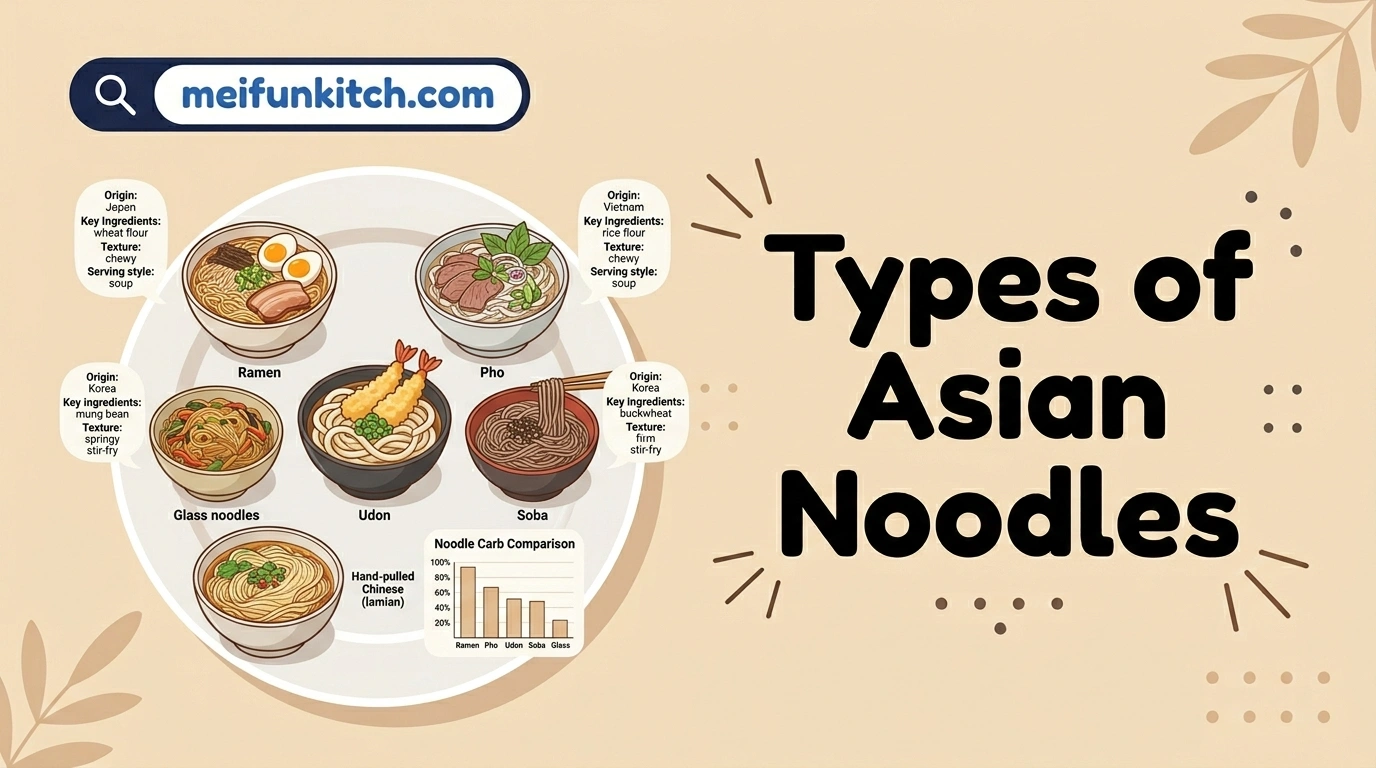
Asian noodles are popular foods enjoyed in many countries across Asia. They come in different shapes, sizes, and textures. Some noodles are thick, while others are thin and soft. Moreover, people make them from ingredients such as wheat, rice, buckwheat, and starch. As a result, all Types of Asian Noodles offer a unique taste and cooking experience.
There are many types of Asian noodles, and each one works best in certain dishes. For example, ramen noodles are often served in warm broth, while rice noodles are commonly used in stir-fries and soups. In addition, soba noodles have a slightly nutty flavor, and udon noodles are thick and chewy. Therefore, learning about these noodle varieties can help you choose the right one for your favorite recipes.
If you enjoy cooking or trying new foods, understanding the types of Asian noodles can be very helpful. Not only will you discover how they differ from one another, but you will also learn which dishes they suit best. Furthermore, knowing the basics can make shopping and meal planning easier. By the end of this guide, you will have a clear understanding of the most popular noodle varieties and how to enjoy them at home.
Traditional Asian Noodle Dishes You Must Try
Famous Noodle Dishes Across Asia
The world of types of asian noodles becomes even more exciting when you explore the traditional dishes that made these noodles famous. Across Asia, families have prepared noodle recipes for generations, and many of these dishes remain popular today. For example, Japan is known for ramen, udon, and soba dishes, while China offers lo mein, chow mein, and hand-pulled noodles. Meanwhile, Thailand is famous for Pad Thai, and Vietnam is celebrated for pho. As a result, each country has developed unique recipes that showcase local ingredients and cooking traditions. Furthermore, these dishes provide an excellent way to experience authentic flavors while learning about different cultures.
Traditional noodle dishes often combine noodles with vegetables, proteins, herbs, and flavorful sauces or broths. Consequently, they deliver a balance of taste, texture, and nutrition. Moreover, many recipes focus on fresh ingredients and careful preparation methods. Therefore, even simple noodle dishes can provide rich flavors and satisfying meals. In addition, these recipes often reflect the history and customs of the regions where they originated. As a result, every bowl tells a story about local food traditions and culinary heritage.
Trying traditional noodle dishes can help home cooks expand their skills and discover new flavors. Additionally, many classic recipes are surprisingly easy to prepare with ingredients available in modern grocery stores. Therefore, beginners can confidently recreate authentic meals at home. Furthermore, learning about famous noodle dishes makes it easier to understand how different noodle varieties are used. Consequently, exploring these traditional recipes becomes both educational and enjoyable.
Traditional Noodle Dish Comparison
| Dish | Country | Noodle Type | Cooking Style | Flavor Profile | Soup Based | Stir-Fried | Difficulty | Popularity | Protein Options | Vegetable Use | Best Occasion |
| Ramen | Japan | Ramen | Soup | Rich | Yes | No | Medium | Very High | Many | High | Dinner |
| Udon Soup | Japan | Udon | Soup | Mild | Yes | No | Easy | High | Many | Medium | Lunch |
| Soba Bowl | Japan | Soba | Hot/Cold | Nutty | Optional | No | Easy | High | Moderate | High | Light Meals |
| Lo Mein | China | Egg Noodles | Stir-Fry | Savory | No | Yes | Easy | High | Many | High | Dinner |
| Chow Mein | China | Wheat Noodles | Stir-Fry | Savory | No | Yes | Easy | High | Many | Medium | Lunch |
| Pho | Vietnam | Rice Noodles | Soup | Aromatic | Yes | No | Medium | Very High | Many | High | Any Time |
| Pad Thai | Thailand | Rice Noodles | Stir-Fry | Sweet Savory | No | Yes | Medium | Very High | Many | High | Dinner |
| Japchae | Korea | Sweet Potato | Stir-Fry | Sweet Savory | No | Yes | Medium | High | Many | High | Celebrations |
| Laksa | Malaysia | Rice Noodles | Soup | Spicy | Yes | No | Medium | High | Many | Medium | Dinner |
| Mee Goreng | Indonesia | Wheat Noodles | Stir-Fry | Spicy | No | Yes | Easy | High | Many | Medium | Quick Meals |
| Char Kway Teow | Malaysia | Rice Noodles | Stir-Fry | Smoky | No | Yes | Medium | High | Many | Medium | Street Food |
Buying, Storing, and Cooking Asian Noodles Like a Pro
Essential Tips for Better Results
When shopping for types of asian noodles, it is important to think about the dishes you plan to prepare. For example, thick noodles often work best in hearty soups, while thin noodles are ideal for stir-fries and salads. Additionally, reading ingredient labels helps you understand texture, flavor, and dietary suitability. Therefore, informed purchasing decisions can improve cooking results and help you select products that match your needs. Moreover, choosing high-quality noodles often leads to a better overall dining experience.
Proper storage is equally important because it helps preserve freshness and quality. Dried noodles generally last much longer than fresh varieties, especially when stored in cool and dry conditions. Meanwhile, fresh noodles usually require refrigeration and should be used within a short period. Consequently, understanding storage requirements can reduce waste and maintain flavor. Furthermore, keeping noodles in sealed containers helps protect them from moisture and contamination.
Cooking noodles correctly can make a significant difference in texture and taste. Therefore, always follow package instructions and test noodles during cooking. Additionally, avoid overcooking because it can make noodles soft and less enjoyable. Meanwhile, using plenty of water allows noodles to cook evenly. As a result, proper cooking techniques help create restaurant-quality meals at home. Furthermore, pairing noodles with suitable sauces and ingredients enhances the final dish even more.
Buying, Storage, and Cooking Comparison
| Factor | Best Practice | Benefit |
| Reading Labels | Check ingredients | Better product selection |
| Choosing Noodle Type | Match recipe | Improved results |
| Fresh Noodles | Refrigerate | Maintain freshness |
| Dried Noodles | Store in pantry | Longer shelf life |
| Airtight Storage | Use sealed containers | Protect quality |
| Cool Environment | Avoid heat | Better preservation |
| Cooking Time | Follow instructions | Ideal texture |
| Water Quantity | Use plenty | Even cooking |
| Texture Testing | Taste while cooking | Prevent overcooking |
| Sauce Pairing | Match noodle style | Better flavor |
| Portion Planning | Measure servings | Reduce waste |
| Ingredient Quality | Buy trusted brands | Consistent results |
Types of Asian Noodles: A Complete Guide for Beginners
Learning the Basics of Asian Noodles
For anyone new to Asian cuisine, understanding types of asian noodles is a great place to start. Noodles play an important role in many Asian cultures and appear in countless dishes. Moreover, they come in different shapes, textures, and ingredients. As a result, each variety creates a unique dining experience. Furthermore, noodles can be served hot, cold, in soups, or stir-fried, making them one of the most versatile foods in the world.
Many noodle varieties are made from wheat, rice, buckwheat, or starch. Consequently, each ingredient produces different textures and cooking characteristics. For example, wheat noodles are often chewy, while rice noodles tend to be softer. Additionally, some noodles absorb broth well, whereas others perform better in stir-fries. Therefore, understanding these differences helps beginners choose the right noodle for each recipe.
As interest in global cuisine continues to grow, more people are exploring noodle dishes at home. Meanwhile, grocery stores now offer a wider selection than ever before. Consequently, beginners can easily find popular noodle varieties and experiment with authentic recipes. Furthermore, learning about noodle basics builds confidence and makes cooking more enjoyable.
Beginner Guide Comparison
| Noodle Type | Main Ingredient | Texture | Best Use | Soup Use | Stir-Fry Use | Salad Use | Ease of Cooking | Availability | Flavor | Popularity | Beginner Friendly |
| Ramen | Wheat | Chewy | Soup | Excellent | Good | Fair | Easy | High | Mild | Very High | High |
| Udon | Wheat | Thick | Soup | Excellent | Good | Low | Easy | High | Mild | High | High |
| Rice Noodles | Rice | Soft | Stir-Fry | Excellent | Excellent | Good | Easy | High | Neutral | Very High | High |
| Soba | Buckwheat | Firm | Salad | Good | Good | Excellent | Easy | Medium | Nutty | High | Medium |
| Egg Noodles | Wheat/Egg | Firm | Stir-Fry | Excellent | Excellent | Fair | Easy | High | Rich | High | High |
| Glass Noodles | Starch | Light | Salad | Fair | Excellent | Excellent | Easy | Medium | Neutral | High | High |
| Vermicelli | Rice | Thin | Bowls | Good | Excellent | Excellent | Easy | High | Neutral | High | High |
| Chow Mein | Wheat | Crisp | Stir-Fry | Low | Excellent | Low | Medium | High | Mild | High | Medium |
| Sweet Potato | Sweet Potato | Chewy | Japchae | Low | Excellent | Good | Medium | Medium | Neutral | Medium | Medium |
| Knife-Cut | Wheat | Dense | Soup | Excellent | Fair | Low | Medium | Low | Mild | Medium | Medium |
| Cellophane | Starch | Light | Salads | Fair | Excellent | Excellent | Easy | Medium | Neutral | Medium | High |
How to Choose the Best Types of Asian Noodles for Any Recipe
Understanding Recipe Requirements
Choosing the right types of asian noodles can make a big difference in the final dish. First, think about how you plan to cook the meal. For example, some noodles work best in rich soups, while others perform better in stir-fries or cold salads. Moreover, each noodle variety has a unique texture that affects the eating experience. Therefore, selecting the proper noodle helps create authentic flavor and better overall results. In addition, understanding the purpose of the dish allows you to match ingredients more effectively.
Texture is another important factor when selecting noodles. Thick noodles often provide a chewy and hearty bite, whereas thin noodles create a lighter texture. Furthermore, some noodles absorb sauces quickly, while others maintain their structure in broth. Consequently, choosing a noodle that complements the cooking method improves both taste and presentation. As a result, home cooks can prepare dishes that feel more balanced and enjoyable.
Availability and dietary preferences should also influence your decision. For instance, some people prefer gluten-free noodles made from rice or starch. Meanwhile, others may enjoy traditional wheat-based options. Therefore, reading ingredient labels and understanding noodle characteristics can help you make informed choices. Moreover, experimenting with different varieties allows you to discover personal favorites and improve your cooking skills over time.
Best Noodles for Different Recipes Comparison
| Recipe Type | Recommended Noodle | Texture | Sauce Absorption | Soup Friendly | Stir-Fry Friendly | Salad Friendly | Cooking Ease | Gluten-Free Option | Popularity | Versatility | Overall Rating |
| Ramen Soup | Ramen | Chewy | High | Excellent | Good | Fair | Easy | No | Very High | High | Excellent |
| Udon Soup | Udon | Thick | High | Excellent | Good | Low | Easy | No | High | Medium | Excellent |
| Pad Thai | Rice Noodles | Soft | High | No | Excellent | Good | Easy | Yes | Very High | High | Excellent |
| Pho | Rice Noodles | Soft | Medium | Excellent | Fair | Low | Easy | Yes | Very High | High | Excellent |
| Lo Mein | Egg Noodles | Firm | High | Good | Excellent | Low | Easy | No | High | High | Excellent |
| Japchae | Sweet Potato Noodles | Chewy | High | Low | Excellent | Good | Medium | Yes | High | Medium | Very Good |
| Cold Salad | Soba | Firm | Medium | Low | Good | Excellent | Easy | Sometimes | High | High | Excellent |
| Stir-Fry Bowl | Rice Vermicelli | Light | Medium | Low | Excellent | Excellent | Easy | Yes | High | High | Very Good |
| Vegetable Soup | Udon | Thick | High | Excellent | Fair | Low | Easy | No | High | Medium | Very Good |
| Asian Salad | Glass Noodles | Light | Medium | Low | Good | Excellent | Easy | Yes | High | High | Very Good |
| Beef Noodle Soup | Knife-Cut Noodles | Dense | High | Excellent | Fair | Low | Medium | No | Medium | Medium | Good |
Types of Asian Noodles Used in Soups, Stir-Fries, and Salads
Choosing Noodles Based on Cooking Style
The types of asian noodles used in recipes often depend on the cooking method. Soup dishes usually require noodles that stay firm in hot broth for an extended period. For example, ramen and udon noodles perform exceptionally well because they absorb flavor while maintaining texture. Additionally, these noodles create satisfying and comforting meals. Therefore, they remain popular choices for traditional soup recipes throughout Asia.
Stir-fried dishes require noodles that can handle high heat and frequent tossing. Consequently, rice noodles, egg noodles, and chow mein noodles are commonly used in these recipes. Moreover, these varieties absorb sauces effectively and blend well with vegetables and proteins. As a result, they help create flavorful meals with balanced textures. Furthermore, many famous noodle dishes rely on these noodles to achieve their signature taste.
Salads often benefit from lighter noodle varieties that remain enjoyable when served cold. For instance, soba noodles, vermicelli, and glass noodles provide refreshing textures and pair well with fresh vegetables. Meanwhile, they absorb dressings without becoming overly heavy. Therefore, these noodles work perfectly for warm-weather meals and quick lunches. In addition, they add variety to meal planning while keeping dishes simple and satisfying.
Soup, Stir-Fry, and Salad Noodle Comparison
| Noodle Type | Best Use | Soup Rating | Stir-Fry Rating | Salad Rating | Texture | Flavor | Cooking Time | Popularity | Availability | Versatility | Recommendation |
| Ramen | Soup | Excellent | Good | Fair | Chewy | Mild | Short | Very High | High | High | Excellent |
| Udon | Soup | Excellent | Good | Low | Thick | Mild | Short | High | High | Medium | Excellent |
| Rice Noodles | Stir-Fry | Excellent | Excellent | Good | Soft | Neutral | Short | Very High | High | High | Excellent |
| Soba | Salad | Good | Good | Excellent | Firm | Nutty | Short | High | Medium | High | Excellent |
| Egg Noodles | Stir-Fry | Excellent | Excellent | Fair | Firm | Rich | Medium | High | High | High | Excellent |
| Glass Noodles | Salad | Fair | Excellent | Excellent | Light | Neutral | Short | High | Medium | High | Very Good |
| Vermicelli | Salad | Good | Excellent | Excellent | Thin | Neutral | Very Short | High | High | High | Excellent |
| Chow Mein | Stir-Fry | Low | Excellent | Low | Crisp | Mild | Medium | High | High | Medium | Very Good |
| Sweet Potato Noodles | Stir-Fry | Low | Excellent | Good | Chewy | Neutral | Medium | Medium | Medium | Medium | Good |
| Knife-Cut Noodles | Soup | Excellent | Fair | Low | Dense | Mild | Medium | Medium | Low | Medium | Good |
| Cellophane Noodles | Salad | Fair | Excellent | Excellent | Light | Neutral | Short | Medium | Medium | High | Very Good |
Ramen vs Udon vs Soba vs Rice Noodles: Key Differences Explained
Comparing Four Popular Noodle Types
Among the many types of asian noodles, ramen, udon, soba, and rice noodles are some of the most popular choices. Although they all belong to Asian cuisine, they differ greatly in ingredients and texture. For example, ramen noodles use wheat flour and have a springy bite. Meanwhile, udon noodles are much thicker and softer. As a result, each noodle variety creates a unique eating experience and works best in different dishes.
Soba noodles stand apart because they contain buckwheat, which provides a mild nutty flavor. In contrast, rice noodles have a neutral taste and a softer texture. Furthermore, soba noodles are commonly served in light broths or cold dishes, while rice noodles appear in stir-fries, soups, and noodle bowls. Therefore, understanding these differences helps cooks select the right noodle for each recipe. Additionally, matching noodle texture to the cooking method improves the final dish.
These noodle varieties remain popular because they are versatile and easy to prepare. Moreover, they pair well with a wide range of ingredients and sauces. Consequently, they appear in both traditional recipes and modern fusion dishes. As a result, learning their differences helps home cooks create more authentic and enjoyable meals.
Ramen vs Udon vs Soba vs Rice Noodles Comparison
| Feature | Ramen | Udon | Soba | Rice Noodles |
| Main Ingredient | Wheat | Wheat | Buckwheat | Rice |
| Texture | Chewy | Thick & Soft | Firm | Soft |
| Thickness | Medium | Thick | Thin | Varies |
| Flavor | Mild | Mild | Nutty | Neutral |
| Soup Use | Excellent | Excellent | Good | Excellent |
| Stir-Fry Use | Good | Fair | Good | Excellent |
| Salad Use | Fair | Low | Excellent | Good |
| Cooking Time | Short | Short | Short | Very Short |
| Gluten-Free | No | No | Sometimes | Yes |
| Popular Region | Japan | Japan | Japan | Southeast Asia |
| Versatility | High | Medium | High | Very High |
| Global Popularity | Very High | High | High | Very High |
Which Types of Asian Noodles Are the Healthiest for Your Diet?
Understanding Nutrition and Ingredients
Many people wonder which types of asian noodles offer the best nutritional value. The answer often depends on the ingredients used and how the noodles are prepared. For example, soba noodles made with buckwheat may provide more fiber and nutrients than some refined wheat noodles. Likewise, whole-grain options often offer additional health benefits. Therefore, reading ingredient labels can help consumers make informed decisions.
Healthy meals involve more than simply choosing the right noodle. In addition, portion size, cooking method, and toppings all influence nutrition. For instance, pairing noodles with vegetables and lean proteins creates a more balanced meal. Consequently, even traditional noodle dishes can fit into a healthy lifestyle. Furthermore, many Asian recipes naturally include a variety of nutritious ingredients.
Consumers should focus on balance rather than searching for a single perfect noodle. Moreover, different noodle varieties can support different dietary preferences. As a result, people can enjoy noodle dishes while maintaining healthy eating habits. Therefore, understanding ingredients and meal composition remains the most effective approach to nutrition.
Healthiest Noodles Comparison
| Noodle Type | Main Ingredient | Fiber Level | Protein Level | Calories | Gluten-Free | Nutrient Density | Satiety | Processing Level | Best For | Popularity | Health Rating |
| Soba | Buckwheat | High | Moderate | Moderate | Sometimes | High | High | Low | Balanced Diets | High | Excellent |
| Whole Wheat Noodles | Whole Wheat | High | Moderate | Moderate | No | High | High | Low | Everyday Meals | High | Excellent |
| Brown Rice Noodles | Brown Rice | Moderate | Moderate | Moderate | Yes | Good | Medium | Low | Healthy Recipes | Medium | Very Good |
| Rice Noodles | Rice | Low | Low | Moderate | Yes | Moderate | Medium | Moderate | Gluten-Free Diets | Very High | Good |
| Sweet Potato Noodles | Sweet Potato | Moderate | Low | Moderate | Yes | Good | Medium | Low | Stir-Fries | High | Very Good |
| Egg Noodles | Wheat/Egg | Moderate | Moderate | Moderate | No | Moderate | High | Moderate | Protein Meals | High | Good |
| Udon | Wheat | Low | Moderate | Moderate | No | Moderate | High | Moderate | Comfort Meals | High | Good |
| Ramen | Wheat | Low | Moderate | Moderate | No | Moderate | Medium | Moderate | Occasional Meals | Very High | Good |
| Glass Noodles | Starch | Low | Low | Moderate | Yes | Low | Medium | Moderate | Light Dishes | High | Fair |
| Vermicelli | Rice | Low | Low | Moderate | Yes | Moderate | Medium | Moderate | Light Meals | High | Good |
| Mung Bean Noodles | Mung Bean | Moderate | Moderate | Moderate | Yes | Good | Medium | Low | Salads | Medium | Very Good |
Cooking Asian Noodles Like a Pro
Expert Tips for Perfect Results
Cooking types of asian noodles correctly helps you achieve the best texture and flavor. First, always read the package instructions because different noodles require different cooking times. Additionally, use plenty of water so the noodles can move freely during cooking. Therefore, they cook evenly and maintain their ideal texture. Furthermore, testing a noodle before draining helps prevent overcooking.
Proper preparation starts before the noodles enter the pot. For example, some rice noodles require soaking instead of boiling. Meanwhile, fresh noodles often cook much faster than dried varieties. Consequently, understanding the specific requirements of each noodle type can improve results. Moreover, preparing sauces and ingredients ahead of time helps create a smoother cooking process.
Professional cooks also focus on pairing noodles with the right sauces and toppings. In addition, they avoid overloading dishes with too many ingredients. As a result, the noodles remain the star of the meal. Therefore, paying attention to preparation, timing, and balance can help anyone create restaurant-quality noodle dishes at home.
Professional Cooking Tips Comparison
| Cooking Factor | Best Practice | Benefit |
| Water Amount | Use plenty | Even cooking |
| Package Instructions | Follow carefully | Better texture |
| Soaking Rice Noodles | Soak when required | Prevent breakage |
| Fresh Noodles | Cook briefly | Maintain texture |
| Dried Noodles | Follow timing | Consistent results |
| Taste Testing | Check during cooking | Avoid overcooking |
| Draining | Drain promptly | Better consistency |
| Sauce Preparation | Prepare beforehand | Faster cooking |
| Ingredient Prep | Organize ingredients | Smoother workflow |
| Heat Control | Use proper temperature | Better results |
| Noodle Pairing | Match sauce style | Improved flavor |
| Portion Control | Measure servings | Balanced meals |
Final Thought about Types of Asian Noodles
The world of types of asian noodles is rich, diverse, and full of exciting flavors. From chewy ramen and thick udon to delicate rice noodles and nutty soba, each variety brings something unique to the table. Moreover, understanding the differences between noodle types can help you choose the best option for soups, stir-fries, salads, and many other dishes. As a result, your meals can become more authentic, flavorful, and enjoyable.
Whether you are a beginner learning the basics or a food enthusiast exploring traditional recipes, Asian noodles offer endless possibilities. Furthermore, they pair well with vegetables, proteins, broths, and sauces, making them suitable for many cooking styles. Therefore, they remain a favorite ingredient in kitchens around the world.
As you continue your culinary journey, do not hesitate to experiment with different noodle varieties and recipes. With the right knowledge and a little creativity, you can enjoy delicious homemade dishes that celebrate the amazing diversity of Asian cuisine.
FAQs about Types of Asian Noodles
What are the most popular Asian noodles?
The most popular Asian noodles include ramen, udon, soba, rice noodles, egg noodles, and vermicelli. These varieties are widely used in soups, stir-fries, and salads. Because each noodle has a unique texture and flavor, different recipes often require specific types for the best results.
What is the difference between ramen and udon noodles?
Ramen noodles are thinner and chewier, while udon noodles are thicker and softer. Additionally, ramen is commonly served in flavorful broths, whereas udon often appears in hearty soups. Both are wheat-based noodles, but they provide very different textures and dining experiences.
Are rice noodles healthier than wheat noodles?
Rice noodles and wheat noodles offer different nutritional benefits. Rice noodles are naturally gluten-free, while wheat noodles may contain more protein depending on the recipe. Therefore, the healthier choice often depends on your dietary needs, ingredients, and portion sizes.
Which Asian noodles are gluten-free?
Many rice noodles, glass noodles, sweet potato noodles, and mung bean noodles are naturally gluten-free. However, it is always important to check product labels because some manufacturers may process noodles in facilities that handle wheat products.
What noodles are best for stir-fry dishes?
Rice noodles, egg noodles, chow mein noodles, and sweet potato noodles are excellent choices for stir-fries. These noodles hold up well during cooking and absorb sauces effectively. As a result, they help create flavorful and satisfying meals.
Which noodles work best in soup recipes?
Ramen, udon, rice noodles, and knife-cut noodles are popular choices for soups. Because they maintain their texture in hot broth, they provide a pleasant eating experience. Furthermore, they absorb flavors well without becoming overly soft.
What are soba noodles made from?
Soba noodles are traditionally made from buckwheat flour, although some varieties also contain wheat flour. They have a slightly nutty flavor and a firm texture. Consequently, they are often served in both hot and cold dishes.
Can I use different noodles in the same recipe?
Yes, you can substitute noodles in many recipes. However, texture and flavor may change depending on the noodle you choose. Therefore, it is helpful to select a replacement with similar cooking characteristics to achieve the best results.
How should I store Asian noodles?
Dried noodles should be stored in a cool, dry place inside sealed containers. Fresh noodles usually require refrigeration and should be used quickly. Proper storage helps maintain freshness, texture, and overall quality.
How do I choose the right noodle for a recipe?
Start by considering the cooking method and desired texture. For example, ramen and udon are excellent for soups, while rice noodles work well in stir-fries. Additionally, dietary preferences and ingredient availability can help guide your decision.

Alex Balducci
Author43 Published Articles
Alex Balducci is a nutritionist, food writer, and health enthusiast dedicated to helping readers make informed dietary choices through reliable, easy-to-understand content. With a passion for nutrition, healthy eating, and balanced lifestyles, Alex creates well-researched articles covering nutrition facts, wholesome recipes, meal planning, and ingredient guides
EducationB.Sc. in Nutrition and Dietetics.
Experience10 Years.
ExpertiseWrites About Nutrition Facts