
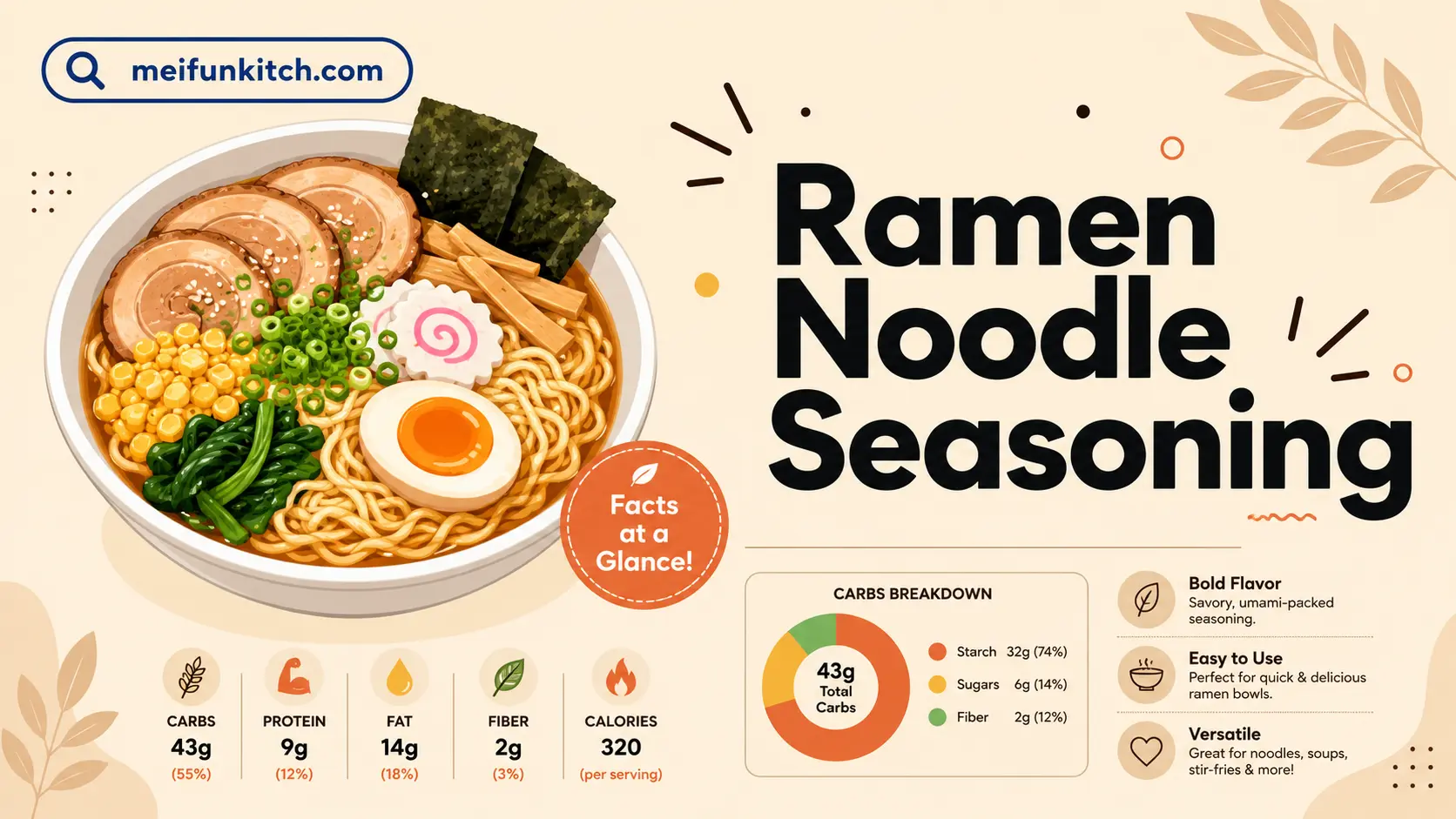
Ramen noodle seasoning gives ramen its rich and tasty flavor. Many people enjoy ramen because the seasoning adds a delicious taste to every bite. Whether you cook instant ramen or homemade ramen, the seasoning plays an important role. It can make the noodles salty, savory, spicy, or even slightly sweet. Because of this, many people want to learn more about ramen noodle seasoning and how it works.
- 1. What Is Ramen Noodle Seasoning?
- 2. What Ingredients Are in Ramen Noodle Seasoning?
- 3. Different Types of Ramen Noodle Seasoning
- 4. How to Use Ramen Noodle Seasoning for Better Flavor
- 5. Best Spices for Homemade Ramen Seasoning
- 6. Is Ramen Noodle Seasoning Healthy?
- 7. Creative Ways to Use Ramen Noodle Seasoning
- 8. Ramen Noodle Seasoning vs Homemade Seasoning
- 9. How to Store Ramen Noodle Seasoning Properly
- 10. Conclusion About Ramen Noodle Seasoning
- 11. FAQs
Different ramen seasonings use different ingredients. For example, some contain garlic, onion, soy sauce powder, and spices. Meanwhile, others include chicken, beef, or vegetable flavors. These ingredients work together to create the unique taste that ramen lovers enjoy. As a result, each ramen brand can have a different flavor and texture.
In this guide, you will learn what ramen noodle seasoning is, what ingredients it contains, and how people use it. In addition, you will discover healthier options and simple ways to make your own seasoning at home. By the end of this article, you will better understand ramen noodle seasoning and how it can improve your favorite noodle dishes.
What Is Ramen Noodle Seasoning?
Ramen Noodle Seasoning is a flavorful blend of spices, powders, and seasonings that gives ramen noodles their signature taste. Most ramen packets include a small seasoning sachet that contains ingredients such as salt, garlic powder, onion powder, soy flavoring, and other savory elements. These ingredients work together to create the rich and comforting flavor that people enjoy. Because ramen is quick and easy to prepare, many families keep it as a convenient meal option. As a result, the seasoning packet plays an important role in making the noodles taste delicious within minutes.
In addition, this flavor mix helps transform plain noodles into a satisfying dish. Different brands create unique blends to give their products a special taste. For example, some seasonings focus on a rich chicken flavor, while others offer beef, seafood, or spicy varieties. Therefore, the flavor profile can vary greatly from one product to another. Many people enjoy experimenting with extra ingredients such as vegetables, eggs, and proteins to enhance the final dish even further.
Furthermore, understanding how seasoning works can help you make better food choices. Some seasoning packets contain higher amounts of sodium, while others offer reduced-salt alternatives. Therefore, reading ingredient labels can be useful when selecting a product. At the same time, homemade versions allow greater control over flavor and nutrition. By learning more about noodle seasonings, home cooks can create meals that match their personal taste preferences and dietary needs.
Benefits of Ramen Seasoning
- Adds rich flavor quickly
- Easy to use and store
- Available in many varieties
- Enhances simple noodle dishes
- Can be customized with extra ingredients
- Convenient for busy schedules
What Ingredients Are in Ramen Noodle Seasoning?
Ramen Noodle Seasoning usually contains a combination of flavor-enhancing ingredients that create a balanced and savory taste. Common ingredients include salt, sugar, garlic powder, onion powder, soy sauce powder, yeast extract, and spices. These components work together to produce the umami flavor that many people associate with ramen. Additionally, manufacturers often add vegetable powders and natural flavorings to improve depth and aroma. Because each brand follows its own recipe, ingredient lists can vary significantly.
Moreover, some seasoning packets contain proteins or meat-based flavorings. Chicken-flavored products may include chicken broth powder, while beef varieties often contain beef extract or related ingredients. Meanwhile, vegetarian options rely on mushrooms, seaweed, and vegetable concentrates to create a rich flavor without animal products. Therefore, consumers can choose options that align with their dietary preferences. Reading the ingredient list helps identify suitable products and avoid unwanted ingredients.
Furthermore, modern food manufacturers continue to develop healthier alternatives. Reduced-sodium seasonings, organic blends, and preservative-free products have become more popular. As consumers seek healthier meal options, companies respond by improving ingredient quality. Consequently, shoppers now have more choices than ever before. Whether someone prefers traditional flavors or healthier alternatives, understanding the ingredient list makes it easier to select the right product.
Common Ingredients Found in Seasoning Packets
| Ingredient | Purpose |
| Salt | Enhances flavor |
| Garlic Powder | Adds savory taste |
| Onion Powder | Provides aroma |
| Soy Sauce Powder | Creates umami flavor |
| Sugar | Balances taste |
| Black Pepper | Adds mild spice |
| Paprika | Improves flavor and color |
| Chicken Powder | Creates chicken flavor |
| Beef Extract | Adds beef taste |
| Mushroom Powder | Boosts umami |
| Seaweed Powder | Adds depth |
| Yeast Extract | Enhances savory notes |
Different Types of Ramen Noodle Seasoning
Ramen Noodle Seasoning comes in many varieties, allowing people to enjoy different flavors and levels of spice. Chicken seasoning remains one of the most popular choices because it offers a mild and comforting taste. Beef seasoning provides a richer and deeper flavor, while seafood varieties deliver a unique ocean-inspired profile. As a result, consumers can choose a flavor that matches their personal preferences and meal ideas.
Additionally, spicy seasonings have gained popularity among people who enjoy bold flavors. These blends often include chili powder, cayenne pepper, garlic, and other spices that create heat and complexity. Some products offer a mild kick, while others provide intense spice levels. Therefore, shoppers can select options based on their tolerance for heat. Spicy varieties also pair well with vegetables, eggs, and grilled proteins.
Furthermore, vegetarian and vegan seasonings continue to attract attention. These products use mushrooms, seaweed, vegetables, and herbs to create a savory flavor without animal ingredients. Consequently, they appeal to a wider audience seeking plant-based meal options. Manufacturers also introduce international flavors inspired by Korean, Japanese, and Thai cuisines. Because of this variety, ramen lovers can enjoy new taste experiences without changing their favorite noodle dishes.
Comparison of Popular Ramen Seasoning Types
| Feature | Chicken | Beef | Seafood | Spicy | Vegetable | Miso | Curry | Garlic | Kimchi | Soy Sauce |
| Flavor Strength | Mild | Rich | Medium | Strong | Mild | Rich | Strong | Medium | Strong | Medium |
| Spice Level | Low | Low | Low | High | Low | Low | Medium | Low | High | Low |
| Best For Beginners | Yes | Yes | Yes | No | Yes | Yes | No | Yes | No | Yes |
| Umami Level | Medium | High | High | Medium | Medium | High | Medium | Medium | High | High |
| Popularity | High | High | Medium | High | Medium | High | Medium | Medium | High | High |
| Family Friendly | Yes | Yes | Yes | No | Yes | Yes | Yes | Yes | No | Yes |
| Vegetarian Option | No | No | No | Sometimes | Yes | Yes | Yes | Yes | Yes | Yes |
| Aroma | Mild | Rich | Fresh | Strong | Light | Rich | Spiced | Strong | Tangy | Savory |
| Easy to Customize | Yes | Yes | Yes | Yes | Yes | Yes | Yes | Yes | Yes | Yes |
| Common Availability | High | High | Medium | High | Medium | Medium | Medium | Medium | Medium | High |
| Pairs with Vegetables | Yes | Yes | Yes | Yes | Yes | Yes | Yes | Yes | Yes | Yes |
How to Use Ramen Noodle Seasoning for Better Flavor
Ramen Noodle Seasoning works best when used thoughtfully during cooking. Most people simply add the packet to boiling noodles, but several techniques can improve the final taste. For example, dissolving the seasoning in a small amount of hot water before mixing helps distribute flavor evenly. As a result, every bite becomes more balanced and enjoyable. Many cooks also adjust the amount of seasoning based on personal taste preferences.
Additionally, combining seasoning with fresh ingredients creates a more satisfying meal. Vegetables such as carrots, spinach, mushrooms, and green onions add texture and nutrition. Meanwhile, proteins like eggs, chicken, shrimp, or tofu increase the meal’s nutritional value. Therefore, a simple bowl of noodles can become a complete and filling dish. Small additions often make a significant difference in flavor and presentation.
Furthermore, sauces and garnishes can elevate the overall experience. Soy sauce, sesame oil, chili oil, and fresh herbs add extra layers of flavor. Consequently, homemade ramen often tastes more complex than standard instant noodles. By experimenting with different ingredients and cooking methods, anyone can create a customized meal that feels both delicious and satisfying. Simple adjustments often lead to surprisingly impressive results.
Flavor Enhancement Comparison
| Method | Flavor Boost | Cost | Ease of Use | Nutrition Benefit |
| Add Egg | High | Low | Easy | High |
| Add Vegetables | High | Low | Easy | High |
| Add Chicken | High | Medium | Medium | High |
| Add Tofu | Medium | Low | Easy | High |
| Add Sesame Oil | Medium | Low | Easy | Low |
| Add Garlic | Medium | Low | Easy | Medium |
| Add Green Onions | Medium | Low | Easy | Medium |
| Add Mushrooms | High | Low | Easy | High |
| Add Chili Oil | High | Low | Easy | Low |
| Add Soy Sauce | Medium | Low | Easy | Low |
| Add Seaweed | Medium | Low | Easy | Medium |
| Add Corn | Medium | Low | Easy | Medium |
Best Spices for Homemade Ramen Seasoning
Creating your own Ramen Noodle Seasoning at home allows you to control both flavor and quality. Many home cooks enjoy making custom blends because they can adjust the ingredients according to their personal preferences. Garlic powder, onion powder, black pepper, and paprika form the foundation of many homemade seasoning mixes. In addition, these spices are easy to find in most grocery stores. Because they provide a balanced flavor profile, they work well for both mild and bold noodle dishes.
Moreover, adding spices such as ginger powder, cayenne pepper, and white pepper can create more depth and complexity. Ginger adds warmth and freshness, while cayenne introduces heat. Meanwhile, white pepper delivers a subtle spicy flavor often found in traditional Asian soups. Therefore, combining these ingredients can help create a more authentic taste. Many experienced cooks also add mushroom powder or nutritional yeast to boost the savory umami flavor naturally.
Furthermore, homemade spice blends offer flexibility and freshness. You can reduce sodium, avoid preservatives, and experiment with different flavor combinations. As a result, many people prefer homemade seasoning over store-bought packets. By using quality spices and storing them properly, you can enjoy flavorful noodle dishes whenever you want. Consequently, homemade blends often become a favorite part of home cooking.
Best Spices for Homemade Seasoning
| Spice | Flavor Profile |
| Garlic Powder | Savory |
| Onion Powder | Sweet and savory |
| Black Pepper | Mild heat |
| White Pepper | Earthy spice |
| Paprika | Mild sweetness |
| Cayenne Pepper | Strong heat |
| Ginger Powder | Warm flavor |
| Turmeric | Earthy taste |
| Chili Flakes | Spicy kick |
| Mushroom Powder | Rich umami |
| Nutritional Yeast | Cheesy savory flavor |
| Seaweed Powder | Ocean-inspired taste |
Is Ramen Noodle Seasoning Healthy?
Many people wonder whether Ramen Noodle Seasoning is healthy enough for regular consumption. The answer depends on the ingredients and serving size. Most traditional seasoning packets contain significant amounts of sodium, which helps create a strong flavor. However, consuming too much sodium may contribute to health concerns over time. Therefore, moderation plays an important role when enjoying instant noodle products.
In addition, some seasoning packets include preservatives, artificial flavors, and flavor enhancers. While food safety authorities generally consider these ingredients safe, some consumers prefer more natural alternatives. As a result, many brands now offer organic, low-sodium, and preservative-free options. These alternatives provide similar flavors while reducing certain ingredients that health-conscious shoppers may want to avoid.
Furthermore, homemade seasoning often provides a healthier choice because it gives complete control over ingredients. You can reduce salt, increase herbs, and add nutrient-rich spices. Consequently, homemade blends may support a more balanced diet. Pairing noodles with vegetables, lean proteins, and healthy fats can also improve the nutritional value of the meal. Therefore, thoughtful ingredient choices make a significant difference.
Health Comparison Table
| Factor | Traditional Packet | Homemade Blend |
| Sodium Level | High | Adjustable |
| Preservatives | Often Present | Usually None |
| Artificial Flavors | Sometimes | Rare |
| Customizable | Limited | High |
| Fresh Ingredients | Low | High |
| Cost | Low | Moderate |
| Flavor Control | Limited | Complete |
| Nutritional Value | Moderate | Higher Potential |
| Shelf Life | Long | Medium |
| Allergy Control | Limited | Better |
| Organic Options | Limited | Easy |
| Family Friendly | Yes | Yes |
Creative Ways to Use Ramen Noodle Seasoning
Many people use Ramen Noodle Seasoning only for noodles, yet it can add flavor to many other dishes. For example, you can sprinkle a small amount over roasted vegetables to create a savory taste. In addition, it works well on baked potatoes, fries, and popcorn. Because the seasoning contains a balanced blend of spices, it easily enhances simple foods.
Moreover, creative cooks often mix the seasoning into soups, rice dishes, and stir-fries. The seasoning dissolves quickly and spreads flavor evenly throughout the meal. Therefore, it can save time when preparing quick lunches or dinners. Some people even use it as a dry rub for grilled chicken or tofu. As a result, the seasoning becomes a versatile ingredient rather than just a noodle packet.
Furthermore, snack lovers enjoy using seasoning blends in unique ways. Crackers, nuts, roasted chickpeas, and homemade chips all benefit from extra flavor. Consequently, one small packet can serve multiple purposes in the kitchen. By experimenting with different recipes, you can discover exciting ways to enjoy familiar flavors beyond a traditional bowl of noodles.
Creative Uses Comparison
| Use | Difficulty | Flavor Impact |
| Popcorn | Easy | High |
| French Fries | Easy | High |
| Roasted Vegetables | Easy | Medium |
| Fried Rice | Medium | High |
| Soup Base | Easy | High |
| Grilled Chicken | Medium | High |
| Tofu Marinade | Medium | Medium |
| Roasted Nuts | Easy | Medium |
| Crackers | Easy | Medium |
| Baked Potatoes | Easy | High |
| Stir-Fry Sauce | Medium | High |
| Roasted Chickpeas | Easy | Medium |
Ramen Noodle Seasoning vs Homemade Seasoning
Choosing between Ramen Noodle Seasoning and homemade seasoning depends on convenience, taste preferences, and nutritional goals. Store-bought packets offer speed and consistency. Every packet delivers a similar flavor, making meal preparation simple and predictable. Therefore, many busy individuals appreciate the convenience of ready-made seasonings.
On the other hand, homemade blends allow complete customization. You can control sodium levels, adjust spice intensity, and select higher-quality ingredients. Additionally, homemade recipes make it easier to avoid preservatives and artificial additives. As a result, many health-conscious consumers prefer creating their own seasoning mixes at home.
Furthermore, both options have unique advantages. Store-bought packets save time and require no preparation. Meanwhile, homemade blends provide flexibility and freshness. Consequently, the best choice depends on individual needs. Some people even combine both methods by enhancing packaged seasoning with fresh herbs and spices for a more balanced flavor.
Ramen Seasoning vs Homemade Seasoning
| Feature | Store-Bought | Homemade |
| Convenience | Excellent | Moderate |
| Preparation Time | None | Required |
| Flavor Consistency | High | Variable |
| Sodium Control | Limited | Complete |
| Ingredient Quality | Variable | Adjustable |
| Cost | Low | Moderate |
| Freshness | Moderate | High |
| Preservatives | Often Present | Usually None |
| Customization | Limited | Unlimited |
| Shelf Life | Long | Medium |
| Nutrition Control | Low | High |
| Family Preferences | Fixed | Flexible |
How to Store Ramen Noodle Seasoning Properly
Proper storage helps maintain the freshness and flavor of Ramen Noodle Seasoning for a longer period. Most seasoning packets stay fresh when stored in a cool, dry place away from direct sunlight. Moisture can cause clumping and reduce quality. Therefore, keeping packets sealed until use helps preserve their flavor and texture.
Additionally, homemade seasoning requires extra attention because it often contains fresher ingredients. Airtight containers protect spices from humidity and air exposure. Moreover, glass jars with tight-fitting lids work especially well for maintaining freshness. As a result, homemade blends can retain their flavor for several months when stored correctly.
Furthermore, labeling containers with preparation dates can help track freshness. Over time, spices gradually lose their strength and aroma. Therefore, replacing older blends ensures better flavor in every dish. By following proper storage practices, you can maximize quality and reduce waste while enjoying flavorful meals whenever you cook.
Proper Storage Methods Comparison
| Storage Method | Freshness Retention | Recommended |
| Original Packet | Good | Yes |
| Airtight Glass Jar | Excellent | Yes |
| Plastic Container | Good | Yes |
| Vacuum-Sealed Bag | Excellent | Yes |
| Pantry Shelf | Good | Yes |
| Kitchen Drawer | Good | Yes |
| Refrigerator | Moderate | Sometimes |
| Freezer | Good | Rarely |
| Open Container | Poor | No |
| Humid Cabinet | Poor | No |
| Near Stove | Poor | No |
| Sunlight Exposure | Very Poor | No |
Conclusion About Ramen Noodle Seasoning
Ramen Noodle Seasoning is the secret ingredient that gives ramen its rich, savory, and comforting taste. Whether you use a store-bought packet or create your own blend at home, the right seasoning can transform a simple bowl of noodles into a flavorful meal. Moreover, homemade seasoning offers greater control over ingredients, allowing you to adjust the salt, spice, and overall flavor to match your preferences.
Throughout this guide, we explored the ingredients commonly found in seasoning blends, different flavor varieties, healthy alternatives, creative uses, and proper storage methods. In addition, we compared packaged options with homemade recipes to help you make informed choices. As a result, you now have a better understanding of how seasoning influences the taste and quality of ramen dishes.
Ultimately, the best seasoning is the one that fits your taste and lifestyle. Therefore, do not hesitate to experiment with spices, herbs, and fresh ingredients. With a little creativity, you can enjoy delicious ramen meals that are both satisfying and customized to your liking.
FAQs
What is ramen noodle seasoning made of?
Ramen noodle seasoning usually contains salt, garlic powder, onion powder, soy sauce powder, spices, and flavor enhancers. Some blends also include vegetable powders, meat extracts, or seaweed. These ingredients work together to create the savory taste commonly associated with ramen noodles.
Can I make ramen seasoning at home?
Yes, you can easily make ramen seasoning at home using common pantry spices. Garlic powder, onion powder, paprika, black pepper, and a small amount of salt create a simple base. You can also add ginger, mushroom powder, or chili flakes for extra flavor.
Is ramen noodle seasoning healthy?
The healthiness depends on the ingredients and serving size. Many packaged seasonings contain high levels of sodium. However, homemade versions allow you to control the ingredients and reduce salt. Pairing ramen with vegetables and protein can also improve the meal’s nutritional value.
What spices taste best in homemade ramen seasoning?
Garlic powder, onion powder, ginger powder, paprika, black pepper, white pepper, and chili flakes are popular choices. Many people also add mushroom powder or seaweed powder to create a richer umami flavor that closely resembles traditional ramen broth.
Can I use ramen seasoning without noodles?
Yes, ramen seasoning works well in many recipes beyond noodles. You can use it on roasted vegetables, rice, popcorn, potatoes, soups, and stir-fries. Its savory flavor makes it a versatile ingredient for quick and easy meals.
How long does homemade ramen seasoning last?
When stored in an airtight container in a cool, dry place, homemade seasoning can remain fresh for several months. For the best flavor, keep it away from moisture, heat, and direct sunlight, which can reduce the strength of the spices.
Does ramen seasoning contain MSG?
Some brands include monosodium glutamate, commonly known as MSG, while others do not. MSG helps enhance savory flavors. If you prefer to avoid it, check the ingredient label or make your own seasoning blend at home.
What is the difference between ramen seasoning and broth?
Ramen seasoning is a concentrated blend of spices and flavorings, while broth is the liquid base used in the soup. The seasoning helps create flavor, whereas the broth provides the liquid component that carries those flavors throughout the dish.
Can vegetarians use ramen seasoning?
Many vegetarian-friendly options are available. Vegetable-based seasonings often use mushrooms, seaweed, herbs, and spices instead of meat extracts. Reading ingredient labels carefully can help you choose a seasoning that matches your dietary preferences.
How can I improve the flavor of instant ramen?
You can improve instant ramen by adding fresh vegetables, eggs, chicken, shrimp, tofu, or herbs. In addition, ingredients such as sesame oil, soy sauce, garlic, and green onions can enhance the flavor and make the meal more satisfying.

Smith
Author88 Published Articles
James Smith is a dedicated food writer and recipe enthusiast who specializes in creating informative content about noodles, pasta, rice dishes, comfort foods, and a wide variety of global cuisines. He is passionate about sharing easy-to-follow recipes, cooking techniques, ingredient guides, nutrition facts, and meal preparation tips that help readers cook with confidence. From classic noodle dishes and homemade sauces to healthy meal ideas and international favorites, James focuses on delivering well-researched, practical, and engaging content for home cooks of all skill levels. His goal is to make cooking enjoyable, accessible, and inspiring by providing reliable recipes and food knowledge that readers can trust.
EducationM.Sc. in Food and Nutrition.
Experience8 Years.
ExpertiseWrites about Noodles and Many Other Foods