
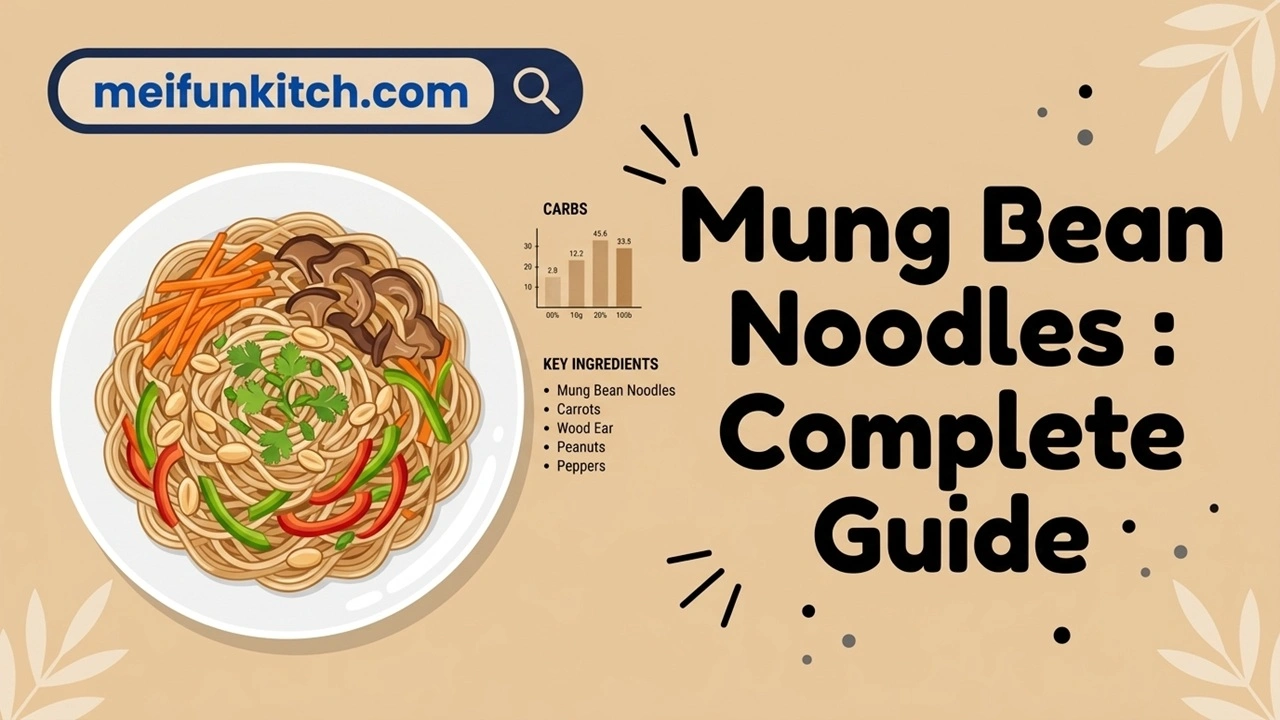
If you want light, chewy, and versatile noodles, Mung Bean Noodles are an excellent choice. They absorb flavors quickly and work well in soups, stir-fries, salads, and spring rolls. These transparent noodles are naturally gluten-free and popular across many Asian cuisines. They also fit several healthy eating plans when prepared with nutritious ingredients.
- 1. 🍜 Noodles Calories Counter
- 2. Mung Bean Noodles Nutrition Facts And Health Benefits
- 3. How To Cook Mung Bean Noodles Perfectly
- 4. Best Mung Bean Noodles Recipes For Every Meal
- 5. Mung Bean Noodles Vs Glass Noodles: What Is The Difference?
- 6. Mung Bean Noodles Vs Rice Noodles Vs Cellophane Noodles
- 7. Are Mung Bean Noodles Healthy For Weight Loss?
- 8. How To Choose And Store Mung Bean Noodles
- 9. Best Dishes You Can Make With Mung Bean Noodles
- 10. FAQs
- 11. Conclusion
Many people confuse these noodles with rice noodles or other glass noodles. However, Mung Bean Noodles are traditionally made from mung bean starch. This ingredient gives them a springy texture and a clear appearance after cooking. Their mild flavor allows them to pair with vegetables, seafood, chicken, tofu, and flavorful sauces.
This guide explains everything you need to know about Mung Bean Noodles. You will learn how they are made, their nutrition, cooking methods, health benefits, storage tips, and the best recipes. You will also discover how they compare with other popular noodle varieties, helping you choose the right option for every meal.
How Mung Bean Noodles Are Made
Traditional Mung Bean Noodles begin with dried mung beans. Manufacturers first clean and process the beans to extract pure starch. The starch is then mixed with water until it forms a smooth paste.
Next, the mixture passes through fine molds to create thin strands. These strands are cooked briefly before cooling. Finally, manufacturers dry the noodles carefully to increase shelf life while preserving their texture.
Unlike wheat noodles, these noodles contain no flour. Therefore, they develop a transparent appearance after cooking. This unique feature explains why many people call them glass noodles or cellophane noodles.
The production process also helps the noodles absorb sauces without becoming overly soft. As a result, they remain popular in traditional and modern recipes alike.
Why Mung Bean Noodles Are Popular Worldwide
The popularity of Mung Bean Noodles has grown because they fit many cooking styles. Their neutral taste blends easily with bold seasonings, making them suitable for countless dishes.
Home cooks appreciate their quick preparation. Most varieties require only soaking or a few minutes of boiling. Therefore, they save valuable cooking time during busy days.
Restaurants also favor these noodles because they maintain their texture well. They stay pleasantly chewy instead of turning mushy when prepared correctly.
Another reason for their popularity is dietary flexibility. They suit vegetarian, vegan, and gluten-free meals when paired with compatible ingredients. This versatility attracts people with different food preferences.
Moreover, international cuisines continue to introduce these noodles to new audiences. Korean, Chinese, Thai, Vietnamese, and Japanese recipes often feature them in soups, stir-fries, hot pots, and fresh spring rolls.
The table below highlights why these noodles remain a favorite worldwide.
| Feature | Benefit |
| Texture | Chewy and pleasantly springy |
| Flavor | Mild and absorbs sauces well |
| Cooking Time | Usually ready within minutes |
| Appearance | Transparent after cooking |
| Common Uses | Soups, stir-fries, salads, spring rolls |
| Diet Compatibility | Naturally gluten-free when made from pure mung bean starch |
Mung Bean Noodles Nutrition Facts And Health Benefits
Choosing Mung Bean Noodles can support a balanced diet when combined with healthy ingredients. They provide energy through carbohydrates while remaining naturally low in fat. Their nutritional value depends on serving size and the accompanying foods.
Calories, Protein, Carbohydrates, And Fiber
A serving of Mung Bean Noodles mainly supplies carbohydrates, which fuel daily activities. They contain little fat and only a modest amount of protein. Because of this composition, many people combine them with lean meat, eggs, tofu, or beans for a more balanced meal.
The nutritional profile varies slightly between brands. However, most products remain similar because they rely on mung bean starch.
| Nutrient | Approximate Amount Per 100g Cooked |
| Calories | 110–130 |
| Carbohydrates | 25–30g |
| Protein | Less Than 1g |
| Fat | Less Than 1g |
| Fiber | Small Amount |
| Sodium | Depends On Brand |
These values can change depending on cooking methods and added ingredients.
Essential Vitamins And Minerals
Although Mung Bean Noodles are not a major vitamin source, they still contribute to a healthy eating pattern when served with colorful vegetables.
Adding spinach, carrots, mushrooms, bell peppers, or broccoli increases vitamins, minerals, and antioxidants. Lean proteins further improve nutritional balance.
This combination creates a satisfying meal without relying on heavy sauces or excessive fats.
Why Mung Bean Noodles Support A Healthy Diet
Many people include Mung Bean Noodles in healthy meal plans because they are light and adaptable. Their neutral taste encourages the use of fresh vegetables and lean proteins instead of processed ingredients.
They also absorb flavorful broths and homemade sauces effectively. Therefore, cooks can reduce added oils while still creating delicious meals.
Furthermore, portion control becomes easier when meals contain vegetables and protein alongside the noodles. This balance improves satisfaction and supports overall nutrition.
In addition, these noodles fit many international recipes without requiring complicated preparation. Their convenience makes healthy home cooking more achievable for busy families.
How To Cook Mung Bean Noodles Perfectly
Cooking Mung Bean Noodles correctly makes a noticeable difference in texture and flavor. These noodles cook quickly, so careful timing matters. They should become tender while remaining slightly chewy. Overcooking often causes them to break apart or lose their pleasant bite.
Soaking Vs Boiling Methods
Different brands recommend different cooking methods for Mung Bean Noodles. Always check the package instructions first. However, most products work well with either soaking or boiling.
| Method | Best For | Time | Result |
| Hot Water Soaking | Salads And Spring Rolls | 8–12 Minutes | Firm And Chewy |
| Boiling | Soups And Stir-Fries | 3–5 Minutes | Soft Yet Springy |
| Warm Water Soaking | Light Recipes | 15–20 Minutes | Balanced Texture |
Hot water soaking preserves the noodles' elasticity. This method also reduces the risk of overcooking. Meanwhile, boiling works better when the noodles will finish cooking in a soup or sauce.
After cooking, rinse them with cool water if the recipe requires cold noodles. This step stops the cooking process and prevents sticking.
Common Cooking Mistakes To Avoid
Preparing Mung Bean Noodles is simple, yet several mistakes can affect the final dish.
| Mistake | Why It Happens | Better Solution |
| Overcooking | Cooking Too Long | Follow Recommended Time |
| Skipping Rinsing | Residual Heat Continues Cooking | Rinse For Cold Dishes |
| Using Too Little Water | Uneven Cooking | Use Plenty Of Water |
| Adding Early To Stir-Fry | Noodles Become Too Soft | Add Near The End |
| Not Draining Properly | Extra Moisture Dilutes Sauce | Drain Thoroughly |
Avoid leaving cooked noodles in hot water for extended periods. They continue softening even after the heat stops. Therefore, remove them as soon as they reach the desired texture.
Cutting long noodles with kitchen scissors also makes serving easier. This trick works especially well for salads and stir-fries.
Tips For The Best Texture Every Time
Perfect Mung Bean Noodles depend on a few simple habits. First, prepare all ingredients before cooking because the noodles cook very fast.
Next, avoid overcrowding the pan during stir-frying. This technique helps vegetables stay crisp while allowing the noodles to absorb the sauce evenly.
Additionally, add sauces gradually instead of pouring everything at once. The noodles absorb liquid quickly, creating richer flavor without becoming soggy.
If you prepare soup, cook the noodles separately whenever possible. Then add them just before serving. This method keeps the broth clear and prevents the noodles from becoming overly soft.
For meal prep, store cooked noodles separately from sauces. Mixing them only before eating helps maintain their texture throughout the week.
Best Mung Bean Noodles Recipes For Every Meal
One reason people love These Noodles is their versatility. They pair well with vegetables, meat, seafood, tofu, and countless seasonings. Whether you want a quick lunch or a hearty dinner, these noodles adapt to almost any recipe.
Quick Stir-Fry Recipe
A stir-fry remains one of the easiest ways to enjoy Mung Bean Noodles. The noodles absorb savory sauces while keeping their chewy texture.
| Ingredient | Purpose |
| Cooked Noodles | Main Base |
| Chicken, Shrimp, Or Tofu | Protein |
| Bell Peppers | Sweet Flavor |
| Carrots | Crunch |
| Broccoli | Nutrition |
| Garlic And Ginger | Aroma |
| Soy Sauce | Savory Taste |
| Sesame Oil | Rich Finish |
Cook the vegetables first. Then add the protein and sauce. Finally, toss in the noodles for one or two minutes until everything combines well.
Refreshing Salad Recipe
Cold Mung Bean Noodles create a light meal during warm weather. Their mild flavor blends beautifully with crisp vegetables and tangy dressings.
Fresh cucumber, shredded carrots, cabbage, herbs, and green onions add texture. Meanwhile, a dressing made with soy sauce, rice vinegar, sesame oil, and lime juice delivers balanced flavor.
Chill the salad before serving for the best results.
Comforting Soup Recipe
Soup becomes more satisfying with Mung Bean Noodles because they absorb flavorful broth without overpowering other ingredients.
A simple broth with mushrooms, bok choy, garlic, ginger, and cooked chicken creates a nourishing meal. Vegetarians can replace chicken with tofu or additional vegetables.
Add the noodles during the final minutes of cooking. This step preserves their texture and keeps the broth clear.
Easy Vegetarian And Vegan Ideas
Plant-based meals become hearty with These Noodles because they combine well with protein-rich ingredients.
| Meal Idea | Recommended Ingredients |
| Vegetable Stir-Fry | Broccoli, Mushrooms, Carrots, Snap Peas |
| Tofu Bowl | Crispy Tofu, Spinach, Sesame Sauce |
| Thai-Inspired Dish | Peanuts, Lime, Cilantro, Chili |
| Fresh Spring Rolls | Lettuce, Mint, Cucumber, Tofu |
| Mushroom Skillet | Mixed Mushrooms, Garlic, Soy Sauce |
These meals offer plenty of flavor while remaining easy to prepare. They also allow endless customization using seasonal vegetables and homemade sauces.
The next section compares Mung Bean Noodles with glass noodles to help you understand their similarities and important differences.
Mung Bean Noodles Vs Glass Noodles: What Is The Difference?
Many people thinkThese Noodles and glass noodles are the same product. However, that is not always true. Glass noodles describe a category rather than one specific ingredient. Manufacturers make glass noodles from different starches, including mung bean, potato, sweet potato, pea, and tapioca starch.
Traditional These Noodles use mung bean starch. Therefore, they usually offer better elasticity and a firmer texture than some alternatives.
Ingredients And Production
The main difference between Mung Bean Noodles and other glass noodles is the starch source. This ingredient affects cooking performance, texture, and taste.
| Feature | Mung Bean Noodles | Glass Noodles |
| Primary Ingredient | Mung Bean Starch | Various Starches |
| Appearance | Transparent | Transparent |
| Texture | Firm And Chewy | Soft To Chewy |
| Flavor | Very Mild | Usually Mild |
| Cooking Time | Short | Varies By Brand |
Reading the ingredient label helps you identify the exact starch used. This step ensures you purchase the product that best fits your recipe.
Taste And Texture Comparison
The flavor of Mung Bean Noodles remains mild, allowing sauces and seasonings to shine. Their chewy texture also holds up well during stir-frying and soups.
Some glass noodles made from potato starch become softer after cooking. Others absorb more water and lose firmness sooner.
Texture differences become noticeable in recipes requiring high heat. Mung bean starch generally performs better because it resists breaking apart.
Which Option Is Better For Different Recipes?
Choosing Mung Bean Noodles depends on the meal you plan to prepare.
| Recipe Type | Better Choice | Reason |
| Stir-Fries | Mung Bean Starch | Holds Shape Better |
| Hot Pot | Mung Bean Starch | Stays Chewy Longer |
| Cold Salads | Mung Bean Starch | Excellent Texture |
| Soups | Either Option | Depends On Preference |
| Spring Rolls | Mung Bean Starch | Easy To Handle |
Although both options work well, mung bean starch noodles often provide the most consistent results. Their durability makes them a favorite among home cooks and professional chefs.
Mung Bean Noodles Vs Rice Noodles Vs Cellophane Noodles
Several noodle varieties appear similar at first glance. However, These Noodles differ in ingredients, texture, cooking methods, and nutritional characteristics. Understanding these differences helps you choose the right noodle for every recipe.
Side-By-Side Comparison Table
The table below highlights the major differences.
| Feature | Mung Bean Noodles | Rice Noodles | Cellophane Noodles |
| Main Ingredient | Mung Bean Starch | Rice Flour | Various Starches |
| Color After Cooking | Transparent | White | Transparent |
| Texture | Chewy | Soft | Soft To Chewy |
| Flavor | Neutral | Mild Rice Flavor | Neutral |
| Best Uses | Stir-Fries, Soups, Salads | Pad Thai, Pho | Soups, Hot Pot |
| Gluten-Free | Yes | Usually Yes | Depends On Ingredients |
Although they look alike, each noodle performs differently in cooking. Therefore, selecting the right type improves the final dish.
Which Noodles Are Healthier?
Health depends more on the complete meal than the noodles alone. Still, Mung Bean Noodles work well in balanced recipes because they pair naturally with vegetables and lean proteins.
Rice noodles also fit gluten-free diets. However, they have a softer texture and different cooking properties.
The healthiest choice includes fresh vegetables, moderate sauce, and quality protein instead of excessive oil or sugar.
Which Noodles Taste Better?
Taste remains a personal preference. Still, These Noodles stand out because they absorb sauces exceptionally well while maintaining a pleasant bite.
Rice noodles provide a softer texture and a subtle rice flavor. Meanwhile, cellophane noodles vary depending on the starch source.
The table below helps match noodle types with popular dishes.
| Dish | Recommended Noodle |
| Asian Stir-Fry | Mung Bean Noodles |
| Fresh Spring Rolls | Mung Bean Noodles |
| Pad Thai | Rice Noodles |
| Pho | Rice Noodles |
| Hot Pot | Mung Bean Noodles |
| Cold Sesame Salad | Mung Bean Noodles |
| Clear Soup | Cellophane Noodles |
Overall, each variety has strengths. However, mung bean starch noodles offer excellent versatility, making them suitable for many everyday recipes.
Are Mung Bean Noodles Healthy For Weight Loss?
Many people include Mung Bean Noodles in weight management plans because they are light and satisfying. However, no single food causes weight loss. Success depends on balanced meals, portion control, and regular physical activity.
These noodles work well with lean protein and fresh vegetables. Therefore, they can become part of a nutritious eating routine.
Can They Help You Feel Full Longer?
A serving of Mung Bean Noodles becomes more filling when paired with protein and fiber-rich vegetables. This combination slows digestion and helps reduce hunger between meals.
Foods such as chicken, shrimp, tofu, eggs, broccoli, spinach, and mushrooms increase satisfaction without adding excessive calories.
The table below shows how different ingredients improve a balanced meal.
| Food Combination | Main Benefit |
| Noodles + Chicken + Vegetables | High Protein And Balanced Nutrition |
| Noodles + Tofu + Broccoli | Plant-Based Protein |
| Noodles + Shrimp + Spinach | Lean Protein And Minerals |
| Noodles + Eggs + Mixed Vegetables | Longer Lasting Fullness |
| Noodles + Mushrooms + Carrots | Extra Fiber And Flavor |
Balanced meals support healthy eating better than noodles alone.
Are They Good For Low-Fat Diets?
Naturally prepared TheseNoodles contain very little fat. Therefore, they fit low-fat meal plans when cooked with healthy ingredients.
Instead of heavy cream sauces, choose garlic, ginger, herbs, soy sauce, sesame oil in moderation, or vegetable broth. These ingredients add flavor without unnecessary calories.
Steaming, boiling, and light stir-frying also help maintain a healthier nutritional profile.
Who Should Eat Them Regularly?
Many people can enjoy Mung Bean Noodles as part of a balanced diet.
| Person | Why They May Benefit |
| Busy Professionals | Quick To Prepare |
| Students | Simple And Budget Friendly |
| Vegetarians | Pairs Well With Plant Proteins |
| Athletes | Provides Energy From Carbohydrates |
| Families | Suitable For Many Recipes |
People with specific medical conditions should follow advice from their healthcare professional regarding portion sizes and overall diet.
How To Choose And Store Mung Bean Noodles
Buying quality Mung Bean Noodles improves both flavor and texture. Fortunately, choosing a good product becomes easy once you know what to look for.
How To Buy High-Quality Noodles
Check the ingredient label before purchasing These Noodles. Products made primarily from mung bean starch usually deliver the best texture.
Look for noodles with a clean, uniform appearance. They should be dry, transparent, and free from excessive broken pieces.
The following table highlights useful buying tips.
| What To Check | Why It Matters |
| Ingredient List | Confirms Main Starch Source |
| Package Condition | Protects Freshness |
| Clear Appearance | Indicates Good Quality |
| Expiration Date | Ensures Best Taste |
| Trusted Brand | Improves Consistency |
Reading labels carefully helps you select products that match your cooking needs.
Proper Storage Tips
Store These Noodles in a cool, dry place away from direct sunlight. Keep the package tightly sealed after opening to prevent moisture from affecting the noodles.
An airtight container provides additional protection against humidity and pantry pests.
Cooked noodles require refrigeration in a sealed container. They remain freshest when consumed within a few days.
Shelf Life And Freshness Guide
Proper storage extends the quality of Mung Bean Noodles and reduces food waste.
| Storage Method | Expected Freshness |
| Unopened Package | Several Months |
| Opened Package In Airtight Container | Several Weeks To Months |
| Cooked And Refrigerated | Up To 3 Days |
| Frozen Cooked Noodles | Up To 1 Month |
Always inspect noodles before cooking. Discard them if they develop an unusual smell, discoloration, or signs of moisture damage.
Best Dishes You Can Make With Mung Bean Noodles
The versatility of These Noodles allows them to fit countless recipes. Their neutral flavor complements bold sauces, aromatic herbs, and fresh vegetables.
Asian Stir-Fries
A stir-fry remains one of the most popular ways to prepare Mung Bean. The noodles absorb savory sauces while maintaining their chewy texture.
Popular additions include chicken, shrimp, tofu, mushrooms, broccoli, carrots, snap peas, and bell peppers.
Soups And Hot Pots
Warm broth transforms These Noodles into a comforting meal. They pair especially well with ginger, garlic, mushrooms, bok choy, cabbage, and green onions.
Add the noodles near the end of cooking. This technique prevents overcooking and preserves their texture.
Cold Salads
Cold Mung Bean Noodles create refreshing salads that work well for lunch or meal preparation.
Fresh vegetables, herbs, sesame seeds, peanuts, and a light dressing provide excellent flavor and texture.
| Salad Ingredient | Purpose |
| Cucumber | Fresh Crunch |
| Carrots | Natural Sweetness |
| Red Cabbage | Color And Texture |
| Fresh Cilantro | Herbal Flavor |
| Sesame Seeds | Nutty Finish |
| Lime Juice | Bright Taste |
Spring Rolls And More
Fresh spring rolls become more satisfying with These Noodles because they add texture without overpowering other ingredients.
These noodles also work well in lettuce wraps, dumpling fillings, casseroles, and fusion dishes.
Their ability to absorb seasonings makes them suitable for both traditional Asian recipes and creative modern cooking.
FAQs
Are Mung Bean Noodles Gluten Free?
Yes, These Noodles are naturally gluten free when they contain only mung bean starch and water. However, some brands may blend other ingredients. Therefore, always read the ingredient label if you have gluten intolerance or celiac disease.
Are Mung Bean Noodles Keto Friendly?
No, Mung Bean Noodles are generally not suitable for a strict keto diet. They contain a significant amount of carbohydrates because they are made from starch. People following keto plans usually choose lower-carb noodle alternatives.
Can People With Diabetes Eat These Noodles?
People with diabetes can enjoy Noodles in moderation as part of a balanced meal. Pairing them with lean protein, healthy fats, and non-starchy vegetables may help support better blood sugar management. Individual dietary needs vary, so medical advice should always come first.
Do Mung Bean Noodles Contain Protein?
These Noodles contain only a small amount of protein because manufacturers use mung bean starch instead of whole beans. Adding chicken, fish, tofu, eggs, or legumes creates a more protein-rich meal.
Can You Freeze Cooked Mung Bean Noodles?
Yes, These Noodles can be frozen after cooking. Allow them to cool completely before placing them in airtight freezer-safe containers. Thaw them overnight in the refrigerator for the best texture.
Are Mung Bean Noodles Better Than Rice Noodles?
The better choice depends on your recipe. These Noodles stay firmer and absorb sauces more effectively. Rice noodles offer a softer texture and a mild rice flavor. Both options work well in different dishes.
What Do Mung Bean Noodles Taste Like?
These Noodles have a very mild flavor. They easily absorb herbs, spices, broths, and sauces. This quality makes them suitable for both simple and richly seasoned meals.
How Long Should You Soak Mung Bean Noodles?
Most Noodles need about 8 to 12 minutes in hot water. Thicker varieties may require a little more time. Always check the package directions because cooking times differ between brands.
Conclusion
Mung Bean Noodles are a versatile ingredient that deserves a place in every kitchen. Their light texture, neutral taste, and quick preparation make them suitable for many recipes.
Whether you prepare stir-fries, soups, fresh salads, or spring rolls, these noodles absorb flavors beautifully while maintaining a pleasant bite. They also pair well with vegetables, seafood, chicken, tofu, and homemade sauces.
Choosing quality ingredients and following proper cooking techniques ensures excellent results every time. Moreover, balanced meals with lean protein and colorful vegetables make these noodles even more nutritious.
Now that you understand their nutrition, cooking methods, storage tips, and recipe ideas, you can confidently enjoy Mung Bean Noodles in a variety of delicious dishes.

Alex Balducci
Author11 Published Articles
Alex Balducci is a nutritionist, food writer, and health enthusiast dedicated to helping readers make informed dietary choices through reliable, easy-to-understand content. With a passion for nutrition, healthy eating, and balanced lifestyles, Alex creates well-researched articles covering nutrition facts, wholesome recipes, meal planning, and ingredient guides
EducationB.Sc. in Nutrition and Dietetics.
Experience10 Years.
ExpertiseWrites About Nutrition Facts