
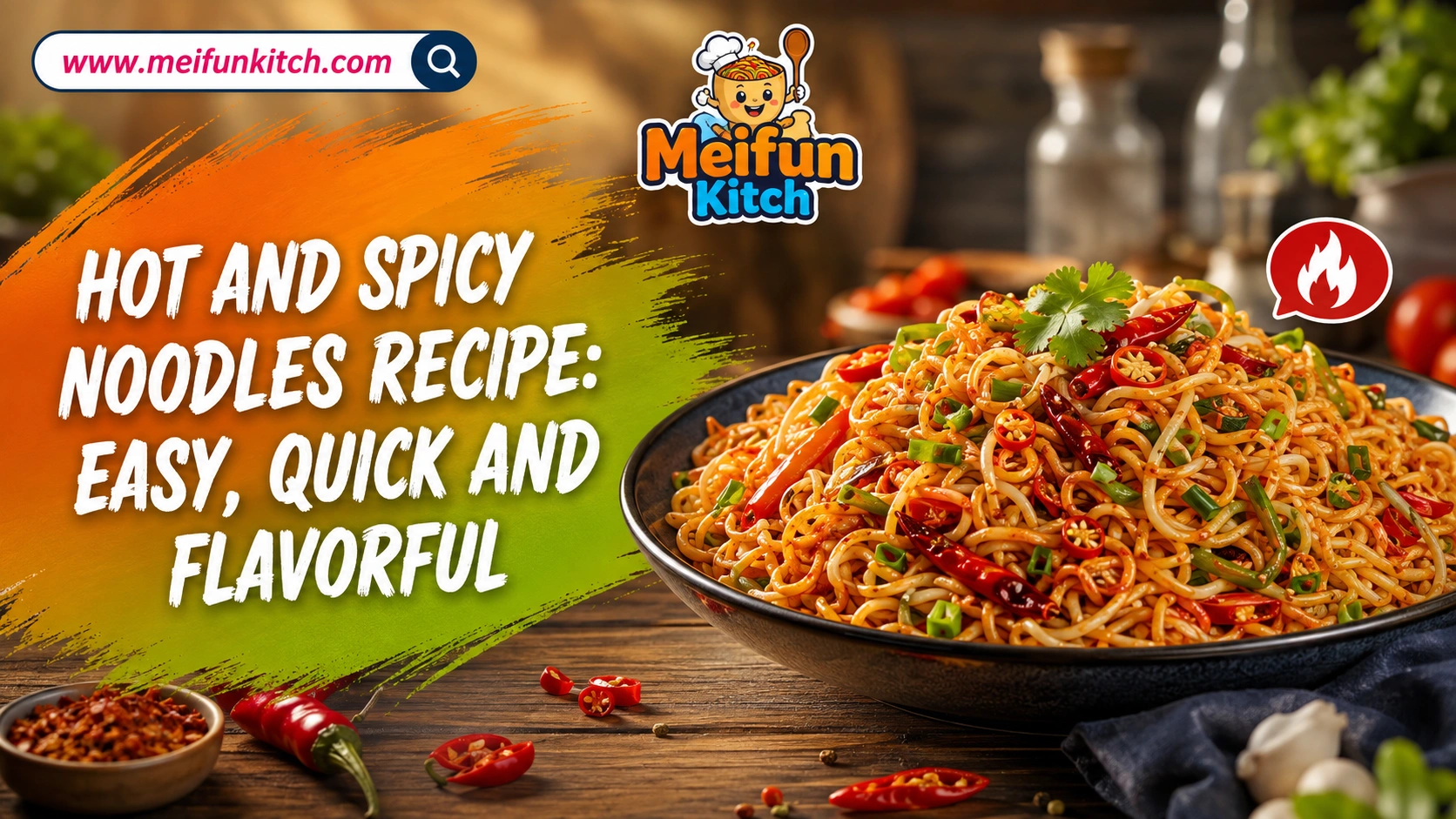
If you want a fast meal with bold heat, chewy noodles, garlic, soy sauce, and a glossy chili sauce, this hot and spicy noodles recipe delivers. You can prepare it in about 15–20 minutes with simple pantry ingredients. The recipe balances heat, saltiness, sweetness, acidity, and umami, so every bite tastes exciting without becoming overwhelmingly spicy. You can also adjust the chili level easily. Add more chili flakes for serious heat, or reduce them for a milder family dinner. Similar recipes commonly use garlic, chili flakes, soy sauce, vinegar, sesame oil, and green onions to build strong flavor quickly.
The best hot and spicy noodles start with properly cooked noodles and a well-balanced sauce. Cook the noodles until just tender, then drain them thoroughly. Meanwhile, build the sauce with garlic, chili, soy sauce, vinegar, and a small amount of sweetness. Hot oil can bloom chili and garlic, creating a deeper aroma and richer flavor. This technique appears in several chili-garlic noodle preparations and works especially well for quick noodle meals.
Plan Your Perfect Week of Meals
Build a personalized weekly diet plan in minutes — balanced meals, made simple.
This guide explains how to make hot and spicy noodles from scratch, choose the best noodles, control the heat, add vegetables or protein, prevent soggy noodles, and store leftovers safely. You will also learn how to create restaurant-style flavor using ordinary ingredients. Whether you want spicy garlic noodles, chili oil noodles, Asian-style noodles, or a quick weeknight dinner, this recipe gives you a flexible foundation.
Hot And Spicy Noodles Ingredients For The Best Flavor
Essential Ingredients For Hot And Spicy Noodles
For hot and spicy noodles, choose ingredients that create several layers of flavor rather than relying only on chili. Start with 8 ounces of noodles, preferably wheat, ramen, egg, or another noodle that holds sauce well. Add 2 tablespoons of neutral cooking oil, 4–5 finely chopped garlic cloves, 2 tablespoons of soy sauce, 1 tablespoon of chili oil, and 1 tablespoon of rice vinegar. Add 1–2 teaspoons of sugar to soften the sharp edges of the chili and vinegar.
For hot and spicy noodles, green onions provide freshness and a mild onion flavor. Sesame seeds add nuttiness and a pleasant texture. You can also add sesame oil for a richer aroma, although a small amount works best. Optional ingredients include ginger, Sichuan peppercorns, chili crisp, gochugaru, crushed red pepper, or fresh chilies. Different chili products create different kinds of heat. Chili flakes give direct heat, while chili oil adds both heat and fragrance. Sichuan pepper adds a distinctive tingling sensation rather than simple chili heat.
The basic ingredient structure looks like this:
| Ingredient | Suggested Amount | Purpose |
|---|---|---|
| Noodles | 8 oz | Main base |
| Neutral oil | 2 tbsp | Carries chili flavor |
| Garlic | 4–5 cloves | Deep savory aroma |
| Soy sauce | 2 tbsp | Salt and umami |
| Chili oil | 1 tbsp | Heat and richness |
| Rice vinegar | 1 tbsp | Bright acidity |
| Sugar | 1–2 tsp | Balances heat |
| Green onions | 2 | Fresh finish |
| Sesame seeds | 1 tbsp | Nutty crunch |
| Sesame oil | 1 tsp | Toasted aroma |
Choosing Noodles For Hot And Spicy Noodles
The noodle shape matters because it affects how much sauce reaches each bite. Wide noodles provide more surface area and hold thick chili sauces particularly well. Knife-cut noodles, fresh wheat noodles, egg noodles, ramen, and many Asian wheat noodles can work beautifully. Some recipes specifically recommend noodles that can cling to chili-garlic sauces rather than very smooth pasta shapes.
For hot and spicy noodles, avoid cooking noodles too long. Overcooked noodles release more starch and lose their firm texture. Instead, cook them until barely tender and finish them in the sauce. Instant ramen noodles also work well when you need a quick meal. Rice noodles can create a lighter texture, while thicker wheat noodles create a chewier bite. Therefore, your noodle choice should match the sauce consistency and the texture you enjoy most.
How To Make Hot And Spicy Noodles Step By Step
Cook The Noodles Properly
To make hot and spicy noodles, bring a large pot of water to a strong boil. Use enough water so the noodles can move freely during cooking. Add the noodles and follow the package timing, but begin checking them slightly early. You want them tender but still firm enough to withstand tossing.
Drain the noodles thoroughly after cooking. Excess water can dilute the sauce and make hot and spicy noodles taste flat. If your noodles tend to stick, toss them with a very small amount of oil. However, avoid adding too much oil because the sauce may slide away instead of coating the noodles. Some recipes recommend rinsing cooked noodles, especially when preparing them ahead of time, while others transfer them directly into the sauce.
Build The Chili Garlic Sauce
For hot and spicy noodles, heat neutral oil in a pan over medium heat. Add the garlic and cook gently until fragrant. Do not burn the garlic because burnt garlic creates bitterness. Add chili flakes or chili oil and stir briefly. The oil should become aromatic without smoking.
Next, add soy sauce, vinegar, sugar, and any additional seasonings. Stir everything together and let the sauce simmer briefly. The goal is not to reduce it into a thick paste. Instead, create a glossy mixture that can spread across the noodles. Add a splash of noodle water if the sauce becomes too thick. That starchy water can help the sauce cling to the noodles.
Add the drained noodles directly to the pan. Toss them continuously until every strand looks evenly coated. Finish with green onions, sesame seeds, and a small drizzle of sesame oil. Serve immediately while the noodles remain hot and fragrant. This sauce-building method follows the same broad flavor structure used in several quick chili-garlic noodle recipes.
How To Make Hot And Spicy Noodles Extra Fiery
Increase Chili Without Losing Flavor
If you want hot and spicy noodles with serious heat, increase the chili gradually. Adding a large amount of chili powder at once can overpower garlic, soy, and vinegar. Instead, add one teaspoon at a time and taste after mixing.
Fresh red chilies provide bright, sharp heat. Dried chili flakes create a more direct pepper flavor. Chili oil contributes heat while also adding fat and fragrance. Chili crisp can add crunchy chili pieces and extra savory depth. Gochugaru gives a fruity pepper character with moderate heat, depending on the variety.
For hot and spicy noodles, you can combine two chili sources for a more complex result. Try chili flakes with chili oil, or fresh chili with chili crisp. Sichuan peppercorns can also add a numbing, tingling sensation. Traditional Sichuan noodle recipes often combine chili oil, Sichuan pepper, soy sauce, vinegar, garlic, and other savory ingredients.
Balance Heat With Sweetness And Acid
A great hot and spicy noodles sauce should not taste like pure chili. Heat needs contrast. Sugar adds gentle sweetness, while vinegar provides acidity. Soy sauce supplies salt and umami. Garlic creates savory depth, and oil carries the aroma throughout the dish.
If your noodles taste too hot, add a little more sweetness and acidity. You can also increase the noodle quantity. Adding vegetables or protein can spread the heat across a larger meal. A small spoonful of sesame paste or peanut butter can also create a richer texture.
For hot and spicy noodles, avoid trying to solve excessive heat with more soy sauce. Too much soy sauce can make the dish extremely salty without properly balancing the chili. Instead, add small amounts of sugar, vinegar, oil, or additional noodles. Taste after every adjustment.
Hot And Spicy Noodles With Vegetables
Best Vegetables For Spicy Noodles
Adding vegetables makes hot and spicy noodles more colorful, textured, and filling. Carrots provide sweetness and crunch. Cabbage adds volume while absorbing the savory sauce. Bell peppers bring freshness and mild sweetness. Broccoli, bok choy, mushrooms, bean sprouts, spinach, and snow peas can also work well.
For hot and spicy noodles, cut vegetables into thin, similar-sized pieces. This helps them cook quickly and evenly. Start with vegetables that need more cooking time. Add softer vegetables later so they retain some texture.
A simple combination includes cabbage, carrots, bell peppers, and green onions. You can also add mushrooms for deeper umami flavor. Broccoli works especially well when lightly steamed before stir-frying. Bean sprouts should go in near the end because they become soft quickly.
How To Stir-Fry Vegetables
Heat a wok or large skillet until hot. Add a small amount of oil and cook firm vegetables first. Keep the heat relatively high so the vegetables develop light browning without becoming watery.
For hot and spicy noodles, avoid overcrowding the pan. Too many vegetables release moisture and lower the cooking temperature. That can create steamed vegetables instead of lightly charred vegetables.
Once the vegetables become crisp-tender, add the prepared sauce. Toss quickly, then add the noodles. Keep everything moving so the sauce coats the vegetables and noodles evenly.
This high-heat method creates the smoky character associated with restaurant-style stir-fried noodles. Recent noodle recipes also emphasize high heat and avoiding overcooked noodles for better texture.
Hot And Spicy Noodles With Chicken, Shrimp, And Tofu
Chicken Hot And Spicy Noodles
Chicken turns hot and spicy noodles into a more substantial dinner. Use boneless chicken breast or thigh and slice it thinly. Thin pieces cook quickly and absorb the sauce better.
Season the chicken lightly with soy sauce, garlic, black pepper, and a small amount of cornstarch. Heat a skillet or wok, add oil, and cook the chicken until browned and fully cooked. Remove it temporarily if needed, then prepare the vegetables and sauce.
Return the chicken to the pan before adding the noodles. Toss everything together until the sauce coats the chicken evenly. The result combines tender meat with chewy noodles and spicy garlic flavor.
Shrimp And Tofu Variations
Shrimp cooks quickly, making it ideal for hot and spicy noodles. Pat shrimp dry before cooking so they brown instead of steaming. Cook them until opaque and firm, then remove them from the pan while preparing the noodles.
Tofu creates an excellent vegetarian option. Press firm tofu before cooking, then cut it into cubes. Pan-fry the cubes until golden on several sides. Add them to the noodles near the end so they maintain their texture.
For hot and spicy noodles, mushrooms and tofu create strong savory flavors without meat. You can also use edamame for additional texture and plant-based protein. These variations make the recipe flexible enough for different diets and pantry situations.
Hot And Spicy Noodles Sauce Variations
Chili Garlic Sauce
The classic hot and spicy noodles sauce relies on garlic and chili as its main flavor drivers. Combine minced garlic, chili flakes, chili oil, soy sauce, vinegar, sugar, and sesame oil.
For deeper flavor, bloom the chili and garlic in hot oil before adding the liquid seasonings. Hot oil releases aromatic compounds from the spices and spreads their flavor throughout the sauce. Several chili-garlic noodle recipes use this technique.
You can make the sauce ahead and refrigerate it in a sealed container. Then simply cook noodles and toss them with the sauce when you need a fast meal.
Sesame And Peanut Sauce
For richer hot and spicy noodles, add sesame paste or smooth peanut butter. Combine one tablespoon of peanut butter with soy sauce, vinegar, chili oil, garlic, and a small amount of warm water.
Whisk until smooth before adding the sauce to the noodles. If the mixture becomes too thick, add warm noodle water gradually. This creates a creamy coating that clings to every strand.
You can also add toasted sesame seeds and a few drops of sesame oil. The result tastes richer and slightly nutty while retaining the spicy character. Use less oil when adding peanut or sesame butter because these ingredients already contribute richness.
Hot And Spicy Noodles Without Chili Oil
Using Fresh Chilies
You can prepare hot and spicy noodles without chili oil. Fresh red chilies provide clean, bright heat. Slice them thinly or mince them before adding them to the sauce.
For a milder dish, remove some seeds and inner membranes. For stronger heat, keep them intact. Jalapeños provide moderate heat, while Thai chilies create much stronger heat.
You can sauté fresh chilies with garlic before adding the soy sauce. This softens their texture and distributes the heat throughout the dish. Add a few fresh slices at the end for extra brightness.
Using Chili Flakes And Hot Sauce
For hot and spicy noodles, crushed red pepper flakes offer an easy alternative to chili oil. Add them to hot oil with garlic, then continue with the sauce.
You can also use sriracha, sambal, Korean chili paste, or another favorite hot sauce. However, check the sweetness and saltiness of the sauce before adding sugar or extra soy sauce.
Chili Pepper Madness also recommends treating spicy noodle sauce as a flexible base and adjusting it with hot sauce, chili flakes, chili paste, chili oil, sugar, or honey.
This flexibility makes the recipe useful when your pantry lacks specialty Asian ingredients.
Hot And Spicy Noodles For A Quick 10-Minute Meal
Fast Preparation Strategy
You can make hot and spicy noodles extremely quickly by preparing everything before turning on the stove. Chop garlic, slice green onions, mix the sauce, and prepare your toppings first.
Then boil the noodles while heating the sauce. If you coordinate both steps, the entire dish can come together quickly.
For hot and spicy noodles, keep your ingredients near the cooking surface. High-heat cooking moves quickly, so you should not leave the pan unattended while preparing the sauce.
Instant noodles can reduce preparation time even further. Remove the seasoning packet if you prefer making your own sauce. Cook the noodles according to the package directions, then drain and toss them with your homemade chili sauce.
One-Pan Cooking Method
A large skillet can simplify hot and spicy noodles because you can cook the protein, vegetables, sauce, and noodles in the same pan.
Start with protein if you are using it. Remove it when cooked. Next, stir-fry vegetables, add garlic and chili, then pour in the sauce. Return the protein and add cooked noodles.
This method reduces cleanup and lets the noodles absorb the sauce directly. However, keep the pan large enough to prevent overcrowding.
Common Hot And Spicy Noodles Mistakes To Avoid
Why Noodles Become Soggy
Soggy hot and spicy noodles usually result from overcooking, excessive sauce, or poor draining. Always cook noodles until just tender.
Drain them well before adding them to the sauce. If you leave too much water on the noodles, the sauce becomes diluted.
Another common problem occurs when noodles sit in hot water after reaching the desired texture. Drain them immediately. If you prepare them before the sauce, briefly loosen them before tossing.
Why The Sauce Tastes Flat
Flat hot and spicy noodles often need better balance rather than more chili. Taste the sauce before adding the noodles.
If it tastes salty but dull, add vinegar. If it tastes sharp, add a little sugar. If it tastes spicy but lacks richness, add sesame oil or chili oil. If it tastes weak, add a small amount of soy sauce.
For hot and spicy noodles, garlic should taste fragrant rather than burnt. Burnt garlic can dominate the entire dish and create bitterness.
Finally, garnish the finished noodles with fresh green onions, sesame seeds, cilantro, or sliced chili. Fresh toppings provide contrast and make the dish taste brighter.
How To Store And Reheat Hot And Spicy Noodles
Refrigerating Leftover Noodles
Store hot and spicy noodles in an airtight container after they cool slightly. Refrigerate leftovers promptly rather than leaving them at room temperature for extended periods.
A similar spicy noodle recipe recommends keeping leftovers refrigerated for several days, although exact storage time depends on ingredients and handling.
For hot and spicy noodles, keep toppings such as green onions and sesame seeds separate when possible. Add fresh toppings after reheating for better texture.
If you prepared noodles with chicken, shrimp, or tofu, cool and refrigerate the entire dish properly. Use clean utensils when serving leftovers.
Best Reheating Method
Reheat hot and spicy noodles in a skillet over medium heat. Add one or two tablespoons of water to loosen the sauce.
Toss gently until the noodles become hot. Avoid overheating because the noodles can become dry and rubbery.
A microwave also works. Place the noodles in a microwave-safe bowl, add a splash of water, cover loosely, and heat in short intervals. Stir between intervals for even heating.
Add fresh chili oil, sesame seeds, or green onions after reheating. These toppings restore some of the aroma lost during refrigeration.
Hot And Spicy Noodles Nutrition And Portion Ideas
Making The Recipe More Balanced
A bowl of hot and spicy noodles can provide carbohydrates and fat, but the overall nutrition depends heavily on your ingredients and portion size.
Adding vegetables increases fiber, volume, and micronutrients. Chicken, shrimp, tofu, or eggs can increase protein. Using moderate oil can reduce the overall calorie density.
For these noodles, you can also choose whole-grain noodles when available. However, noodle texture varies by product, so follow the package cooking instructions carefully.
Nutrition values vary widely between recipes. For example, one published spicy noodle recipe lists approximately 526 calories per serving, along with carbohydrates, protein, fat, and substantial sodium.
Portion And Serving Suggestions
Serve hot and spicy noodles as a main meal with vegetables and protein. For a smaller portion, serve them alongside grilled chicken, stir-fried vegetables, or soup.
If you want a lighter meal, increase vegetables and reduce noodles slightly. If you need a more filling dinner, add chicken, shrimp, tofu, or a fried egg.
Keep sodium in mind because soy sauce, oyster sauce, chili sauces, and seasoning products can contain significant salt. Taste before adding additional salt.
Hot And Spicy Noodles FAQs
Are Hot And Spicy Noodles Very Spicy?
The heat level of hot and spicy noodles depends on the type and amount of chili you use. You control the heat by adjusting chili flakes, fresh chilies, chili oil, or hot sauce.
For beginners, start with one teaspoon of chili flakes and one tablespoon of chili oil. Taste the sauce before adding the noodles.
You can make these noodles mild, medium, or extremely hot. Therefore, the recipe does not need a fixed spice level.
What Makes Noodles Spicy?
Chili flakes, chili oil, fresh chilies, chili crisp, sambal, gochugaru, and hot sauces can make hot and spicy noodles spicy.
Garlic, soy sauce, vinegar, sesame oil, and sugar create the supporting flavor structure. They do not simply increase heat. Instead, they make the chili taste more balanced.
Can I Use Instant Ramen?
Yes. Instant ramen works very well for hot and spicy noodles. Cook the noodles until just tender and drain them well.
Then toss them with your homemade sauce instead of relying on the seasoning packet. This approach gives you more control over salt, heat, sweetness, and garlic flavor.
What Noodles Work Best?
Wheat noodles, egg noodles, ramen, knife-cut noodles, and many fresh Asian noodles work well for hot and spicy noodles.
Choose noodles with enough texture to hold the sauce. Wide or ridged noodles generally hold thicker sauces especially well.
Can I Make Them Vegetarian?
Yes. Vegetarian hot and spicy noodles are easy to prepare. Use tofu, mushrooms, edamame, cabbage, carrots, bok choy, or broccoli.
Use vegetarian mushroom sauce instead of oyster sauce if needed. Check ingredient labels when using prepared chili sauces or other condiments.
How Do I Make Them Less Spicy?
To make hot and spicy noodles less spicy, reduce chili flakes and fresh chilies first. Then increase the noodles or vegetables if the dish still tastes too hot.
You can also add a little sugar, vinegar, sesame paste, or peanut butter. These ingredients can soften the overall perception of heat.
Can I Add Chicken Or Shrimp?
Absolutely. Chicken and shrimp both work well in hot and spicy noodles. Cook the protein separately when necessary, then combine it with the noodles near the end.
Shrimp cooks particularly quickly, while thinly sliced chicken needs more cooking time. Always cook animal proteins thoroughly before serving.
How Do I Get Restaurant-Style Flavor?
High heat, properly drained noodles, fresh garlic, balanced seasoning, and enough sauce create excellent hot and spicy noodles.
Avoid overcrowding your pan. Cook vegetables quickly and keep the noodles moving. Finish with fresh green onions and sesame seeds.
Final Thoughts On Hot And Spicy Noodles
The best hot and spicy noodles combine heat with balance. Chili creates excitement, but garlic, soy sauce, vinegar, sugar, sesame, and aromatics create depth. That balance separates a flavorful noodle dish from one that simply tastes hot.
Once you understand the basic method, hot and spicy noodles become one of the easiest meals to customize. Use ramen for convenience, wheat noodles for chewiness, rice noodles for a lighter texture, or wide noodles for maximum sauce coverage.
You can add chicken, shrimp, tofu, eggs, mushrooms, cabbage, carrots, peppers, broccoli, or bok choy. You can also change the chili source depending on your preferred heat level. The recipe remains flexible without losing its core character.
For the best hot and spicy noodles, focus on three things: cook the noodles carefully, balance the sauce, and finish everything quickly over high heat. Do not overcook the noodles or burn the garlic. Taste the sauce before serving and adjust it gradually.
With this method, hot and spicy noodles can become a reliable weeknight dinner, quick lunch, late-night snack, or customizable family meal. The combination of chewy noodles, aromatic garlic, savory soy sauce, bright vinegar, and fiery chili creates a satisfying bowl that takes little time to prepare.
If you want hot and spicy noodles with even more restaurant-style character, try blooming chili flakes in hot oil, adding toasted sesame seeds, and finishing with fresh scallions. These small details create a noticeable difference.
Ultimately, hot and spicy noodles work because they offer contrast in every bite. You get chewy noodles, fragrant garlic, spicy chili, salty umami, gentle sweetness, fresh toppings, and a touch of acidity. That combination keeps the dish exciting while allowing you to adjust it around your own preferences.

Alex Balducci
Author43 Published Articles
Alex Balducci is a nutritionist, food writer, and health enthusiast dedicated to helping readers make informed dietary choices through reliable, easy-to-understand content. With a passion for nutrition, healthy eating, and balanced lifestyles, Alex creates well-researched articles covering nutrition facts, wholesome recipes, meal planning, and ingredient guides
EducationB.Sc. in Nutrition and Dietetics.
Experience10 Years.
ExpertiseWrites About Nutrition Facts