
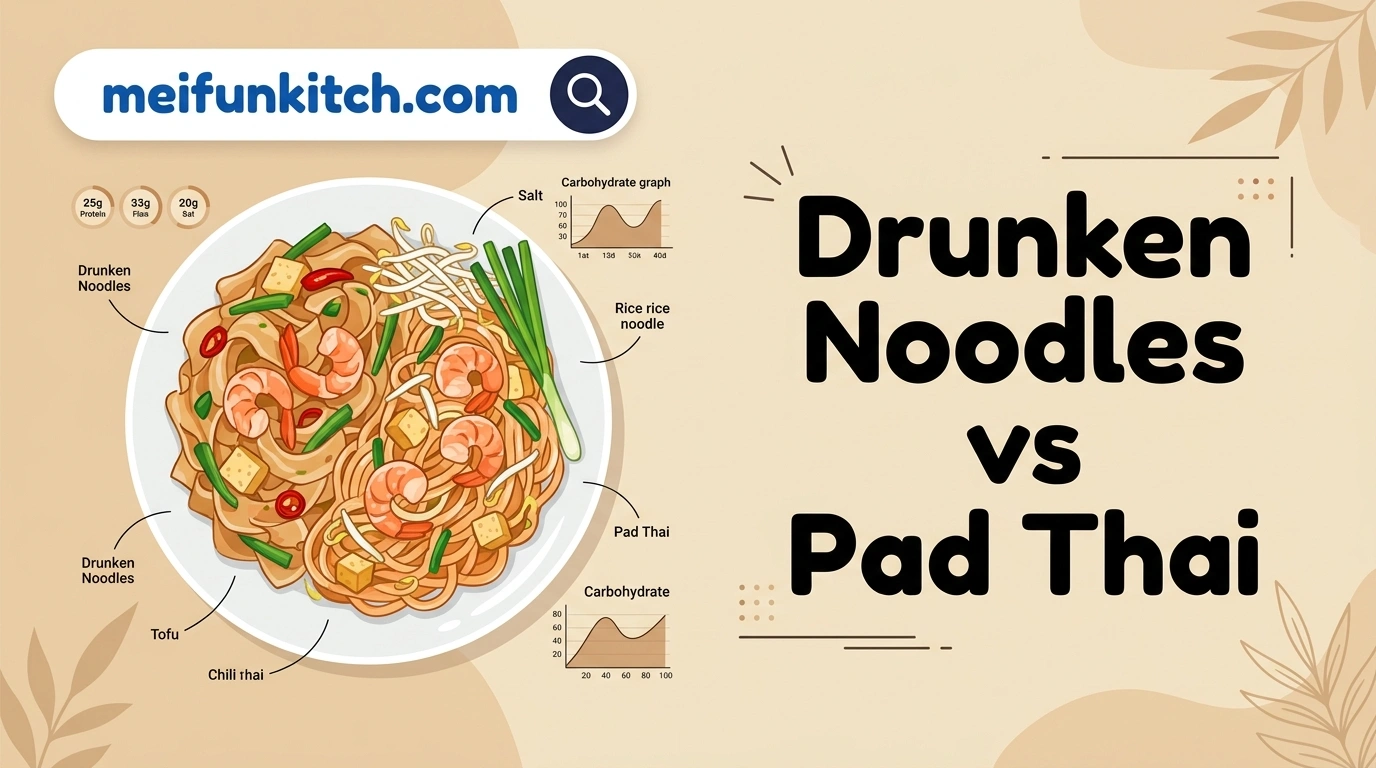
Drunken noodles vs pad thai is a popular comparison among people who love Thai food. Both dishes use noodles, but they have different flavors, ingredients, and cooking styles. Therefore, many people want to know which one tastes better and which one fits their preferences. Moreover, understanding the differences can help you choose the right dish when ordering at a restaurant or cooking at home.
Although both meals come from Thailand, they offer unique experiences. Drunken noodles usually have a bold, spicy flavor, while Pad Thai often has a sweet, savory, and slightly tangy taste. In addition, the noodles used in each dish can look and feel different. As a result, each meal provides its own texture and flavor profile. Furthermore, both dishes include vegetables, protein options, and delicious sauces that make them popular around the world.
If you are trying to decide between these two famous noodle dishes, this guide will help you. Throughout this article, you will learn about their ingredients, flavors, nutrition, cooking methods, and key differences. Meanwhile, you will also discover which dish may be the better choice for your taste and dining needs. Therefore, by the end, you will have a clear understanding of drunken noodles vs pad thai and what makes each one special.
Drunken Noodles vs Pad Thai: What Is the Main Difference?
Understanding the Core Difference
When comparing drunken noodles vs pad thai, the biggest difference comes from flavor, ingredients, and cooking style. Drunken noodles, also known as Pad Kee Mao, usually feature wide rice noodles, fresh vegetables, basil leaves, and a savory sauce with a spicy kick. On the other hand, Pad Thai often includes thinner rice noodles, bean sprouts, peanuts, eggs, and a sweet-tangy sauce. Therefore, although both dishes come from Thai cuisine, they create very different dining experiences. Furthermore, each dish attracts different types of noodle lovers depending on their taste preferences.
Another major difference involves texture and presentation. Drunken noodles often look rustic and colorful because chefs stir-fry them quickly over high heat. As a result, the vegetables remain crisp while the noodles absorb rich flavors. Meanwhile, Pad Thai usually has a slightly softer texture and a balanced combination of sweet, salty, sour, and savory notes. Consequently, many first-time Thai food lovers choose Pad Thai because of its approachable flavor profile. Moreover, its widespread popularity has made it one of the most recognized Thai dishes worldwide.
The purpose of each dish also differs slightly. While Pad Thai often appeals to people who enjoy balanced flavors, drunken noodles frequently attract those who prefer bolder and spicier meals. Therefore, choosing between them depends largely on personal taste. Additionally, both dishes offer customization options with chicken, shrimp, beef, tofu, or vegetables. Because of this flexibility, both remain popular menu choices in Thai restaurants around the world.
Comparison: Main Differences
| Feature | Drunken Noodles | Pad Thai |
| Noodle Type | Wide rice noodles | Thin rice noodles |
| Flavor | Spicy and savory | Sweet, sour, savory |
| Heat Level | Higher | Lower |
| Basil Usage | Common | Rare |
| Peanuts | Usually absent | Common |
| Bean Sprouts | Sometimes | Common |
| Sauce Style | Bold | Balanced |
| Texture | Chewy | Soft |
| Appearance | Rustic | Neat |
| Popularity | Food enthusiasts | General audience |
| Customization | High | High |
| Traditional Spice | Strong | Mild |
Drunken Noodles vs Pad Thai: Ingredients Compared
Key Ingredients in Each Dish
The ingredients used in drunken noodles vs pad thai help explain why the dishes taste so different. Drunken noodles typically include wide rice noodles, garlic, chili peppers, basil, soy sauce, vegetables, and a protein choice. Therefore, the recipe creates a bold and aromatic flavor profile. In addition, fresh basil contributes a distinctive herbal taste that many people immediately recognize. As a result, the dish feels vibrant and full of character.
Pad Thai uses a different combination of ingredients. For example, it commonly includes rice noodles, eggs, bean sprouts, peanuts, tamarind sauce, and green onions. Furthermore, the tamarind sauce creates the signature sweet and tangy flavor that defines the dish. Consequently, Pad Thai delivers a more balanced taste compared to the stronger flavor profile of drunken noodles. Moreover, the peanuts add texture and richness to every bite.
Both dishes allow significant flexibility. Because restaurants often adapt recipes, ingredients may vary slightly depending on location and customer preferences. Likewise, proteins such as shrimp, chicken, beef, pork, and tofu work well in both dishes. Therefore, diners can personalize their meals while still enjoying authentic Thai-inspired flavors. Additionally, fresh vegetables help improve both nutrition and texture.
Comparison: Ingredient Breakdown
| Ingredient | Drunken Noodles | Pad Thai |
| Wide Rice Noodles | Yes | No |
| Thin Rice Noodles | No | Yes |
| Basil | Yes | Rare |
| Tamarind Sauce | Rare | Yes |
| Peanuts | Rare | Yes |
| Bean Sprouts | Sometimes | Common |
| Garlic | Yes | Yes |
| Chili Peppers | High amount | Moderate |
| Egg | Optional | Common |
| Green Onions | Yes | Yes |
| Soy Sauce | Common | Limited |
| Lime | Optional | Common |
Drunken Noodles vs Pad Thai: Taste and Flavor Differences
Comparing Flavor Profiles
The flavor comparison between drunken noodles vs pad thai remains one of the most common questions among Thai food lovers. Drunken noodles deliver a bold, savory, and spicy experience that immediately stands out. Therefore, people who enjoy intense flavors often prefer this dish. Furthermore, basil and chili peppers create layers of complexity that make each bite exciting. As a result, the dish offers a strong and memorable taste.
Pad Thai focuses on balance rather than intensity. For example, sweet, sour, salty, and savory flavors work together harmoniously. Meanwhile, tamarind sauce provides a gentle tanginess that complements the noodles and protein. Consequently, the dish feels approachable and satisfying to a wider audience. Moreover, peanuts contribute additional richness and texture, which further enhances the overall experience.
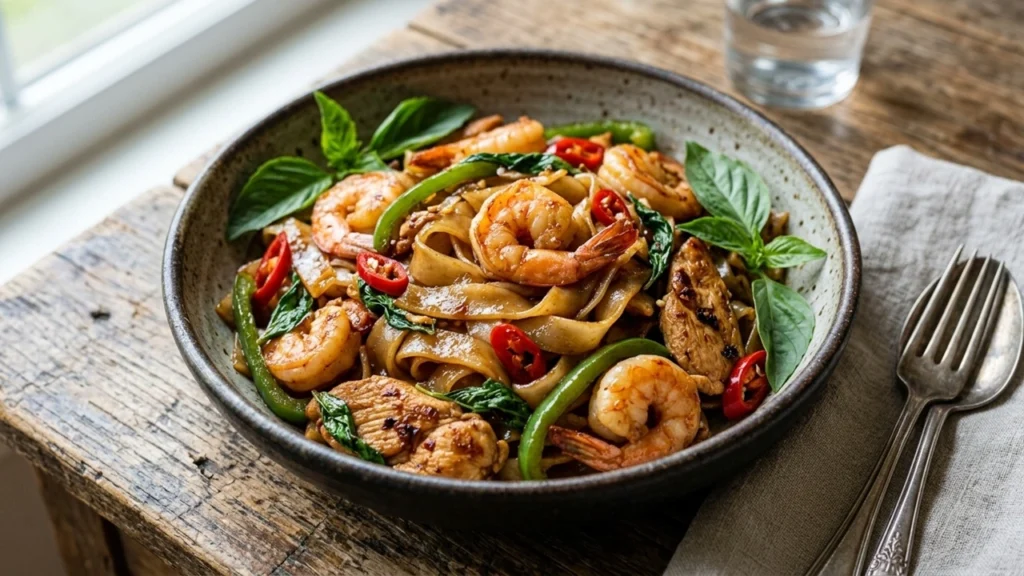
Taste preferences vary from person to person. Because some diners enjoy strong spice levels, they may choose drunken noodles more often. On the other hand, people who prefer balanced flavors frequently select Pad Thai. Therefore, neither dish is objectively better. Instead, each offers a unique culinary experience that reflects different aspects of Thai cuisine.
Comparison: Flavor Characteristics
| Flavor Element | Drunken Noodles | Pad Thai |
| Spiciness | High | Mild to Moderate |
| Sweetness | Low | Moderate |
| Sourness | Low | Moderate |
| Savory Notes | Strong | Balanced |
| Herbal Flavor | Strong | Mild |
| Chili Presence | High | Moderate |
| Peanut Flavor | Rare | Strong |
| Tanginess | Low | High |
| Richness | Moderate | High |
| Complexity | High | High |
| Beginner Friendly | Moderate | Excellent |
| Boldness | Very High | Moderate |
Drunken Noodles vs Pad Thai: Which Dish Is Spicier?
Understanding Spice Levels
Many people researching drunken noodles vs pad thai specifically want to know which dish contains more heat. In most traditional recipes, drunken noodles are noticeably spicier. Because chefs often use fresh chili peppers, the dish develops a strong heat level that remains one of its defining characteristics. Furthermore, the spicy flavor works well with basil and savory sauces. As a result, the dish appeals to spice lovers.
Pad Thai generally contains less heat. Although some recipes include chili flakes or spicy condiments, the core flavor focuses on balance rather than intensity. Therefore, many diners find it easier to enjoy, especially if they are sensitive to spicy foods. Additionally, sweet and sour flavors help soften any heat that may be present. Consequently, Pad Thai often appeals to a broader audience.
Restaurants can adjust spice levels according to customer preferences. Because customization is common, diners can request mild, medium, or extra spicy versions. Likewise, adding chili sauce allows people to increase heat gradually. Therefore, both dishes can accommodate different spice tolerances while maintaining their unique identities.
Comparison: Spice Factors
| Spice Factor | Drunken Noodles | Pad Thai |
| Traditional Heat | High | Low |
| Chili Content | High | Moderate |
| Spice Lovers Appeal | Excellent | Good |
| Beginner Friendly | Moderate | Excellent |
| Heat Intensity | Strong | Mild |
| Customizable | Yes | Yes |
| Sweetness Balance | Low | High |
| Herbal Heat | Strong | Mild |
| Family Friendly | Moderate | High |
| Restaurant Variations | Common | Common |
| Lingering Heat | Strong | Light |
| Overall Spice Ranking | Higher | Lower |
Drunken Noodles vs Pad Thai: Nutrition and Calories
Nutritional Comparison
When evaluating drunken noodles vs pad thai, nutrition often becomes an important consideration. Both dishes contain carbohydrates from rice noodles, proteins from meat or tofu, and vitamins from vegetables. Therefore, either option can fit into a balanced diet when consumed in moderation. In addition, ingredient choices significantly affect calorie totals and nutritional value.
Drunken noodles often contain fewer sweet ingredients, which may reduce sugar content. However, oil usage and larger noodle portions can increase calories. Meanwhile, Pad Thai often includes peanuts and sweet tamarind-based sauce, which can contribute additional calories. Consequently, nutritional values vary between recipes and restaurants. Moreover, serving size remains one of the biggest factors affecting calorie intake.
Health-conscious diners can make adjustments to improve either dish. For example, adding vegetables and choosing lean proteins can increase nutritional quality. Likewise, reducing sauce amounts may help lower calorie intake. Therefore, both dishes can support different dietary goals when prepared thoughtfully.
Comparison: Nutrition Factors
| Nutrition Factor | Drunken Noodles | Pad Thai |
| Carbohydrates | High | High |
| Protein Potential | High | High |
| Vegetable Content | Often Higher | Moderate |
| Sugar Content | Lower | Higher |
| Fiber Potential | Moderate | Moderate |
| Calories | Moderate to High | Moderate to High |
| Peanuts | Rare | Common |
| Healthy Customization | Easy | Easy |
| Protein Variety | High | High |
| Portion Size | Large | Moderate |
| Balanced Meal Potential | High | High |
| Dietary Flexibility | High | High |
How Drunken Noodles and Pad Thai Are Traditionally Made
Traditional Cooking Methods
Traditional Thai cooking techniques help create the unique flavors found in these dishes. While discussing drunken noodles vs pad thai, understanding preparation methods provides valuable insight. Drunken noodles are typically cooked quickly in a hot wok with vegetables, protein, basil, and sauces. Therefore, high heat helps develop smoky flavors while preserving vegetable texture. As a result, the dish feels fresh and vibrant.
Pad Thai follows a different process. For example, cooks prepare the noodles separately before combining them with sauce, eggs, vegetables, and protein. Furthermore, tamarind sauce plays a central role in creating the dish's signature flavor. Consequently, the final result balances sweetness, tanginess, and savoriness. Moreover, garnishes such as peanuts and lime complete the presentation.
Both dishes require careful timing and ingredient preparation. Because stir-frying happens quickly, chefs organize ingredients before cooking begins. Likewise, maintaining proper heat helps achieve authentic texture and flavor. Therefore, traditional cooking methods remain essential to preserving the character of each dish.
Comparison: Traditional Preparation
| Cooking Element | Drunken Noodles | Pad Thai |
| Wok Cooking | Yes | Yes |
| High Heat | Essential | Important |
| Basil Addition | Yes | Rare |
| Tamarind Usage | Rare | Essential |
| Peanut Garnish | Rare | Common |
| Cooking Speed | Fast | Fast |
| Sauce Focus | Savory | Sweet-Tangy |
| Vegetable Emphasis | High | Moderate |
| Noodle Width | Wide | Thin |
| Stir Fry Method | Direct | Layered |
| Traditional Appearance | Rustic | Structured |
| Final Flavor Goal | Bold | Balanced |
Drunken Noodles vs Pad Thai: Which Is Healthier?
Choosing the Better Option for Your Diet
Many diners ask which dish is healthier when comparing drunken noodles vs pad thai. The answer depends on ingredients, preparation methods, and portion sizes. Therefore, neither dish automatically qualifies as healthier in every situation. Instead, the nutritional outcome depends largely on how the meal is prepared. Furthermore, adding vegetables and lean proteins can improve either option.
Drunken noodles may appeal to people looking to reduce added sugar because the dish generally relies more on savory flavors. Meanwhile, Pad Thai may contain higher amounts of sweet sauce and peanuts. Consequently, calorie totals can vary significantly. Moreover, restaurant recipes often differ, which makes direct comparisons challenging.
The healthiest choice often involves customization. Because both dishes can include vegetables, tofu, chicken, or seafood, diners can adjust ingredients to meet their goals. Likewise, requesting lighter sauce portions may help reduce calories. Therefore, both dishes can fit into a balanced eating plan when enjoyed mindfully.
Comparison: Health Considerations
| Health Factor | Drunken Noodles | Pad Thai |
| Sugar Content | Lower | Higher |
| Vegetable Potential | High | Moderate |
| Protein Options | Many | Many |
| Customization | Excellent | Excellent |
| Calorie Control | Possible | Possible |
| Fiber Content | Moderate | Moderate |
| Sodium Awareness | Important | Important |
| Balanced Meal Potential | High | High |
| Lean Protein Friendly | Yes | Yes |
| Portion Management | Important | Important |
| Overall Flexibility | High | High |
| Healthy Preparation Potential | Excellent | Excellent |
Best Protein Options for Drunken Noodles and Pad Thai
Choosing the Right Protein for More Flavor
When preparing Thai noodle dishes, protein plays an important role in flavor, texture, and nutrition. In the comparison of drunken noodles vs pad thai, many people want to know which proteins work best with each dish. Fortunately, both recipes are very flexible and pair well with a variety of ingredients. Therefore, whether you prefer meat, seafood, or plant-based options, you can easily customize your meal. Furthermore, selecting the right protein can help create a more satisfying and balanced dining experience.
Chicken remains one of the most popular choices because it absorbs sauces well and complements both dishes. In addition, chicken provides lean protein, which makes it suitable for many diets. Meanwhile, shrimp adds a slightly sweet seafood flavor that pairs especially well with traditional Pad Thai recipes. Consequently, seafood lovers often choose shrimp when ordering Thai noodles. Moreover, shrimp cooks quickly, making it a convenient ingredient for home cooks.
For those who prefer vegetarian or vegan meals, tofu serves as an excellent alternative. Because tofu absorbs surrounding flavors, it blends naturally with Thai sauces and seasonings. Likewise, beef and pork can add richness and depth for those who enjoy heartier meals. Therefore, there is no single best protein choice for everyone. Instead, selecting a protein depends on taste preferences, dietary goals, and desired texture.
Comparison: Popular Protein Choices
| Protein Option | Drunken Noodles | Pad Thai |
| Chicken | Excellent | Excellent |
| Shrimp | Very Good | Excellent |
| Beef | Excellent | Good |
| Pork | Excellent | Good |
| Tofu | Excellent | Excellent |
| Fish | Good | Very Good |
| Egg | Common | Common |
| Turkey | Good | Good |
| Plant-Based Meat | Excellent | Excellent |
| Duck | Good | Moderate |
| Mixed Seafood | Very Good | Excellent |
| Extra Vegetables | Good Alternative | Good Alternative |
Which Should You Choose: Drunken Noodles or Pad Thai?
Finding the Best Dish for Your Taste
Choosing between drunken noodles vs pad thai depends mainly on your personal taste preferences. If you enjoy bold flavors, spicy sauces, and aromatic herbs, drunken noodles may be the better option. Furthermore, the combination of basil, chili peppers, and savory seasonings creates a strong flavor profile that many spice lovers appreciate. As a result, the dish often appeals to adventurous eaters who enjoy intense flavors.
On the other hand, Pad Thai may be a better choice if you prefer balanced flavors. Because it combines sweetness, tanginess, and savoriness, it creates a pleasant and approachable taste. Moreover, the addition of peanuts and bean sprouts adds texture that many diners enjoy. Consequently, Pad Thai remains one of the most popular Thai dishes worldwide. Additionally, people who are new to Thai cuisine often find it easier to enjoy.
Ultimately, there is no wrong choice because both dishes offer unique benefits. While one focuses on spice and boldness, the other emphasizes balance and harmony. Therefore, the best option depends on your mood, spice tolerance, and flavor preferences. Likewise, many Thai food enthusiasts enjoy both dishes for different occasions. As a result, trying each one can help you discover your personal favorite.
Comparison: Which Dish Should You Choose?
| Preference | Drunken Noodles | Pad Thai |
| Loves Spicy Food | Best Choice | Good Choice |
| Mild Flavor Preference | Moderate | Best Choice |
| First-Time Thai Food Eater | Good | Excellent |
| Sweet and Tangy Taste | Moderate | Excellent |
| Savory Flavor Lover | Excellent | Good |
| Basil Flavor Fan | Excellent | Limited |
| Peanut Lover | Limited | Excellent |
| Bold Taste Preference | Excellent | Good |
| Family-Friendly Option | Good | Excellent |
| Customization Options | High | High |
| Restaurant Availability | High | Very High |
| Overall Popularity | High | Very High |
Conclusion
When comparing drunken noodles vs pad thai, both dishes bring something special to the table. Drunken noodles stand out with their bold, spicy flavors, fresh basil, and hearty texture, while Pad Thai offers a balanced combination of sweet, savory, tangy, and nutty tastes that appeal to a wide range of diners. Therefore, the best choice depends on your personal preferences and spice tolerance. Moreover, both dishes provide excellent opportunities for customization with different proteins, vegetables, and seasonings. Whether you are visiting a Thai restaurant for the first time or looking to recreate authentic flavors at home, understanding the differences can help you make a better choice. Furthermore, each dish represents a unique part of Thailand’s rich food culture. As a result, many food lovers enjoy both for different occasions. Ultimately, trying each dish is the best way to discover which one satisfies your cravings and becomes your favorite Thai noodle meal.
FAQs
What is the biggest difference between drunken noodles and Pad Thai?
The biggest difference is flavor. Drunken noodles focus on spicy, savory, and basil-forward tastes, while Pad Thai offers a sweeter and tangier flavor profile. Additionally, the noodle types differ, which creates unique textures. Therefore, each dish provides a distinct Thai dining experience.
Which dish is more popular worldwide?
Pad Thai is generally more popular around the world because it has a balanced flavor that appeals to many people. Furthermore, it is commonly featured on Thai restaurant menus internationally. However, drunken noodles also have a strong following among spice lovers.
Are drunken noodles always spicy?
Traditionally, drunken noodles contain chili peppers and are known for their spicy flavor. However, many restaurants allow customers to adjust the spice level. Therefore, you can often request a milder version if you prefer less heat.
Does Pad Thai contain peanuts?
Yes, traditional Pad Thai usually includes crushed peanuts as a topping. Peanuts add crunch and richness to the dish. However, some restaurants can prepare it without peanuts for customers who have allergies or dietary restrictions.
Which dish is better for beginners trying Thai food?
Pad Thai is often recommended for beginners because its sweet, savory, and tangy flavors are easy to enjoy. Additionally, it is usually less spicy than drunken noodles. As a result, many first-time Thai food diners choose Pad Thai.
Can vegetarians eat drunken noodles or Pad Thai?
Yes, both dishes can be prepared with vegetables and tofu instead of meat or seafood. Furthermore, many Thai restaurants offer vegetarian versions. Therefore, plant-based eaters can enjoy either dish while still experiencing authentic flavors.
Which dish has more calories?
Calorie counts vary depending on ingredients and portion sizes. However, Pad Thai may contain more calories because of peanuts and sweet sauce. Meanwhile, drunken noodles can also be calorie-dense when prepared with extra oil or large portions.
What protein works best with these dishes?
Chicken, shrimp, beef, pork, and tofu are all popular choices. Additionally, each protein absorbs Thai sauces differently, creating unique flavors. Therefore, the best protein depends on personal taste and dietary preferences.
Are drunken noodles healthier than Pad Thai?
Neither dish is automatically healthier than the other. Instead, healthiness depends on preparation methods, ingredients, and serving sizes. Adding vegetables and lean proteins can improve the nutritional value of both dishes significantly.
Can I make drunken noodles and Pad Thai at home?
Yes, both dishes can be made at home using readily available ingredients. Furthermore, many simple recipes guide beginners through the cooking process. As a result, home cooks can customize flavors and ingredients to match their preferences.

Smith
Author103 Published Articles
James Smith is a dedicated food writer and recipe enthusiast who specializes in creating informative content about noodles, pasta, rice dishes, comfort foods, and a wide variety of global cuisines. He is passionate about sharing easy-to-follow recipes, cooking techniques, ingredient guides, nutrition facts, and meal preparation tips that help readers cook with confidence. From classic noodle dishes and homemade sauces to healthy meal ideas and international favorites, James focuses on delivering well-researched, practical, and engaging content for home cooks of all skill levels. His goal is to make cooking enjoyable, accessible, and inspiring by providing reliable recipes and food knowledge that readers can trust.
EducationM.Sc. in Food and Nutrition.
Experience8 Years.
ExpertiseWrites about Noodles and Many Other Foods