
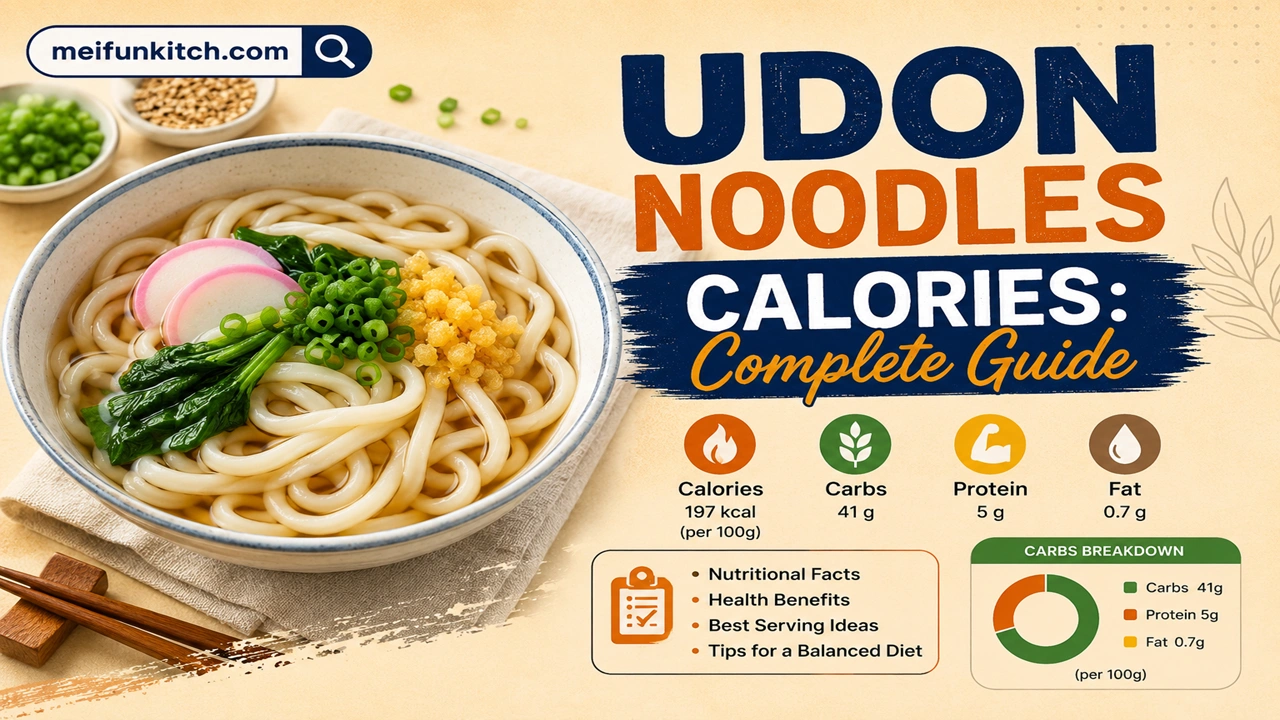
If you want to know udon noodles calories before adding them to your meal, the short answer is simple. A plain serving of cooked udon noodles contains about 120 to 150 calories per 100 grams. However, the total calorie count changes with serving size, broth, sauces, and toppings. Therefore, understanding the complete nutrition profile helps you make healthier choices. Udon noodles calories remain moderate when you enjoy them with vegetables and lean protein instead of heavy sauces.
Japanese cuisine has become popular worldwide because it offers comforting and flavorful dishes. Among them, udon noodles stand out for their thick texture and satisfying bite. Although many people assume they are high in calories, that is not always true. Udon noodles calories depend on preparation, ingredients, and portion size. Consequently, knowing these details allows you to enjoy udon without exceeding your daily calorie goals.
Whether you want to lose weight, build muscle, or simply eat healthier, learning about udon noodles calories can help you make smarter food choices. This guide explains calorie counts, nutrition facts, serving sizes, health benefits, comparisons with other noodles, and practical tips. By the end, you will understand how to include udon noodles in a balanced diet without sacrificing flavor.
Udon Noodles Calories: Quick Answer and Nutrition Overview
Udon noodles are thick Japanese wheat noodles known for their soft texture and mild flavor. Since they contain simple ingredients, many people wonder whether they fit into a healthy eating plan. The good news is that udon noodles calories are moderate when compared with many processed meals.
Plain udon noodles mainly provide carbohydrates, which supply energy for daily activities. They also contain a small amount of protein and very little fat. However, the broth, meat, tempura, and sauces usually add more calories than the noodles themselves. Therefore, choosing lighter toppings makes a significant difference.
The table below shows the average calorie content of plain cooked udon noodles.
| Serving | Average Calories | Carbohydrates | Protein | Fat |
| 100 g cooked | 127 kcal | 26 g | 3 g | 0.4 g |
| 150 g cooked | 191 kcal | 39 g | 4.5 g | 0.6 g |
| 200 g cooked | 254 kcal | 52 g | 6 g | 0.8 g |
| 1 medium bowl | 250–350 kcal | 50–60 g | 6–10 g | 1–5 g |
These values represent plain noodles. Therefore, soups and toppings can increase the total calorie count considerably. Understanding udon noodles calories helps you estimate the nutrition of every meal more accurately.
How Many Calories Are in Udon Noodles?
Many people search for a simple answer about udon noodles calories before ordering Japanese food. A standard serving of cooked udon noodles contains approximately 250 calories per bowl before toppings. Nevertheless, this number varies depending on the serving size.
Fresh udon noodles generally contain similar calories to frozen varieties. On the other hand, dried udon noodles contain more calories per gram because manufacturers remove the water. After cooking, they absorb water and their calorie density decreases.
The table below provides a quick comparison.
| Type of Udon | Serving Size | Average Calories |
| Fresh udon | 100 g | 125 kcal |
| Frozen udon | 100 g | 130 kcal |
| Dried udon (uncooked) | 100 g | 340 kcal |
| Cooked udon | 1 bowl | 250–300 kcal |
These numbers may vary slightly among brands. Therefore, checking the nutrition label always provides the most accurate information about udon noodles calories.
Calories in Cooked vs Dry Udon Noodles
Many shoppers notice different calorie numbers on food packages. This difference often causes confusion. The reason is simple. Dry noodles contain very little water, while cooked noodles absorb plenty during boiling.
As a result, 100 grams of dry udon contains far more calories than 100 grams of cooked udon. However, the total calories remain similar after cooking because the noodles become heavier with water.
| Comparison | Dry Udon | Cooked Udon |
| Water Content | Very Low | High |
| Calories per 100 g | About 340 kcal | About 127 kcal |
| Carbohydrates | High | Moderate |
| Serving Weight | Light | Heavier |
Understanding this difference prevents mistakes when tracking udon noodles calories. Always check whether the nutrition label refers to dry or cooked noodles before calculating your meal.
Udon Noodles Calories by Serving Size
Portion size has the biggest effect on udon noodles calories. Even healthy foods can contribute excess calories when portions become too large. Therefore, measuring servings helps maintain a balanced diet.
Restaurants often serve much larger portions than home kitchens. Consequently, one restaurant bowl may contain twice the noodles found in a standard serving. Adding tempura, beef, pork, or creamy sauces increases calories even further.
The following table makes serving sizes easier to understand.
| Serving Size | Calories | Best For |
| 50 g cooked | 64 kcal | Light snack |
| 100 g cooked | 127 kcal | Small meal |
| 150 g cooked | 191 kcal | Average lunch |
| 200 g cooked | 254 kcal | Large serving |
| 250 g cooked | 318 kcal | Restaurant portion |
Choosing a suitable serving size allows you to enjoy udon noodles calories without consuming unnecessary energy. Pairing noodles with vegetables also improves fullness while keeping calories under control.
Calories in 100 Grams of Udon Noodles
Many nutrition labels use a 100-gram serving because it makes food comparisons easier. For most brands, udon noodles calories average about 120 to 130 calories per 100 grams of cooked noodles. This serving provides enough energy for a light meal or a side dish.
Although the calorie count stays fairly consistent, nutrition can vary slightly between brands. Some manufacturers use extra salt or different wheat flour blends. Therefore, reading the package label remains a smart habit.
The table below shows the average nutrition for 100 grams of cooked udon noodles.
| Nutrient | Amount per 100 g |
|---|---|
| Calories | 127 kcal |
| Carbohydrates | 26 g |
| Protein | 3 g |
| Fat | 0.4 g |
| Fiber | 1.3 g |
| Sugar | Less than 1 g |
| Sodium* | 5–220 mg |
*The sodium content depends on the brand and preparation method.
Because udon noodles calories mainly come from carbohydrates, they provide quick energy. Athletes and active people often include them in balanced meals after exercise.
Calories in One Bowl of Udon
A bowl of udon can range from light to very filling. Therefore, the total calories depend on both the noodles and the toppings. A simple bowl of broth and noodles contains fewer calories than one topped with fried foods.
The table below compares common bowl sizes.
| Type of Bowl | Average Calories |
|---|---|
| Plain kake udon | 250–320 kcal |
| Chicken udon | 350–450 kcal |
| Beef udon | 450–600 kcal |
| Tempura udon | 550–750 kcal |
| Curry udon | 500–700 kcal |
Even though udon noodles calories begin at a moderate level, rich toppings can double the final calorie count. Therefore, choosing grilled protein instead of fried toppings creates a lighter meal.
Calories in Restaurant and Homemade Udon
Restaurant meals often contain larger portions than homemade recipes. In addition, chefs may use more oil, sugar, and sodium. These ingredients improve flavor but also increase calories.
Homemade udon gives you complete control over ingredients. You can reduce calories by using a light broth, lean protein, and fresh vegetables.
| Meal Type | Typical Calories | Why It Differs |
|---|---|---|
| Homemade plain udon | 250–320 kcal | Controlled ingredients |
| Homemade chicken udon | 320–420 kcal | Lean protein |
| Restaurant plain udon | 350–450 kcal | Larger portions |
| Restaurant beef udon | 500–650 kcal | Extra meat and sauce |
| Restaurant tempura udon | 600–800 kcal | Fried toppings |
Preparing meals at home makes it easier to manage udon noodles calories while enjoying fresh ingredients and balanced nutrition.
What Affects Udon Noodles Calories?
Several factors determine udon noodles calories. The noodles themselves provide only part of the total energy. The remaining calories come from ingredients added during cooking.
Understanding these factors helps you build healthier meals without giving up your favorite Japanese dishes.
| Factor | Effect on Calories |
|---|---|
| Serving size | Larger portions increase calories |
| Type of broth | Creamy broths add more calories |
| Sauces | Sweet and oily sauces raise calories |
| Protein choice | Lean meats add fewer calories |
| Fried toppings | Increase calories significantly |
| Vegetables | Add nutrients with few calories |
Making small ingredient changes can reduce total calories while preserving flavor.
Fresh vs Frozen vs Dried Udon
People often ask whether one type of udon contains fewer calories. In reality, the differences remain small after cooking. The biggest difference comes from water content before preparation.
Fresh and frozen udon usually contain similar nutrition. Dried noodles appear higher in calories because they contain almost no water.
| Type | Calories After Cooking | Best Use |
|---|---|---|
| Fresh udon | 125–130 kcal per 100 g | Quick meals |
| Frozen udon | 125–135 kcal per 100 g | Convenience |
| Dried udon | About 127 kcal per 100 g cooked | Long storage |
Therefore, choosing between these options depends more on convenience than on udon noodles calories.
Soup, Sauce, and Toppings
Many people focus only on the noodles. However, toppings usually contribute the largest share of calories. A light broth keeps meals balanced, while creamy sauces and fried foods increase calorie intake.
The comparison below shows how common additions affect a bowl of udon.
| Ingredient | Extra Calories |
|---|---|
| Clear dashi broth | 20–40 kcal |
| Miso broth | 40–80 kcal |
| Chicken breast | 120–170 kcal |
| Boiled egg | 70–80 kcal |
| Tofu | 70–90 kcal |
| Tempura shrimp | 120–180 kcal |
| Tempura vegetables | 90–150 kcal |
| Sesame oil | 120 kcal per tablespoon |
Selecting healthier toppings allows you to enjoy udon noodles calories without making the meal overly heavy.
Cooking Method and Portion Size
Cooking techniques also influence udon noodles calories. Boiled noodles remain naturally low in fat because they require no oil. In contrast, stir-fried dishes often include cooking oil and sweet sauces.
The table below explains how preparation changes calories.
| Cooking Method | Average Calories per Bowl |
|---|---|
| Boiled udon in broth | 250–350 kcal |
| Vegetable udon stir-fry | 350–450 kcal |
| Chicken yaki udon | 450–550 kcal |
| Beef stir-fried udon | 500–650 kcal |
| Creamy udon dishes | 550–700 kcal |
Portion control remains equally important. Even healthy recipes become high in calories when serving sizes increase. Therefore, balancing noodles with vegetables and lean protein creates a satisfying meal without excessive udon noodles calories.
Complete Udon Noodles Nutrition Facts
Understanding the full nutrition profile is just as important as knowing udon noodles calories. These Japanese noodles mainly provide carbohydrates for energy. They also contain small amounts of protein, very little fat, and a few essential minerals. However, the overall nutrition changes with the ingredients used in the dish.
The table below summarizes the average nutrition in 100 grams of plain cooked udon noodles.
| Nutrient | Amount per 100 g | Daily Value (%) |
|---|---|---|
| Calories | 127 kcal | 6% |
| Carbohydrates | 26 g | 9% |
| Protein | 3 g | 6% |
| Fat | 0.4 g | 1% |
| Fiber | 1.3 g | 5% |
| Sugar | Less than 1 g | — |
| Sodium | 5–220 mg | 0–9% |
| Calcium | 10–15 mg | 1% |
| Iron | 0.5–0.8 mg | 3–4% |
Although udon noodles calories receive the most attention, nutrients such as protein and fiber also affect how filling the meal feels. Pairing udon with vegetables improves its overall nutritional value.
Carbohydrates
Carbohydrates provide most of the energy found in udon noodles calories. A 100-gram serving contains about 26 grams of carbohydrates. These carbohydrates break down into glucose, which fuels your muscles and brain.
Because udon noodles are made from wheat flour, they contain mostly refined carbohydrates. Therefore, they digest faster than whole-grain foods. Adding vegetables, beans, or lean protein slows digestion and helps you stay full longer.
| Carbohydrate Information | Average Amount |
|---|---|
| Carbohydrates per 100 g | 26 g |
| Carbohydrates per bowl | 50–60 g |
| Main Source | Refined wheat flour |
| Primary Function | Energy production |
If you exercise regularly, udon noodles calories can provide quick energy before or after workouts.
Protein
Protein helps build muscles and repair body tissues. Although udon noodles contain protein, they are not considered a high-protein food. Therefore, adding chicken, tofu, shrimp, or eggs creates a more balanced meal.
The table below compares protein amounts in common udon meals.
| Meal | Protein |
|---|---|
| Plain udon | 6 g |
| Chicken udon | 25–30 g |
| Beef udon | 20–28 g |
| Tofu udon | 16–20 g |
| Shrimp udon | 18–24 g |
Adding lean protein improves the nutritional quality of udon noodles calories while increasing satiety.
Fat
Plain udon noodles contain almost no fat. As a result, most fat in an udon dish comes from cooking oils, meats, sauces, or fried toppings.
Choosing grilled or steamed ingredients instead of fried foods helps keep meals lighter.
| Food Component | Fat Content |
|---|---|
| Plain cooked udon | 0.4 g |
| Chicken breast | 3–5 g |
| Tofu | 4–6 g |
| Tempura shrimp | 8–12 g |
| Sesame oil (1 tbsp) | 14 g |
People following a low-fat diet often appreciate udon noodles calories because the noodles themselves contribute very little fat.
Fiber
Fiber supports healthy digestion and helps you feel full. However, refined wheat noodles contain less fiber than whole grains. Therefore, vegetables become an important addition to any udon meal.
The table below shows simple ways to increase fiber.
| Ingredient | Fiber Added |
|---|---|
| Spinach | 2.2 g |
| Broccoli | 2.6 g |
| Carrots | 2.8 g |
| Mushrooms | 1.8 g |
| Cabbage | 2.5 g |
| Edamame | 5.2 g |
Adding colorful vegetables improves both nutrition and udon noodles calories, since vegetables provide volume without many extra calories.
Sodium
Sodium deserves attention because many restaurant udon dishes contain salty broths. The noodles themselves remain fairly low in sodium. However, soup bases, soy sauce, and seasoning packets can increase the total amount quickly.
| Food Item | Approximate Sodium |
|---|---|
| Plain cooked udon | 5–20 mg |
| Packaged udon with seasoning | 600–1,200 mg |
| Restaurant udon soup | 900–1,800 mg |
| Low-sodium homemade broth | 250–500 mg |
Reducing broth consumption lowers sodium while keeping udon noodles calories almost unchanged.
Vitamins and Minerals
Although udon noodles are not rich in vitamins, they still provide small amounts of essential minerals. Their nutritional value improves greatly when served with vegetables, seafood, or lean meats.
| Vitamin or Mineral | Role in the Body | Food Sources to Add |
|---|---|---|
| Iron | Supports oxygen transport | Beef, spinach |
| Calcium | Strengthens bones | Tofu, bok choy |
| Potassium | Supports muscles | Mushrooms, spinach |
| Magnesium | Supports nerve function | Edamame |
| Vitamin C | Boosts immunity | Bell peppers |
| Vitamin A | Supports vision | Carrots |
Combining nutrient-rich ingredients with udon noodles calories creates a meal that is both satisfying and well-balanced.
Udon Noodles Calories Compared with Other Noodles
Many people compare udon noodles calories with other popular noodles before deciding what to eat. While calorie differences exist, nutrition also depends on serving size, ingredients, and cooking methods.
The comparison below shows average calories for cooked noodles.
| Noodle Type | Calories per 100 g | Main Ingredient |
|---|---|---|
| Udon | 127 kcal | Wheat flour |
| Ramen | 138 kcal | Wheat flour |
| Soba | 99 kcal | Buckwheat and wheat |
| Rice noodles | 108 kcal | Rice flour |
| Egg noodles | 138 kcal | Wheat and eggs |
| Spaghetti | 158 kcal | Durum wheat |
This comparison shows that udon noodles calories fall in the middle range. They contain fewer calories than spaghetti and many egg noodles but slightly more than soba or rice noodles.
Udon vs Ramen Calories
Udon and ramen both come from Japanese cuisine, yet they differ in texture and nutrition. Ramen noodles usually contain more fat because manufacturers often add oil during processing.
| Comparison | Udon | Ramen |
|---|---|---|
| Calories per 100 g | 127 kcal | 138 kcal |
| Fat | Very low | Higher |
| Carbohydrates | 26 g | 28 g |
| Protein | 3 g | 5 g |
| Texture | Thick and chewy | Thin and firm |
If you choose plain noodles, udon noodles calories are usually slightly lower than ramen.
Udon vs Soba Calories
Soba noodles contain buckwheat, which naturally provides more fiber and minerals. Therefore, many health-conscious eaters prefer soba.
| Comparison | Udon | Soba |
|---|---|---|
| Calories per 100 g | 127 kcal | 99 kcal |
| Fiber | Lower | Higher |
| Protein | 3 g | 5 g |
| Main Grain | Wheat | Buckwheat |
Although soba contains fewer calories, udon noodles calories still fit well into a balanced diet when portions remain reasonable.
Udon vs Rice Noodles
Rice noodles are popular in many Asian dishes. They usually contain slightly fewer calories than udon, although the difference remains small.
| Comparison | Udon | Rice Noodles |
|---|---|---|
| Calories per 100 g | 127 kcal | 108 kcal |
| Carbohydrates | 26 g | 24 g |
| Protein | 3 g | 2 g |
| Gluten | Contains gluten | Usually gluten-free |
People with gluten sensitivity often choose rice noodles. Otherwise, udon noodles calories remain comparable.
Udon vs Egg Noodles
Egg noodles contain eggs in addition to wheat flour. As a result, they usually provide more protein and fat than udon.
| Comparison | Udon | Egg Noodles |
|---|---|---|
| Calories per 100 g | 127 kcal | 138 kcal |
| Protein | 3 g | 5 g |
| Fat | 0.4 g | 2–3 g |
| Texture | Soft | Firm |
For lower-fat meals, udon noodles calories make them a practical choice.
Udon vs Spaghetti
Many people compare Japanese noodles with traditional pasta. Spaghetti generally contains more calories because of its denser texture.
| Comparison | Udon | Spaghetti |
|---|---|---|
| Calories per 100 g | 127 kcal | 158 kcal |
| Carbohydrates | 26 g | 31 g |
| Protein | 3 g | 6 g |
| Fat | 0.4 g | 1 g |
Both noodles can fit into a healthy diet. However, udon noodles calories are usually lower when served in simple broth with vegetables instead of heavy sauces.
Are Udon Noodles Good for Weight Loss?
Many people wonder whether udon noodles calories fit into a weight-loss plan. The answer is yes, when you control portions and choose healthy ingredients. Plain udon noodles contain moderate calories and very little fat. Therefore, they can become part of a balanced diet.
Weight loss depends on your total daily calorie intake. One bowl of plain udon can satisfy hunger without adding excessive calories. However, fried toppings and creamy sauces may quickly increase the calorie count.
The table below explains how different meal choices affect weight management.
| Meal Choice | Weight-Loss Friendly | Reason |
|---|---|---|
| Plain udon with vegetables | Yes | Low in fat and filling |
| Chicken udon | Yes | High protein supports fullness |
| Tofu udon | Yes | Balanced nutrition |
| Tempura udon | No | Fried toppings increase calories |
| Creamy udon | No | High fat and calorie content |
Choosing lighter recipes helps you enjoy udon noodles calories while staying within your calorie goals.
Can You Eat Udon on a Diet?
You do not need to avoid noodles during a diet. Instead, focus on portion size and meal balance. A moderate serving of udon paired with vegetables and lean protein supports healthy eating.
Protein increases fullness, while vegetables add volume with few calories. Together, they make the meal more satisfying without greatly increasing udon noodles calories.
The table below shows smart diet combinations.
| Meal Combination | Estimated Calories |
|---|---|
| Udon with spinach and mushrooms | 280 kcal |
| Udon with grilled chicken | 360 kcal |
| Udon with tofu and broccoli | 330 kcal |
| Udon with shrimp and vegetables | 340 kcal |
| Udon with tempura | 620 kcal |
Simple ingredient choices make a significant difference in the final calorie count.
Best Portion Size for Weight Management
Portion control remains one of the easiest ways to manage udon noodles calories. Even healthy foods contribute excess calories when portions become too large.
The table below provides practical serving suggestions.
| Goal | Recommended Cooked Udon |
|---|---|
| Weight loss | 100–150 g |
| Weight maintenance | 150–200 g |
| Active lifestyle | 200–250 g |
| Athletes | 250–300 g |
Pairing smaller portions with vegetables creates a balanced plate. Consequently, you feel satisfied while consuming fewer calories.
Healthy Ways to Reduce Calories
Reducing udon noodles calories does not require giving up flavor. Small cooking changes often produce noticeable results.
| Simple Change | Calories Saved |
|---|---|
| Use grilled chicken instead of tempura | 150–250 kcal |
| Choose clear broth instead of creamy soup | 100–180 kcal |
| Add extra vegetables | Improves fullness |
| Reduce noodle portion by 50 g | About 65 kcal |
| Limit sesame oil by one tablespoon | 120 kcal |
These adjustments help create healthier meals without sacrificing taste.
How to Make Low-Calorie Udon Meals
Preparing meals at home gives you complete control over udon noodles calories. Fresh ingredients, balanced portions, and lighter seasonings create nutritious meals that remain satisfying.
A healthy udon bowl should include carbohydrates, lean protein, colorful vegetables, and a light broth. This combination supports energy while keeping calories reasonable.
The table below outlines a balanced bowl.
| Ingredient | Recommended Amount |
|---|---|
| Cooked udon | 150 g |
| Chicken or tofu | 100 g |
| Mixed vegetables | 150–200 g |
| Light broth | 1 cup |
| Green onions | 2 tablespoons |
This combination creates a filling meal with balanced nutrition.
Choose Lean Protein
Protein improves satiety and supports muscle maintenance. Therefore, selecting lean protein makes udon noodles calories more nutritious.
The comparison below highlights excellent protein choices.
| Protein Source | Calories per 100 g | Protein |
|---|---|---|
| Chicken breast | 165 kcal | 31 g |
| Shrimp | 99 kcal | 24 g |
| Firm tofu | 144 kcal | 17 g |
| Turkey breast | 135 kcal | 30 g |
| Egg | 78 kcal each | 6 g |
Lean protein transforms a simple noodle bowl into a complete meal.
Add More Vegetables
Vegetables increase meal volume without adding many calories. They also provide fiber, vitamins, and minerals. Consequently, they improve both nutrition and satisfaction.
| Vegetable | Calories per 100 g |
|---|---|
| Spinach | 23 kcal |
| Broccoli | 34 kcal |
| Carrots | 41 kcal |
| Cabbage | 25 kcal |
| Bell peppers | 31 kcal |
| Mushrooms | 22 kcal |
| Bok choy | 13 kcal |
Adding several vegetables helps balance udon noodles calories while making the meal more colorful.
Use Light Broth Instead of Creamy Sauces
Broth selection greatly affects udon noodles calories. Traditional dashi broth contains very few calories. In contrast, creamy soups and rich sauces can double the calorie count.
The table below compares common options.
| Broth or Sauce | Average Calories per Cup |
|---|---|
| Clear dashi broth | 25 kcal |
| Low-sodium vegetable broth | 30 kcal |
| Miso broth | 55 kcal |
| Soy-based broth | 40 kcal |
| Creamy broth | 180 kcal |
| Peanut sauce | 220 kcal |
Choosing clear broth keeps meals light while preserving authentic flavor.
Healthy Toppings That Add Nutrition
The right toppings improve taste without greatly increasing udon noodles calories. Fresh vegetables, herbs, and lean protein work much better than fried ingredients.
| Healthy Topping | Benefit |
|---|---|
| Green onions | Fresh flavor |
| Spinach | Iron and fiber |
| Seaweed | Minerals |
| Edamame | Plant protein |
| Boiled egg | High-quality protein |
| Sesame seeds | Healthy fats in moderation |
| Grilled chicken | Lean protein |
| Mushrooms | Low-calorie texture |
These toppings create a satisfying bowl that supports a healthy lifestyle while keeping calories under control.
Are Udon Noodles Healthy?
Many people ask whether udon noodles calories make them a healthy food. The answer depends on the entire meal rather than the noodles alone. Plain udon noodles are low in fat and provide steady energy from carbohydrates. However, they contain less fiber than whole-grain foods. Therefore, adding vegetables and lean protein creates a more nutritious meal.
A balanced bowl of udon can support an active lifestyle. On the other hand, frequent servings with fried toppings and salty broths may reduce its health benefits.
| Health Factor | Plain Udon Noodles | Overall Rating |
|---|---|---|
| Calories | Moderate | Good |
| Fat | Very Low | Excellent |
| Carbohydrates | High | Good |
| Protein | Low | Needs Improvement |
| Fiber | Low | Needs Improvement |
| Versatility | High | Excellent |
When prepared wisely, udon noodles calories fit well into a healthy eating pattern.
Health Benefits of Udon Noodles
Plain udon noodles offer several nutritional advantages despite their simple ingredients. They provide energy while remaining naturally low in fat. Additionally, they pair well with many nutrient-rich foods.
The table below summarizes the main benefits.
| Benefit | Explanation |
|---|---|
| Provides energy | Rich in carbohydrates for daily activities |
| Low in fat | Supports lower-fat meal planning |
| Easy to digest | Suitable for many people |
| Versatile | Works with vegetables and lean proteins |
| Quick to prepare | Ideal for busy schedules |
Combining healthy ingredients with udon noodles calories creates a satisfying and balanced meal.
Possible Downsides
Although udon noodles have benefits, they also have limitations. They are made from refined wheat flour, so they contain less fiber than whole grains. In addition, restaurant dishes often contain large amounts of sodium.
The comparison below highlights common concerns.
| Potential Concern | Reason |
|---|---|
| Low fiber | Refined wheat flour |
| High carbohydrates | May not suit every diet |
| Restaurant sodium | Broths contain significant salt |
| Large portions | Increase calorie intake |
| Fried toppings | Raise fat and calories |
These concerns do not mean you should avoid udon. Instead, make thoughtful choices to manage udon noodles calories effectively.
Who Should Limit Udon Intake?
Most healthy adults can enjoy udon noodles in moderation. However, some people should monitor portion sizes or choose alternatives.
| Group | Reason |
|---|---|
| People with celiac disease | Contains gluten |
| Individuals with wheat allergy | Made from wheat flour |
| People on low-carb diets | High carbohydrate content |
| People limiting sodium | Restaurant broths may be salty |
| People with diabetes | Portion control is important |
If these situations apply, consult a healthcare professional before making significant dietary changes involving udon noodles calories.
Best Udon Dishes and Their Calories
The type of udon dish you choose greatly affects udon noodles calories. Plain broth-based recipes remain relatively light. In contrast, fried toppings and rich sauces increase calories considerably.
The table below compares popular udon dishes.
| Udon Dish | Average Calories per Bowl |
|---|---|
| Kake Udon | 250–320 kcal |
| Chicken Udon | 350–450 kcal |
| Beef Udon | 450–600 kcal |
| Tempura Udon | 550–750 kcal |
| Curry Udon | 500–700 kcal |
| Yaki Udon | 450–650 kcal |
Selecting lighter dishes helps keep calorie intake under control while still enjoying authentic Japanese flavors.
Kake Udon
Kake udon consists of thick noodles served in a light dashi broth. Since it uses minimal ingredients, it contains fewer calories than many other udon dishes.
| Nutrition Information | Average Amount |
|---|---|
| Calories | 250–320 kcal |
| Protein | 7–10 g |
| Fat | 1–3 g |
| Carbohydrates | 50–60 g |
Kake udon remains one of the healthiest ways to enjoy udon noodles calories.
Tempura Udon
Tempura udon combines noodles with deep-fried shrimp or vegetables. While delicious, frying significantly increases calories and fat.
| Nutrition Information | Average Amount |
|---|---|
| Calories | 550–750 kcal |
| Protein | 15–20 g |
| Fat | 18–30 g |
| Carbohydrates | 65–80 g |
Eating tempura occasionally helps keep udon noodles calories within a balanced diet.
Curry Udon
Curry udon features a thick, flavorful curry broth. The curry sauce usually contains flour and oil, making this dish higher in calories.
| Nutrition Information | Average Amount |
|---|---|
| Calories | 500–700 kcal |
| Protein | 15–22 g |
| Fat | 15–25 g |
| Carbohydrates | 70–85 g |
Choosing smaller portions reduces udon noodles calories while allowing you to enjoy rich flavors.
Yaki Udon
Yaki udon is a stir-fried noodle dish prepared with vegetables, meat, and sauce. Cooking oil contributes additional calories.
| Nutrition Information | Average Amount |
|---|---|
| Calories | 450–650 kcal |
| Protein | 18–25 g |
| Fat | 12–20 g |
| Carbohydrates | 60–75 g |
Using less oil at home lowers udon noodles calories without reducing taste.
Beef Udon
Beef udon combines tender beef slices with broth and noodles. Lean beef provides extra protein but also increases calorie content.
| Nutrition Information | Average Amount |
|---|---|
| Calories | 450–600 kcal |
| Protein | 22–30 g |
| Fat | 10–18 g |
| Carbohydrates | 55–70 g |
Selecting lean beef keeps udon noodles calories more balanced.
Chicken Udon
Chicken udon remains one of the healthiest restaurant choices. Skinless chicken adds protein while keeping fat relatively low.
| Nutrition Information | Average Amount |
|---|---|
| Calories | 350–450 kcal |
| Protein | 25–30 g |
| Fat | 5–10 g |
| Carbohydrates | 50–60 g |
Chicken udon offers an excellent balance of protein and udon noodles calories, making it suitable for many healthy eating plans.
How to Read Udon Nutrition Labels
Reading nutrition labels helps you understand udon noodles calories before buying packaged noodles. Labels also reveal serving size, carbohydrates, protein, fat, sodium, and ingredients. Therefore, checking them takes only a minute but helps you make healthier choices.
Many people compare products using only the calorie number. However, serving size is equally important. A package may contain two servings instead of one. Consequently, eating the entire package doubles the listed calories.
The table below explains the most important parts of a nutrition label.
| Label Section | Why It Matters |
|---|---|
| Serving Size | Shows the nutrition for one serving |
| Calories | Indicates total energy |
| Carbohydrates | Shows the primary energy source |
| Protein | Helps evaluate meal balance |
| Fat | Indicates total fat intake |
| Sodium | Important for heart health |
| Ingredients | Reveals additives and allergens |
Checking every section gives you a complete understanding of udon noodles calories instead of relying only on the calorie number.
Serving Size Tips
Serving size causes the most confusion when people calculate udon noodles calories. Some nutrition labels use dry weight, while others list cooked weight. Therefore, comparing products requires careful reading.
The table below shows common serving sizes.
| Serving Description | Typical Weight | Average Calories |
|---|---|---|
| Half serving | 75 g cooked | 95 kcal |
| Standard serving | 100 g cooked | 127 kcal |
| Large serving | 150 g cooked | 191 kcal |
| Restaurant serving | 250 g cooked | 318 kcal |
| Family portion | 300 g cooked | 381 kcal |
Measuring your portion at home improves calorie accuracy and supports healthier eating habits.
Calories Per Package
Packaged udon products vary greatly in size. Some containers include one serving, while others contain two or more. Therefore, always multiply the calories by the number of servings you eat.
The comparison below illustrates the difference.
| Package Type | Servings | Total Calories |
|---|---|---|
| Single fresh pack | 1 | 240–280 kcal |
| Frozen udon pack | 1 | 220–260 kcal |
| Large family pack | 2 | 450–550 kcal |
| Instant udon cup | 1 | 320–450 kcal |
Understanding package size prevents underestimating udon noodles calories.
Ingredients That Increase Calories
Not every calorie comes from the noodles. Oils, sweet sauces, and fried toppings often contribute the largest share of the meal's energy.
The table below highlights ingredients that increase calories the most.
| Ingredient | Calories Added |
|---|---|
| Sesame oil (1 tbsp) | 120 kcal |
| Tempura batter | 150–250 kcal |
| Cream sauce | 180–250 kcal |
| Sweet teriyaki sauce | 40–70 kcal |
| Mayonnaise | 90 kcal per tablespoon |
| Butter | 100 kcal per tablespoon |
Choosing simple seasonings keeps udon noodles calories lower while maintaining authentic flavor.
Frequently Asked Questions About Udon Noodles Calories
How Many Calories Are in a Bowl of Udon Noodles?
A plain bowl usually contains 250 to 350 calories. However, toppings such as beef, tempura, or creamy sauces can increase udon noodles calories to more than 700 calories.
Are Udon Noodles Lower in Calories Than Ramen?
Yes. Plain udon noodles calories are usually slightly lower than ramen. Udon also contains less fat because it is not typically fried during production.
Can I Eat Udon Noodles Every Day?
Yes, you can enjoy udon noodles calories daily if your meals remain balanced. Add vegetables and lean protein while controlling portion size.
Are Udon Noodles High in Carbohydrates?
Yes. Most udon noodles calories come from carbohydrates. A typical serving contains about 50 to 60 grams of carbohydrates per bowl.
Do Udon Noodles Make You Gain Weight?
No single food causes weight gain. Udon noodles calories contribute to weight gain only when your total calorie intake consistently exceeds your daily needs.
Are Fresh Udon Noodles Healthier Than Dried Udon?
Fresh and dried udon offer similar nutrition after cooking. The main difference in udon noodles calories comes from water content before preparation rather than nutritional quality.
Which Udon Dish Has the Lowest Calories?
Kake udon usually contains the fewest udon noodles calories because it uses a light broth without fried toppings or rich sauces.
How Can I Reduce Calories in Udon Noodle Soup?
You can lower udon noodles calories by reducing the noodle portion, using a clear broth, adding vegetables, choosing grilled chicken or tofu, and avoiding tempura.
Conclusion
Understanding udon noodles calories helps you enjoy this classic Japanese noodle without guessing its nutritional value. Plain cooked udon contains moderate calories, very little fat, and a good amount of carbohydrates for energy. The total calorie count depends mainly on serving size, broth, sauces, and toppings.
A balanced bowl with vegetables, lean protein, and clear broth offers both flavor and nutrition. Meanwhile, limiting fried toppings and creamy sauces keeps calories under control. Measuring portions also makes a noticeable difference.
Whether your goal is weight loss, weight maintenance, or simply healthier eating, udon noodles calories can fit comfortably into your meal plan. Smart ingredient choices allow you to enjoy authentic udon while maintaining a balanced diet.

Alex Balducci
Author43 Published Articles
Alex Balducci is a nutritionist, food writer, and health enthusiast dedicated to helping readers make informed dietary choices through reliable, easy-to-understand content. With a passion for nutrition, healthy eating, and balanced lifestyles, Alex creates well-researched articles covering nutrition facts, wholesome recipes, meal planning, and ingredient guides
EducationB.Sc. in Nutrition and Dietetics.
Experience10 Years.
ExpertiseWrites About Nutrition Facts