
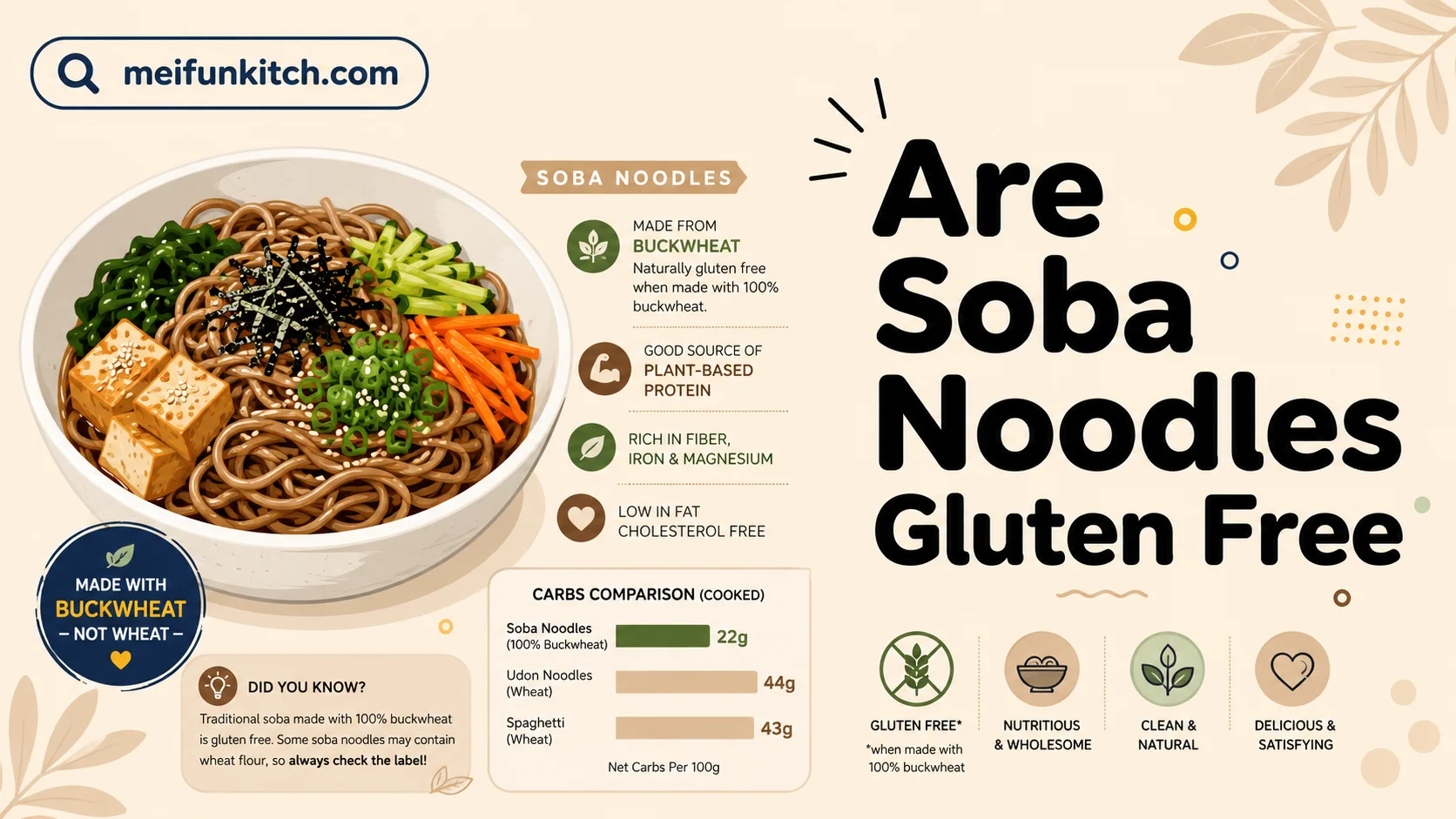
Many people enjoy soba noodles because they have a unique taste and are easy to cook. However, if you follow a gluten-free diet, you may wonder, “Are soba noodles gluten free?” The answer is not always simple. While traditional soba noodles contain buckwheat, many brands also add wheat flour. Therefore, it is important to check the ingredients before eating them.
Soba noodles are popular in Japanese cuisine and are often served hot or cold. Because more people now look for gluten-free foods, questions about soba noodles have become very common. In addition, understanding what these noodles contain can help you make better food choices. As a result, you can enjoy your meals with greater confidence.
In this guide, you will learn what soba noodles are, whether they contain gluten, and how to choose safe options if you need a gluten-free diet. Furthermore, we will explain the difference between pure buckwheat soba and mixed-flour varieties. By the end of this article, you will have clear and trustworthy information to help you decide if soba noodles are right for you.
Are Soba Noodles Gluten Free? Everything You Need to Know
Understanding What Soba Noodles Are
Soba noodles are traditional Japanese noodles that manufacturers usually make from buckwheat flour. Many people believe buckwheat contains wheat because of its name. However, buckwheat is actually a seed and does not belong to the wheat family. Because of this, pure buckwheat noodles can fit well into a gluten-free lifestyle. Still, many commercial brands mix buckwheat flour with regular wheat flour to improve texture and elasticity. As a result, shoppers need to read ingredient labels carefully before purchasing any soba noodle product. Are Soba Noodles Gluten Free is a common question because the answer depends completely on the ingredients used by the manufacturer.
In many restaurants, soba noodles contain a combination of wheat and buckwheat. Chefs often prefer blended noodles because they are easier to prepare and less likely to break during cooking. Although these noodles taste delicious, they may not suit people with gluten sensitivity or celiac disease. Therefore, consumers should always ask restaurants about the exact ingredients before ordering. In addition, cross-contamination may happen during cooking if the same water or utensils are used for wheat-based foods. This issue can create problems even when noodles contain mostly buckwheat flour.
Fortunately, fully gluten-free soba noodles are now easier to find in supermarkets and online stores. Many health-conscious brands produce noodles made from 100% buckwheat flour without adding wheat. These products often provide a rich nutty flavor and excellent nutritional value. Moreover, buckwheat naturally contains fiber, protein, minerals, and antioxidants. Because of these benefits, soba noodles continue to grow in popularity among people looking for healthier pasta alternatives.
Soba Noodles vs Regular Wheat Noodles
| Feature | Soba Noodles | Regular Wheat Noodles |
| Main Ingredient | Buckwheat flour | Wheat flour |
| Gluten Content | Sometimes gluten free | Contains gluten |
| Texture | Slightly firm and nutty | Soft and chewy |
| Taste | Earthy flavor | Mild flavor |
| Protein Level | Moderate | Moderate |
| Fiber Content | Higher | Lower |
| Suitable for Celiac Disease | Only certified gluten free types | No |
| Popular Cuisine | Japanese | Global |
| Nutritional Value | Rich in minerals | Mostly carbohydrates |
| Digestibility | Easier for some people | May cause gluten issues |
| Cooking Style | Boiled quickly | Multiple cooking methods |
| Health Benefits | Antioxidants and fiber | Energy source |
Can You Eat Soba Noodles on a Gluten-Free Diet?
Choosing Safe Soba Noodles for Gluten-Free Eating
People who follow a gluten-free diet often search for healthier grain alternatives that still provide satisfying flavor and texture. Soba noodles can become an excellent option when they are made entirely from buckwheat flour. However, consumers must check labels carefully because many noodle brands still contain wheat flour. Reading ingredient lists helps avoid accidental gluten consumption and supports better digestive health. Are Soba Noodles Gluten Free remains an important topic for anyone trying to maintain a safe gluten-free eating routine.
Certified gluten-free products offer the safest choice for individuals with celiac disease or gluten intolerance. These certifications show that manufacturers follow strict production standards to prevent contamination. Furthermore, dedicated gluten-free facilities reduce the risk of hidden gluten particles entering the final product. People with severe sensitivities should prioritize trusted brands that clearly state their gluten-free status on packaging. This extra caution can prevent uncomfortable symptoms and long-term health complications.
Besides safety, gluten-free soba noodles also provide nutritional advantages. Buckwheat naturally contains amino acids, fiber, magnesium, and antioxidants that support overall wellness. Many people enjoy these noodles because they feel lighter than traditional pasta. Additionally, gluten-free soba noodles pair well with vegetables, seafood, tofu, and lean meats. Their versatility allows families to prepare healthy meals without sacrificing flavor or texture.
Gluten-Free Diet Comparison Table
| Factor | Gluten-Free Soba Noodles | Traditional Pasta |
| Gluten Presence | None | High |
| Main Flour | Buckwheat | Wheat |
| Digestive Comfort | Better for sensitive individuals | May trigger symptoms |
| Fiber | Higher | Moderate |
| Blood Sugar Impact | Lower | Higher |
| Cooking Time | Quick | Moderate |
| Protein | Moderate | Moderate |
| Suitable for Celiac Disease | Yes | No |
| Flavor Profile | Nutty | Neutral |
| Nutrient Density | Rich in minerals | Less varied |
| Popular Use | Healthy meals | Traditional dishes |
| Texture | Slightly firm | Soft |
Are Soba Noodles Gluten Free or Made With Wheat?
Why Many Soba Noodles Contain Wheat
Many shoppers assume all soba noodles are naturally gluten free because buckwheat does not contain gluten. However, manufacturers frequently blend buckwheat flour with wheat flour to improve elasticity and reduce production costs. This combination creates noodles that are easier to shape and cook without breaking apart. As a result, many traditional soba products still contain gluten despite their healthy image. Are Soba Noodles Gluten Free becomes a confusing question because different brands use very different ingredient formulas.
Restaurants also commonly serve blended soba noodles instead of pure buckwheat varieties. Wheat-based noodles hold together better during large-scale preparation, which makes them more practical for busy kitchens. Unfortunately, this practice creates challenges for people who need strict gluten-free meals. Therefore, customers should always ask detailed questions about ingredients and preparation methods before ordering. Even small amounts of wheat can affect people with celiac disease.
Pure buckwheat noodles usually have a darker appearance and stronger earthy flavor compared to wheat-blended versions. Although they may break more easily during cooking, many health-conscious consumers prefer them because they contain no gluten ingredients. In addition, these noodles often deliver better nutritional value due to their higher fiber and mineral content. Understanding the difference between pure buckwheat and wheat-blended soba noodles helps consumers make smarter dietary decisions.
Pure Buckwheat vs Wheat-Blended Soba
| Feature | Pure Buckwheat Soba | Wheat-Blended Soba |
| Gluten Content | Gluten free | Contains gluten |
| Main Flour | 100% buckwheat | Buckwheat and wheat |
| Texture | Fragile | Elastic |
| Flavor | Strong earthy taste | Mild nutty taste |
| Color | Dark brown | Light brown |
| Suitable for Celiac Disease | Yes | No |
| Cost | Usually higher | Usually cheaper |
| Cooking Difficulty | Moderate | Easier |
| Nutritional Benefits | Higher | Moderate |
| Restaurant Availability | Less common | Very common |
| Fiber Content | Higher | Lower |
| Protein Quality | Better amino acids | Standard |
How to Tell if Soba Noodles Are Truly Gluten Free
Smart Ways to Read Labels and Ingredients
Reading food labels carefully helps consumers avoid hidden gluten ingredients. Many soba noodle packages display attractive health claims, but the ingredient list reveals the real contents. If wheat flour appears anywhere on the label, the noodles are not gluten free. Consumers should also search for certified gluten-free symbols because they provide extra assurance. Are Soba Noodles Gluten Free depends largely on accurate label reading and careful product selection.
Cross-contamination presents another important concern for gluten-sensitive individuals. Some manufacturers process gluten-free noodles in facilities that also handle wheat products. Because of this, tiny traces of gluten may still enter the noodles during production. Certified products often follow stricter manufacturing standards to minimize contamination risks. Therefore, certification can provide greater peace of mind for consumers with severe sensitivities.
Shopping online can also make gluten-free searching easier because websites often provide detailed ingredient information and customer reviews. Buyers can compare brands, nutritional values, and certifications before making a purchase. Furthermore, many specialty health stores now carry dedicated gluten-free soba products. Taking time to research trusted brands can improve safety and help consumers enjoy delicious noodle dishes with confidence.
Label Reading Checklist
| What to Check | Safe Sign | Warning Sign |
| Ingredient List | 100% buckwheat | Wheat flour |
| Certification | Gluten-free certified | No certification |
| Facility Info | Dedicated facility | Shared equipment |
| Product Description | Clearly gluten free | Vague wording |
| Allergen Statement | No wheat listed | Wheat listed |
| Brand Reputation | Trusted reviews | Poor transparency |
| Packaging Clarity | Easy to understand | Confusing claims |
| Online Reviews | Positive feedback | Complaints about reactions |
| Nutritional Label | Natural ingredients | Artificial fillers |
| Restaurant Menu | Gluten-free marked | No allergen details |
| Cooking Process | Separate equipment | Shared cooking water |
| Manufacturer Website | Detailed info | Missing details |
Best Gluten-Free Soba Noodles You Can Buy Online
Popular Gluten-Free Soba Brands Worth Trying
Online shopping gives consumers access to many high-quality gluten-free soba noodle brands from around the world. Several companies now produce authentic Japanese-style noodles using only buckwheat flour. These products often deliver excellent flavor while supporting gluten-free dietary needs. In addition, online marketplaces make it easy to compare ingredients, reviews, and pricing before purchasing. Are Soba Noodles Gluten Free becomes easier to answer when trusted brands clearly label their products and manufacturing standards.
Many customers prefer organic soba noodles because they contain fewer additives and preservatives. Organic products also appeal to health-conscious buyers looking for cleaner ingredient lists. Furthermore, premium brands often use traditional production methods that preserve authentic taste and texture. Although these noodles may cost slightly more, many consumers believe the quality justifies the price. Good gluten-free soba noodles can create restaurant-style meals at home without complicated preparation.
Buyers should still verify labels carefully even when shopping online. Product formulas sometimes change, and older listings may contain outdated information. Reading recent customer reviews can also provide valuable insight about texture, taste, and cooking performance. Choosing reliable brands with transparent labeling helps consumers enjoy healthier noodle dishes with confidence and convenience.
Best Gluten-Free Soba Noodle Brand Comparison
| Brand Feature | Premium Gluten-Free Soba | Standard Soba |
| Gluten-Free Certification | Yes | Sometimes |
| Main Ingredient | 100% buckwheat | Mixed flour |
| Flavor Quality | Rich and authentic | Mild |
| Texture | Firm and natural | Softer |
| Organic Options | Common | Less common |
| Nutritional Value | Higher | Moderate |
| Availability | Online and specialty stores | Widely available |
| Price Range | Moderate to high | Lower |
| Cooking Performance | Excellent | Good |
| Suitable for Celiac Disease | Yes | No |
| Additives | Minimal | More common |
| Consumer Reviews | Highly rated | Mixed |
Are Soba Noodles Gluten Free for People With Celiac Disease?
Understanding the Risks for People With Celiac Disease
People with celiac disease must avoid even tiny amounts of gluten because gluten can damage the small intestine and trigger painful symptoms. Soba noodles may seem safe at first because buckwheat does not naturally contain gluten. However, many commercial soba noodles include wheat flour in their ingredient list. Because of this, individuals with celiac disease should never assume that every soba noodle product is safe to eat. Are Soba Noodles Gluten Free is a very important question for anyone managing celiac disease and trying to prevent accidental gluten exposure.
Many restaurants also prepare soba noodles in shared kitchens where cross-contamination can happen easily. Chefs may cook wheat noodles and soba noodles in the same boiling water or use shared utensils during meal preparation. Even if the noodles contain mostly buckwheat flour, cross-contact with gluten can still create serious health risks for sensitive individuals. Therefore, people with celiac disease should ask detailed questions before ordering noodle dishes at restaurants or food courts.
Fortunately, certified gluten-free soba noodles provide a safer option for people who want to enjoy traditional Japanese flavors without health concerns. Certified products usually come from facilities that follow strict gluten-free manufacturing standards. In addition, trusted brands often test their products carefully to ensure gluten levels remain below safe limits. By choosing certified products and reading labels carefully, consumers with celiac disease can safely include soba noodles in their diet.
Celiac Disease Safety Comparison
| Feature | Certified Gluten-Free Soba | Regular Soba Noodles |
| Gluten Content | Very low or none | Often contains gluten |
| Safe for Celiac Disease | Yes | Usually no |
| Main Ingredient | 100% buckwheat | Buckwheat and wheat |
| Cross-Contamination Risk | Lower | Higher |
| Manufacturing Standards | Strict testing | Standard production |
| Restaurant Safety | Requires caution | Risky |
| Ingredient Transparency | Clear labeling | Sometimes unclear |
| Digestive Safety | Better | Can trigger symptoms |
| Certification Label | Present | Often absent |
| Nutritional Value | High | Moderate |
| Availability | Health stores and online | Common everywhere |
| Consumer Trust | Higher | Variable |
What Ingredients Are Used in Soba Noodles?
Common Ingredients Found in Traditional Soba Noodles
Traditional soba noodles mainly contain buckwheat flour, water, and sometimes wheat flour. Buckwheat gives the noodles their earthy flavor and slightly nutty aroma. Although the name may confuse some people, buckwheat does not belong to the wheat family and naturally contains no gluten. However, manufacturers often add wheat flour to improve noodle texture and flexibility during cooking. Because of this, ingredient lists become very important when shoppers choose soba noodles for a gluten-free lifestyle. Are Soba Noodles Gluten Free depends largely on the exact ingredients used during production.
Some authentic Japanese soba noodles contain only buckwheat flour and water. These noodles usually have a darker appearance and a more intense flavor compared to wheat-blended varieties. Since pure buckwheat noodles break more easily, many commercial brands still rely on wheat flour to create smoother and stronger noodles. In addition, some flavored soba noodles may include additives, preservatives, or seasonings that also contain gluten ingredients.
Modern soba noodle brands now offer many healthier and specialty options for consumers with dietary restrictions. Some manufacturers use organic buckwheat, while others create vegan and gluten-free versions with simple ingredient lists. Consumers who want the safest option should always look for products labeled “100% buckwheat” or “certified gluten free.” Careful ingredient checking helps prevent accidental gluten consumption and supports healthier eating habits.
Soba Noodle Ingredient Comparison
| Ingredient | Purpose | Gluten Content |
| Buckwheat Flour | Main ingredient | Gluten free |
| Wheat Flour | Improves texture | Contains gluten |
| Water | Forms dough | Gluten free |
| Salt | Flavor enhancement | Gluten free |
| Tapioca Starch | Texture support | Gluten free |
| Rice Flour | Gluten-free alternative | Gluten free |
| Seaweed Powder | Flavoring | Usually gluten free |
| Soy Sauce Seasoning | Added flavor | May contain gluten |
| Preservatives | Shelf life | Depends on type |
| Organic Buckwheat | Premium ingredient | Gluten free |
| Barley Additives | Texture and flavor | Contains gluten |
| Vegetable Powders | Color and taste | Usually gluten free |
Are Soba Noodles Gluten Free Compared to Udon and Ramen?
Comparing Popular Japanese Noodles
Japanese cuisine offers several delicious noodle varieties, including soba, udon, and ramen. Each noodle type has unique ingredients, textures, and nutritional values. Soba noodles usually contain buckwheat flour, while udon and ramen rely mainly on wheat flour. Because wheat naturally contains gluten, traditional udon and ramen noodles are not suitable for gluten-free diets. However, some soba noodles can be gluten free if manufacturers avoid wheat flour completely. Are Soba Noodles Gluten Free becomes easier to understand when comparing them directly with other Japanese noodle types.
Udon noodles have a thick and chewy texture that many people enjoy in soups and stir-fried dishes. Since they contain wheat flour, they usually have a soft and elastic consistency. Ramen noodles also contain wheat and often include alkaline ingredients that create their signature springy texture. Although both noodle types taste excellent, they are generally unsuitable for people with celiac disease or gluten sensitivity.
Soba noodles stand out because buckwheat provides additional nutrients such as fiber, magnesium, and antioxidants. Pure buckwheat soba noodles may also support better digestion and blood sugar balance compared to refined wheat noodles. As gluten-free eating becomes more popular, many consumers now choose buckwheat soba as a healthier alternative to ramen and udon. This growing demand has encouraged brands to produce more certified gluten-free noodle options.
Soba vs Udon vs Ramen Comparison
| Feature | Soba Noodles | Udon Noodles | Ramen Noodles |
| Main Ingredient | Buckwheat | Wheat flour | Wheat flour |
| Gluten Content | Sometimes gluten free | Contains gluten | Contains gluten |
| Texture | Firm | Thick and chewy | Springy |
| Flavor | Nutty and earthy | Mild | Savory |
| Fiber Content | Higher | Lower | Lower |
| Protein Level | Moderate | Moderate | Moderate |
| Suitable for Celiac Disease | Certified types only | No | No |
| Cooking Style | Soups and salads | Soups and stir fry | Broth dishes |
| Nutritional Value | Rich in minerals | Mostly carbs | Mostly carbs |
| Digestibility | Easier for some people | Heavier | Heavier |
| Popular Origin | Japan | Japan | Japan |
| Gluten-Free Options | Widely available | Rare | Limited |
Healthy Benefits of Gluten-Free Soba Noodles
Why Gluten-Free Soba Noodles Are a Healthy Choice
Gluten-free soba noodles provide several nutritional advantages that make them popular among health-conscious consumers. Pure buckwheat noodles contain important nutrients such as fiber, protein, magnesium, manganese, and antioxidants. These nutrients support energy production, heart health, and digestion. In addition, buckwheat contains compounds that may help balance blood sugar levels and reduce inflammation in the body. Are Soba Noodles Gluten Free is not only a dietary concern but also a health topic for people searching for nutritious meal alternatives.
Many people prefer gluten-free soba noodles because they feel lighter and easier to digest than traditional wheat pasta. The high fiber content can also help people feel full longer, which supports healthy weight management. Furthermore, buckwheat contains plant-based protein that works well in vegetarian and vegan meal plans. When combined with vegetables and lean proteins, soba noodles create balanced and satisfying meals.
Gluten-free soba noodles also fit well into modern healthy eating habits because they cook quickly and work in many recipes. People can enjoy them in soups, salads, stir-fries, or cold noodle dishes. Since they contain fewer processed ingredients than some instant noodles, they often provide a cleaner and more natural food option. Choosing certified gluten-free products ensures both safety and nutritional quality for consumers with dietary restrictions.
Health Benefits Comparison Table
| Health Factor | Gluten-Free Soba Noodles | Regular Wheat Pasta |
| Fiber Content | Higher | Lower |
| Protein Quality | Better amino acids | Standard |
| Digestibility | Easier for sensitive individuals | Moderate |
| Blood Sugar Impact | Lower | Higher |
| Antioxidants | Present | Limited |
| Magnesium Content | High | Lower |
| Weight Management | Supports fullness | Less filling |
| Heart Health | Beneficial nutrients | Moderate benefits |
| Gluten Presence | None | Present |
| Processing Level | Less processed | Often refined |
| Vegan Friendly | Usually yes | Usually yes |
| Cooking Versatility | Excellent | Excellent |
Are 100% Buckwheat Soba Noodles Gluten Free?
Understanding Pure Buckwheat Soba Noodles
Noodles made from 100% buckwheat flour are naturally gluten free because buckwheat itself does not contain gluten proteins. These noodles usually have a stronger earthy flavor and darker appearance compared to wheat-blended soba noodles. Since pure buckwheat dough is more fragile, manufacturers must use careful production methods to create noodles that hold together during cooking. For people avoiding gluten, pure buckwheat soba often becomes the safest and healthiest option available. Are Soba Noodles Gluten Free can often be answered with confidence when the product clearly states “100% buckwheat” on the label.
Despite the gluten-free nature of buckwheat, consumers still need to check packaging carefully. Some products claim to contain buckwheat while still including small amounts of wheat flour or being processed in shared facilities. Cross-contamination can happen during manufacturing, packaging, or transportation. Therefore, certified gluten-free labels remain very important for people with celiac disease or severe gluten sensitivity.
Pure buckwheat soba noodles also provide strong nutritional benefits because they contain more fiber and minerals than refined wheat noodles. Many consumers enjoy their rich flavor and satisfying texture in both hot and cold dishes. As gluten-free eating continues to grow in popularity, more companies now offer authentic 100% buckwheat soba products in supermarkets and online stores. Careful shopping and label reading help consumers enjoy these traditional noodles safely and confidently.
100% Buckwheat vs Mixed Soba Comparison
| Feature | 100% Buckwheat Soba | Mixed Flour Soba |
| Gluten Content | Naturally gluten free | Contains gluten |
| Main Flour | Pure buckwheat | Buckwheat and wheat |
| Flavor | Strong earthy taste | Mild taste |
| Color | Dark brown | Lighter brown |
| Texture | More delicate | More elastic |
| Safe for Celiac Disease | Certified types yes | No |
| Nutritional Value | Higher | Moderate |
| Fiber Content | Higher | Lower |
| Protein Quality | Better | Standard |
| Cooking Difficulty | Slightly harder | Easier |
| Health Benefits | More antioxidants | Fewer nutrients |
| Consumer Demand | Growing rapidly | Traditional market |
Conclusion
Soba noodles can be a delicious and healthy choice for many people, especially those looking for lighter and more nutritious meal options. However, understanding the ingredients is very important before adding them to a gluten-free diet. While pure buckwheat soba noodles are naturally gluten free, many traditional brands still mix wheat flour into the recipe. That is why reading labels carefully and choosing certified gluten-free products can make a big difference for people with gluten sensitivity or celiac disease.
Are Soba Noodles Gluten Free is a common question because not all soba noodles are made the same way. Fortunately, many trusted brands now offer safe and flavorful gluten-free varieties that are easy to find online and in grocery stores. These noodles also provide fiber, protein, minerals, and antioxidants that support overall wellness. Whether you enjoy them in soups, salads, or stir-fries, gluten-free soba noodles can become a satisfying addition to a balanced and healthy lifestyle.
FAQs
Are all soba noodles gluten free?
No, not all soba noodles are gluten free. Many brands mix buckwheat flour with wheat flour to improve texture and elasticity. Pure buckwheat soba noodles are naturally gluten free, but consumers should always check labels carefully before buying.
Can people with celiac disease eat soba noodles?
People with celiac disease can eat soba noodles only if they are certified gluten free and made from one hundred percent buckwheat. Cross-contamination during manufacturing or cooking may still cause problems, so choosing trusted brands is very important.
What are soba noodles made from?
Traditional soba noodles are usually made from buckwheat flour and water. Some manufacturers also add wheat flour to improve the noodle texture. Gluten-free varieties use only buckwheat or other safe gluten-free ingredients.
Do soba noodles taste different from regular noodles?
Yes, soba noodles have a slightly nutty and earthy flavor that makes them different from regular wheat noodles. Their unique taste works well in soups, cold salads, and stir-fried dishes.
Are buckwheat noodles healthy?
Buckwheat noodles are considered healthy because they contain fiber, protein, antioxidants, and important minerals like magnesium. They may also support digestion and help maintain balanced energy levels throughout the day.
How can I tell if soba noodles contain gluten?
You can check the ingredient label for wheat flour or gluten ingredients. Certified gluten-free labels also help identify safer products for people with gluten intolerance or celiac disease.
Are soba noodles healthier than ramen noodles?
Many people consider soba noodles healthier than ramen noodles because buckwheat contains more fiber and nutrients. Gluten-free soba noodles may also be easier to digest for some individuals.
Can soba noodles help with weight management?
Soba noodles may support weight management because they contain fiber and protein that help people feel full longer. They can also fit well into balanced and portion-controlled meals.
Are soba noodles suitable for vegans?
Most plain soba noodles are suitable for vegans because they mainly contain buckwheat flour and water. However, flavored varieties or soup bases may include animal-based ingredients, so checking labels is helpful.
Where can I buy gluten-free soba noodles?
You can buy gluten-free soba noodles in health food stores, supermarkets, Asian grocery stores, and online marketplaces. Many trusted brands now offer certified gluten-free options for safer eating.

Smith
Author103 Published Articles
James Smith is a dedicated food writer and recipe enthusiast who specializes in creating informative content about noodles, pasta, rice dishes, comfort foods, and a wide variety of global cuisines. He is passionate about sharing easy-to-follow recipes, cooking techniques, ingredient guides, nutrition facts, and meal preparation tips that help readers cook with confidence. From classic noodle dishes and homemade sauces to healthy meal ideas and international favorites, James focuses on delivering well-researched, practical, and engaging content for home cooks of all skill levels. His goal is to make cooking enjoyable, accessible, and inspiring by providing reliable recipes and food knowledge that readers can trust.
EducationM.Sc. in Food and Nutrition.
Experience8 Years.
ExpertiseWrites about Noodles and Many Other Foods