
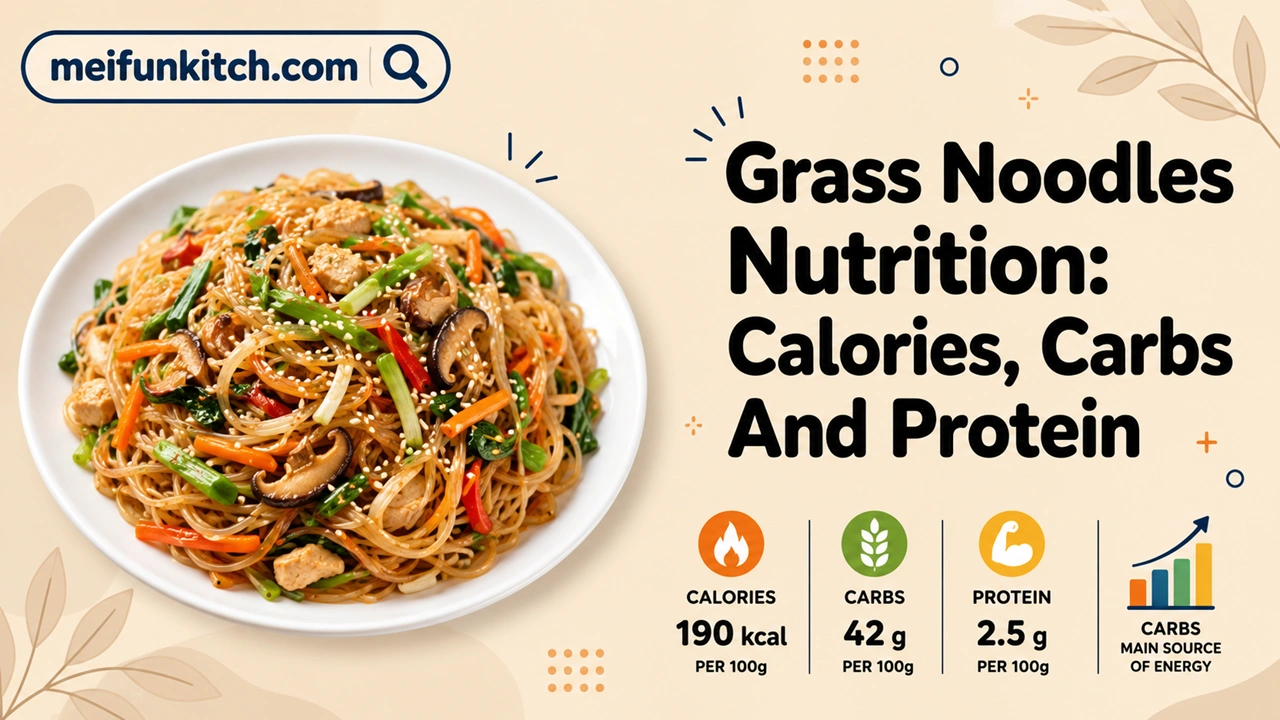
Choosing the right noodles can improve your daily diet. Grass noodles nutrition has become a popular topic because many people want lighter and healthier alternatives. These noodles are often made from mung bean starch or other plant starches. They contain fewer nutrients than whole grains, yet they fit many balanced meals. However, their nutritional value depends on ingredients, serving size, and cooking method.
Many people confuse grass noodles with glass noodles or cellophane noodles. In most markets, these names describe the same transparent noodles. Therefore, understanding grass noodles nutrition helps you compare calories, carbohydrates, protein, and other nutrients before adding them to your meals. You can then make smarter choices for weight management, blood sugar control, or general healthy eating.
This guide explains grass noodles nutrition in detail. You will learn about calories, carbohydrates, vitamins, minerals, health benefits, and possible drawbacks. Moreover, you will compare grass noodles with rice noodles, wheat noodles, and other popular varieties. By the end, you will know whether these noodles deserve a place in your healthy diet.
Grass Noodles Nutrition: What Are Grass Noodles?
Before exploring grass noodles nutrition, it helps to know what these noodles actually are. Grass noodles usually refer to transparent noodles made from mung bean starch. Some brands also use pea starch, potato starch, tapioca starch, or sweet potato starch.
After cooking, these noodles become soft, glossy, and slightly chewy. They absorb sauces very well. Therefore, they appear in many Asian recipes, including soups, stir-fries, salads, and spring rolls.
Although they look delicate, grass noodles remain firm during cooking. Their neutral flavor also makes them suitable for many dishes.
How Grass Noodles Are Made
Manufacturers first extract starch from plants. Then they mix the starch with water to create a smooth paste. Next, they shape the mixture into thin strands.
Afterward, the noodles are steamed, dried, and packaged. Finally, consumers soak or boil them before cooking.
The production process affects grass noodles nutrition because different starches contain slightly different nutrient levels.
Common Names for Grass Noodles
| Common Name | Description | Main Ingredient | Common Uses |
| Grass Noodles | Transparent starch noodles | Mung bean starch | Stir-fries, soups |
| Glass Noodles | Clear noodles after cooking | Mung bean starch | Asian recipes |
| Cellophane Noodles | Thin translucent noodles | Mung bean or potato starch | Salads, soups |
| Bean Thread Noodles | Fine starch noodles | Mung bean starch | Spring rolls |
| Vermicelli (Asian Style) | Thin starch noodles | Various starches | Stir-fries |
Knowing these names makes researching grass noodles nutrition much easier.
Grass Noodles Nutrition Facts Per Serving
Understanding grass noodles nutrition starts with reading the nutrition facts label. Values vary between brands. However, most plain cooked grass noodles provide similar nutrition.
Grass Noodles Nutrition Table (Per 100 g Cooked)
| Nutrient | Amount |
| Calories | 80–95 kcal |
| Carbohydrates | 19–23 g |
| Protein | 0–1 g |
| Total Fat | 0 g |
| Dietary Fiber | 0–1 g |
| Sugar | 0 g |
| Sodium | 5–15 mg |
| Calcium | 5–10 mg |
| Iron | 0.2–0.5 mg |
| Potassium | 5–15 mg |
These values show that grass noodles nutrition mainly consists of carbohydrates. The noodles contain very little fat and protein.
Macronutrient Distribution
| Macronutrient | Percentage |
| Carbohydrates | 95–98% |
| Protein | 1–3% |
| Fat | Less than 1% |
Because carbohydrates dominate grass noodles nutrition, pairing them with lean protein and vegetables creates a more balanced meal.
Grass Noodles Nutrition: Calories, Carbs, Protein, and Fat
Many shoppers first check calories before buying noodles. Fortunately, grass noodles nutrition offers relatively moderate calories after cooking because the noodles absorb water.
Calories in Grass Noodles
Cooked grass noodles contain fewer calories per cup than many fried noodle dishes. However, sauces often add significant calories.
| Serving Size | Calories |
| 50 g Cooked | 40–48 kcal |
| 100 g Cooked | 80–95 kcal |
| 1 Cup Cooked | 150–180 kcal |
Therefore, grass noodles nutrition can support calorie-conscious eating when prepared with healthy ingredients.
Carbohydrates in Grass Noodles
Carbohydrates supply most of the energy in grass noodles nutrition. Since these noodles contain starch, they digest faster than whole-grain products.
People needing quick energy may benefit from this feature. However, balanced meals should include protein and fiber.
Protein Content
Protein remains low in grass noodles nutrition. Most servings provide less than one gram.
Therefore, nutrition experts recommend adding foods such as chicken, shrimp, tofu, eggs, or edamame.
Fat Content
Grass noodles naturally contain almost no fat. This makes grass noodles nutrition attractive for people reducing saturated fat intake.
Healthy fats can still come from sesame seeds, avocado, nuts, or olive oil added during cooking.
Grass Noodles Nutrition: Vitamins and Minerals
Many people focus only on calories. However, grass noodles nutrition also includes small amounts of vitamins and minerals. Since these noodles come from refined starch, they naturally contain fewer micronutrients than whole grains. Therefore, they work best as one part of a balanced meal.
Fresh vegetables, lean protein, and healthy fats can improve the nutritional quality of dishes made with grass noodles. As a result, you enjoy better flavor and greater nutrient diversity.
Vitamin Content in Grass Noodles
Most plain grass noodles contain only trace amounts of vitamins. Processing removes much of the original plant material. Therefore, these noodles should not serve as your main vitamin source.
| Vitamin | Amount Per 100 g Cooked | Health Role |
|---|---|---|
| Vitamin B1 | Trace | Supports energy production |
| Vitamin B2 | Trace | Helps maintain healthy cells |
| Vitamin B3 | Trace | Supports metabolism |
| Folate | Small Amount | Helps produce healthy cells |
| Vitamin C | None | Usually absent |
| Vitamin A | None | Usually absent |
Although grass noodles nutrition offers limited vitamins, adding colorful vegetables greatly increases vitamin intake.
Mineral Content in Grass Noodles
Grass noodles contain small amounts of several essential minerals. Still, the amounts remain modest compared with whole grains.
| Mineral | Approximate Amount | Main Benefit |
|---|---|---|
| Calcium | 5–10 mg | Supports bone health |
| Iron | 0.2–0.5 mg | Helps carry oxygen |
| Potassium | 5–15 mg | Supports muscle function |
| Magnesium | Small Amount | Supports nerve function |
| Phosphorus | Small Amount | Supports healthy bones |
| Sodium | Naturally Low | Helps maintain fluid balance |
Therefore, grass noodles nutrition becomes much healthier when paired with mineral-rich foods such as spinach, mushrooms, broccoli, or seafood.
How to Increase the Nutritional Value
Instead of eating plain noodles, create a complete meal with nutritious ingredients.
| Food Addition | Nutritional Benefit |
|---|---|
| Chicken Breast | High-quality protein |
| Shrimp | Lean protein and selenium |
| Tofu | Plant protein and calcium |
| Eggs | Protein and vitamin B12 |
| Broccoli | Fiber and vitamin C |
| Bell Peppers | Vitamin A and vitamin C |
| Spinach | Iron and folate |
| Mushrooms | B vitamins and antioxidants |
These additions make grass noodles nutrition far more balanced and satisfying.
Grass Noodles Nutrition vs Rice Noodles, Glass Noodles, and Wheat Noodles
Many shoppers compare different noodle types before choosing one. Understanding grass noodles nutrition alongside other noodles helps you select the best option for your health goals.
Grass Noodles Nutrition vs Rice Noodles
Rice noodles contain more rice flour, while grass noodles usually come from mung bean starch. Their texture and nutrition differ slightly.
| Feature | Grass Noodles | Rice Noodles |
|---|---|---|
| Main Ingredient | Mung bean starch | Rice flour |
| Calories | Lower to Moderate | Moderate |
| Carbohydrates | High | High |
| Protein | Very Low | Low |
| Fat | Almost None | Almost None |
| Fiber | Low | Low |
| Texture | Chewy | Soft |
| Gluten-Free | Yes | Yes |
Overall, grass noodles nutrition offers similar calories but often provides a lighter texture than rice noodles.
Grass Noodles Nutrition vs Wheat Noodles
Wheat noodles contain gluten and more protein. Grass noodles remain gluten-free in most cases.
| Feature | Grass Noodles | Wheat Noodles |
|---|---|---|
| Gluten | No | Yes |
| Protein | Very Low | Higher |
| Fiber | Low | Moderate |
| Calories | Moderate | Slightly Higher |
| Best For | Gluten-free diets | Higher protein meals |
People with gluten sensitivity often prefer grass noodles nutrition because these noodles usually contain no wheat.
Grass Noodles Nutrition vs Glass Noodles
Many consumers think these are different products. In reality, grass noodles and glass noodles often describe the same food.
| Comparison | Grass Noodles | Glass Noodles |
|---|---|---|
| Appearance | Transparent | Transparent |
| Main Ingredient | Mung bean starch | Mung bean starch |
| Taste | Mild | Mild |
| Texture | Chewy | Chewy |
| Nutrition | Nearly Identical | Nearly Identical |
Therefore, discussions about grass noodles nutrition often apply to glass noodles as well.
Grass Noodles Nutrition vs Shirataki Noodles
Shirataki noodles have become popular among people following low-carb diets. They differ greatly from grass noodles.
| Feature | Grass Noodles | Shirataki Noodles |
|---|---|---|
| Calories | Moderate | Very Low |
| Carbohydrates | High | Very Low |
| Protein | Very Low | Very Low |
| Fiber | Low | High |
| Main Ingredient | Mung bean starch | Konjac root |
| Texture | Chewy | Slightly Gel-like |
People following ketogenic diets usually choose shirataki noodles. However, grass noodles nutrition remains an excellent choice for balanced eating.
Health Benefits of Grass Noodles Nutrition
When eaten in moderation, grass noodles nutrition can fit many healthy eating plans. Although these noodles lack large amounts of protein and fiber, they still offer several practical benefits.
Provides Quick Energy
Carbohydrates serve as the body's preferred energy source. Therefore, grass noodles nutrition provides fuel for daily activities and exercise.
Athletes sometimes enjoy starch-based meals before training because they digest easily.
Naturally Low in Fat
One important advantage of grass noodles nutrition is its extremely low fat content.
This makes meal planning easier for people limiting saturated fat. However, adding healthy fats creates better nutritional balance.
Usually Gluten-Free
Most grass noodles contain mung bean starch instead of wheat flour.
Therefore, grass noodles nutrition suits many people avoiding gluten. Still, always read ingredient labels because recipes vary between brands.
Easy to Digest
Soft, cooked grass noodles digest more easily than some whole grains.
People recovering from illness sometimes choose lighter meals containing grass noodles nutrition with broth and vegetables.
Works Well with Healthy Ingredients
The mild flavor allows grass noodles to absorb seasonings without overpowering other foods.
As a result, grass noodles nutrition fits recipes containing vegetables, seafood, chicken, tofu, mushrooms, and herbs.
Supports Portion-Controlled Meals
Because cooked grass noodles absorb water, they appear larger after preparation.
This characteristic helps some people feel satisfied while controlling serving sizes. Therefore, grass noodles nutrition may support healthy eating habits when portions remain moderate.
Are Grass Noodles Good for Weight Loss?
Many people choose transparent noodles because they seem lighter than traditional pasta. However, whether they support weight loss depends on portion size and the foods served alongside them. While grass noodles nutrition is relatively low in fat, the noodles still provide a good amount of carbohydrates.
When prepared with lean protein and vegetables, they can fit into a calorie-controlled eating plan. On the other hand, rich sauces and deep-fried toppings can quickly increase calories.
Can Grass Noodles Help You Lose Weight?
Grass noodles absorb water during cooking. Therefore, they become larger in volume without adding extra fat. This feature may help you feel satisfied with a moderate serving.
However, these noodles contain little protein and fiber. Those nutrients improve fullness after meals. Pairing the noodles with chicken, tofu, shrimp, or beans creates a more balanced plate.
| Weight-Loss Factor | Grass Noodles |
|---|---|
| Calories | Moderate |
| Fat | Very Low |
| Protein | Low |
| Fiber | Low |
| Satiety | Moderate When Paired With Protein |
| Best Cooking Method | Stir-fried Lightly or Soup-Based |
Best Ingredients to Pair With Grass Noodles
A balanced meal provides more than carbohydrates. Adding nutrient-rich foods improves both flavor and nutrition.
| Healthy Addition | Main Benefit |
|---|---|
| Grilled Chicken | Lean protein |
| Shrimp | Protein and selenium |
| Tofu | Plant-based protein |
| Broccoli | Fiber and vitamin C |
| Bok Choy | Vitamins A and K |
| Mushrooms | B vitamins |
| Bell Peppers | Antioxidants |
| Carrots | Beta-carotene |
| Spinach | Iron and folate |
| Sesame Seeds | Healthy fats |
These ingredients turn a simple noodle dish into a complete meal.
Weight-Loss Tips When Eating Grass Noodles
| Tip | Why It Helps |
|---|---|
| Measure serving sizes | Prevents overeating |
| Add lean protein | Increases fullness |
| Include vegetables | Adds fiber and nutrients |
| Choose low-sodium sauces | Reduces excess salt |
| Avoid deep frying | Keeps calories lower |
| Use healthy oils sparingly | Maintains calorie balance |
Can People With Diabetes Eat Grass Noodles?
People with diabetes often monitor carbohydrate intake carefully. Since grass noodles come mainly from starch, they can raise blood sugar when eaten in large portions.
That does not mean they must be avoided completely. Instead, portion control and balanced meals become more important.
Glycemic Impact of Grass Noodles
The exact glycemic index varies by manufacturer and ingredients. Mung bean starch noodles generally have a moderate glycemic response, although cooking methods and meal composition also affect blood sugar.
Adding protein, healthy fats, and fiber slows digestion. Therefore, balanced meals often produce steadier blood sugar levels than eating noodles alone.
| Meal Component | Effect on Blood Sugar |
|---|---|
| Grass Noodles Alone | Faster rise |
| With Chicken | Slower digestion |
| With Tofu | Better balance |
| With Vegetables | More fiber |
| With Healthy Fats | Improved meal satisfaction |
People with diabetes should also follow advice from their healthcare provider or dietitian.
Portion Control Matters
Even healthy foods require reasonable portions. Eating excessive amounts of starch-based noodles may increase total carbohydrate intake.
A balanced plate works well for many people.
| Plate Portion | Recommendation |
|---|---|
| Non-starchy Vegetables | Half of the plate |
| Lean Protein | One-quarter |
| Grass Noodles | One-quarter |
This approach supports better nutrition while helping manage blood sugar.
How to Cook Grass Noodles Without Losing Nutrition
Cooking methods influence both texture and nutritional quality. Fortunately, grass noodles require very little cooking time.
Overcooking can make them soft and sticky. Therefore, following package directions produces the best results.
Simple Cooking Steps
| Step | Description |
|---|---|
| Soak | Place dried noodles in warm water until soft |
| Drain | Remove excess water |
| Cook | Add to soup or stir-fry briefly |
| Season | Mix with herbs, vegetables, and protein |
| Serve | Enjoy immediately for the best texture |
Healthy Cooking Methods
| Cooking Method | Health Rating | Notes |
|---|---|---|
| Soup | Excellent | Uses little added fat |
| Stir-Fry | Very Good | Use minimal oil |
| Steaming With Vegetables | Excellent | Preserves texture |
| Cold Noodle Salad | Very Good | Great with fresh vegetables |
| Deep Frying | Less Healthy | Adds extra fat and calories |
Common Cooking Mistakes
Many first-time cooks accidentally reduce meal quality through simple mistakes.
| Mistake | Better Choice |
|---|---|
| Overcooking | Cook only until tender |
| Using heavy sauces | Choose lighter sauces |
| Skipping vegetables | Add colorful produce |
| Serving without protein | Include lean protein |
| Adding too much oil | Measure cooking oil |
These small changes help create healthier meals while keeping the noodles enjoyable.
Who Should Eat Grass Noodles?
Grass noodles can fit into many eating patterns. However, they are not the perfect choice for everyone. Their mild flavor and chewy texture make them easy to combine with many healthy ingredients. Since they contain mostly starch, they work best as part of a balanced meal rather than the main source of nutrition.
Choosing the right portion and pairing them with nutrient-rich foods helps improve overall diet quality.
People Who May Benefit Most
Several groups can enjoy grass noodles as part of a healthy lifestyle.
| Group | Why They May Benefit |
|---|---|
| Adults following a balanced diet | Easy to pair with vegetables and lean protein |
| People avoiding gluten | Most brands are naturally gluten-free |
| Athletes | Good source of quick energy before activity |
| Busy families | Cook quickly and suit many recipes |
| Vegetarians | Pair well with tofu, beans, and vegetables |
Although these noodles are versatile, they should not replace nutrient-dense whole foods.
Who Should Limit Grass Noodles?
Some individuals should pay closer attention to portion sizes and meal balance.
| Group | Reason |
|---|---|
| People managing diabetes | High starch content may affect blood sugar |
| Individuals following a low-carb diet | Mostly made of carbohydrates |
| People seeking high-protein meals | Naturally low in protein |
| Those needing more dietary fiber | Contain very little fiber |
A registered dietitian can provide personalized guidance based on individual health needs.
Choosing the Best Grass Noodles at the Grocery Store
Not all noodle products are made the same. Reading the ingredient list helps you select higher-quality options.
Simple ingredients often indicate a less processed product. In addition, avoiding unnecessary additives supports healthier eating.
What to Look For on the Label
| Label Feature | Why It Matters |
|---|---|
| Mung bean starch listed first | Indicates a traditional recipe |
| Short ingredient list | Usually contains fewer additives |
| Low sodium | Supports heart health |
| No artificial colors | Keeps the ingredient list simple |
| Certified gluten-free | Helpful for people with gluten intolerance |
Many brands also provide nutrition facts for both dry and cooked servings. Always compare serving sizes before making nutritional comparisons.
Signs of a Quality Product
Good-quality grass noodles usually share several characteristics.
| Feature | Description |
|---|---|
| Uniform color | Clear or slightly white |
| Smooth strands | Even thickness without breaks |
| Mild smell | No strong or unusual odor |
| Firm texture after cooking | Holds shape without becoming mushy |
| Proper packaging | Dry and sealed without moisture |
Buying from trusted brands also improves consistency and food safety.
Storage Tips and Shelf Life
Proper storage helps preserve both texture and quality. Dry grass noodles have a long shelf life when kept in the right conditions.
Once cooked, they require refrigeration and should be eaten within a few days.
How to Store Dry Grass Noodles
| Storage Method | Recommendation |
|---|---|
| Pantry | Cool and dry location |
| Container | Original sealed package or airtight container |
| Sunlight | Keep away from direct light |
| Moisture | Avoid humid areas |
Dry noodles remain stable because they contain very little moisture.
How to Store Cooked Grass Noodles
| Storage Tip | Recommendation |
|---|---|
| Refrigeration | Store within two hours of cooking |
| Container | Airtight food-safe container |
| Shelf Life | Best within 3–4 days |
| Reheating | Heat thoroughly before serving |
| Freezing | Possible, but texture may change |
Discard cooked noodles if they develop an unusual smell, sticky coating, or signs of spoilage.
Frequently Asked Questions About Grass Noodles Nutrition
Are grass noodles healthier than regular noodles?
Grass noodles contain very little fat and are naturally gluten-free in most cases. However, they also contain less protein and fiber than whole-wheat noodles. The healthier choice depends on your dietary goals and the overall meal.
Do grass noodles contain gluten?
Traditional grass noodles made from mung bean starch do not contain gluten. However, some products are processed in facilities that also handle wheat. Always read the package label if you have celiac disease or gluten sensitivity.
Are grass noodles high in carbohydrates?
Yes. Most of their calories come from carbohydrates because they are starch-based noodles. Pairing them with vegetables and lean protein creates a more balanced meal.
Can grass noodles be part of a healthy diet?
Yes. They can fit into a healthy eating pattern when eaten in moderation. Combining them with vegetables, lean protein, and healthy fats improves nutritional balance.
Are grass noodles suitable for vegetarians and vegans?
Most plain grass noodles contain only plant-based ingredients. However, always check the ingredient list because seasoning packets or prepared dishes may include animal products.
What is the difference between grass noodles and glass noodles?
In many countries, the terms refer to the same transparent noodles made primarily from mung bean starch. Some manufacturers may use different starches, but the products are generally very similar in appearance and nutrition.
Are grass noodles better than rice noodles?
Both have advantages. Grass noodles are usually chewier and often contain slightly fewer calories after cooking. Rice noodles have a softer texture. The better option depends on your recipe and nutritional preferences.
Can children eat grass noodles?
Yes. They can be served as part of a balanced meal with vegetables and protein. Parents should ensure children receive enough protein, fiber, vitamins, and minerals from other foods.
Final Thoughts
Grass noodles are a versatile ingredient that works well in soups, stir-fries, salads, and spring rolls. They are naturally low in fat, quick to prepare, and suitable for many gluten-free diets. While they provide a convenient source of energy, they are not a complete food because they contain little protein, fiber, and micronutrients.
For the healthiest meal, combine grass noodles with lean protein, colorful vegetables, and healthy fats. This approach improves nutrition, increases satiety, and creates a balanced plate. Whether your goal is weight management, gluten-free eating, or simply enjoying Asian-inspired dishes, grass noodles can be a valuable addition when eaten in appropriate portions.

Smith
Author103 Published Articles
James Smith is a dedicated food writer and recipe enthusiast who specializes in creating informative content about noodles, pasta, rice dishes, comfort foods, and a wide variety of global cuisines. He is passionate about sharing easy-to-follow recipes, cooking techniques, ingredient guides, nutrition facts, and meal preparation tips that help readers cook with confidence. From classic noodle dishes and homemade sauces to healthy meal ideas and international favorites, James focuses on delivering well-researched, practical, and engaging content for home cooks of all skill levels. His goal is to make cooking enjoyable, accessible, and inspiring by providing reliable recipes and food knowledge that readers can trust.
EducationM.Sc. in Food and Nutrition.
Experience8 Years.
ExpertiseWrites about Noodles and Many Other Foods