

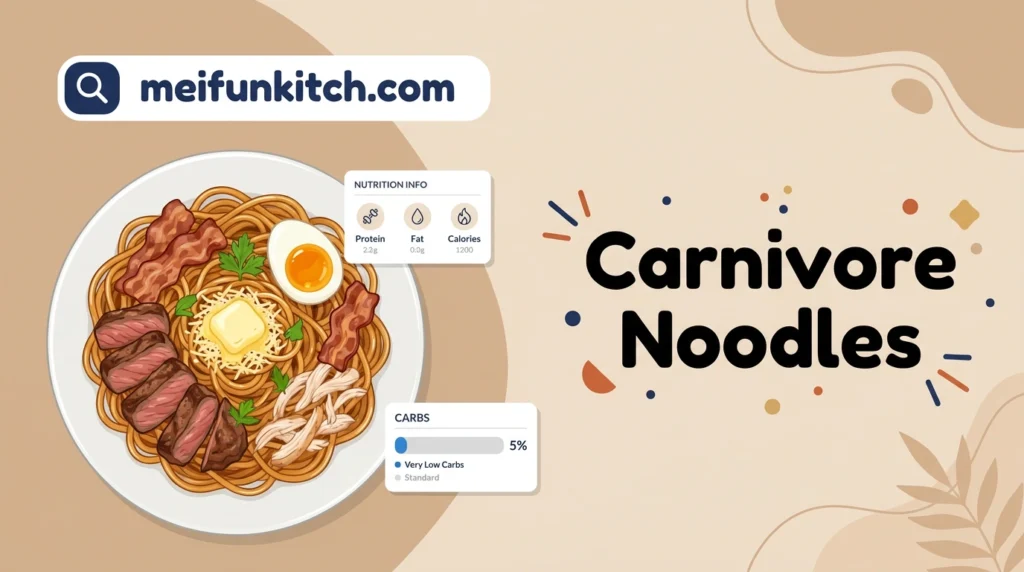
Carnivore Noodles are pasta alternatives made entirely from animal-based ingredients like eggs, gelatin, and pork rinds. They deliver the look and texture of regular noodles without any carbs. Most recipes blend eggs, gelatin, or ground pork rinds into a batter. Cooks then pour that batter thin, bake or fry it, and slice it into strips. The result tastes remarkably close to real pasta. Anyone following a strict carnivore or keto lifestyle can enjoy pasta night again. This guide covers every recipe, method, and nutrition fact you need.
Furthermore, this article compares different carnivore noodle recipes side by side. It also explains storage, common mistakes, and creative serving ideas. Consequently, both beginners and experienced carnivore cooks will find real value here. You will also see how these noodles stack up against other low-carb pasta options.
Additionally, this guide answers the most common questions people search for online. It walks through ingredients, step-by-step instructions, and troubleshooting tips. You will also discover meal prep strategies, seasoning ideas, and serving suggestions for any occasion. Therefore, you get one complete resource for mastering this protein-packed noodle alternative. Read on to see exactly how these noodles fit into your kitchen routine.
Quick Answer: Carnivore noodles are pasta substitutes made from eggs, gelatin, and sometimes pork rinds. Blend the ingredients, bake into a thin sheet, cool completely, then roll and slice into noodle strips. Warm gently in sauce or broth, since boiling causes them to fall apart.
What Are Carnivore Noodles?
Carnivore noodles are zero-carb noodle substitutes built entirely from animal products. Most recipes rely on eggs, gelatin, or pork rinds as the main structure. Some versions add cream cheese or parmesan for richness and flavor. Once combined, the batter gets poured thin and cooked into a flat sheet. Cooks then roll that sheet and slice it into noodle-shaped strips.
This method mimics traditional pasta-making without using any flour or wheat. As a result, the noodles fit perfectly into a strict carnivore diet. They also work well for anyone avoiding grains, gluten, or plant-based carbohydrates entirely. Many home cooks describe the final texture as remarkably close to real spaghetti or fettuccine.
Core Ingredients In Carnivore Noodles
Most carnivore noodle recipes use a short list of animal-based ingredients. Eggs provide structure, protein, and the classic pasta-like bite. Gelatin adds firmness so the noodles hold together during cooking.
Pork rinds bring extra texture and a subtle savory crunch. Cream cheese or parmesan can boost richness in certain variations. Together, these ingredients recreate a familiar noodle experience without any carbohydrates.
Why Carnivore Noodles Fit The Diet
The carnivore diet excludes all plant-based foods, including grains and vegetables. Traditional pasta clearly cannot fit within those strict guidelines. Carnivore noodles solve this problem using only approved animal ingredients.
Moreover, they let dieters enjoy familiar comfort foods without breaking their plan. This flexibility often improves long-term adherence to the carnivore lifestyle. People miss pasta more than almost any other food group.
How Carnivore Noodles Differ From Regular Pasta
Traditional pasta relies on wheat flour, water, and sometimes eggs. Carnivore noodles skip flour completely and use animal proteins instead. This single swap changes the nutrition, texture, and cooking process dramatically.
Regular pasta also requires boiling in salted water for several minutes. These , however, cannot handle prolonged boiling without falling apart. Understanding these differences helps you cook them successfully every time.
Nutrition Comparison
The nutritional gap between these two noodle types is significant. Traditional pasta carries roughly 40 grams of carbs per cooked cup. Carnivore noodles, by contrast, contain close to zero carbohydrates total.
| Nutrient (per 1 cup) | Traditional Pasta | Carnivore Noodles |
|---|---|---|
| Calories | 220 | 180–240 |
| Carbohydrates | 40g | 1–2g |
| Protein | 8g | 18–24g |
| Fat | 1g | 10–16g |
| Fiber | 2g | 0g |
Clearly, carnivore noodles offer far more protein per serving. Meanwhile, traditional pasta remains the higher-carb, lower-protein choice overall.
Texture And Taste Differences
Carnivore noodles taste noticeably eggier than traditional wheat-based pasta. However, the texture stays surprisingly close once properly cooked and sliced. Pork rind versions add a slightly firmer, chewier bite.
Gelatin-based versions feel softer and more delicate on the fork. Most home cooks agree the taste improves with the right sauce. A rich, savory sauce helps mask any lingering egg flavor.
Best Carnivore Noodles Recipes To Try
Several proven recipes exist for making carnivore noodles at home. Each version uses slightly different ingredients and produces a unique texture. Trying a few versions helps you find your personal favorite.
Below, three popular recipes show the range of options available. Each one fits comfortably within a strict carnivore or keto plan.
Egg And Gelatin Carnivore Noodles
This version uses just two main ingredients: eggs and gelatin. Cooks bloom the gelatin in warm water before mixing it with whisked eggs. The mixture then bakes into thin sheets on a lined tray.
This recipe produces a light, delicate noodle with minimal egg flavor. It also works well for anyone avoiding dairy or pork products. Many carnivore dieters consider this the simplest starting recipe.
Pork Rind Carnivore Noodles
Pork rind noodles blend finely ground pork rinds with eggs and cream cheese. This combination creates a sturdier, more pasta-like texture overall. Parmesan cheese often gets added for extra savory depth.
The pork rinds prevent the batter from turning too eggy or soft. Consequently, this version holds up especially well in heavier sauces. Many reviewers say it feels closest to real pasta.
Egg White Carnivore Noodles
Egg white versions use only egg whites, gelatin, and a pinch of salt. This recipe skips the yolk entirely for a lighter, milder flavor. The noodles also turn out dairy-free and pork-free naturally.
This option suits anyone with dairy sensitivities or specific ingredient restrictions. The texture stays firm enough for soups and stir-fry dishes. It remains one of the most versatile carnivore noodle recipes available.
How To Make Carnivore Noodles At Home
Making carnivore noodles at home takes only basic kitchen tools and patience. Most recipes come together in under thirty minutes total. The process involves blending, spreading, cooking, and slicing the batter.
Below, you will find the exact ingredients, steps, and helpful tips. Following these instructions closely leads to the best possible texture.
Additionally, gathering ingredients ahead of time speeds up the entire cooking process. Having everything measured and ready prevents mistakes once the batter starts cooking.
Ingredients You Need
Gather these ingredients before starting your carnivore noodles recipe.
- Eggs (whole eggs or egg whites, depending on your recipe)
- Unflavored gelatin powder for structure and firmness
- Ground pork rinds for extra texture, if desired
- Cream cheese or parmesan for added richness
- A pinch of salt for flavor balance
- Water for blooming the gelatin
Each ingredient serves a specific purpose in the final texture. For instance, gelatin prevents the noodles from tearing apart during cooking.
Step-By-Step Instructions
Follow these steps closely for consistent, pasta-like results every time.
- Bloom the gelatin in warm water for five minutes.
- Whisk the eggs until they turn light and frothy.
- Combine the bloomed gelatin with the whisked eggs slowly.
- Add ground pork rinds or cream cheese if using them.
- Pour the batter thinly onto a lined baking sheet.
- Bake at 350°F for eight to ten minutes.
- Let the sheet cool completely before handling it.
- Roll the cooled sheet tightly like a jelly roll.
- Slice the roll into thin, noodle-shaped strips.
- Unroll the strips gently and serve with sauce.
Each step affects the final texture in a meaningful way. For example, cooling the sheet fully prevents the noodles from tearing.
Tips For Perfect Texture
A sharp knife makes slicing the rolled sheet much easier. Dull knives tend to tear the delicate egg layer instead. Additionally, avoid overcooking the batter, since dry sheets crack when rolled.
Spreading the batter evenly also matters for consistent thickness. Uneven spreading creates noodles that cook unevenly in sauces. These small details separate great results from frustrating failures.
Best Ways To Cook And Serve Carnivore Noodles
Carnivore noodles work beautifully across many different meal styles. However, they require gentler handling than traditional wheat-based pasta. Understanding the best serving methods improves your overall results.
Below, three popular serving styles show just how versatile these noodles are. Each method highlights a different strength of this protein-rich alternative.
Serving Carnivore Noodles With Sauces
Rich, savory sauces pair especially well with carnivore noodles. Alfredo, meat sauce, and butter-based sauces all work wonderfully here. Simply toss the warm noodles directly into your finished sauce.
Avoid boiling the noodles directly inside the sauce itself. Instead, warm the noodles briefly before combining them with sauce. This method prevents the delicate noodles from breaking apart.
Using Carnivore Noodles In Soups
Carnivore noodles add texture and protein to broth-based soups easily. Add them near the very end of cooking time. This timing prevents the noodles from turning mushy or falling apart.
Beef broth and chicken broth both pair naturally with these noodles. Meanwhile, a splash of fat or butter enriches the overall flavor. Soups become heartier and more satisfying with this simple addition.
Carnivore Noodles For Lasagna And Casseroles
Wider carnivore noodle sheets work perfectly as lasagna layers. Simply skip the slicing step and use the sheets whole. Layer them with meat sauce, cheese, and additional sauce as desired.
This method recreates a classic comfort food without any carbohydrates. Casseroles also benefit from thicker, wider noodle strips throughout. The result feels indulgent while staying fully carnivore-friendly.
The Rise Of Carnivore Noodles In The Low-Carb Community
Carnivore noodles emerged as home cooks searched for pasta replacements online. Social media played a major role in spreading these recipes quickly. Instagram and TikTok creators shared videos showing the rolling and slicing process.
Where The Trend Started
Early keto bloggers experimented with egg-based noodle substitutes years ago. However, the carnivore-specific version gained traction more recently. Diet forums and recipe blogs helped refine the technique over time.
Why The Trend Keeps Growing
Interest in strict elimination diets continues rising steadily each year. As more people try carnivore eating, pasta cravings inevitably follow. Carnivore noodles offer a practical, satisfying solution to that exact problem.
Choosing The Right Ingredients For Carnivore Noodles
Ingredient quality directly affects the final taste and texture of your noodles. Choosing fresh, high-quality items makes a noticeable difference in results.
Selecting Gelatin For Best Results
Unflavored gelatin works best for carnivore noodle recipes overall. Avoid flavored gelatin, since it introduces unwanted sugar and taste. Look for gelatin labeled specifically for cooking or baking use.
Bloom the gelatin fully before adding it to your egg mixture. Skipping this step often leads to a grainy, uneven texture. A properly bloomed gelatin dissolves smoothly into the batter.
Picking Quality Pork Rinds
Choose plain, unflavored pork rinds whenever possible for this recipe. Flavored varieties can overpower the delicate egg base significantly. Grinding the rinds finely also improves the final noodle texture.
A high-speed blender works best for creating a fine, powder-like consistency. Coarse pork rind pieces can make noodles feel gritty. Take time to blend thoroughly before combining with other ingredients.
Meal Prep Ideas Using Carnivore Noodles
Carnivore noodles work wonderfully for meal prep and batch cooking. Preparing several servings at once saves valuable time during busy weeks.
Batch Cooking For The Week
Triple your recipe to prepare enough noodles for multiple meals. Cook all the sheets at once, then store them uncut. Slicing them fresh right before each meal preserves the best texture.
Portioning For Easy Lunches
Divide uncut sheets into meal-sized portions using parchment paper layers. Store portions in a single airtight container in the fridge. This method keeps servings organized and ready to grab quickly.
Adapting Carnivore Noodles For Special Needs
Carnivore noodles adapt easily to different sensitivities and personal preferences. A few simple swaps make them accessible to more people.
Low Sodium Carnivore Noodles
Skip the pork rinds and salted cheeses for a lower-sodium version. Use only eggs and gelatin as your base ingredients instead. Season lightly with fresh herbs rather than salty additions.
Egg-Free Considerations
Unfortunately, eggs remain difficult to replace within a true carnivore framework. Anyone with a severe egg allergy may need to avoid this recipe entirely. Consulting a doctor or dietitian helps identify safe alternatives.
Common Mistakes When Making Carnivore Noodles
Even simple recipes can go wrong without a few key precautions. Avoiding these mistakes saves time, ingredients, and frustration in the kitchen.
Overheating Or Boiling The Noodles
Carnivore noodles cannot handle traditional boiling like wheat pasta can. Boiling causes the delicate egg structure to disintegrate quickly. Instead, always warm these noodles gently in a pan or broth.
Using Too Much Batter
Pouring too much batter at once creates overly thick, eggy sheets. Thick sheets also take much longer to cook through evenly. Stick to thin, even layers for the best pasta-like texture.
Cutting With A Dull Knife
A dull knife tears the delicate noodle sheet instead of slicing cleanly. This mistake leads to jagged, uneven noodle strips. Always use a sharp knife for smooth, professional-looking results.
Carnivore Noodles Storage And Reheating Guide
Proper storage keeps carnivore noodles fresh and ready for future meals. However, these noodles behave differently than traditional pasta during storage. Understanding these differences prevents waste and disappointment later.
Refrigerator Storage
Store cooked carnivore noodles in an airtight container in the fridge. They typically stay fresh for three to four days. Keeping them uncut and stacked helps preserve their texture longer.
Freezing Considerations
Freezing it is generally not recommended by most recipe creators. Eggs, cream cheese, and gelatin do not freeze and thaw well. The texture often turns watery or crumbly after thawing.
If you must freeze a batch, store the sheets uncut and flat. Slice and finish them with sauce only after thawing completely. This approach minimizes texture loss compared to freezing finished noodles.
Best Reheating Methods
Reheat carnivore noodles gently in a skillet over low heat. Adding them directly to warm sauce or broth also works well. Avoid microwaving them for extended periods, since this dries them out quickly.
Nutritional Profile Of Carnivore Noodles
Carnivore noodles stand out for their impressive protein content. Unlike traditional pasta, they contain almost no carbohydrates at all. This profile makes them popular among keto and carnivore dieters alike.
Protein And Fat Content
A typical serving of carnivore noodles delivers around 18 to 24 grams of protein. Fat content ranges from 10 to 16 grams, depending on the recipe. Egg-based versions tend to run slightly leaner than pork rind versions.
| Recipe Type | Protein (per cup) | Fat (per cup) | Carbs (per cup) |
|---|---|---|---|
| Egg and gelatin | 18g | 10g | 1g |
| Pork rind and cream cheese | 24g | 16g | 2g |
| Egg white and gelatin | 20g | 6g | 1g |
This table shows how ingredient choice shifts the final macros. Choosing the right recipe depends on your specific dietary goals.
Carbohydrate Count
Nearly every carnivore noodle recipe contains one to two grams of carbs per serving. This number stays low regardless of which ingredients you choose. As a result, these noodles fit easily into strict low-carb meal plans.
Carnivore Noodles vs Other Low-Carb Pasta Alternatives
Several low-carb pasta alternatives exist beyond carnivore noodles specifically. Comparing them helps you choose the right option for your goals.
| Alternative | Main Ingredients | Carbs Per Cup | Carnivore Friendly |
|---|---|---|---|
| Carnivore noodles | Eggs, gelatin, pork rinds | 1–2g | Yes |
| Shirataki noodles | Konjac root fiber | 1g | No |
| Zucchini noodles | Fresh zucchini | 4g | No |
| Pork rind pasta | Pork rinds, eggs | 2g | Yes |
| Spaghetti squash | Winter squash | 7g | No |
Clearly, carnivore noodles remain one of the only truly animal-based options. Shirataki and zucchini noodles both rely on plant ingredients instead. Therefore, strict carnivore dieters should stick with egg or pork rind versions.
Additionally, these noodles support anyone managing insulin resistance or blood sugar concerns. Their carbohydrate content stays low enough to avoid major blood sugar spikes. This makes them a practical option well beyond the carnivore community alone.
Are Carnivore Noodles Healthy?
Carnivore noodles offer real nutritional benefits alongside a few considerations. Understanding both sides helps you decide how often to include them.
Benefits Of Carnivore Noodles
These noodles deliver high protein with essentially zero carbohydrates. They also fit seamlessly into strict elimination diets like carnivore or keto. Additionally, they satisfy pasta cravings without derailing dietary progress.
Many people report better diet adherence once they add these noodles back. Cravings for traditional carbs often decrease significantly as a result. This psychological benefit matters as much as the nutrition itself.
Potential Downsides
Egg-heavy recipes may not suit anyone with an egg allergy or sensitivity. Pork rind versions also contain higher sodium than plain egg recipes. Additionally, the texture differs enough that some newcomers need time to adjust. Checking ingredient labels carefully helps avoid unwanted additives in store-bought pork rinds.
Portion awareness still matters, since fat and calories can add up quickly. Balancing noodles with lean proteins keeps meals well-rounded overall.
Buying Pre-Made Carnivore Noodles vs Making Them At Home
Some specialty brands now sell pre-made carnivore noodle products online. However, homemade versions remain far more common and accessible currently.
Where To Buy Carnivore Noodles
A handful of small keto and carnivore brands sell frozen or refrigerated noodles. These products typically appear on specialty health food websites. Availability varies significantly depending on your location and region.
Cost Comparison
Homemade carnivore noodles cost significantly less than pre-made options. A batch of eggs, gelatin, and pork rinds costs just a few dollars. Pre-made products, by comparison, often cost ten dollars or more per package.
| Option | Approximate Cost | Convenience Level |
|---|---|---|
| Homemade noodles | $3–$5 per batch | Moderate effort |
| Pre-made noodles | $8–$12 per package | Very convenient |
Therefore, budget-conscious cooks usually prefer making noodles at home instead.
Carnivore Noodles Recipe Card
Here is a simple, tested recipe you can follow from start to finish.
Ingredients:
| Ingredient | Amount |
|---|---|
| Eggs | 3 large |
| Unflavored gelatin | 1 tbsp |
| Water | 3 tbsp |
| Ground pork rinds | 3 tbsp |
| Cream cheese | 2 tbsp |
| Salt | 1 pinch |
Instructions:
- Bloom the gelatin in warm water for five minutes.
- Blend all ingredients together until fully smooth.
- Pour the batter thinly onto a lined baking sheet.
- Bake at 350°F for about ten minutes.
- Let the sheet cool for twenty minutes before handling.
- Roll the sheet tightly like a jelly roll.
- Slice thinly with a sharp knife to form noodles.
- Warm gently in sauce or broth before serving.
Herbs And Seasonings That Enhance Carnivore Noodles
The right seasoning elevates the mild egg flavor of carnivore noodles significantly. A few thoughtful additions make a noticeable difference.
Savory Herb Additions
Garlic powder and onion powder both blend easily into the batter itself. Dried Italian herbs, like oregano and basil, add familiar pasta-night flavor. Add these seasonings before baking for even distribution throughout the noodles.
Finishing Touches After Cooking
Fresh cracked pepper and grated parmesan work well sprinkled on top. A drizzle of melted butter also enhances richness right before serving. These small touches turn simple noodles into a restaurant-style dish.
Creative Variations Of Carnivore Noodles
Once you master the basic recipe, several fun variations become possible. These twists keep carnivore noodles interesting across many different meals.
Flavored Carnivore Noodles
Add garlic powder, onion powder, or Italian herbs directly into the batter. These additions boost flavor without adding any carbohydrates. A pinch of smoked paprika also adds subtle warmth and color.
Dairy-Free Carnivore Noodles
Skip the cream cheese and parmesan for a fully dairy-free version. Replace cream cheese with a small amount of mayonnaise instead. This swap keeps the texture rich while removing dairy completely.
Fitting Carnivore Noodles Into A Weekly Meal Plan
Carnivore noodles can anchor several meals across a busy week. Planning ahead makes this ingredient even more convenient to use.
Sample Weekly Rotation
Monday might feature carnivore noodles with beef stroganoff sauce. Wednesday could bring a lighter version tossed in warm broth. By Friday, leftover noodles work well layered into a quick casserole.
This rotation prevents boredom while keeping prep time minimal. Reusing one base ingredient across several meals also saves grocery costs. Many carnivore dieters find this approach sustainable long term.
Balancing Variety And Simplicity
Rotate different sauces and proteins to keep meals feeling fresh. Alfredo one night and a rich meat sauce the next works well. This simple variation keeps carnivore eating enjoyable and less repetitive.
Sticking to one reliable noodle recipe also simplifies grocery shopping. You always know exactly which ingredients to keep on hand. This predictability makes long-term dietary adherence much easier.
Tips For Rolling And Slicing Carnivore Noodles
Rolling and slicing determine the final shape of your carnivore noodles. A careful technique produces clean, even strands every time.
Rolling The Sheet Correctly
Roll the cooled sheet tightly, similar to rolling a jelly roll. Keep the roll firm and compact for the cleanest slices. A loose roll often leads to uneven, oddly shaped noodles.
Work on a flat, clean surface for the best control. Chilling the rolled sheet briefly can also firm it up further. This extra step makes slicing noticeably easier for beginners.
Slicing For Different Noodle Styles
Slice thin for spaghetti-style noodles or wider for fettuccine. A ruler can help you cut consistent widths throughout the roll. Consistent width ensures even cooking once the noodles hit the sauce.
For lasagna, skip slicing and use the flat sheets directly instead. This flexibility makes one basic recipe useful for several different dishes. Mastering this technique unlocks many creative noodle shapes.
Troubleshooting Guide For Carnivore Noodles
Use this quick-reference table to fix common carnivore noodle problems.
| Problem | Likely Cause | Fix |
|---|---|---|
| Noodles tear when rolled | Sheet cooled too quickly or too thin | Let cool fully, spread slightly thicker |
| Batter sticks to the pan | Pan not properly greased or preheated | Grease well, preheat before pouring |
| Noodles taste too eggy | Too many yolks in the recipe | Use more egg whites or add pork rinds |
| Texture turns rubbery | Overcooked in the oven or pan | Reduce cook time slightly |
| Noodles fall apart in sauce | Boiled instead of gently warmed | Warm gently, never boil directly |
Carnivore Noodles For Athletes And High-Protein Diets
Athletes and active individuals often need higher daily protein intake. Carnivore noodles offer a convenient way to meet those needs.
Supporting Muscle Recovery
Protein plays a critical role in repairing muscle after exercise. A single serving of carnivore noodles delivers up to 24 grams of protein. This makes them a smart addition to post-workout meals.
Pairing the noodles with grilled meat further boosts total protein intake. Many athletes on carnivore or keto plans rely on this combination. It supports recovery without adding unwanted carbohydrates.
Building A High-Protein Meal Plan
Carnivore noodles fit easily into structured, high-protein meal plans. Combine them with steak, chicken, or ground beef for balance. This pairing keeps meals satisfying while supporting strength and recovery goals.
Pairing Carnivore Noodles With Carnivore-Friendly Proteins
The right protein pairing elevates any carnivore noodle dish significantly. Different meats bring unique flavors and textures to the plate.
Beef-Based Pairings
Ground beef, steak strips, or beef stroganoff all pair beautifully with these noodles. The rich, savory flavor of beef complements the mild egg base. Many carnivore cooks consider this the most popular pairing overall.
Chicken And Pork Pairings
Shredded chicken or crispy bacon also works wonderfully with carnivore noodles. These lighter proteins create a slightly different flavor profile. Adding melted butter or cheese ties the whole dish together nicely.
Serving Carnivore Noodles At Gatherings And Parties
Carnivore noodles can shine at dinner parties and family gatherings too. A little presentation effort makes them feel like a special dish.
Presentation Tips For Guests
Twirl the noodles with tongs and pile them high on a plate. Top with meatballs, steak strips, or a rich sauce for visual appeal. Fresh herbs sprinkled on top add color and a fresh aroma.
Guests unfamiliar with carnivore eating rarely notice these are not wheat pasta. The texture and presentation closely resemble traditional noodle dishes. This makes them a great conversation starter at gatherings.
Make-Ahead Tips For Entertaining
Prepare the noodle sheets a day in advance to save time. Store them uncut and stacked in the refrigerator until needed. Slice and warm them just before guests arrive for the best texture.
This approach reduces stress during meal preparation significantly. You can focus on sauces and proteins while noodles wait ready. Make-ahead planning makes entertaining with carnivore noodles far easier.
Cost And Practical Benefits Of Homemade Carnivore Noodles
Making carnivore noodles at home offers real practical advantages. Beyond flavor, the financial and convenience benefits add up quickly.
Saving Money Over Store-Bought Options
Eggs, gelatin, and pork rinds cost far less than specialty pasta brands. A single batch often costs under five dollars total. This makes homemade noodles accessible for regular weekly meals.
Store-bought low-carb pasta alternatives frequently cost significantly more per serving. Therefore, home cooks save meaningful money by making their own. Over a month, these savings become quite noticeable.
Reducing Reliance On Processed Carnivore Noodles Alternatives
Many packaged low-carb pasta products contain additives and preservatives. Homemade carnivore noodles use only simple, recognizable ingredients instead. This appeals to cooks who prefer minimally processed food.
Additionally, you control the exact sodium and fat content yourself. This level of control is difficult to achieve with packaged products. Homemade versions ultimately offer more flexibility and transparency.
Frequently Asked Questions
What Are Carnivore Noodles Made Of?
Carnivore noodles are typically made from eggs, gelatin, and sometimes pork rinds. Some recipes add cream cheese or parmesan for extra richness. All ingredients stay fully animal-based and carb-free.
Do Carnivore Noodles Taste Like Real Pasta?
They taste slightly eggier than traditional wheat pasta overall. However, the texture stays surprisingly close once properly cooked. A flavorful sauce helps balance any lingering egg taste.
Can You Boil Carnivore Noodles Like Regular Pasta?
No, boiling causes carnivore noodles to fall apart quickly. Instead, warm them gently in a pan or hot broth. Avoid prolonged direct heat whenever possible.
How Many Carbs Are In These?
Most carnivore noodle recipes contain only one to two grams of carbs per cup. This makes them ideal for strict low-carb or carnivore diets. The exact count depends slightly on added ingredients.
Can You Freeze Carnivore Noodles?
Freezing is generally not recommended for finished carnivore noodles. Eggs and gelatin do not thaw well once frozen. Storing uncut sheets flat offers slightly better results if needed.
How Long Do Carnivore Noodles Last In The Fridge?
Cooked carnivore noodles typically stay fresh for three to four days. Store them in an airtight container to maintain texture. Keeping them uncut also helps preserve freshness longer.
Are Carnivore Noodles Good For Weight Loss?
Their high protein and low carb content can support weight loss goals. However, portion size still matters due to fat content. Pairing them with lean proteins creates a balanced meal.
Can You Make Carnivore Noodles Without Pork Rinds?
Yes, many recipes use only eggs and gelatin instead. This version works well for anyone avoiding pork products. The texture stays slightly softer without the added crunch.
What Sauces Work Best With Carnivore Noodles?
Alfredo sauce, meat sauce, and butter-based sauces all pair beautifully. Rich, savory sauces help balance the noodles' mild egg flavor. Avoid watery sauces, since they can make noodles soggy.
Are Carnivore Noodles Suitable For Keto Diets?
Yes, carnivore noodles fit perfectly within most keto meal plans. Their near-zero carb count supports ketosis effectively. Many keto dieters use them interchangeably with carnivore followers.
Can You Buy Carnivore Noodles Already Made?
Yes, a few specialty keto and carnivore brands sell pre-made versions. Availability depends heavily on your local stores and region. Online specialty retailers often carry a wider selection than grocery stores.
Do Carnivore Noodles Work In Cold Pasta Salads?
Yes, cooled carnivore noodles hold up reasonably well in cold dishes. Toss them with mayonnaise, chopped meat, and seasonings for a simple salad. Serve chilled for a refreshing, protein-packed meal option.
How Do You Prevent Carnivore Noodles From Sticking Together?
Toss finished noodles lightly with melted butter or ghee. This coating prevents strands from clumping during storage. A light coating also helps noodles reheat more evenly later.
Can Beginners Successfully Make These Noodles On The First Try?
Yes, most beginners succeed with careful attention to cooling and slicing. Following exact ingredient ratios also improves first-attempt success rates. Patience during the rolling and cutting steps matters most.
What Equipment Do You Need To Make Carnivore Noodles?
You need a blender, a lined baking sheet, and a sharp knife. A silicone baking mat also helps prevent sticking during baking. No specialty pasta equipment is required for this recipe.
Can Kids Eat Carnivore Noodles Too?
Yes, kids on a carnivore or keto diet can safely enjoy these noodles. The mild flavor often appeals to picky eaters as well. Adjust portion sizes based on your child's individual nutritional needs.

George Eliot
Author27 Published Articles
George Eliot is a passionate recipe writer and home cooking enthusiast dedicated to sharing simple, flavorful, and reliable recipes for everyday meals. With a love for fresh ingredients and practical cooking techniques, George creates easy-to-follow recipes that help home cooks of all skill levels prepare delicious breakfasts, lunches, dinners, desserts, and snacks. In addition to developing recipes, George shares helpful cooking tips, ingredient guides, and nutrition insights to inspire readers to cook with confidence and enjoy homemade food. Every recipe is carefully crafted, tested, and written with the goal of making home cooking enjoyable, accessible, and rewarding for families and food lovers alike.
EducationPostgraduate Diploma in Nutrition.
Experience5 Years.
ExpertiseWrite about Recipes, Nutrition Facts