
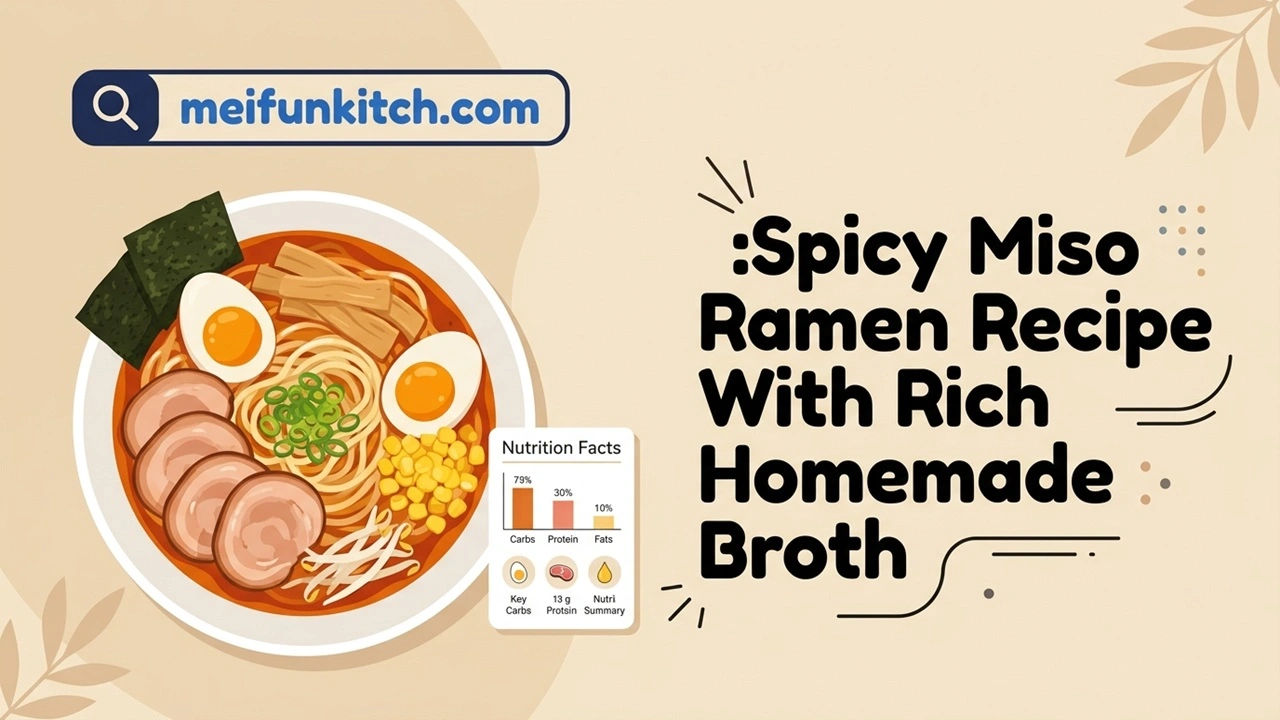
Spicy Miso Ramen is a rich, spicy noodle soup with deep umami flavor. It combines fermented miso broth with chili oil, garlic, and ginger. Many cooks also add la-yu or gochujang for extra heat. The result is a warm, comforting meal with bold flavor. Spicy Miso Ramen is especially popular during colder months. This guide explains how to prepare, customize, and enjoy Spicy Miso Ramen. It also covers broth techniques, toppings, and common questions.
Miso ramen originated in Sapporo, Japan. Local cooks added fermented soybean paste to create a richer broth. The hearty soup matched the region’s cold climate. Later, chefs introduced chili oil and spicy bean paste. These additions created modern Spicy Miso Ramen. Today, it is popular across Japan and worldwide. Many people in the United States and Southeast Asia enjoy its bold taste.
.nutri-widget{ font-family:’Poppins’,sans-serif; max-width:420px; margin:20px auto; padding:25px; border-radius:18px; background:linear-gradient(135deg,#1e3c72,#2a5298,#ff6a00); box-shadow:0 10px 30px rgba(0,0,0,.25); color:#fff; text-align:center; } .nutri-widget h2{ font-size:22px; margin-bottom:8px; } .nutri-widget p{ font-size:13px; opacity:.9; margin-bottom:15px; } .nutri-widget select, .nutri-widget input{ width:100%; padding:12px; margin-top:10px; border:none; border-radius:10px; outline:none; box-sizing:border-box; } .nutri-widget button{ width:100%; margin-top:15px; padding:12px; border:none; border-radius:12px; background:linear-gradient(45deg,#ff512f,#dd2476); color:#fff; font-weight:600; cursor:pointer; transition:.3s; } .nutri-widget button:hover{ transform:translateY(-2px); } .nutri-widget .result{ margin-top:15px; padding:12px; background:rgba(255,255,255,.2); border-radius:12px; font-weight:600; } .nutri-widget .internal-link{ margin-top:18px; padding:12px; border-radius:12px; background:rgba(255,255,255,.15); font-size:13px; } .nutri-widget .internal-link a{ color:#fff; font-weight:600; text-decoration:underline; } function calcCalories() { let cal = parseFloat(document.getElementById(“type”).value); let weight = parseFloat(document.getElementById(“weight”).value); if (!weight || weight <= 0) { document.getElementById("result").innerHTML = "❌ Please enter a valid weight!"; return; } let total = (cal * weight) / 100; document.getElementById("result").innerHTML = "🔥 Total Calories: " + total.toFixed(0) + " kcal"; }This guide covers every step for making Spicy Miso Ramen at home. Learn how to prepare the broth and choose the best noodles. Discover popular proteins, vegetables, and traditional toppings. You can also adjust the spice level to your preference. The guide includes ingredient substitutions, nutrition facts, and regional variations. It explains common cooking mistakes and simple solutions. You’ll also learn how Spicy Miso Ramen differs from tonkotsu ramen. By the end, you can confidently cook or order Spicy Miso Ramen anywhere.
Featured Snippet Answer: Spicy miso ramen is a Japanese noodle soup made with fermented miso paste, chili oil, garlic, and ginger simmered into a rich broth, then served over wheat noodles with toppings like ground pork, soft-boiled egg, and scallions. It delivers a warming, umami-rich heat that distinguishes it from milder ramen styles.
What Is Spicy Miso Ramen and Where Did It Come From
Understanding the background of spicy miso ramen helps explain why this bowl has become such a beloved comfort food across the globe, and why so many ramen shops now feature it as a signature menu item.
The Origins of Miso Ramen in Sapporo
Miso ramen traces its roots back to Sapporo, a city in Japan’s northern Hokkaido region, where cold winters demanded heartier, richer meals. Cooks began stirring fermented miso paste into pork or chicken-based broths, creating a thicker, more robust soup than the clearer shoyu or shio ramen styles found elsewhere in Japan. This regional innovation eventually spread nationwide, and the spicy version emerged as a natural evolution once chefs began adding chili-based ingredients for extra warmth and depth.
How Chili Oil and Spice Became Part of the Recipe
As ramen culture spread beyond Japan, chefs in various regions began incorporating local spice preferences into their broths. This style gained particular popularity in the United States and parts of Asia, where diners often favor more intense heat. Chili oil, la-yu, doubanjiang, or gochujang became common additions, each contributing a slightly different character to the finished broth.
Why This Ramen Style Continues Growing in Popularity
Social media and the broader ramen boom of the past decade have played a significant role in popularizing this dish, since its vibrant red-orange broth photographs beautifully and its bold flavor profile appeals to spice lovers. Many ramen shops now offer adjustable heat levels specifically for this bowl, further cementing its status as a customer favorite.
How Ramen Culture Evolved Alongside This Dish
Ramen itself has a relatively short history compared to other Japanese staples, having arrived from China in the late 19th century before evolving into distinct regional styles. As regional broths diversified across Japan, cold-weather cities like Sapporo leaned into richer, spicier flavors, setting the stage for spicy miso ramen to eventually become a standalone category rather than a simple variation.
Spicy Miso Ramen Ingredients You’ll Need
Before cooking, it helps to gather every component of an authentic spicy miso ramen bowl, since this dish relies on several layered elements working together to create its signature depth.
Core Broth Ingredients
| Ingredient | Quantity | Purpose |
|---|---|---|
| Chicken or pork stock | 8 cups | Base of the broth |
| White or red miso paste | ½ cup | Adds umami and fermented depth |
| Chili oil (la-yu) | 3 tablespoons | Adds heat and color |
| Garlic, minced | 6 cloves | Adds pungent aroma |
| Fresh ginger, grated | 2 tablespoons | Adds warmth and brightness |
| Doubanjiang (spicy bean paste) | 2 tablespoons | Adds fermented heat |
| Soy sauce | 2 tablespoons | Adds saltiness and color |
| Sesame oil | 1 tablespoon | Adds nutty aroma |
| Green onions, chopped | ¼ cup | Adds freshness |
Noodles and Toppings
A proper bowl of this dish always balances the rich broth with the right noodles and toppings.
- Fresh ramen noodles (or dried alkaline noodles)
- Ground pork, seasoned and cooked
- Soft-boiled marinated egg (ajitsuke tamago)
- Bean sprouts
- Corn kernels
- Nori sheets
- Bamboo shoots (menma)
- Butter (optional, Sapporo-style)
Optional Add-Ins for Extra Flavor
Several optional ingredients can further customize this ramen depending on personal preference:
- Chili crisp for extra crunch and heat
- Roasted garlic oil for deeper aroma
- Shredded cabbage for texture
- Sliced chashu pork belly instead of ground pork
- A drizzle of black garlic oil (mayu) for smoky complexity
How to Make Spicy Miso Ramen Step-by-Step
This section walks through the exact process for building spicy miso ramen from scratch, ensuring rich, balanced flavor in every bowl.
Step 1: Build the Aromatic Base
In a large pot, heat sesame oil over medium heat, then add minced garlic and grated ginger. Sauté for 1–2 minutes until fragrant, being careful not to let the garlic brown, since burnt garlic can turn the broth bitter.
Step 2: Add the Spicy Miso Paste Mixture
Stir in the doubanjiang and half of the miso paste directly into the aromatics, cooking for another minute to toast the paste slightly. This step deepens the flavor of the finished broth significantly compared to simply dissolving miso into hot liquid without toasting it first.
Step 3: Add the Stock
Pour in the chicken or pork stock, then bring the mixture to a gentle simmer. Whisk in the remaining miso paste and soy sauce, stirring until fully dissolved.
Step 4: Simmer to Develop Flavor
Let the broth simmer gently for 15–20 minutes, allowing the flavors to meld together. Avoid boiling vigorously, since high heat can cause the miso to separate and lose some of its delicate fermented flavor.
Step 5: Add the Chili Oil
Stir in the chili oil during the final few minutes of cooking, adjusting the amount based on your desired spice level. This is the step that officially transforms a standard miso broth into spicy miso ramen .
Step 6: Cook the Noodles Separately
Boil the ramen noodles in a separate pot according to package instructions, typically 2–4 minutes for fresh noodles. Drain well, since excess water can dilute the broth once combined.
Step 7: Assemble the Bowl
Place the cooked noodles into a serving bowl, then ladle the hot broth over top. Arrange toppings such as ground pork, soft-boiled egg, bean sprouts, corn, and green onions attractively across the surface, then serve immediately while hot.
The Science Behind a Well-Balanced Spicy Miso Ramen Broth
Understanding the cooking principles behind it helps explain why certain techniques matter more than others when building the broth.
Why Miso Shouldn’t Be Boiled Directly
Miso paste contains live fermentation cultures and delicate flavor compounds that can break down under prolonged high heat. Whisking miso into broth off the boil, or at a gentle simmer, preserves more of its complex, fermented character in the final bowl.
How Chili Oil Interacts with Fat in the Broth
Chili oil is fat-soluble, meaning its heat and flavor disperse more evenly throughout a broth that already contains some fat content, such as pork-based stock. This is one reason this dish made with pork stock often tastes spicier and more cohesive than versions made with a leaner chicken or vegetable base.
The Role of Doubanjiang in Building Depth
Doubanjiang, a fermented broad bean and chili paste, contributes both heat and umami simultaneously, distinguishing it from simple chili flakes or hot sauce. Toasting it briefly in oil before adding liquid, as outlined in the recipe above, helps release its full aromatic potential into the finished broth.
Why Fat Content in the Stock Matters
A broth with too little fat can taste thin once chili oil and spice are added, since there’s nothing to carry the flavor evenly across the palate. Using a stock simmered from pork bones or chicken thighs, rather than lean chicken breast, gives spicy miso ramen the body it needs to feel satisfying rather than watery.
Variations Worth Trying
Because the base recipe is so adaptable, several popular variations of spicy miso ramen have emerged to suit different tastes and dietary preferences.
Extra Recipe
For those who want intense heat, doubling the chili oil and adding fresh sliced Thai chilies directly to the bowl creates a noticeably spicier version of this ramen. Additionally, a spoonful of chili crisp stirred in just before serving intensifies both heat and texture.
Vegetarian Recipe
Replacing chicken or pork stock with a rich vegetable or mushroom-based broth allows spicy miso ramen to fit within a vegetarian diet. Using shiitake mushrooms in the stock adds a meaty, umami depth that helps compensate for the absence of animal-based broth.
Vegan Spicy Miso Ramen Recipe
Building on the vegetarian version, swapping the soft-boiled egg for marinated tofu and ensuring the miso paste and doubanjiang are free of fish-derived ingredients makes this bowl fully vegan-friendly without sacrificing its signature richness.
Tantanmen-Inspired it
Tantanmen, a Japanese take on Sichuan dan dan noodles, shares many similarities with spicy miso ramen but typically includes ground sesame paste and Sichuan peppercorns for a numbing, tingling heat alongside the spice. Adding a tablespoon of tahini or sesame paste to the broth creates this fusion-style variation.
Seafood Recipe
Swapping ground pork for shrimp or scallops, and using a light dashi-based stock as the broth foundation, creates a lighter, ocean-forward take on this dish that still retains the signature heat and umami balance.
Instant Noodle Upgrade Version
For a faster weeknight approach, doctoring a package of instant ramen with homemade spicy miso broth components — discarding the seasoning packet entirely — delivers a shortcut its version in under 20 minutes, without sacrificing too much authenticity.
Spicy Miso Ramen vs Other Popular Ramen Styles
Understanding how spicy miso ramen compares to other well-known ramen styles helps clarify what makes it distinct on a menu or recipe list.
| Ramen Style | Broth Base | Flavor Profile | Heat Level |
|---|---|---|---|
| Spicy Miso Ramen | Miso, chili oil | Rich, spicy, umami | Moderate to high |
| Classic Miso Ramen | Miso paste | Rich, savory, mild | None to low |
| Tonkotsu Ramen | Pork bone | Creamy, rich, fatty | None |
| Shoyu Ramen | Soy sauce | Light, salty, clear | None |
| Shio Ramen | Salt-based | Light, clean, delicate | None |
| Tantanmen | Sesame, chili | Nutty, spicy, numbing | High |
As shown above, this ramen stands out due to its bold combination of fermented richness and chili heat, which distinguishes it from milder, more traditional ramen styles like shio or shoyu.
When to Choose Spicy Miso Ramen Over Other Styles
Spicy miso ramen works best for cold weather, when diners want a warming, filling meal with bold flavor. For lighter meals or hot summer days, a shio or shoyu ramen might suit the occasion better, since the richness and heat of this broth can feel heavy in warmer conditions.
Choosing the Right Noodles for Spicy Miso Ramen
Best Noodle Type for This Dish
Thick, curly alkaline wheat noodles work best for spicy miso ramen , since their sturdy texture holds up well against the rich, thick broth without becoming mushy. Thinner noodles, typically used in shio or shoyu ramen, tend to get lost in the boldness of this style of broth.
Fresh vs Dried Ramen Noodles
Fresh ramen noodles generally deliver a chewier, more authentic texture for this bowl, though high-quality dried alkaline noodles can work well as a convenient substitute. Instant ramen noodles, while not ideal, can be dressed up with homemade broth for a quick weeknight version.
Gluten-Free Noodle Alternatives
For those avoiding gluten, rice-based ramen noodles or shirataki noodles provide a suitable base for spicy miso ramen , though the texture will differ noticeably from traditional wheat noodles.
How Noodle Thickness Changes the Eating Experience
Thicker noodles hold more broth per bite, which intensifies the perceived spiciness of each mouthful, while thinner noodles let the broth’s heat come through more subtly. Adjusting noodle thickness is a simple, often overlooked way to fine-tune the overall intensity of this bowl.
Comparison Table: Popular Spicy Miso Ramen Toppings
| Topping | Flavor Contribution | Best Paired With |
|---|---|---|
| Ground pork | Savory, rich | Classic version |
| Soft-boiled egg | Creamy, mild | Almost any variation |
| Corn | Sweet contrast | Sapporo-style versions |
| Bean sprouts | Crunchy freshness | Balances heavy broth |
| Nori sheets | Umami, oceanic | Traditional presentations |
| Chili crisp | Extra heat and crunch | Extra spicy versions |
| Butter | Rich, creamy | Sapporo-style versions |
| Bamboo shoots | Earthy crunch | Traditional presentations |
This table demonstrates how each topping contributes a distinct element to the final bowl, allowing home cooks to customize spicy miso ramen based on personal preference.
Protein Options for it
Ground Pork Topping Recipe
Ground pork remains the most traditional protein for spicy miso ramen , typically seasoned with soy sauce, garlic, and a touch of the same doubanjiang used in the broth. Brown the pork in a hot skillet until crispy at the edges, then spoon it generously over the finished bowl.
Chashu Pork Belly for Spicy Miso Ramen
For a more indulgent version, slow-braised chashu pork belly adds melt-in-your-mouth richness to spicy miso ramen . Braise pork belly in a mixture of soy sauce, mirin, sake, and sugar for several hours until tender, then sear briefly before slicing and adding to the bowl.
Chicken and Tofu Alternatives
For lighter or plant-based options, shredded rotisserie chicken or pan-seared marinated tofu both work well as protein toppings for this dish, offering different textures while still complementing the bold, spicy broth.
Egg Preparation Tips for a Better Bowl
A properly soft-boiled egg, marinated overnight in soy sauce, mirin, and a touch of sugar, adds a creamy, savory-sweet contrast that balances the heat found in spicy miso ramen . Aim for a 6.5-minute boil to achieve a jammy, not fully set, yolk.
Adjusting the Heat Level in it
How to Make It Milder
Reducing the amount of chili oil and doubanjiang, while increasing the proportion of miso paste, creates a milder version of spicy miso ramen without losing its signature umami richness. This adjustment works well for those introducing the dish to guests with lower spice tolerance.
How to Make It Spicier
Increasing chili oil, adding fresh sliced chilies, or stirring in a spoonful of chili crisp just before serving intensifies the heat significantly. Some ramen shops offer a numbered spice scale specifically for this bowl, allowing diners to select their preferred intensity.
Balancing Heat with Richness
Since excessive heat can overwhelm the delicate fermented flavor of miso, it’s important to balance chili additions with enough broth richness. A small pat of butter or a spoonful of tahini can help mellow out overly aggressive spice levels in it without diluting the overall flavor.
Building a Custom Spice Scale at Home
Home cooks preparing this dish for a group can portion the base broth into individual servings, then add chili oil to each bowl separately rather than spicing the entire pot at once. This method lets everyone enjoy spicy miso ramen at their own preferred heat level from a single shared batch.
Tips for Perfecting Your Spicy Miso Ramen
Don’t Skip Toasting the Miso and Chili Paste
Briefly cooking the miso and doubanjiang in oil before adding liquid develops significantly more depth than simply stirring them into hot broth. This small step makes a noticeable difference in the final bowl.
Use High-Quality Miso Paste
Since miso forms the backbone of this dish, using a high-quality, well-fermented miso paste elevates the entire bowl. Red miso delivers a bolder, saltier flavor, while white miso offers a milder, slightly sweeter profile for spicy miso ramen.
Time the Noodles Carefully
Overcooked noodles turn mushy and absorb too much broth, diluting the flavor of the finished dish. Cook noodles just until al dente, then drain immediately and assemble the bowl right away.
Serve Immediately for Best Texture
This ramen is best enjoyed immediately after assembly, since the noodles continue absorbing broth the longer they sit, which can affect both texture and flavor balance if the bowl sits too long before eating.
Warm the Serving Bowls First
Restaurants often preheat ramen bowls with hot water before ladling in the broth, since a cold bowl can rapidly cool a hot dish. Doing the same at home helps it stay piping hot for longer during the meal.
How to Store and Reheat Spicy Miso Ramen Components
Proper storage ensures leftovers from your spicy miso ramen stay fresh and flavorful.
Storing the Broth Separately
Store the broth in an airtight container in the refrigerator for up to four days. Keeping it separate from the noodles is essential, since noodles continue absorbing liquid and become mushy if stored together.
Storing Cooked Noodles
Toss cooked noodles lightly in sesame oil before refrigerating to prevent them from sticking together. Store in a separate airtight container for up to three days.
Freezing Spicy Miso Ramen Broth
The broth for this dish freezes exceptionally well, making it ideal for meal prep. Freeze in individual portions using freezer-safe containers or bags, then thaw overnight in the refrigerator before reheating gently on the stovetop.
Reheating Instructions
- Reheat the broth gently over medium-low heat, stirring occasionally, until warmed through.
- Boil fresh or refrigerated noodles separately for 1–2 minutes to warm them without overcooking.
- Combine just before serving, adding fresh toppings like green onions or a soft-boiled egg for the best texture.
Common Mistakes to Avoid When Making Spicy Miso Ramen
Boiling the Broth Too Aggressively
High, prolonged boiling can break down the delicate fermented flavor of miso and cause the broth to taste flat. Keeping the heat at a gentle simmer preserves the complexity of a well-made bowl of spicy miso ramen .
Adding Chili Oil Too Early
Adding chili oil at the very beginning of cooking, rather than toward the end, can cause its flavor and heat to mellow out too much during the long simmering process. Reserve most of the chili oil for the final few minutes of cooking.
Overcrowding the Bowl with Toppings
While toppings add visual appeal and texture, overcrowding a bowl of this dish can overwhelm the broth’s flavor and make it difficult to eat. Choosing three or four complementary toppings usually works better than piling on every option at once.
Using Low-Quality Instant Noodles Without Adjustment
Standard instant ramen noodles often come with their own seasoning packets, which can clash with a homemade spicy miso ramen broth. If using instant noodles, discard the packet and season the broth independently for better flavor control.
Skipping the Resting Period for Braised Toppings
If using chashu pork belly, slicing it immediately after braising rather than letting it rest and cool slightly can cause the meat to fall apart. Letting braised toppings rest for 10–15 minutes before slicing keeps them intact when added to this bowl.
Nutritional Information for it
While rich and satisfying, understanding the nutritional profile of spicy miso ramen helps with portion planning and dietary awareness.
| Nutrient | Approximate Amount (per bowl) |
|---|---|
| Calories | 550 |
| Total Fat | 22g |
| Saturated Fat | 6g |
| Sodium | 1,600mg |
| Carbohydrates | 62g |
| Protein | 28g |
Because this recipe contains a fair amount of sodium from miso, soy sauce, and doubanjiang, those monitoring sodium intake should consider using low-sodium stock and reducing added soy sauce.
Making a Lighter Version
Using a lean protein like chicken breast instead of ground pork, along with a reduced-sodium miso paste and extra vegetables, can meaningfully lighten spicy miso ramen without sacrificing its signature bold flavor.
Health Benefits Worth Noting
Miso is a fermented food that contains probiotics beneficial for gut health, along with plant-based protein from soybeans. While this bowl is undeniably indulgent, the fermented miso base offers some nutritional upside that distinguishes it from purely broth-based comfort foods lacking any fermentation.
Pairing Spicy Miso Ramen with Sides and Drinks
Best Side Dishes
Classic pairings for spicy miso ramen include gyoza (pan-fried dumplings), edamame, and a simple cucumber salad, since these sides complement the richness of the broth without competing with its flavor.
Best Drinks to Pair
A cold Japanese lager or a lightly sweetened iced green tea both pair well with this dish, helping to cool the palate between spicy, savory bites.
Dessert Pairings to Round Out the Meal
Light, cooling desserts such as mochi ice cream or a simple fruit sorbet work particularly well after a bowl of spicy miso ramen , since their sweetness and coolness offer a refreshing contrast to the meal’s heat and richness.
Regional and Flavor-Inspired Twists on Spicy Miso Ramen
Sapporo-Style
Staying true to the dish’s origins, Sapporo-style spicy miso ramen typically includes a pat of butter and sweet corn atop the bowl, along with stir-fried vegetables like cabbage and bean sprouts cooked directly in the pork fat before assembly.
Korean-Inspired
Incorporating gochujang alongside the traditional doubanjiang, and topping the bowl with kimchi, creates a Korean-inspired fusion twist on spicy miso ramen that adds tangy, fermented complexity.
Creamy Spicy Miso Ramen
Stirring a small amount of coconut milk or heavy cream into the finished broth mellows the heat slightly while adding a luxurious, silky texture to this bowl, a variation that has gained popularity in fusion ramen shops.
American Fusion-Style Spicy Miso Ramen
Some American ramen shops top spicy miso ramen with unconventional additions like crispy fried chicken, jalapeños, or even shredded cheese, reflecting a broader trend of blending Japanese technique with familiar Western comfort-food elements.
Ordering Spicy Miso Ramen at a Restaurant
What to Ask For If You Want It Milder or Spicier
Most ramen shops that serve spicy miso ramen allow diners to request a specific spice level, often on a numbered scale from one to five. Asking your server directly about this option ensures you get a bowl matched to your personal heat tolerance.
How to Spot a High-Quality Bowl on a Menu
A well-made version of this dish typically lists specific ingredients like doubanjiang, chili oil, or gochujang on the menu description, rather than a vague “spicy” label. This level of detail often signals a kitchen that takes the preparation of spicy miso ramen seriously.
Questions to Ask About Allergens
Since miso, soy sauce, and doubanjiang all commonly contain soy and gluten, diners with allergies should always confirm ingredient details before ordering this bowl at a restaurant, particularly if a gluten-free or soy-free noodle substitute is needed.
Building a Homemade Spicy Miso Ramen Kit for Meal Prep
Preparing Broth in Bulk
Making a large batch of the broth base for spicy miso ramen on a weekend, then portioning it into individual containers, allows for quick weeknight assembly throughout the following week without repeating the full cooking process each time.
Assembling Ready-to-Cook Kits
Storing pre-portioned noodles, broth, and toppings separately in the refrigerator or freezer creates a convenient homemade kit for this dish, mimicking the meal-kit services that have popularized ramen as an easy at-home dinner option.
Shopping List for a Week of Spicy Miso Ramen
| Category | Items to Buy |
|---|---|
| Broth base | Stock, miso paste, doubanjiang, chili oil |
| Noodles | Fresh or dried alkaline noodles |
| Protein | Ground pork, chicken, or tofu |
| Toppings | Eggs, corn, bean sprouts, green onions, nori |
| Extras | Chili crisp, sesame oil, butter |
This shopping list simplifies weekly meal planning for anyone who wants to prepare spicy miso ramen regularly without last-minute grocery runs.
Frequently Asked Questions
What makes miso ramen spicy?
Spicy miso ramen gets its heat from added chili oil, doubanjiang, or gochujang stirred into the traditional miso-based broth, creating a fiery contrast to the rich, fermented umami flavor of the miso itself.
Is spicy miso ramen very hot in spice level?
The heat level of spicy miso ramen varies by recipe and preparation, ranging from mild to quite spicy depending on how much chili oil or chili paste is added, making it adjustable to individual preference.
What is the difference between spicy miso ramen and tonkotsu ramen?
Spicy miso ramen uses fermented miso paste and chili oil for its flavor base, while tonkotsu ramen relies on a long-simmered pork bone broth for its rich, creamy texture, resulting in two distinctly different flavor profiles.
What noodles are best for it?
Thick, curly alkaline wheat noodles work best for spicy miso ramen , since their chewy texture holds up well against the rich, spicy broth without becoming overly soft.
How long does spicy miso ramen broth last in the fridge?
This broth lasts up to four days when stored in an airtight container in the refrigerator, and it can also be frozen for up to three months for longer storage.
Can I use miso paste from a store instead of making my own?
Yes, store-bought miso paste works perfectly well for this dish and is what most home cooks and restaurants use, since making miso paste from scratch is a lengthy fermentation process typically reserved for specialty producers.
Is spicy miso ramen healthy?
Itcontains beneficial fermented ingredients and protein, though it also tends to be high in sodium, so it works best as part of a balanced diet rather than a daily staple.
How do I make it less salty?
Using low-sodium stock, reducing the amount of added soy sauce, and choosing a milder miso paste can help balance the saltiness of spicy miso ramen without compromising its overall flavor profile.
Can I make it ahead of time for meal prep?
Yes, the broth for spicy miso ramen can be made several days in advance and stored separately from noodles and toppings, making it a practical option for weekly meal prep.
Final Thoughts:
Spicy miso ramen delivers a warming, deeply satisfying bowl that balances fermented umami richness with bold, adjustable heat. Because the recipe relies on layering flavors gradually, from toasted aromatics to simmered miso and finishing chili oil, it rewards patience while remaining approachable for home cooks of any skill level. Furthermore, its flexibility means you can easily adjust spice levels, swap proteins, or make it fully plant-based to suit any dietary need or occasion.
Whether you’re recreating a Sapporo-style bowl with butter and corn, building a Korean-inspired fusion version with gochujang and kimchi, or simply doctoring up a package of instant noodles on a busy weeknight, this approach to spicy miso ramen consistently delivers the rich, fiery comfort that has made it a favorite among ramen lovers worldwide. With the techniques, substitutions, and troubleshooting tips covered throughout this guide, you now have everything needed to build a restaurant-quality bowl of spicy miso ramen at home, customized exactly to your taste and dietary needs.

George Eliot
Author63 Published Articles
George Eliot is a passionate recipe writer and home cooking enthusiast dedicated to sharing simple, flavorful, and reliable recipes for everyday meals. With a love for fresh ingredients and practical cooking techniques, George creates easy-to-follow recipes that help home cooks of all skill levels prepare delicious breakfasts, lunches, dinners, desserts, and snacks. In addition to developing recipes, George shares helpful cooking tips, ingredient guides, and nutrition insights to inspire readers to cook with confidence and enjoy homemade food. Every recipe is carefully crafted, tested, and written with the goal of making home cooking enjoyable, accessible, and rewarding for families and food lovers alike.
EducationPostgraduate Diploma in Nutrition.
Experience5 Years.
ExpertiseWrite about Recipes, Nutrition Facts