
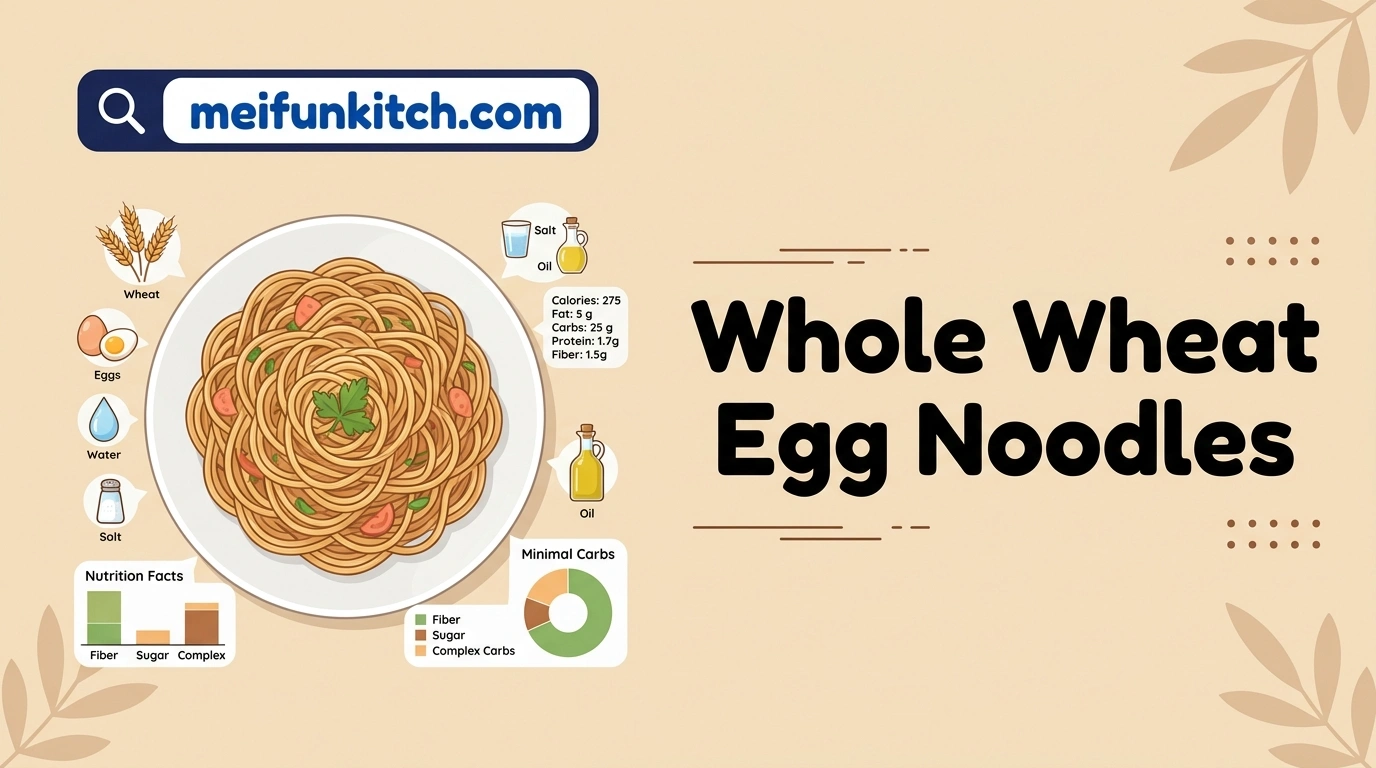
Whole wheat egg noodles are a tasty and healthy type of noodle. They are made with whole wheat flour and eggs, which gives them a rich flavor and a soft texture. Because they contain more fiber than regular noodles, many people choose them for balanced meals. Whether you enjoy soups, casseroles, or pasta dishes, whole wheat egg noodles can fit into many recipes.
In addition, whole wheat egg noodles provide important nutrients that help support a healthy diet. They contain carbohydrates for energy, while eggs add protein. As a result, these noodles can help you feel full for a longer time. Many families enjoy them because they are both nutritious and easy to cook.
Moreover, whole wheat egg noodles are simple to use in everyday meals. You can serve them with vegetables, chicken, beef, or your favorite sauce. Since they cook quickly, they are a great choice for busy days. In this guide, you will learn about their benefits, how to cook them, and the best ways to enjoy whole wheat egg noodles at home.
Are Whole Wheat Egg Noodles Healthy for Weight Management?
Many people look for foods that help them stay full while supporting healthy eating habits. Whole wheat egg noodles can be a smart choice because they contain fiber from whole grains and protein from eggs. As a result, they may help reduce hunger between meals. Moreover, fiber moves slowly through the digestive system, which can help people feel satisfied for a longer time. Therefore, individuals who want better portion control often include whole-grain foods in their meal plans. In addition, these noodles provide steady energy, which may help prevent sudden hunger cravings during the day.
Furthermore, weight management depends on overall eating habits rather than one food alone. However, choosing nutrient-dense foods can make a positive difference. Since whole-grain products often contain more vitamins and minerals than refined options, they can support a balanced diet. Likewise, pairing noodles with lean protein and vegetables creates a meal that offers both nutrition and satisfaction. Consequently, many nutrition experts recommend combining healthy carbohydrates with protein-rich ingredients for better meal balance.
On the other hand, portion size still plays an important role. Even healthy foods should fit within daily calorie needs. Therefore, measuring servings and adding colorful vegetables can improve meal quality. Meanwhile, preparing meals at home allows better control over ingredients and cooking methods. As a result, people can enjoy flavorful dishes while supporting long-term wellness goals. When eaten as part of a balanced lifestyle, these noodles can fit comfortably into many healthy meal plans.
Weight Management Benefits Comparison
| Feature | Benefit |
| Fiber content | Helps increase fullness |
| Protein from eggs | Supports satiety |
| Whole grains | Provide lasting energy |
| Balanced carbohydrates | Fuel daily activities |
| Slower digestion | May reduce snacking |
| Nutrient density | Supports overall health |
| Versatile meals | Easy to pair with vegetables |
| Family-friendly food | Fits many eating plans |
| Portion control friendly | Easy to measure servings |
| Better than many refined options | Offers more fiber |
| Home-cooking flexibility | Allows healthier recipes |
| Supports balanced eating | Works with healthy diets |
How to Cook Whole Wheat Egg Noodles Perfectly Every Time
Cooking noodles correctly improves both texture and flavor. First, bring a large pot of water to a rolling boil. Next, add a small amount of salt to enhance taste. After that, place whole wheat egg noodles into the boiling water and stir gently. This simple step prevents sticking and helps ensure even cooking. Moreover, using enough water gives the noodles room to move freely, which leads to better texture and more consistent results.
Meanwhile, checking the noodles regularly is important because cooking times can vary slightly by brand and thickness. Therefore, taste-testing a noodle a minute before the package time ends often produces the best outcome. In addition, many cooks prefer a tender yet slightly firm texture because it works well in many dishes. Consequently, careful timing helps prevent overcooking. Once the noodles reach the desired texture, drain them promptly to stop further cooking.
After draining, you can use them immediately in your favorite recipe. Alternatively, toss them with a small amount of olive oil if you plan to serve them later. Furthermore, adding sauces, vegetables, or proteins right away allows the noodles to absorb flavor more effectively. As a result, the final dish becomes more enjoyable and satisfying. With a few simple techniques, anyone can achieve consistently delicious results.
Cooking Tips Comparison Table
| Cooking Step | Why It Matters |
| Use a large pot | Prevents crowding |
| Boil water fully | Ensures even cooking |
| Add salt | Improves flavor |
| Stir early | Reduces sticking |
| Follow package directions | Prevents overcooking |
| Taste before draining | Checks texture |
| Drain promptly | Stops cooking process |
| Add oil if storing | Prevents clumping |
| Mix with sauce quickly | Improves flavor absorption |
| Use fresh ingredients | Enhances meal quality |
| Monitor cooking time | Maintains texture |
| Serve warm | Provides best taste |
Best Recipes to Make with Whole Wheat Egg Noodles
These noodles work well in a variety of dishes because they offer a hearty texture and rich flavor. For example, many home cooks enjoy preparing vegetable noodle bowls packed with colorful ingredients. In addition, roasted vegetables, herbs, and light sauces create meals that are both satisfying and nutritious. Whole wheat egg noodles also pair beautifully with grilled chicken, turkey, or lean beef, making them a flexible ingredient for everyday cooking.
Furthermore, creamy noodle casseroles remain a popular family favorite. By combining cooked noodles with vegetables, protein, and a light sauce, families can create comforting meals that are easy to prepare. Likewise, baked dishes often make excellent leftovers for busy weekdays. As a result, meal planning becomes simpler while reducing food waste. Moreover, casseroles allow cooks to customize ingredients based on personal preferences and dietary needs.
Another excellent option includes stir-fry recipes filled with fresh vegetables and flavorful seasonings. Meanwhile, soups and broths can transform noodles into warm and comforting meals during colder months. Consequently, these recipes provide variety without requiring complicated cooking skills. Because the noodles adapt well to different cuisines and cooking styles, they remain a practical pantry staple for many households.
Popular Recipe Ideas Comparison
| Recipe Type | Main Benefit |
| Chicken noodle bowl | High in protein |
| Vegetable stir-fry | Rich in nutrients |
| Baked casserole | Great for families |
| Beef noodle skillet | Hearty and filling |
| Creamy vegetable pasta | Comfort food option |
| Garden vegetable soup | Light and healthy |
| Turkey noodle bake | Easy meal prep |
| Garlic herb noodles | Quick preparation |
| Mushroom noodle dish | Rich flavor |
| Mediterranean-style noodles | Fresh ingredients |
| Broccoli noodle casserole | Extra fiber |
| Homemade noodle soup | Warm and comforting |
Whole Wheat Egg Noodles for Soups, Casseroles, and Family Meals
Many families appreciate ingredients that work in several recipes. Because of their sturdy texture, whole wheat egg noodles perform exceptionally well in soups, casseroles, and everyday dinners. In soups, they absorb flavorful broth while maintaining their structure. As a result, each spoonful feels satisfying and comforting. Additionally, they pair well with vegetables, chicken, turkey, and other wholesome ingredients.
Casseroles also benefit from these noodles because they hold up well during baking. Furthermore, their hearty texture helps create dishes that feel substantial without requiring complicated preparation. Consequently, busy families often choose casserole recipes for convenient weeknight meals. In addition, casseroles can be prepared ahead of time, making them ideal for meal planning and gatherings.
Family meals often focus on comfort, nutrition, and convenience. Therefore, ingredients that meet all three needs become household favorites. Likewise, these noodles fit easily into many traditional and modern recipes. Whether served in soup, baked dishes, or simple skillet meals, they offer versatility and dependable results. As a result, they remain a practical choice for home cooks who value both flavor and nutrition.
Meal Type Comparison Table
| Meal Type | Advantages |
| Chicken soup | Comforting and warming |
| Vegetable soup | Nutrient-rich |
| Beef soup | Hearty flavor |
| Baked casserole | Easy serving |
| Family skillet meal | Quick preparation |
| Holiday side dish | Crowd-friendly |
| Meal prep containers | Convenient storage |
| One-pot dinners | Less cleanup |
| Creamy baked meals | Comfort food appeal |
| Vegetable casseroles | More fiber |
| Lunch leftovers | Budget-friendly |
| Weeknight dinners | Time-saving |
How to Store and Reheat Whole Wheat Egg Noodles
Proper storage helps maintain freshness, texture, and food safety. After cooking, allow noodles to cool slightly before placing them in airtight containers. Then store them in the refrigerator within a reasonable time. Whole wheat egg noodles generally stay fresh for several days when stored correctly. Moreover, separating them into meal-sized portions makes future meals more convenient and reduces unnecessary handling.
When reheating refrigerated noodles, gentle heating often produces the best results. For example, adding a small amount of water or broth can restore moisture and improve texture. Furthermore, stovetop reheating allows greater control compared to high heat methods. As a result, the noodles remain tender and enjoyable rather than dry or overcooked. Likewise, microwaving works well when done in short intervals with occasional stirring.
Freezing can also extend storage time for larger batches. However, using freezer-safe containers helps protect quality. Therefore, labeling containers with dates makes organization easier and supports food safety. In addition, thawing frozen portions in the refrigerator before reheating often improves texture. Consequently, proper storage and reheating techniques help reduce waste while keeping meals delicious and convenient.
Storage and Reheating Comparison Table
| Method | Main Advantage |
| Airtight container | Maintains freshness |
| Refrigeration | Short-term storage |
| Freezing | Long-term storage |
| Portioning meals | Easier meal planning |
| Labeling containers | Better organization |
| Stovetop reheating | Greater control |
| Microwave reheating | Fast and convenient |
| Add water or broth | Restores moisture |
| Refrigerator thawing | Better texture |
| Cool before storing | Supports food safety |
| Freezer-safe containers | Protects quality |
| Gentle reheating | Prevents overcooking |
What Are Whole Wheat Egg Noodles and How Are They Made?
Many people enjoy noodles because they are versatile, filling, and easy to prepare. Whole wheat egg noodles are a special type of noodle made from whole wheat flour, eggs, and water. Unlike refined noodles that use processed flour, whole wheat versions keep the bran and germ parts of the grain. As a result, they contain more natural nutrients and fiber. Moreover, they offer a slightly nutty flavor and a hearty texture that works well in many recipes. Therefore, they have become a popular choice among people who want both flavor and nutrition in their meals.
The production process is simple yet important for quality. First, manufacturers combine whole wheat flour with fresh eggs and water to create a dough. Next, they knead the dough until it becomes smooth and elastic. Afterward, they roll the dough into thin sheets and cut it into noodle shapes. Meanwhile, some producers dry the noodles for longer shelf life, while others sell them fresh. Consequently, consumers can choose the type that best suits their cooking needs. In addition, careful processing helps preserve texture and flavor.
These noodles fit into many different cuisines and cooking styles. For example, people often use them in soups, casseroles, stir-fries, and pasta dishes. Furthermore, they absorb flavors well while maintaining their structure during cooking. As a result, they provide both convenience and versatility in the kitchen. Whether someone wants a quick family dinner or a nutritious homemade meal, these noodles can easily become a valuable pantry staple.
Whole Wheat Egg Noodles at a Glance
| Feature | Description |
| Main ingredient | Whole wheat flour |
| Additional ingredient | Eggs |
| Texture | Firm and hearty |
| Flavor | Mild and slightly nutty |
| Fiber content | Higher than refined noodles |
| Protein source | Eggs |
| Common uses | Soups, casseroles, pasta dishes |
| Cooking time | Usually 6–10 minutes |
| Nutritional value | Richer than refined alternatives |
| Shelf options | Fresh or dried |
| Family-friendly | Yes |
| Meal versatility | Very high |
Whole Wheat Egg Noodles Nutrition Facts: Calories, Protein, and Fiber
Nutrition is often one of the first things people consider when choosing foods. Whole wheat egg noodles provide a combination of carbohydrates, protein, and dietary fiber. Because they contain whole grains, they generally offer more nutrients than refined noodle varieties. In addition, they supply energy that supports daily activities. As a result, many individuals include them in balanced meal plans. Furthermore, their nutritional profile makes them suitable for a wide range of healthy recipes.
Calories play an important role in meal planning, and these noodles provide moderate energy per serving. Meanwhile, the protein from eggs contributes to muscle maintenance and overall body function. Likewise, fiber supports digestion and helps promote feelings of fullness after meals. Therefore, combining these nutrients creates a food that can satisfy hunger while providing essential nourishment. In addition, fiber may help support stable energy levels throughout the day.
Although exact values vary by brand and serving size, the overall nutritional benefits remain consistent. Consequently, reading nutrition labels can help consumers make informed decisions. Moreover, pairing noodles with vegetables and lean proteins can further improve meal quality. As a result, these noodles become part of a balanced and nutrient-rich eating pattern. For many families, they offer a practical way to enjoy comfort food while still focusing on nutrition.
Nutrition Facts Comparison Table
| Nutrient | Benefit |
| Calories | Provide energy |
| Protein | Supports muscle health |
| Fiber | Promotes fullness |
| Carbohydrates | Fuel daily activities |
| Iron | Supports oxygen transport |
| B Vitamins | Help energy metabolism |
| Whole grains | Add nutritional value |
| Complex carbs | Provide steady energy |
| Low added sugar | Supports balanced eating |
| Egg nutrients | Enhance protein quality |
| Digestive support | Comes from fiber |
| Meal satisfaction | Helps reduce hunger |
Health Benefits of Whole Wheat Egg Noodles
Many health-conscious consumers look for foods that provide both taste and nutrition. Whole wheat egg noodles offer several advantages because they combine whole grains with egg-based protein. As a result, they can contribute to balanced meals that support overall wellness. Furthermore, whole grains contain valuable nutrients that many people need in their daily diets. Therefore, choosing whole-grain options can be a simple way to improve meal quality.
One significant benefit is the fiber content. Fiber supports healthy digestion and may help people feel full longer after eating. In addition, foods rich in fiber often encourage more mindful eating habits. Meanwhile, the protein from eggs adds another layer of nutritional value by helping support muscle maintenance and body functions. Consequently, the combination of fiber and protein makes meals more satisfying. Moreover, balanced meals often support better energy management throughout the day.
Another advantage involves versatility. Healthy eating becomes easier when nutritious foods fit into different recipes. Therefore, these noodles work well with vegetables, lean meats, and flavorful sauces. Likewise, they can serve as the foundation for soups, casseroles, and skillet meals. As a result, families can enjoy nutritious dishes without sacrificing flavor or convenience. When included as part of a balanced diet, they offer a practical and enjoyable way to support healthy eating habits.
Health Benefits Comparison Table
| Health Benefit | Why It Matters |
| Higher fiber | Supports digestion |
| Protein content | Helps maintain muscles |
| Whole grain nutrition | Provides essential nutrients |
| Better satiety | Helps control hunger |
| Sustained energy | Reduces energy crashes |
| Versatile ingredient | Encourages healthy cooking |
| Family-friendly meals | Easy to include in diets |
| Nutrient density | More value per serving |
| Balanced carbohydrates | Support daily activities |
| Reduced reliance on refined grains | Improves meal quality |
| Supports healthy habits | Fits balanced diets |
| Easy meal planning | Convenient for families |
Whole Wheat Egg Noodles vs Regular Egg Noodles: What Is the Difference?
Many shoppers compare noodle varieties before making a purchase. The main difference between whole wheat egg noodles and regular egg noodles lies in the flour used during production. Whole wheat varieties use flour that contains the entire grain, while regular versions often use refined flour. As a result, whole wheat options generally contain more fiber and nutrients. Furthermore, they offer a slightly richer flavor and denser texture compared to traditional varieties.
Nutrition also sets these noodles apart. Because whole grains retain more natural components of the wheat kernel, they often provide additional vitamins, minerals, and fiber. Meanwhile, regular noodles may have a softer texture and lighter color. Therefore, personal preference often influences which option people choose. However, individuals looking for more fiber frequently prefer whole-grain products. Consequently, both types have unique strengths depending on dietary goals and taste preferences.
Cooking performance differs slightly as well. Whole-grain varieties usually have a firmer bite and a heartier texture. In contrast, regular noodles tend to be softer and cook somewhat faster. Nevertheless, both options work well in soups, casseroles, and pasta-style dishes. As a result, the best choice depends on the desired flavor, texture, and nutritional priorities. Understanding these differences helps consumers select the option that best matches their needs.
Whole Wheat vs Regular Egg Noodles Comparison
| Feature | Whole Wheat Version | Regular Version |
| Flour type | Whole wheat flour | Refined flour |
| Fiber content | Higher | Lower |
| Nutrient retention | More nutrients | Fewer natural nutrients |
| Texture | Hearty and firm | Softer |
| Flavor | Slightly nutty | Mild |
| Color | Darker brown | Light yellow |
| Satiety | Greater fullness | Less fullness |
| Whole grain content | Yes | No |
| Digestive support | Better due to fiber | Lower fiber support |
| Energy release | More gradual | Faster digestion |
| Popular use | Health-focused meals | Traditional recipes |
| Nutritional profile | More nutrient-dense | Less nutrient-dense |
Conclusion
Whole wheat egg noodles offer a wonderful balance of flavor, nutrition, and versatility. Throughout this guide, we explored how they are made, their nutritional value, their health benefits, and the many ways you can use them in everyday meals. Because they contain whole grains and protein from eggs, they can help create satisfying dishes that fit into a balanced lifestyle. Moreover, they work beautifully in soups, casseroles, stir-fries, and family dinners.
In addition, these noodles are easy to cook, simple to store, and adaptable to countless recipes. Whether you are looking for a hearty comfort meal or a healthier alternative to refined noodles, they provide a practical option for many households. As a result, they continue to grow in popularity among home cooks and health-conscious families alike. By pairing them with vegetables, lean proteins, and flavorful seasonings, you can create delicious meals that everyone will enjoy. Ultimately, whole wheat egg noodles are a smart pantry staple that combines convenience, taste, and nutrition in every bite.
FAQs
Are whole wheat egg noodles healthier than regular egg noodles?
Yes, they are often considered healthier because they contain more fiber and nutrients from whole grains. As a result, they may help support digestion and keep you feeling full longer than regular egg noodles made with refined flour.
Can whole wheat egg noodles help with weight management?
They can support weight management when eaten as part of a balanced diet. Because they contain fiber and protein, they may help increase fullness and reduce the urge to snack between meals.
Do whole wheat egg noodles taste different from regular noodles?
Yes, they have a slightly nuttier and richer flavor. However, the taste is still mild and works well with many sauces, soups, and casseroles, making them easy for most people to enjoy.
Are whole wheat egg noodles good for soups?
Absolutely. They hold their shape well during cooking and absorb the flavor of the broth. Therefore, they are a popular choice for chicken noodle soup and other hearty soup recipes.
How long do whole wheat egg noodles take to cook?
Most varieties cook within a few minutes, although cooking times vary by brand. It is always best to follow the package directions and taste-test near the end of the cooking time.
Can I freeze cooked whole wheat egg noodles?
Yes, you can freeze them in airtight containers. For best results, allow them to cool first and store them in meal-sized portions to make reheating easier later.
What foods pair well with whole wheat egg noodles?
They pair well with chicken, turkey, beef, seafood, vegetables, mushrooms, and a variety of sauces. Their hearty texture makes them suitable for both light and rich dishes.
Are whole wheat egg noodles high in protein?
They provide a moderate amount of protein because they contain eggs. While they are not as protein-rich as meat or beans, they can contribute to your daily protein intake.
Can I use whole wheat egg noodles in casseroles?
Yes, they work very well in casseroles. Their firm texture helps them hold up during baking, making them an excellent ingredient for family-friendly comfort food recipes.
How should I store uncooked whole wheat egg noodles?
Store them in a cool, dry place away from moisture and direct sunlight. When kept in their original packaging or an airtight container, they can stay fresh for an extended period.

Smith
Author79 Published Articles
James Smith is a dedicated food writer and recipe enthusiast who specializes in creating informative content about noodles, pasta, rice dishes, comfort foods, and a wide variety of global cuisines. He is passionate about sharing easy-to-follow recipes, cooking techniques, ingredient guides, nutrition facts, and meal preparation tips that help readers cook with confidence. From classic noodle dishes and homemade sauces to healthy meal ideas and international favorites, James focuses on delivering well-researched, practical, and engaging content for home cooks of all skill levels. His goal is to make cooking enjoyable, accessible, and inspiring by providing reliable recipes and food knowledge that readers can trust.
EducationM.Sc. in Food and Nutrition.
Experience8 Years.
ExpertiseWrites about Noodles and Many Other Foods