
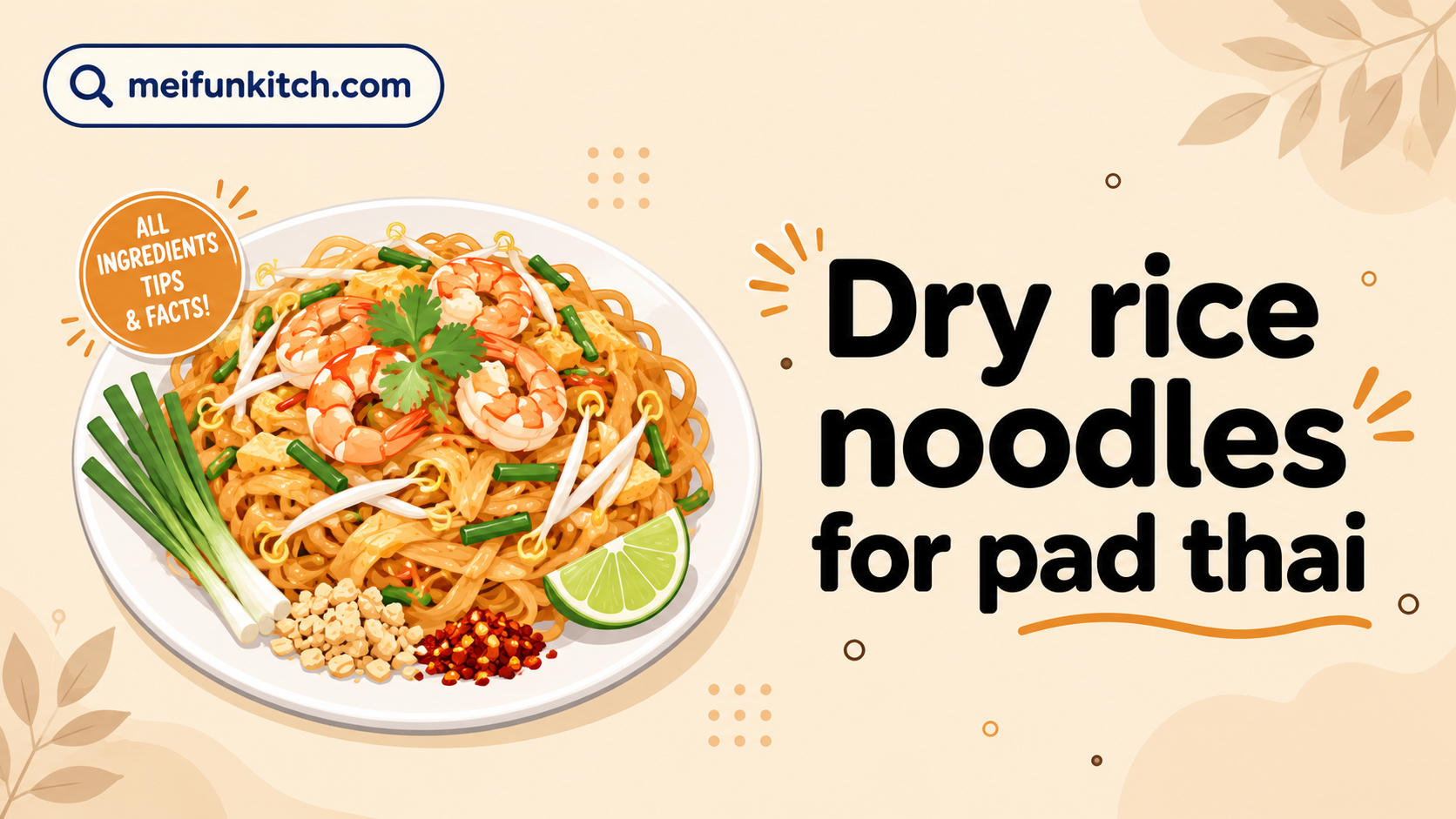
Dry rice noodles for Pad Thai are one of the most important ingredients in this famous Thai dish. These noodles are light, thin, and easy to cook. When they are prepared the right way, they become soft and chewy. As a result, they give Pad Thai its special texture and taste. Many home cooks choose dry rice noodles because they are simple to store and use whenever needed.
- 1. What Are Rice Noodles Used in Pad Thai?
- 2. How to Choose the Right Dry rice noodles for pad thai
- 3. 🍜 Noodles Calories Counter
- 4. Common Mistakes That Ruin the Texture
- 5. Best Ingredients to Pair With Dry rice noodles for pad thai
- 6. Step-by-Step Guide to Cooking Perfect Noodles
- 7. Dry Rice Noodles for Pad Thai vs Fresh Noodles
- 8. Nutrition Facts and Health Benefits
- 9. Tips for Making Restaurant-Style Dry rice noodles for pad thai at Home
- 10. Conclusion About Dry Rice Noodles for Pad Thai
- 11. FAQs
Before cooking Pad Thai, you need to soak the dry rice noodles in water. Then, they become soft enough for stir-frying. In addition, they absorb the flavors of sauces, vegetables, and proteins very well. Because of this, dry rice noodles help create the delicious taste that people love. Whether you add chicken, shrimp, or tofu, these noodles work perfectly in the dish.
Many people wonder how to choose and cook dry rice noodles for Pad Thai. Therefore, it is helpful to learn a few simple tips before you start. In this guide, you will discover how to select the best noodles, prepare them correctly, and avoid common mistakes. By following these easy steps, you can make a tasty Pad Thai meal at home with confidence.
What Are Rice Noodles Used in Pad Thai?
Rice noodles are the heart of traditional Pad Thai. These noodles are made from rice flour and water, which gives them a light texture and a mild flavor. Because they do not have a strong taste of their own, they easily absorb sauces and seasonings. As a result, they become a perfect base for one of Thailand’s most famous dishes. Many cooks prefer dry rice noodles for pad thai because they are easy to store, have a long shelf life, and deliver consistent cooking results. Furthermore, they create the chewy texture that people expect from authentic Pad Thai.
Pad Thai combines sweet, sour, salty, and savory flavors in a single dish. Therefore, the noodles must hold these flavors without becoming too soft. Rice noodles perform this job very well. They stay tender while still maintaining a pleasant bite. In addition, they blend smoothly with vegetables, eggs, tofu, chicken, or shrimp. Since rice noodles are naturally gluten-free, they also provide an excellent choice for people who avoid wheat-based products. Consequently, many restaurants and home cooks continue to use them as the main ingredient in Pad Thai recipes.
The popularity of rice noodles extends beyond Thailand. Today, people around the world enjoy Pad Thai because it is simple, flavorful, and satisfying. Moreover, rice noodles cook quickly, making meal preparation easier. Experienced chefs often recommend selecting quality noodles because better ingredients usually create better results. Although many noodle varieties exist, rice noodles remain the preferred option for authentic flavor and texture. When prepared correctly, they help create a balanced meal that is both delicious and enjoyable.
Dry rice noodles for pad thai vs Wheat Noodles
| Feature | Rice Noodles | Wheat Noodles |
| Main Ingredient | Rice Flour | Wheat Flour |
| Texture | Soft and Chewy | Firm and Elastic |
| Flavor | Mild | Slightly Nutty |
| Gluten Content | Gluten-Free | Contains Gluten |
| Traditional Pad Thai Use | Yes | No |
| Cooking Time | Quick | Moderate |
| Color | White or Translucent | Yellow or Cream |
| Digestibility | Easy for Many People | Depends on Gluten Tolerance |
| Sauce Absorption | Excellent | Good |
| Shelf Life | Long When Dry | Long |
| Authentic Thai Cooking | Common | Rare |
| Popularity in Pad Thai | Very High | Low |
How to Choose the Right Dry rice noodles for pad thai
Selecting the right noodles can make a significant difference in the final dish. First, consider the width of the noodles. Most traditional recipes use medium-width rice noodles because they provide a balance between softness and structure. If the noodles are too thin, they may break during cooking. On the other hand, very thick noodles may not absorb the sauce evenly. Therefore, choosing the correct width helps create the texture that most people enjoy in homemade Pad Thai.
Quality is another important factor. Good noodles should look clean, smooth, and uniform in size. Furthermore, reputable brands often provide cooking instructions that help achieve better results. When shopping, check the ingredient list and select products with simple ingredients. Many experienced cooks recommend dry rice noodles for pad thai because they offer reliable performance and are widely available in grocery stores and Asian markets. As a result, beginners can achieve excellent results without much difficulty.
Storage and freshness also matter when choosing noodles. Although dry noodles have a long shelf life, they should still be stored in a cool and dry place. In addition, packaging should remain sealed and undamaged. Fresh ingredients often produce better-tasting meals, so checking expiration dates is always a smart practice. By selecting the right noodles from the start, you increase the chances of creating a flavorful and authentic Pad Thai dish that everyone will enjoy.
Thin Noodles vs Medium Noodles
| Feature | Thin Rice Noodles | Medium Rice Noodles |
| Size | Very Thin | Moderately Wide |
| Cooking Speed | Faster | Moderate |
| Texture | Delicate | Balanced |
| Breakage Risk | Higher | Lower |
| Sauce Holding Ability | Good | Excellent |
| Traditional Pad Thai Use | Sometimes | Most Common |
| Stir-Frying Performance | Fair | Excellent |
| Beginner Friendly | Less | More |
| Flavor Absorption | Good | Excellent |
| Visual Appearance | Light | Authentic |
| Restaurant Preference | Moderate | High |
| Overall Recommendation | Acceptable | Best Choice |
Common Mistakes That Ruin the Texture
Many people struggle with noodle texture because they make a few common mistakes during preparation. One of the biggest problems is over-soaking the noodles. When noodles stay in water for too long, they become soft before they even reach the pan. As a result, they often break apart during stir-frying. In addition, over-soaked noodles absorb too much moisture, which can make the final dish mushy. Experienced cooks usually monitor soaking time carefully so the noodles remain firm and ready for cooking.
Another mistake involves using excessive heat for too long. Although high heat helps create authentic stir-fried flavors, cooking the noodles for too many minutes can damage their texture. Therefore, cooks should stir constantly and remove the noodles from heat once they become tender. Many beginners also add too much sauce at once. Consequently, the noodles may become wet and sticky instead of light and flavorful. Proper balance is important because every ingredient affects the final result.
Poor ingredient preparation can also ruin a great meal. Vegetables should be cut before cooking begins, and proteins should be ready to add at the right time. Furthermore, quality dry rice noodles for pad thai help maintain a better texture throughout the cooking process. If ingredients are not prepared in advance, the noodles may overcook while the cook rushes to finish other tasks. Therefore, organization plays a major role in creating restaurant-style Pad Thai at home.
Common Texture Mistakes and Solutions
| Mistake | Result | Solution |
| Over-soaking noodles | Mushy texture | Reduce soaking time |
| Under-soaking noodles | Hard center | Soak properly |
| Too much sauce | Sticky noodles | Use moderate sauce |
| Cooking too long | Broken noodles | Cook briefly |
| Low-quality noodles | Uneven texture | Choose quality products |
| Crowded pan | Uneven cooking | Use a larger pan |
| Skipping stirring | Clumping | Stir regularly |
| Excess water | Soggy dish | Drain well |
| Cold pan | Poor texture | Preheat pan |
| Delayed cooking | Soft noodles | Cook immediately |
| Too many ingredients | Overloaded dish | Keep balance |
| Wrong noodle size | Texture issues | Use medium-width noodles |
Best Ingredients to Pair With Dry rice noodles for pad thai
Pad Thai becomes more flavorful when paired with the right ingredients. Protein choices such as chicken, shrimp, tofu, and eggs work especially well because they add richness and texture. Furthermore, these ingredients absorb the sauce and blend smoothly with the noodles. Many home cooks enjoy experimenting with different proteins. However, traditional combinations remain popular because they create a balanced and satisfying meal.
Fresh vegetables also play an important role. Bean sprouts, carrots, green onions, and garlic add color and crunch to the dish. In addition, vegetables provide nutrients that help create a more complete meal. Fresh ingredients often improve both taste and appearance. Therefore, selecting crisp vegetables can make a noticeable difference. Many cooks also add peanuts and lime wedges because they enhance flavor and create a more authentic dining experience.
The sauce ties everything together. A combination of fish sauce, tamarind, sugar, and seasonings creates the signature sweet and savory taste that people expect. High-quality dry rice noodles for pad thai absorb these flavors beautifully while maintaining their chewy texture. As a result, every bite becomes more enjoyable. When all ingredients work together, the final dish delivers a balance of flavors, textures, and aromas that make Pad Thai so popular worldwide.
Best Pad Thai Ingredients Comparison
| Ingredient | Purpose | Benefit |
| Shrimp | Protein | Authentic flavor |
| Chicken | Protein | Easy to prepare |
| Tofu | Plant Protein | Vegetarian option |
| Eggs | Richness | Adds texture |
| Bean Sprouts | Crunch | Fresh taste |
| Carrots | Color | Natural sweetness |
| Green Onions | Flavor | Mild sharpness |
| Garlic | Aroma | Strong flavor |
| Peanuts | Topping | Crunchy texture |
| Lime | Freshness | Bright flavor |
| Tamarind Sauce | Main Sauce | Signature taste |
| Fish Sauce | Seasoning | Savory depth |
Step-by-Step Guide to Cooking Perfect Noodles
Cooking noodles correctly starts with proper preparation. First, place the noodles in warm water and allow them to soften gradually. However, do not soak them for too long because they will continue cooking in the pan. After soaking, drain the water completely. Then, set the noodles aside while preparing the remaining ingredients. This simple step helps ensure a smooth cooking process and prevents unnecessary delays later.
Next, heat a wok or large skillet over medium-high heat. Add oil, followed by garlic, protein, and vegetables. Stir everything quickly because high heat cooks ingredients efficiently. Once the ingredients become nearly cooked, add the noodles and sauce. Therefore, the noodles can absorb flavor while finishing the cooking process. Stir constantly so that the ingredients combine evenly and the noodles do not stick together.
Finally, remove the dish from heat as soon as the noodles become tender. Overcooking can quickly destroy texture and flavor. Many experienced cooks recommend tasting the noodles before serving. Quality dry rice noodles for pad thai should feel tender yet slightly chewy. Afterward, garnish with peanuts, lime wedges, and fresh herbs. As a result, the finished dish looks appealing and tastes delicious. Following these steps consistently helps create restaurant-quality Pad Thai at home.
Pad Thai Cooking Steps
| Step | Action | Purpose |
| 1 | Gather ingredients | Better organization |
| 2 | Soak noodles | Soften texture |
| 3 | Drain noodles | Remove excess water |
| 4 | Heat wok | Prepare for stir-frying |
| 5 | Add oil | Prevent sticking |
| 6 | Cook garlic | Build flavor |
| 7 | Add protein | Cook thoroughly |
| 8 | Add vegetables | Add freshness |
| 9 | Add noodles | Combine ingredients |
| 10 | Add sauce | Create flavor |
| 11 | Stir constantly | Ensure even cooking |
| 12 | Garnish and serve | Enhance presentation |
Dry Rice Noodles for Pad Thai vs Fresh Noodles
Many people wonder whether dry noodles or fresh noodles create a better Pad Thai dish. Both options have advantages, yet they perform differently during cooking. Dry noodles are widely available, easy to store, and often more affordable. In contrast, fresh noodles usually require refrigeration and have a shorter shelf life. Therefore, many home cooks prefer dry rice noodles for pad thai because they can keep them in the pantry and use them whenever needed. As a result, meal planning becomes much easier.
Texture is another important difference between these two options. Fresh noodles often feel softer from the beginning, while dry noodles develop their texture during soaking and cooking. Consequently, dry noodles provide more control over the final result. Many experienced cooks appreciate this flexibility because they can adjust soaking time according to the recipe. Furthermore, dry noodles tend to absorb sauces more effectively, which helps create the rich flavors associated with authentic Pad Thai.
Cost and availability also influence the decision. Fresh noodles may not be available in every grocery store, especially in smaller towns. On the other hand, dry noodles can be found in most supermarkets and Asian food stores. In addition, they remain usable for a much longer period. Therefore, they offer convenience without sacrificing quality. Although fresh noodles can produce excellent dishes, dry noodles remain the preferred choice for many home cooks and professional chefs.
Dry Noodles vs Fresh Noodles
| Feature | Dry Noodles | Fresh Noodles |
| Shelf Life | Long | Short |
| Storage | Pantry | Refrigerator |
| Availability | Widely Available | Limited |
| Cost | Usually Lower | Usually Higher |
| Preparation | Requires Soaking | Ready to Use |
| Texture Control | Excellent | Moderate |
| Sauce Absorption | Very Good | Good |
| Convenience | High | Medium |
| Travel Friendly | Yes | No |
| Beginner Friendly | Yes | Moderate |
| Traditional Use | Very Common | Less Common |
| Overall Value | Excellent | Good |
Nutrition Facts and Health Benefits
Pad Thai noodles can fit into a balanced diet when enjoyed in reasonable portions. Rice noodles mainly provide carbohydrates, which give the body energy throughout the day. In addition, they contain very little fat on their own. Because rice noodles are naturally gluten-free, they can be a suitable option for people who avoid gluten. Therefore, many individuals choose rice noodles as part of their regular meal planning.
The nutritional value of Pad Thai depends greatly on the ingredients added to the dish. For example, vegetables contribute vitamins, minerals, and fiber. Likewise, proteins such as chicken, shrimp, or tofu provide essential nutrients that support muscle growth and overall health. Furthermore, fresh vegetables add color and texture while increasing the meal's nutritional content. As a result, a well-balanced Pad Thai can offer both flavor and nourishment.
Quality dry rice noodles for pad thai can serve as a foundation for a healthy meal when combined with fresh ingredients. However, portion control remains important because noodle dishes can contain a significant amount of carbohydrates. In addition, reducing excess sugar and oil can help create a lighter version of the dish. Therefore, home cooking often provides more control over nutrition compared to restaurant meals. With thoughtful ingredient choices, Pad Thai can become a satisfying and nutritious option.
Nutrition Overview
| Nutrient | Benefit |
| Carbohydrates | Provide energy |
| Protein | Supports muscles |
| Fiber | Supports digestion |
| Iron | Helps oxygen transport |
| Calcium | Supports bones |
| Vitamin A | Supports vision |
| Vitamin C | Supports immunity |
| Potassium | Supports heart health |
| Low Fat Noodles | Balanced meals |
| Gluten-Free Rice Noodles | Suitable for many diets |
| Vegetables | Add nutrients |
| Lean Proteins | Increase fullness |
Tips for Making Restaurant-Style Dry rice noodles for pad thai at Home
Creating restaurant-style Pad Thai at home starts with preparation. Professional chefs often organize every ingredient before turning on the stove. Therefore, they can focus completely on cooking once the heat is applied. This method, often called mise en place, helps prevent mistakes and improves efficiency. In addition, preparing vegetables, sauces, and proteins ahead of time reduces the risk of overcooking the noodles.
Heat management is another important factor. Restaurants often use powerful burners that cook ingredients quickly. Although home kitchens may not have the same equipment, cooks can still achieve excellent results by preheating a wok or large skillet. Furthermore, cooking in small batches helps maintain consistent heat. As a result, ingredients cook evenly and develop better flavor. Proper heat also helps create the slightly smoky taste that many people enjoy in authentic Pad Thai.
Selecting quality ingredients contributes significantly to the final dish. Fresh vegetables, flavorful sauces, and premium dry rice noodles for pad thai can elevate the meal from ordinary to exceptional. Additionally, tasting the dish throughout cooking allows for small adjustments in seasoning. Therefore, the final result becomes more balanced and enjoyable. With practice, patience, and attention to detail, home cooks can prepare Pad Thai that rivals dishes served in many restaurants.
Home Cooking vs Restaurant Techniques
| Feature | Home Cooking | Restaurant Cooking |
| Heat Level | Moderate | Very High |
| Equipment | Standard Stove | Commercial Burners |
| Batch Size | Small | Large |
| Preparation Style | Flexible | Highly Organized |
| Cooking Speed | Moderate | Fast |
| Flavor Control | High | High |
| Ingredient Choice | Personal Preference | Standardized |
| Cost | Lower | Higher |
| Customization | Easy | Limited |
| Freshness Control | Excellent | Good |
| Learning Curve | Gradual | Professional Training |
| Overall Experience | Convenient | Specialized |
Conclusion About Dry Rice Noodles for Pad Thai
Dry rice noodles are the foundation of a delicious and authentic Pad Thai. Throughout this guide, we explored how to choose the right noodles, soak them properly, avoid common mistakes, and pair them with the best ingredients. When prepared correctly, these noodles create the perfect balance of softness and chewiness that makes Pad Thai so enjoyable. Moreover, they absorb sauces beautifully and blend well with vegetables, proteins, and seasonings.
Many home cooks prefer dry rice noodles because they are affordable, easy to store, and simple to prepare. In addition, they offer consistent results, making them a reliable choice for beginners and experienced cooks alike. By following the tips and techniques shared in this article, you can create restaurant-style Pad Thai in your own kitchen. Whether you cook for family or friends, the right noodles can make every meal more flavorful, satisfying, and memorable.
FAQs
What type of rice noodles are best for Pad Thai?
Medium-width rice noodles are generally the best choice for Pad Thai. They provide the ideal balance of texture and flavor absorption. Furthermore, they hold up well during stir-frying and create the authentic chewy texture found in traditional recipes.
Do I need to soak rice noodles before cooking?
Yes, soaking is an important step. It softens the noodles and helps them cook evenly during stir-frying. However, avoid soaking them for too long because they can become overly soft and break apart while cooking.
Can I boil rice noodles instead of soaking them?
You can boil them, but soaking is usually preferred for Pad Thai. Soaking gives you more control over the texture. As a result, the noodles remain firm enough to finish cooking in the wok without becoming mushy.
How long should I soak rice noodles?
The soaking time depends on the noodle thickness and brand. In most cases, warm water works best. The noodles should feel flexible but still slightly firm because they will continue cooking in the pan.
Why do my Pad Thai noodles turn mushy?
Mushy noodles often result from over-soaking, overcooking, or adding too much liquid. Therefore, monitor soaking times carefully and avoid cooking the noodles longer than necessary to maintain the perfect texture.
Are rice noodles healthier than wheat noodles?
Rice noodles are naturally gluten-free and low in fat. However, the overall nutritional value depends on the ingredients used in the dish. Adding vegetables and lean proteins can create a more balanced meal.
Can I make Pad Thai with fresh noodles?
Yes, fresh noodles can be used. However, they have a softer texture and a shorter shelf life. Many cooks prefer dry noodles because they are easier to store and offer more consistent results.
How do I keep noodles from sticking together?
Drain the noodles well after soaking and stir them frequently while cooking. In addition, using enough oil and avoiding overcrowding the pan can help prevent sticking and clumping.
What proteins work best with Pad Thai?
Popular choices include shrimp, chicken, tofu, and eggs. These ingredients complement the noodles and absorb the sauce well. As a result, they help create a flavorful and satisfying meal.
Can I store leftover Pad Thai?
Yes, leftover Pad Thai can be stored in an airtight container in the refrigerator. For the best taste and texture, reheat it gently and consume it within a few days after cooking.

Smith
Author86 Published Articles
James Smith is a dedicated food writer and recipe enthusiast who specializes in creating informative content about noodles, pasta, rice dishes, comfort foods, and a wide variety of global cuisines. He is passionate about sharing easy-to-follow recipes, cooking techniques, ingredient guides, nutrition facts, and meal preparation tips that help readers cook with confidence. From classic noodle dishes and homemade sauces to healthy meal ideas and international favorites, James focuses on delivering well-researched, practical, and engaging content for home cooks of all skill levels. His goal is to make cooking enjoyable, accessible, and inspiring by providing reliable recipes and food knowledge that readers can trust.
EducationM.Sc. in Food and Nutrition.
Experience8 Years.
ExpertiseWrites about Noodles and Many Other Foods