
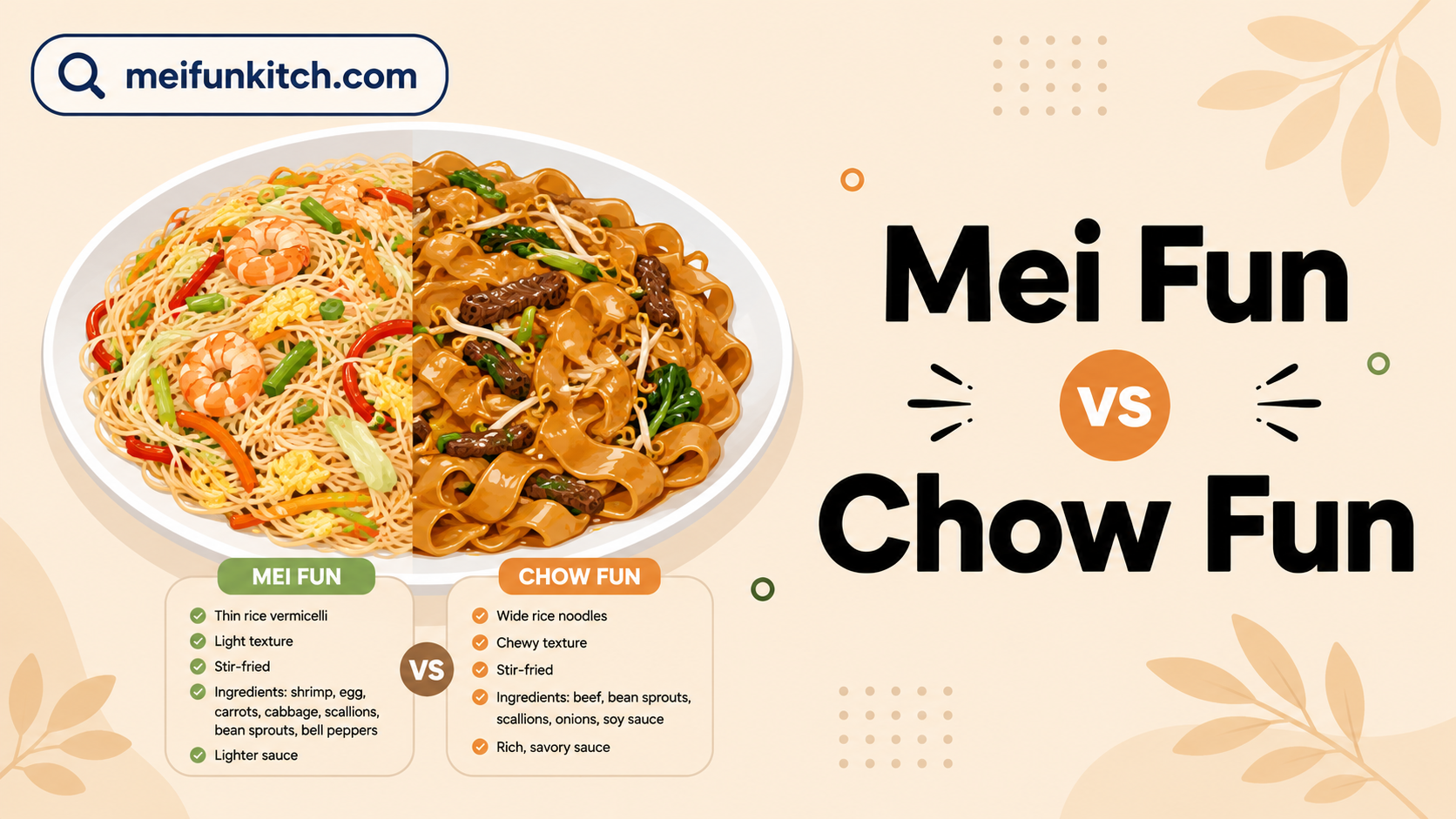
When it comes to popular Chinese noodle dishes, the debate between mei fun vs chow fun is one that many food lovers often ask about.Chinese restaurants and takeout menus commonly serve both dishes, but they differ greatly in noodles, texture, flavor, and cooking style. Chefs make mei fun with thin rice vermicelli noodles, while they prepare chow fun with wide, flat rice noodles that create a richer and chewier bite. Knowing the difference between chow fun and mei fun can help you choose the perfect dish for your taste buds.
- 1. Mei Fun vs Chow Fun: Difference in Noodle Type
- 2. Mei Fun vs Chow Fun Thin vs Wide Noodles
- 3. 🍜 Noodles Calories Counter
- 4. Rice Noodle Comparison
- 5. Chewy vs Soft Texture
- 6. Difference in Taste and Flavor
- 7. Calories Difference
- 8. Mei Fun vs Chow Fun: Difference in Ingredients
- 9. Mei Fun vs Chow Fun: Demand Difference
- 10. Conclusion:
- 11. FAQs About Mei Fun vs Chow Fun
One of the biggest differences in the mei fun vs chow fun comparison is the texture and preparation of the noodles. Mei fun noodles are light, delicate, and absorb flavors quickly, making them ideal for stir-fried noodle recipes with vegetables, shrimp, chicken, or pork. Chow fun noodles, on the other hand, are thicker, softer, and slightly chewy, giving stir-fry dishes a smoky and hearty flavor that many people love in authentic Chinese cuisine. Both dishes are flavorful, but each offers a completely different eating experience.
In this guide, we’ll break down everything you need to know about mei fun vs chow fun, including ingredients, taste, calories, cooking methods, and traditional recipes. Whether you want to learn which Chinese noodle is healthier, easier to cook, or better for stir-fry dishes, this detailed comparison will help you understand the unique qualities of both noodles and decide which one deserves a place on your plate.
Mei Fun vs Chow Fun: Difference in Noodle Type
One of the biggest differences between mei fun and chow fun is the type of noodle each dish uses. Chefs make mei fun with thin rice vermicelli noodles that feel delicate, smooth, and lightweight. These noodles cook very quickly and easily absorb sauces, making them perfect for fast stir-fry dishes filled with vegetables, shrimp, chicken, or pork. Because of their thin shape, mei fun noodles create a lighter overall meal that feels less heavy on the stomach.
Chow fun uses wide, flat rice noodles that are much thicker and chewier than mei fun noodles. Cantonese cooks often use these broad noodles in stir-fry dishes and cook them over high heat to create a smoky flavor known as wok hei. Chow fun noodles hold their shape well during cooking, allowing them to maintain a soft yet chewy bite that many people enjoy in restaurant-style Chinese dishes.
The noodle type changes the entire texture and eating experience of both dishes. Mei fun is best for people who enjoy delicate noodles with light seasoning, while chow fun appeals to those who prefer hearty, chewy noodles with bold flavor. Although both dishes use rice noodles, their thickness, cooking style, and texture make them completely different Chinese noodle meals.
| Noodle Type Comparison | Mei Fun | Chow Fun |
| Noodle Shape | Thin vermicelli | Wide flat noodles |
| Texture | Light and delicate | Thick and chewy |
| Cooking Time | Fast cooking | Slightly longer cooking |
| Common Cuisine | Light stir-fry dishes | Cantonese wok dishes |
| Overall Feel | Soft and airy | Rich and filling |
Mei Fun vs Chow Fun Thin vs Wide Noodles
The most noticeable visual difference in mei fun vs chow fun is the noodle width. Mei fun noodles are extremely thin, almost like angel hair pasta, giving the dish a delicate and elegant appearance. Because the noodles are so fine, they blend smoothly with vegetables and proteins, creating a balanced bite in every forkful. Thin noodles also absorb sauces evenly, which helps the flavor spread throughout the dish.
Chow fun noodles are much wider and flatter, creating a more substantial texture. Their broad shape allows them to hold thicker sauces while maintaining their chewy consistency. When stir-fried over high heat, the noodles develop slightly crispy edges and smoky flavor that make chow fun famous in Chinese restaurants around the world. Wide noodles also make the dish feel more filling and satisfying.
Choosing between thin and wide noodles often depends on personal preference. Some people enjoy the lightness and softness of mei fun, while others prefer the hearty bite of chow fun noodles. Both noodle styles are authentic and delicious, but they create very different textures and dining experiences.
| Thin vs Wide Noodles | Mei Fun | Chow Fun |
| Noodle Width | Very thin | Wide and flat |
| Appearance | Delicate | Thick and bold |
| Sauce Coating | Even absorption | Rich coating |
| Texture Feel | Light | Hearty |
| Popular Use | Vermicelli stir-fry | Cantonese noodle stir-fry |
Rice Noodle Comparison
Chefs make both mei fun and chow fun with rice noodles, but they prepare them differently and create very different textures. Mei fun uses dried vermicelli noodles that become soft after cooks soak them in water before cooking. These noodles are flexible, smooth, and ideal for absorbing seasonings quickly during stir-frying. Their thin structure gives mei fun dishes a lighter and less oily texture compared to heavier noodle dishes.
Chow fun rice noodles are usually fresh and much thicker than vermicelli noodles. They contain more moisture and require careful handling during stir-frying because they can break apart if overcooked. Their larger surface area allows them to soak up rich sauces while still maintaining a chewy bite. This texture makes chow fun one of the most popular Chinese noodle dishes in Cantonese cuisine.
Although both dishes use rice as the primary ingredient, the noodle style changes the flavor, texture, and overall cooking experience. Mei fun works best in quick and lightly seasoned stir-fries, while chow fun shines in smoky, high-heat wok cooking with bold sauces and proteins like beef or chicken.
| Rice Noodle Comparison | Mei Fun | Chow Fun |
| Rice Noodle Style | Vermicelli rice noodles | Flat rice noodles |
| Noodle Moisture | Dried noodles | Fresh noodles |
| Texture | Silky | Chewy |
| Sauce Absorption | Quick absorption | Thick sauce coating |
| Cooking Style | Light stir-fry | Smoky wok fry |
Chewy vs Soft Texture
Texture is one of the most important factors in the mei fun vs chow fun debate. Mei fun noodles are naturally soft and delicate because of their thin rice vermicelli structure. They become tender after soaking and cook quickly in the wok without becoming too chewy. This creates a smooth and light mouthfeel that pairs well with vegetables and lean proteins.
Chow fun noodles are famous for their chewy texture. Their thickness allows them to remain soft while still providing resistance when bitten. This chewiness becomes even more enjoyable when the noodles are cooked over high heat, creating crispy edges and smoky flavor. Many people love chow fun specifically because of its hearty and satisfying bite.
The choice between chewy and soft noodles often depends on personal taste. Mei fun is perfect for people who enjoy lighter noodle dishes, while chow fun is ideal for those who prefer dense and filling textures. Both noodle styles are delicious, but their mouthfeel creates two very different Chinese food experiences.
| Texture Comparison | Mei Fun | Chow Fun |
| Texture Style | Soft and smooth | Chewy and tender |
| Bite Feel | Delicate | Thick |
| Weight | Light | Heavy |
| Cooking Result | Tender noodles | Smoky chewy noodles |
| Best For | Light meals | Filling meals |
Difference in Taste and Flavor
The taste difference between mei fun vs chow fun comes mainly from noodle thickness, sauce absorption, and cooking technique. Mei fun has a lighter and more delicate flavor profile because the thin vermicelli noodles carry seasonings evenly without overpowering the dish. This makes mei fun ideal for people who enjoy mild, balanced Chinese noodle recipes that are not too heavy or oily. The flavor usually feels clean, simple, and comforting.
The wide rice noodles absorb sauces deeply, and cooks often stir-fry them over very high heat in a wok to create a smoky aroma known as wok hei. This cooking method gives chow fun a strong umami flavor that tastes richer and more intense than mei fun. In addition, ingredients like soy sauce, oyster sauce, garlic, and beef increase its savory depth.
When people compare both dishes, many choose mei fun for its light texture and subtle seasoning, while others prefer chow fun because of its bold, restaurant-style flavors.. Each noodle dish offers a unique taste experience depending on your flavor preference and appetite.
| Taste & Flavor | Mei Fun | Chow Fun |
| Flavor Strength | Mild | Strong |
| Aroma | Light | Smoky |
| Sauce Impact | Balanced | Deep umami |
| Seasoning Style | Simple | Bold |
| Overall Taste | Soft and clean | Rich and savory |
Mei Fun vs Chow Fun Smoky Flavor Comparison
The smoky flavor difference between mei fun vs chow fun is one of the most important distinctions in Chinese cooking. Mei fun is usually cooked quickly at medium heat, which means it does not develop a strong smoky aroma. Instead, it focuses on absorbing the flavors of sauces and ingredients, creating a clean and light taste that is easy to enjoy.
Chow fun is famous for its smoky wok flavor, often referred to as wok hei. This comes from cooking the noodles in a very hot wok for a short period of time. The high heat slightly chars the noodles, giving them a deep, smoky, and slightly caramelized taste. This is one of the main reasons chow fun is considered a restaurant-quality dish.
Because of this difference, chow fun feels more intense and flavorful, while mei fun remains mild and smooth. The smoky element makes chow fun more appealing for those who enjoy bold Chinese stir-fry dishes with strong aroma and depth.
| Smoky Flavor | Mei Fun | Chow Fun |
| Cooking Heat | Medium | High heat wok |
| Smoky Aroma | Minimal | Strong wok hei |
| Flavor Depth | Light | Deep |
| Taste Style | Clean | Charred and rich |
| Restaurant Style | Simple stir-fry | Authentic wok stir-fry |
Sauce Absorption Difference
Sauce absorption plays a major role in the mei fun vs chow fun comparison. Mei fun noodles are extremely thin, which allows them to absorb sauces quickly and evenly. This makes every bite flavorful without needing heavy seasoning. Because of this, mei fun dishes often taste well-balanced and not overly saucy or greasy.
Chow fun noodles are thicker and wider, which means they absorb sauce more slowly but hold it more intensely on the surface. Instead of soaking up all the liquid, chow fun noodles retain a glossy coating of sauce that enhances their chewy texture. This creates a richer and more layered eating experience.
This difference makes mei fun better for light, even flavor distribution, while chow fun is ideal for bold, sauce-heavy stir-fries. Both styles are delicious but cater to different cooking preferences and taste expectations.
| Sauce Absorption | Mei Fun | Chow Fun |
| Absorption Speed | Fast | Moderate |
| Sauce Coverage | Even | Coated surface |
| Flavor Distribution | Balanced | Intense |
| Texture Impact | Light | Rich |
| Dish Style | Dry/light stir-fry | Saucy wok stir-fry |
Savory Taste Comparison
The savory taste difference between mei fun vs chow fun is closely linked to ingredients and cooking style. Mei fun has a gentle savory flavor that comes from light soy sauce, vegetables, and sometimes a small amount of protein. The result is a simple, comforting dish that is easy to digest and not overwhelming in taste.
Chow fun delivers a much stronger savory profile due to the use of dark soy sauce, oyster sauce, garlic, and high-heat stir-frying. These ingredients combine to create a deep umami flavor that is rich, satisfying, and more intense than mei fun. The noodles also enhance the savory experience by holding onto the bold sauces.
Because of this, mei fun is often preferred for lighter meals or quick lunches, while chow fun is chosen for more filling and flavorful dinners. Both dishes are savory, but chow fun offers a more powerful and complex taste profile.
| Savory Taste | Mei Fun | Chow Fun |
| Flavor Intensity | Mild savory | Strong umami |
| Sauce Type | Light soy-based | Dark soy + oyster sauce |
| Garlic Impact | Low | High |
| Overall Taste | Soft savory | Deep savory |
| Meal Style | Light dish | Hearty dish |
Calories Difference
When comparing mei fun vs chow fun calories, the difference mainly comes from noodle thickness, cooking oil usage, and portion size. Mei fun is typically lower in calories because it uses thin rice vermicelli noodles, which are lighter and require less oil during stir-frying. A standard serving of mei fun (especially vegetable or shrimp mei fun) usually contains around 300–450 calories, depending on ingredients and sauce quantity. This makes it a popular choice for people looking for a lighter Chinese noodle meal.
Chow fun, on the other hand, tends to be higher in calories due to its wide rice noodles and richer cooking method. The noodles absorb more oil and sauce during high-heat wok cooking, which increases the overall calorie content. A typical serving of chow fun, especially beef chow fun or chicken chow fun, can range from 500–800 calories or more, depending on portion size and oil used in preparation. The dish is more filling and heavier compared to mei fun.
Overall, the calorie difference between these two dishes makes mei fun a better option for lighter eating, while chow fun is more suitable for those who want a more satisfying, energy-dense meal. However, both can be made healthier by reducing oil, increasing vegetables, and choosing lean proteins.
| Calories Comparison | Mei Fun | Chow Fun |
| Average Calories (per serving) | 300–450 kcal | 500–800+ kcal |
| Oil Usage | Low | Higher |
| Portion Weight | Light meal | Heavy meal |
| Best For | Weight-conscious eaters | Filling meals |
| Overall Impact | Low-calorie option | High-energy dish |
Mei Fun vs Chow Fun: Difference in Ingredients
At first glance, mei fun and chow fun use similar ingredients, but the noodle type and cooking style create clear differences in each dish. Chefs typically make mei fun with thin rice vermicelli noodles and pair them with lighter ingredients such as shredded vegetables, eggs, and small portions of protein like shrimp or chicken.Because the noodles are delicate, the overall ingredient balance tends to stay simple and light, allowing the flavors of soy sauce and vegetables to stand out without overpowering the dish.
Chow fun, in contrast, uses wide, flat rice noodles that require more robust and flavorful ingredients to match their chewy texture. Common chow fun ingredients include beef, chicken, or shrimp, along with bean sprouts, scallions, garlic, and sometimes onions. Cooks often prepare the dish with dark soy sauce and oyster sauce, which give it a richer color and a deeper umami taste. High-heat wok cooking also adds a slightly smoky layer that enhances the overall ingredient profile.
While both dishes share core Chinese stir-fry ingredients, mei fun focuses on lightness and balance, whereas chow fun emphasizes richness and bold flavors. The difference in ingredient combinations is what makes each dish unique in taste, texture, and overall dining experience.
| Ingredients Comparison | Mei Fun | Chow Fun |
| Noodle Type | Thin rice vermicelli | Wide flat rice noodles |
| Vegetables | Light mix (carrot, cabbage, bean sprouts) | Bean sprouts, onions, scallions |
| Protein Options | Shrimp, chicken, egg | Beef, chicken, shrimp |
| Sauces | Light soy sauce | Dark soy + oyster sauce |
| Flavor Base | Simple and mild | Rich and bold |
Mei Fun vs Chow Fun: Demand Difference
The meiin fun vs chow fun demand difference is strongly influenced by regional popularity, restaurant menus, and global food trends. Mei fun is often in higher demand among people who prefer lighter, less greasy Asian noodle dishes. Because it is made with thin rice vermicelli noodles, it appeals to health-conscious eaters and those looking for quick, simple stir-fried meals. In many Chinese takeout restaurants, mei fun is a common choice for lunch orders due to its light texture and easy digestibility.
Chow fun, however, has extremely strong demand in Cantonese cuisine and authentic Chinese restaurants, especially in areas with a large Asian food culture. Its rich, smoky flavor and chewy wide noodles make it a favorite for diners who enjoy bold and satisfying meals. Dishes like beef chow fun are particularly popular, often seen as a restaurant signature dish because of the high-heat wok cooking technique that creates “wok hei” flavor.
Overall, people often choose mei fun because of its light and versatile nature, while many prefer chow fun for its rich, restaurant-style flavor and authentic Chinese cooking appeal. Both noodle dishes remain widely popular, but they attract different audiences based on taste preferences and dining styles.
| Demand Comparison | Mei Fun | Chow Fun |
| Popularity Style | Light meal demand | Restaurant-style demand |
| Customer Preference | Health-conscious eaters | Flavor-focused eaters |
| Restaurant Orders | Common takeout option | Signature dish choice |
| Regional Demand | Broad international appeal | Strong Cantonese demand |
| Overall Trend | Growing for light diets | Strong in authentic cuisine |
Conclusion:
Choosing between mei fun vs chow fun ultimately depends on your personal taste, appetite, and the kind of Chinese noodle experience you enjoy. Mei fun offers a light, delicate, and mildly seasoned dish made with thin rice vermicelli noodles, making it perfect for those who prefer simple, low-oil meals. It is easy to digest and ideal for quick lunches or healthier eating choices.
Chow fun, on the other hand, delivers a bold, smoky, and deeply savory flavor thanks to wide rice noodles and high-heat wok cooking. Its chewy texture and rich sauces make it a more filling and restaurant-style dish. If you enjoy strong flavors and hearty portions, chow fun is often the better choice. In the end, both noodles are authentic, delicious, and worth trying, so the “better” option truly depends on your taste preference and dining mood.
FAQs About Mei Fun vs Chow Fun
What is the main difference between mei fun and chow fun?
The main difference is noodle type and texture. Mei fun uses thin rice vermicelli noodles, while chow fun uses wide flat rice noodles. Mei fun is lighter and softer, while chow fun is chewier, richer, and often cooked with high-heat wok techniques that create a smoky flavor.
Is mei fun healthier than chow fun?
In most cases, mei fun is considered healthier because it uses less oil and has fewer calories. It is lighter and easier to digest. Chow fun is more calorie-dense due to thicker noodles, heavier sauces, and wok frying, making it a more filling but less diet-friendly option.
Which noodle has fewer calories, mei fun or chow fun?
Mei fun generally has fewer calories, averaging around 300–450 per serving. Chow fun can range from 500–800 calories or more depending on ingredients and oil used. The difference comes from noodle thickness, cooking method, and portion size.
What does mei fun taste like compared to chow fun?
Mei fun has a mild, light, and slightly savory taste. Chow fun, on the other hand, has a bold, smoky, and umami-rich flavor due to high-heat wok cooking and stronger sauces like dark soy and oyster sauce.
Why is chow fun more popular in restaurants?
Chow fun is popular in restaurants because it delivers strong flavor, chewy texture, and authentic wok hei (smoky aroma). It is considered a signature Cantonese dish and is often seen as more satisfying and restaurant-style compared to lighter noodle options.
Can mei fun and chow fun be made at home?
Yes, both dishes can be made at home. Mei fun is easier because it requires less heat and oil. Chow fun is slightly more difficult because it needs high-heat wok cooking to achieve authentic smoky flavor and proper noodle texture.
Which is better for weight loss, mei fun or chow fun?
Mei fun is generally better for weight loss because it is lower in calories and oil. It provides a lighter meal option while still being flavorful. Chow fun is more suitable for occasional indulgence due to its higher calorie content.
What proteins are used in mei fun and chow fun?
Mei fun commonly uses shrimp, chicken, or eggs with vegetables. Chow fun often includes beef, chicken, or shrimp along with bean sprouts and onions. Chow fun ingredients are usually richer and more robust in flavor.
Why do people confuse mei fun and chow fun?
People often confuse them because both are Chinese stir-fried rice noodle dishes. However, their appearance is different—mei fun is thin and light, while chow fun is wide and thick. Their cooking styles and flavors are also very different.
Which is better overall, mei fun or chow fun?
Neither is universally better—it depends on preference. Mei fun is best for light, simple meals, while chow fun is ideal for bold, flavorful dishes. Both are authentic Chinese noodle options that offer unique textures and taste experiences.

Smith
Author86 Published Articles
James Smith is a dedicated food writer and recipe enthusiast who specializes in creating informative content about noodles, pasta, rice dishes, comfort foods, and a wide variety of global cuisines. He is passionate about sharing easy-to-follow recipes, cooking techniques, ingredient guides, nutrition facts, and meal preparation tips that help readers cook with confidence. From classic noodle dishes and homemade sauces to healthy meal ideas and international favorites, James focuses on delivering well-researched, practical, and engaging content for home cooks of all skill levels. His goal is to make cooking enjoyable, accessible, and inspiring by providing reliable recipes and food knowledge that readers can trust.
EducationM.Sc. in Food and Nutrition.
Experience8 Years.
ExpertiseWrites about Noodles and Many Other Foods