
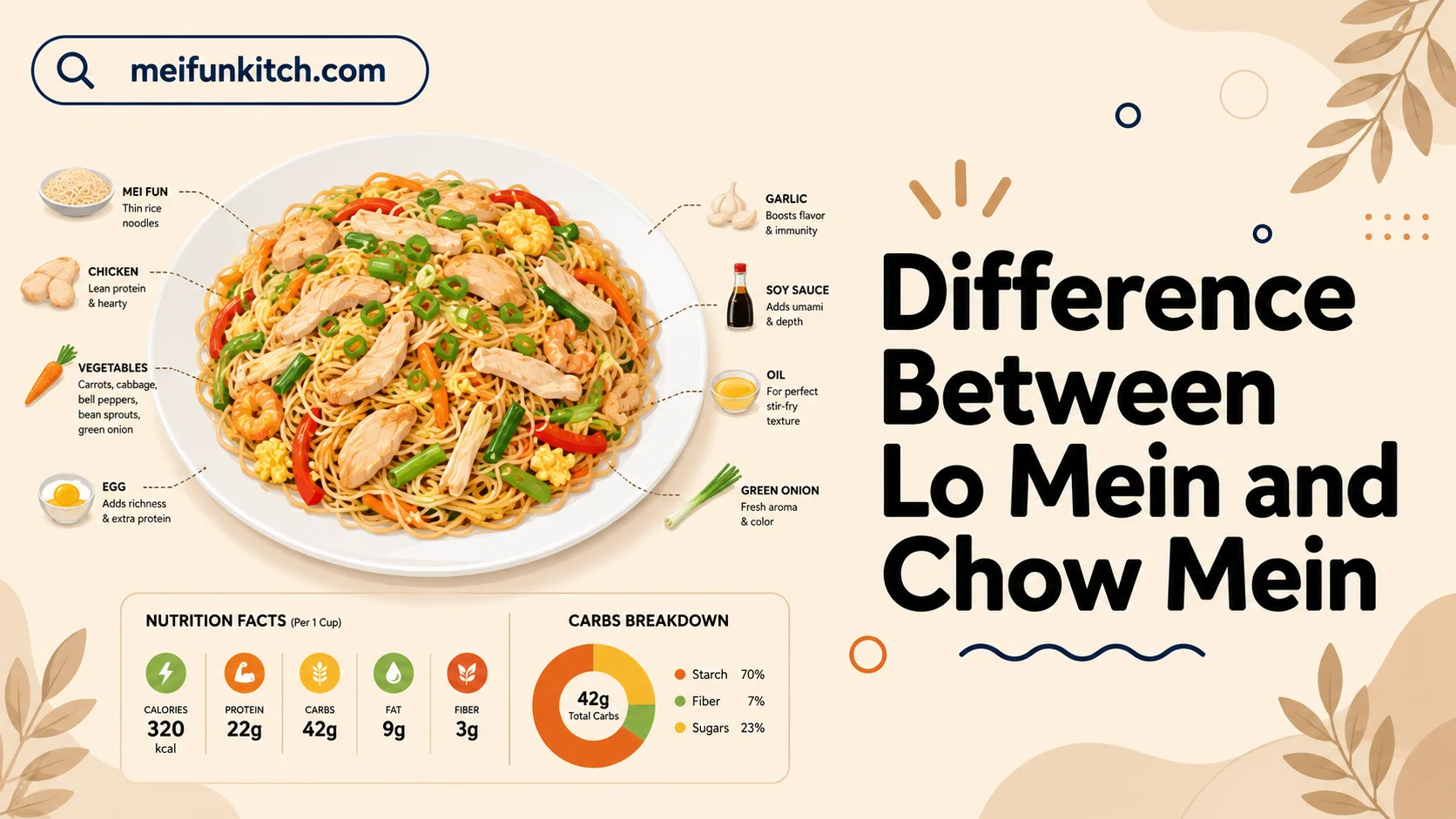
Many people enjoy noodle dishes, but they often wonder about the Difference Between Lo Mein and Chow Mein. Both dishes come from Chinese cuisine and use similar ingredients, such as noodles, vegetables, and protein. However, they are prepared in different ways. As a result, they have different textures, flavors, and appearances. Understanding these differences can help you choose the dish that matches your taste.
Lo mein uses soft noodles that cooks toss with sauce after boiling. In contrast, chow mein uses noodles that cooks stir-fry until they become slightly crispy or crunchy. Because of this cooking method, each dish offers a unique eating experience. Furthermore, restaurants may serve them with chicken, beef, shrimp, or vegetables, which makes both meals very versatile.
If you want to learn more about the Difference Between Lo Mein and Chow Mein, this guide will explain everything in simple terms. Additionally, you will discover how each dish is made, what ingredients they use, and which option may fit your preferences best. By the end, you will easily understand what makes these two popular noodle dishes different.
Difference Between Lo Mein and Chow Mein: A Quick Overview
Many people enjoy Chinese noodle dishes, but they often want to know the Difference Between Lo Mein and Chow Mein before ordering at a restaurant. Both dishes use wheat noodles and often include vegetables, meat, seafood, or tofu. However, the cooking style creates a completely different eating experience. While lo mein features soft noodles tossed in sauce, chow mein usually includes stir-fried noodles with a firmer or crispier texture. As a result, each dish appeals to different tastes and preferences.
Additionally, both dishes have deep roots in Chinese cuisine and remain popular worldwide. Restaurants often customize them with various proteins and vegetables. Therefore, customers can enjoy many flavor combinations while still experiencing the unique qualities of each dish. Furthermore, chefs can adapt these recipes to suit different dietary preferences, making them versatile menu options.
Understanding the basic differences helps diners make informed choices. Moreover, learning about cooking techniques, textures, and ingredients can enhance appreciation for these classic noodle dishes. Whether someone prefers soft and saucy noodles or crispy and stir-fried noodles, both options offer delicious flavors and satisfying meals.
Quick Comparison Overview
| Feature | Lo Mein | Chow Mein |
| Texture | Soft | Crispy or firm |
| Cooking style | Tossed | Stir-fried |
| Sauce amount | More | Less |
| Noodle feel | Tender | Crunchy |
| Popularity | Very popular | Very popular |
| Traditional use | Mixed with sauce | Fried with ingredients |
| Moisture level | Higher | Lower |
| Appearance | Glossy | Crisp |
| Preparation time | Moderate | Moderate |
| Flavor absorption | High | Medium |
| Serving style | Soft noodles | Fried noodles |
| Main attraction | Sauce | Texture |
What Is the Main Difference Between Lo Mein and Chow Mein?
The biggest distinction between these dishes comes from the way chefs prepare the noodles. When discussing the Difference Between Lo Mein and Chow Mein, most experts focus on cooking techniques. Lo mein noodles are boiled until soft and then mixed with sauce and ingredients. In contrast, chow mein noodles spend more time in the wok, where they develop a firmer texture.
Furthermore, lo mein emphasizes rich sauces that coat every strand of noodle. The sauce creates a smooth and flavorful dish that feels soft and satisfying. Meanwhile, chow mein focuses on texture. Stir-frying gives the noodles a slightly crispy exterior while maintaining some tenderness inside. Therefore, diners often choose between the two based on texture preferences rather than ingredients.
Another key difference involves the final presentation. Lo mein appears glossy and moist because the noodles absorb sauce during preparation. On the other hand, chow mein often looks drier and more textured due to the frying process. Consequently, both dishes provide unique experiences even when they use similar vegetables and proteins.
Main Differences at a Glance
| Feature | Lo Mein | Chow Mein |
| Main focus | Sauce | Texture |
| Noodle preparation | Boiled | Fried |
| Final texture | Soft | Crispy |
| Sauce coating | Heavy | Light |
| Moisture | Higher | Lower |
| Appearance | Smooth | Crunchy |
| Cooking technique | Tossing | Stir-frying |
| Mouthfeel | Tender | Firm |
| Flavor style | Rich | Toasted |
| Common preference | Soft noodle lovers | Crunchy noodle lovers |
| Wok cooking time | Shorter | Longer |
| Serving experience | Saucy | Textured |
Difference Between Lo Mein and Chow Mein in Cooking Method
The cooking process plays a major role in creating the unique characteristics of each dish. The Difference Between Lo Mein and Chow Mein becomes clear when examining how chefs handle the noodles. Lo mein starts with boiled noodles that cooks combine with sauce and other ingredients. Because the noodles remain soft, they absorb flavors very effectively.
Meanwhile, chow mein involves additional stir-frying after boiling. Chefs place the noodles into a hot wok and cook them until they develop a firmer texture. As a result, the noodles gain a slight crispness that many people enjoy. Furthermore, the high heat creates subtle toasted flavors that add depth to the dish.
Cooking methods also affect how the ingredients interact. Lo mein allows the sauce to coat the noodles evenly, creating a smooth and unified flavor. Conversely, chow mein focuses on texture contrast between vegetables, protein, and crispy noodles. Therefore, the cooking style directly influences the final taste and presentation.
Cooking Method Comparison
| Cooking Element | Lo Mein | Chow Mein |
| Boiling | Yes | Yes |
| Stir-frying | Minimal | Extensive |
| Wok exposure | Lower | Higher |
| Crispiness | Low | High |
| Sauce mixing | After boiling | During frying |
| Texture outcome | Soft | Firm |
| Oil usage | Moderate | Slightly higher |
| Flavor absorption | High | Medium |
| Cooking goal | Tender noodles | Crispy noodles |
| Heat intensity | Moderate | High |
| Preparation style | Tossed | Fried |
| Final appearance | Saucy | Golden |
Difference Between Lo Mein and Chow Mein in Texture and Taste
Texture is often the first thing diners notice when eating these noodle dishes. The Difference Between Lo Mein and Chow Mein becomes obvious after the first bite. Lo mein offers soft, smooth noodles that feel tender and easy to chew. Because the noodles absorb sauce, every bite delivers consistent flavor throughout the dish.
On the other hand, chow mein provides a combination of textures. The noodles often develop crispy edges while maintaining some softness inside. This contrast creates a more dynamic eating experience. Additionally, the frying process adds a lightly toasted flavor that complements vegetables and proteins very well.
Taste also varies because of the preparation style. Lo mein usually tastes richer and saucier due to its higher sauce content. Meanwhile, chow mein often highlights the natural flavors of vegetables and proteins. Therefore, people who enjoy bold sauces may prefer lo mein, while those who appreciate texture may favor chow mein.
Texture and Taste Comparison
| Feature | Lo Mein | Chow Mein |
| Texture | Soft | Crispy |
| Bite feel | Tender | Crunchy |
| Sauce presence | Strong | Moderate |
| Flavor intensity | Rich | Balanced |
| Mouthfeel | Smooth | Textured |
| Crisp edges | Rare | Common |
| Moisture level | High | Medium |
| Chewiness | Moderate | Higher |
| Toasted flavor | Minimal | Noticeable |
| Sauce absorption | Excellent | Good |
| Overall feel | Comforting | Exciting |
| Eating experience | Soft and saucy | Crunchy and flavorful |
Difference Between Lo Mein and Chow Mein Ingredients Explained
Although both dishes often use similar ingredients, preparation changes how those ingredients perform. The Difference Between Lo Mein and Chow Mein does not usually come from vegetables or proteins. Instead, the noodles and cooking methods create most of the variation. Common ingredients include carrots, cabbage, onions, bean sprouts, chicken, beef, shrimp, and tofu.
Additionally, lo mein recipes typically include more sauce. Chefs often use soy sauce, sesame oil, garlic, and other seasonings to create a rich flavor profile. Consequently, the noodles absorb these flavors and become the main focus of the dish. The vegetables and proteins support the overall taste rather than dominate it.
Chow mein recipes often use similar vegetables and proteins, yet the stir-frying process creates different results. Because the noodles spend more time in the wok, texture becomes the star feature. Furthermore, vegetables often remain slightly crisp, which adds freshness and contrast to the dish.
Ingredient Comparison
| Ingredient Aspect | Lo Mein | Chow Mein |
| Noodle type | Wheat noodles | Wheat noodles |
| Vegetables | Common | Common |
| Protein options | Many | Many |
| Sauce quantity | More | Less |
| Soy sauce use | High | Moderate |
| Sesame oil | Common | Common |
| Garlic flavor | Common | Common |
| Bean sprouts | Sometimes | Often |
| Cabbage | Common | Common |
| Onion | Common | Common |
| Ingredient focus | Sauce | Texture |
| Flavor balance | Rich | Lightly toasted |
Difference Between Lo Mein and Chow Mein: Which Is Healthier?
Healthiness depends on ingredients, cooking methods, and portion sizes. When considering the Difference Between Lo Mein and Chow Mein, many people want to know which option better supports their dietary goals. Lo mein often contains more sauce, which may increase sodium levels depending on the recipe. However, it can still be part of a balanced meal when paired with vegetables and lean proteins.
Meanwhile, chow mein may contain slightly more oil because chefs fry the noodles longer. However, it often uses less sauce, which can reduce sodium content. Therefore, neither dish automatically qualifies as healthier. The overall nutritional value depends on how chefs prepare the meal and which ingredients they include.
The healthiest choice usually includes plenty of vegetables, moderate portions, and lean protein sources. Additionally, homemade versions allow people to control oil, salt, and sauce levels. As a result, both lo mein and chow mein can fit into a balanced diet when prepared thoughtfully and enjoyed in moderation.
Health Comparison
| Health Factor | Lo Mein | Chow Mein |
| Calories | Moderate | Moderate |
| Sauce content | Higher | Lower |
| Sodium potential | Higher | Medium |
| Oil usage | Moderate | Higher |
| Vegetable content | Flexible | Flexible |
| Protein options | Many | Many |
| Fiber potential | Good | Good |
| Portion control importance | High | High |
| Homemade adaptability | Excellent | Excellent |
| Flavor richness | Higher | Medium |
| Balanced meal potential | Strong | Strong |
| Diet-friendly when customized | Yes | Yes |
How Lo Mein Noodles Are Made
Lo mein noodles start with wheat flour, water, and sometimes eggs. Manufacturers mix these ingredients into a smooth dough and then roll it into long noodle strands. Many people researching the Difference Between Lo Mein and Chow Mein want to understand how the noodles themselves contribute to the final dish. Because lo mein noodles are designed to stay soft and flexible, they work especially well with rich sauces and vegetables.
After the dough is prepared, producers cut the noodles into long strands and cook them until tender. Next, chefs briefly boil the noodles before combining them with vegetables, proteins, and flavorful sauces. As a result, the noodles absorb seasonings very effectively. Furthermore, their smooth texture allows every ingredient to blend together in a balanced and satisfying way.
The final step involves tossing the noodles with sauce rather than frying them extensively. Therefore, lo mein keeps its signature soft texture. Additionally, the noodles remain moist and flavorful because they absorb the sauce during the mixing process. This preparation method creates the comforting texture that makes lo mein popular around the world.
Lo Mein Noodle Production Process
| Step | Description |
| Main ingredient | Wheat flour |
| Liquid addition | Water |
| Optional ingredient | Eggs |
| Dough mixing | Creates structure |
| Dough kneading | Improves texture |
| Rolling process | Forms sheets |
| Cutting stage | Creates noodles |
| Boiling | Softens noodles |
| Sauce mixing | Adds flavor |
| Vegetable addition | Enhances nutrition |
| Protein addition | Adds variety |
| Final texture | Soft and tender |
How Chow Mein Gets Its Crispy Texture
Chow mein stands out because of its crispy and slightly crunchy texture. When learning about the Difference Between Lo Mein and Chow Mein, many people discover that frying plays the most important role. Chefs first boil the noodles briefly and then place them into a very hot wok. This extra cooking step creates the texture that chow mein lovers enjoy.
Additionally, high heat removes moisture from the noodle surface. As a result, the outer layer becomes golden and slightly crispy while the inside remains tender. Furthermore, chefs constantly stir the noodles during cooking to prevent burning and to ensure even crispness. This careful process gives chow mein its unique character.
The wok also contributes subtle toasted flavors that enhance the dish. Moreover, vegetables and proteins cook alongside the noodles, creating a balance of textures in every bite. Therefore, chow mein offers a combination of crunch, flavor, and freshness that differs greatly from the softer style of lo mein.
How Chow Mein Becomes Crispy
| Factor | Effect |
| Boiled noodles | Initial softness |
| Hot wok | High heat cooking |
| Stir-frying | Creates texture |
| Oil contact | Helps crisping |
| Moisture reduction | Increases crunch |
| Continuous stirring | Even cooking |
| Golden surface | Added flavor |
| Toasted notes | Rich taste |
| Vegetable contrast | More texture |
| Protein integration | Balanced dish |
| Crispy edges | Signature feature |
| Final result | Crunchy noodles |
Lo Mein vs Chow Mein: Which One Should You Order?
Choosing between lo mein and chow mein depends on your personal taste preferences. Many diners compare these dishes because of the Difference Between Lo Mein and Chow Mein, yet both offer excellent flavors. If you enjoy soft noodles covered in savory sauce, lo mein may be the better choice. Its tender texture creates a comforting and satisfying meal.
On the other hand, chow mein appeals to people who enjoy crispy textures and slightly toasted flavors. Because the noodles spend more time in the wok, they develop a unique crunch that many diners love. Additionally, chow mein often provides more texture contrast between noodles, vegetables, and proteins.
Neither option is better for everyone. Instead, the right choice depends on what type of eating experience you want. Therefore, people who love rich sauces often choose lo mein, while those who enjoy crispy noodles usually prefer chow mein. Fortunately, both dishes offer delicious flavors and plenty of customization options.
Which Dish Fits Your Preference?
| Preference | Best Choice |
| Soft noodles | Lo Mein |
| Crispy noodles | Chow Mein |
| More sauce | Lo Mein |
| Toasted flavor | Chow Mein |
| Tender texture | Lo Mein |
| Crunchy bite | Chow Mein |
| Comfort food feel | Lo Mein |
| Texture variety | Chow Mein |
| Rich flavor coating | Lo Mein |
| Lightly fried taste | Chow Mein |
| Smooth eating experience | Lo Mein |
| Crispy noodle experience | Chow Mein |
Traditional Chinese Noodle Dishes and Their Unique Features
Chinese cuisine includes many noodle dishes beyond lo mein and chow mein. While studying the Difference Between Lo Mein and Chow Mein, many people become interested in other traditional noodle varieties. Each dish reflects unique regional cooking styles, ingredients, and cultural traditions. As a result, Chinese noodles offer incredible variety and flavor.
For example, some noodle dishes focus on rich broths, while others highlight stir-fried ingredients. Additionally, different regions use various noodle shapes, thicknesses, and preparation methods. Consequently, diners can experience a wide range of textures and flavors. Many traditional recipes have been passed down through generations and continue to play an important role in Chinese food culture.
Exploring these dishes helps people appreciate the diversity of Chinese cuisine. Furthermore, each noodle style provides a unique combination of ingredients and cooking techniques. Therefore, trying different noodle dishes can be a delicious way to learn more about traditional Chinese cooking and culinary history.
Popular Traditional Chinese Noodle Dishes
| Dish | Unique Feature |
| Lo Mein | Soft tossed noodles |
| Chow Mein | Crispy stir-fried noodles |
| Mei Fun | Thin rice noodles |
| Dan Dan Noodles | Spicy sauce |
| Zhajiangmian | Savory bean sauce |
| Beef Noodle Soup | Rich broth |
| Wonton Noodle Soup | Dumplings and noodles |
| Hand-Pulled Noodles | Freshly stretched noodles |
| Knife-Cut Noodles | Thick rustic texture |
| Cold Sesame Noodles | Chilled preparation |
| Rice Noodle Soup | Light broth |
| Scallion Oil Noodles | Simple aromatic flavor |
Conclusion:
Understanding the Difference Between Lo Mein and Chow Mein helps you enjoy Chinese food with more confidence and joy. Both dishes use similar ingredients, yet they offer very different eating experiences. Lo mein gives you soft noodles coated in rich, tasty sauce, while chow mein delivers a crispy, slightly toasted bite with less sauce but more texture.
Moreover, your choice often depends on what you feel like eating. If you want comfort food with smooth and saucy noodles, lo mein can satisfy you well. However, if you enjoy crunchy textures and stir-fried flavor, chow mein may be the better pick. In addition, both dishes work beautifully with vegetables, chicken, beef, or shrimp, making them flexible for any meal.
Ultimately, there is no wrong choice. Instead, both dishes bring unique flavors and traditions to your plate. So next time you order, choose based on your taste mood and enjoy every bite.
FAQs
What is the main difference between lo mein and chow mein?
The main difference is how the noodles are cooked. Lo mein noodles are boiled and tossed with sauce, making them soft. Chow mein noodles are stir-fried, which gives them a crispier texture. Both use similar ingredients, but cooking style changes the taste and overall eating experience.
Are lo mein and chow mein made from the same noodles?
Both dishes usually use wheat-based egg noodles, but preparation differs. Lo mein noodles stay soft after boiling, while chow mein noodles are often fried to create a firmer or crispy texture. This difference in cooking method is what creates their unique taste and texture profiles.
Which is healthier, lo mein or chow mein?
Health depends on preparation. Lo mein often has more sauce, which may increase calories and sodium. Chow mein may use more oil due to frying. However, both can be healthy when loaded with vegetables, lean protein, and eaten in balanced portions as part of a varied diet.
Why does chow mein taste crispy?
Chow mein tastes crispy because the noodles are stir-fried in a hot wok. The high heat removes moisture and creates a lightly crunchy texture. This cooking method also adds a toasted flavor that makes chow mein different from soft noodle dishes like lo mein.
Can vegetarians eat lo mein or chow mein?
Yes, both dishes can be vegetarian. Restaurants and home recipes often include vegetables like carrots, cabbage, and bean sprouts. You can also replace meat with tofu. However, it is always good to check sauces, as some may contain animal-based ingredients or fish sauce.
Which dish has more sauce, lo mein or chow mein?
Lo mein has more sauce because the noodles are tossed after boiling. This allows the sauce to coat every strand evenly. Chow mein uses less sauce since it focuses more on stir-frying and texture. As a result, lo mein tastes richer and more saucy.
Is chow mein always crispy?
Not always. Some chow mein versions are soft instead of crispy, depending on regional cooking styles. However, traditional chow mein is usually stir-fried to create a light crispness. Restaurants may adjust texture based on customer preference and cooking method used in the kitchen.
Can I make lo mein and chow mein at home?
Yes, both are easy to make at home. Lo mein requires boiling noodles and mixing them with sauce and ingredients. Chow mein needs a wok or pan for stir-frying. With simple ingredients and basic cooking skills, you can prepare both dishes in your kitchen.
Which dish is more popular worldwide?
Both lo mein and chow mein are popular globally. Lo mein is widely loved for its soft texture and rich flavor, while chow mein is enjoyed for its crispy bite. Popularity often depends on region and personal taste rather than one dish being better than the other.
What vegetables are commonly used in both dishes?
Common vegetables include cabbage, carrots, onions, bean sprouts, and bell peppers. These vegetables add color, texture, and nutrition. Both lo mein and chow mein can be customized easily, allowing cooks to mix different vegetables based on taste and availability.

Smith
Author103 Published Articles
James Smith is a dedicated food writer and recipe enthusiast who specializes in creating informative content about noodles, pasta, rice dishes, comfort foods, and a wide variety of global cuisines. He is passionate about sharing easy-to-follow recipes, cooking techniques, ingredient guides, nutrition facts, and meal preparation tips that help readers cook with confidence. From classic noodle dishes and homemade sauces to healthy meal ideas and international favorites, James focuses on delivering well-researched, practical, and engaging content for home cooks of all skill levels. His goal is to make cooking enjoyable, accessible, and inspiring by providing reliable recipes and food knowledge that readers can trust.
EducationM.Sc. in Food and Nutrition.
Experience8 Years.
ExpertiseWrites about Noodles and Many Other Foods